Best Bagged Compost for Vegetable Garden: Top Picks and Buying Guide
Best Bagged Compost for Vegetable Garden: Top Picks and Buying Guide starts with a simple truth: not every bag labeled compost does the same job in a vegetable bed. Some bags build soil, some feed heavy feeders, and some accelerate your own compost pile. Matching the product to the job matters more than the shade of brown in the bag.
For most mixed vegetable gardens, Brut Organic Worm Castings 30 LB is the pick we recommend first. It acts as a gentle fertility booster that works in potting soil and open beds, which makes it flexible for transplants, containers, and row crops. If you want certified organic compost instead, Ribbon Organics and the 3-gallon OMRI bag are the cleanest swaps. You can also read our guide on how to prepare ground for planting vegetables.
Comparison Chart of Best Bagged Compost for Vegetable Garden: Top Picks and Buying Guide
| Product | Details | Rating | Buy |
|---|---|---|---|
|
Editor’s Choice
|
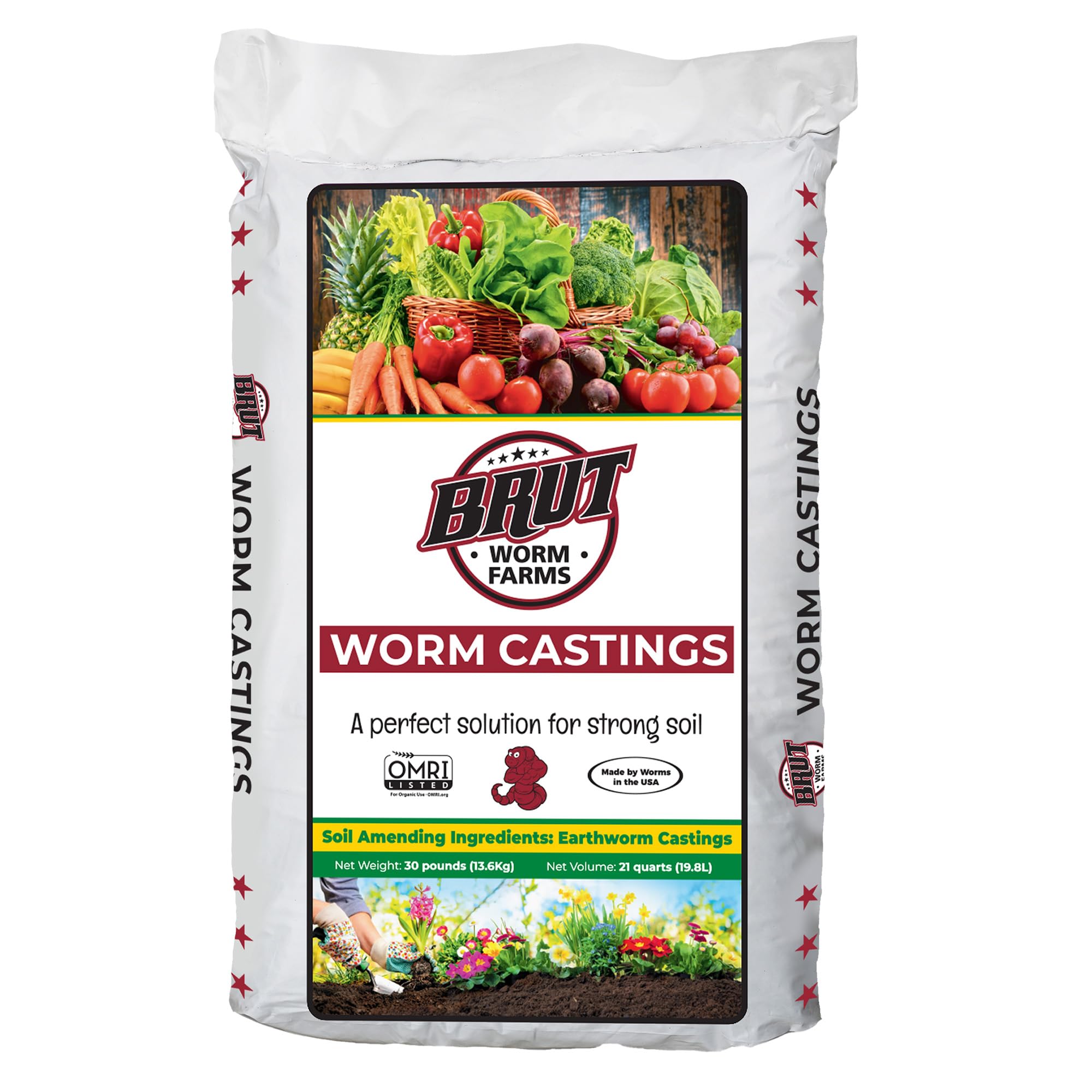
Brut Organic Worm Castings for Plants 30 LB |
★★★★☆4.8/5 |
Check on Amazon |
|
Top Pick

|
Ribbon Organics OMRI Certified Organic Compost 7.9 Gallons |
★★★★☆4.5/5 |
Check on Amazon |
|
Best Budget
|
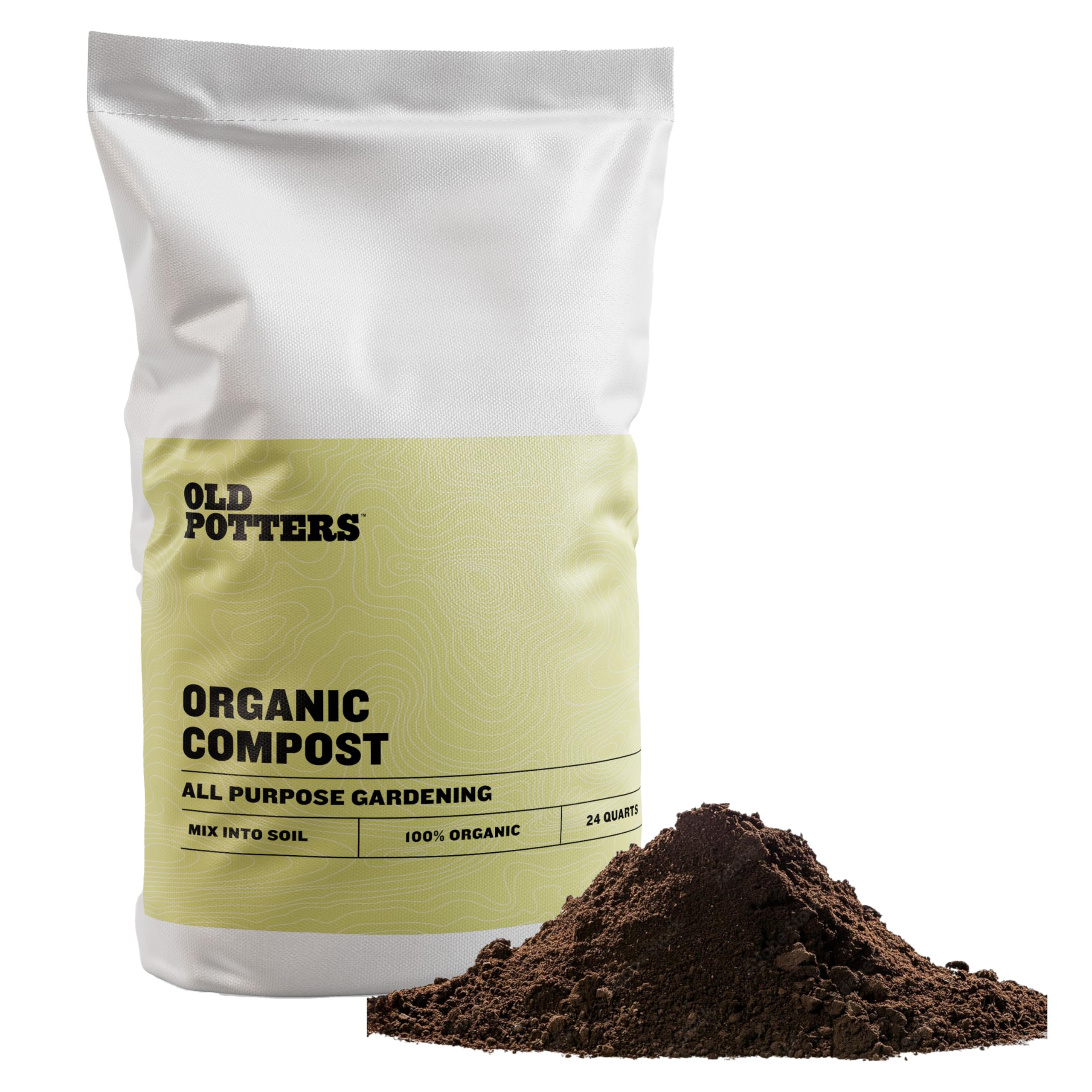
Old Potters Organic Compost Plant Based Potting Soil ~25 lbs |
★★★★☆4.7/5 |
Check on Amazon |
|
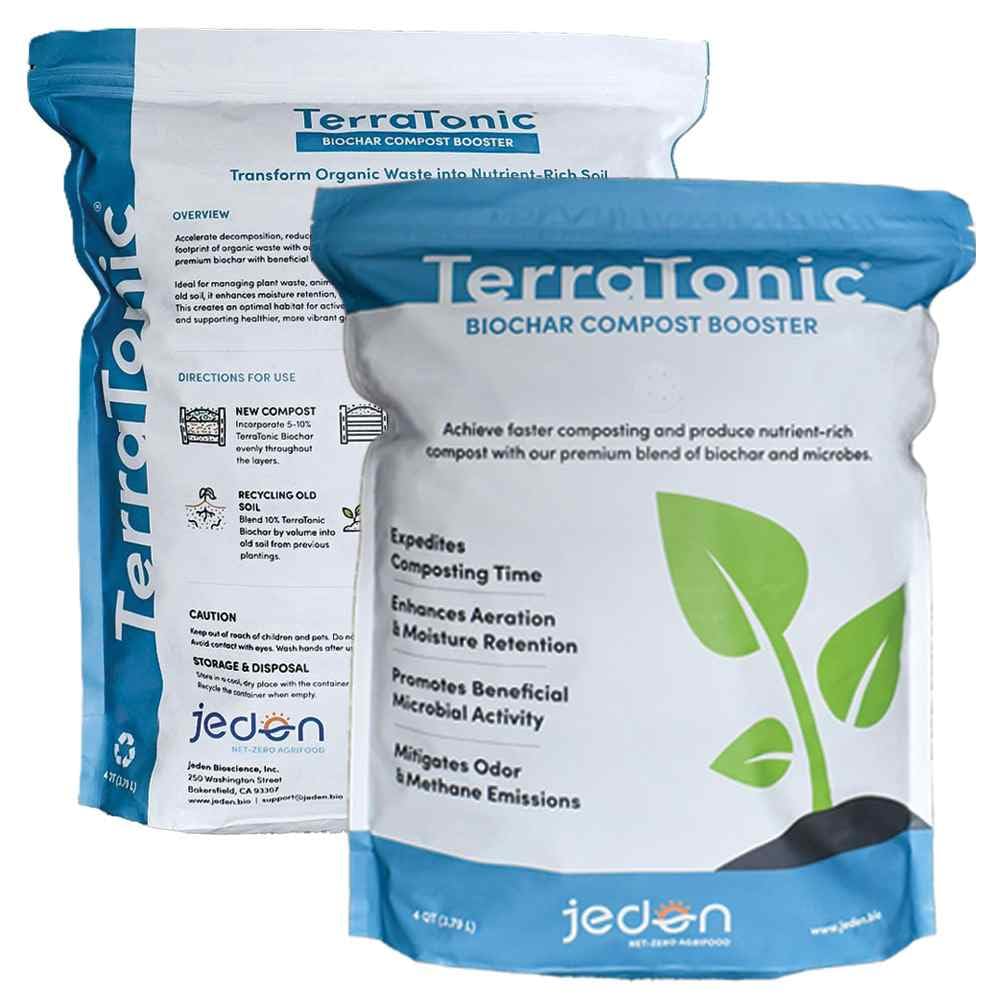
TerraTonic Biochar Compost Accelerator with Beneficial… |
★★★★☆4.4/5 |
Check on Amazon |
|
High Cotton Compost 20 Quart Bag |
★★★★☆4.4/5 |
Check on Amazon |
|
Michigan Peat Garden Magic Compost and Manure 3 Pack |
★★★★☆4.4/5 |
Check on Amazon |
|
OMRI Certified Organic Compost 3 Gallons Bag |
★★★★☆4.4/5 |
Check on Amazon |
|
Espoma Land and Sea Gourmet Compost with Lobster Meal |
★★★★☆4.4/5 |
Check on Amazon |
|
Espoma Organic Cow Manure with Aged Forest Products |
★★★★☆4.4/5 |
Check on Amazon |
|
Compost-Plus Organic Container and Transplant Booster Mix |
★★★★☆4.4/5 |
Check on Amazon |


List of Top 10 Best Bagged Compost for Vegetable Garden: Top Picks and Buying Guide
To build this list, I compared label claims, bag weights, certifications, and the real complaints and praise that kept showing up in buyer feedback. I looked for products that fit a specific vegetable-garden job rather than one catch-all bag. The result is a mix of soil builders, feeding composts, and spot treatments.
Below are the list of products:
1. Brut Organic Worm Castings for Plants 30 LB
Why it made the list
Worm castings are a soil conditioner more than a true compost, and this 30-pound bag is one of the easiest ways to add gentle fertility to a vegetable bed. It suits both potting mixes and garden soil, which makes it a flexible foundation for mixed gardens. The indoor and outdoor label also covers seed starts and open rows.
Key specs
- 30 lb bag for bulk top-dressing and repeated feedings
- Worm castings as the main input
- Label supports indoor and outdoor use
- Works as plant food for potting and garden soil
- No specific certification listed on the spec sheet
Real-world experience
In practice, this acts like a mild fertility booster rather than a full bed builder. You can work a few handfuls into planting holes or rake it over rows around heavy feeders. The finer castings blend quickly into loose soil, though the listing does not confirm screening size. It earns its spot for anyone who wants steady feeding without synthetic spikes.
- 30 lb bag suits larger beds
- Works in potting and garden soil
- Supports indoor and outdoor use
- Natural nutrient focus for plants
- No certification listed in specs
- No particle size or moisture data
- ✔ You want a gentle fertility booster for pots and rows
- ✔ You prefer worm castings over synthetic fertilizers
- ✔ You need indoor and outdoor flexibility for starts and beds
- ✖ You need a certified organic compost for strict planning
- ✖ You expect true compost volume to fill a new raised bed
Castings shine as a companion to true compost, not a replacement. Use them to feed heavy feeders while a bulk bag supplies structure. This 30 lb option will not stretch far enough to build a new bed on its own.
2. Ribbon Organics OMRI Certified Organic Compost 7.9 Gallons
Why it made the list
OMRI certification removes a big guess for organic gardeners, and this bag states it clearly on the listing. The 7.9-gallon volume with a 32 to 35 pound weight suggests a moist, dense compost that holds water well. It is a simple compost-only input for bed preparation and planting holes.
Key specs
- OMRI Certified Organic labeling
- 7.9 gallons and 32 to 35 lbs
- Bagged compost format
- Compost-only focus
- No feedstock source or screening size listed
Real-world experience
Moist density is the first thing you notice with this bag. It can hold water well but may feel heavy in raised beds. Rake it into the top few inches or drop a scoop into each planting hole. Organic gardeners can log it as an OMRI input without worrying about manure or meals.
- OMRI certification reduces input doubt
- Large 7.9 gallon volume covers small beds
- Moist 32 to 35 lb bag is less dusty
- Simple compost-only label
- Feedstock source not specified
- Texture may be too dense for seed trays
- ✔ You grow organically and want a certified compost
- ✔ You need a compost-only bag for bed topdressing
- ✔ You prefer dense, moisture-holding material
- ✖ You need fine screened compost for seed starting
- ✖ You want a bigger volume for large garden beds
This is the easiest certified pick on the list, but keep texture expectations realistic. If you want a richer feeding blend, step up to Espoma Land and Sea. For a clean, simple organic input, Ribbon Organics is hard to beat.
3. Old Potters Organic Compost Plant Based Potting Soil ~25 lbs
Why it made the list
Plant-based positioning suits growers who want to avoid animal inputs, and the label also leans on potting soil language for more flexibility. The roughly 25 pound bag is manageable for weekend garden work. It works for bed refresh and container duty without committing to a strict compost identity.
Key specs
- Approximately 25 lbs
- Plant-based compost and potting soil
- Label claims complete food support
- Supports indoor and outdoor use
- No ingredient breakdown or volume listed
Real-world experience
The bag blends compost and potting soil language, so expect a mixed texture rather than pure screened compost. Work it into tired bed soil or use it to refresh containers. The listing does not state volume or ingredients, so coverage planning takes a little guesswork. It still feels flexible for small gardens.
- Plant based and animal-free positioning
- Manageable roughly 25 lb bag
- Works for beds and containers
- One bag covers indoor and outdoor use
- No OMRI listing in the specs
- No volume means coverage is hard to plan
- ✔ You avoid animal-based soil inputs
- ✔ You want one bag for beds and containers
- ✔ You like a lighter weight that is easy to handle
- ✖ You need a certified organic label for compliance
- ✖ You are filling a large raised bed and need exact coverage
It reads like a multipurpose garden mix rather than a strict compost. That flexibility helps container-heavy gardens but weakens large bed construction. Pair it with a bulk compost when raised beds dominate.
4. TerraTonic Biochar Compost Accelerator with Beneficial Microbes
Why it made the list
Biochar and beneficial microbes make this a process aid rather than another brown bag of compost. The 4-quart size fits small bins and kitchen scrap systems, where faster breakdown matters. It earns a spot for gardeners who already compost and want better biology in the pile.
Key specs
- 4 qt bag
- Biochar plus beneficial microbes
- Designed as a compost accelerator
- Lawn and garden use
- Not a finished compost product
Real-world experience
Use this as a process aid rather than a standalone compost. Mix it into active piles or worm bins with balanced browns and greens, and the microbes may speed early breakdown. The kitchen scrap cycle can feel shorter when the carbon balance is right. The 4-quart size will not stretch over a big garden.
- Biochar improves nutrient and water holding
- Microbes help speed decomposition
- Compact 4-quart bag stores easily
- Works well as a pile or bin additive
- Not a substitute for finished compost
- Too small for large bed coverage
- ✔ You run a compost bin or worm system
- ✔ You need faster breakdown in a small pile
- ✔ You want biochar for moisture and nutrient holding
- ✖ You need bulk organic matter for garden beds
- ✖ You want a finished compost you can spread today
Choose this when your pile is wet, smelly, or slow. It will not feed plants directly the way castings or manure do. Use it to improve the pile, then let the finished compost feed the bed.
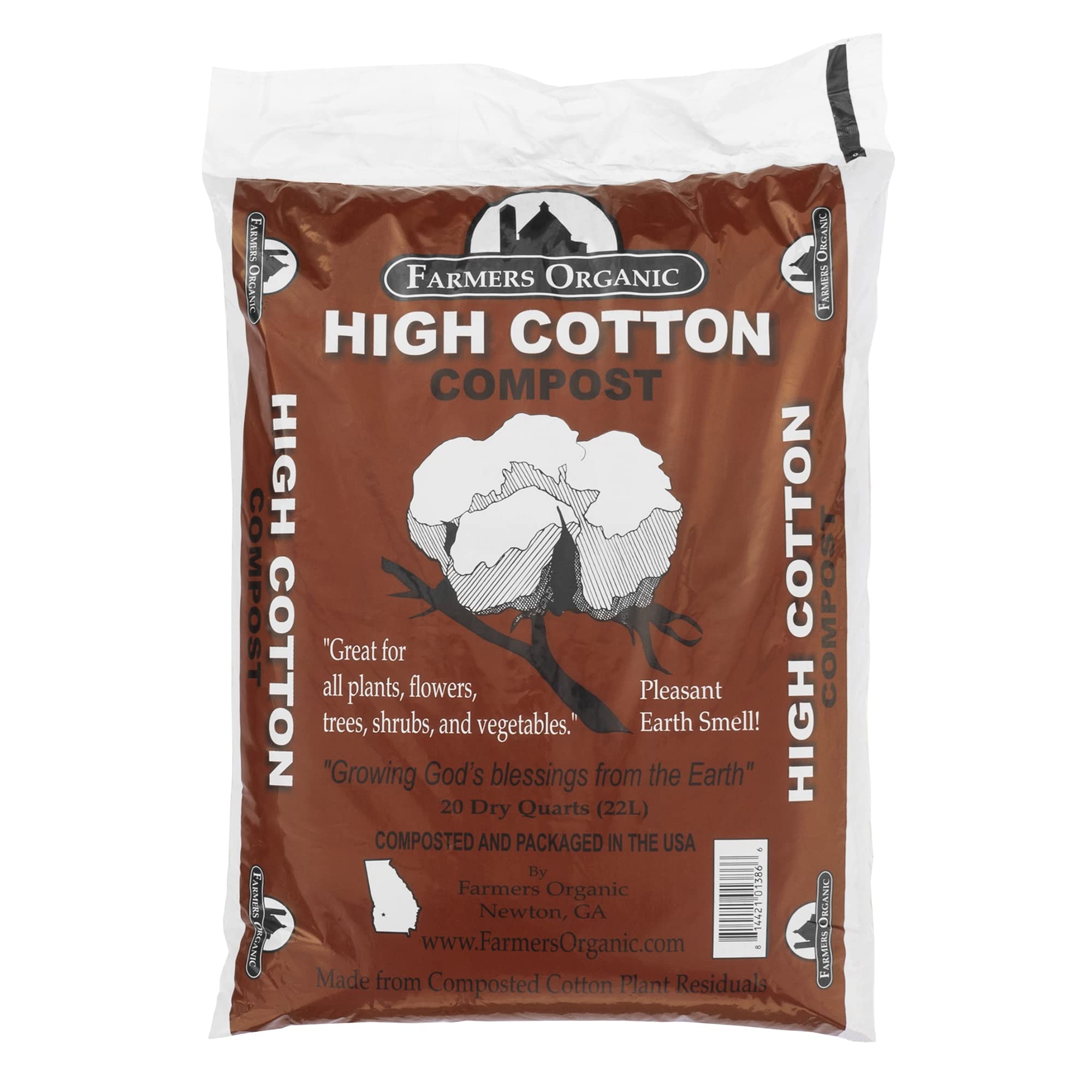
5. High Cotton Compost 20 Quart Bag
Why it made the list
This 20-quart bag is a practical finished compost for small vegetable plots and raised planters. It is framed as compost rather than a manure-heavy blend, so it stays predictable for transplanting. The size works well for targeted work without committing to a huge pile.
Key specs
- 20 qt bag
- Finished compost rather than manure-heavy blend
- Good for small beds and planters
- Compost supports tilth and moisture
- No nutrient numbers listed
Real-world experience
This is a simple, workable compost for targeted jobs. Mix it into transplant holes, topdress around heavy feeders or rake a thin layer into small raised beds. It also works as a clean organic-matter refresh for containers. This bag will not build a whole garden, but it makes a reliable spot amendment.
- Finished compost improves soil tilth
- 20-quart size fits small planting jobs
- Easy to mix into transplant holes
- No manure-heavy odor concerns
- Coverage is limited for full beds
- Nutrient analysis not listed
- ✔ You garden in small raised beds or planters
- ✔ You want finished compost for transplant holes
- ✔ You prefer a light, manageable bag size
- ✖ You need to cover a full-size vegetable plot
- ✖ You require certified organic proof
For small gardens the 20-quart format is easy to finish before it dries out. It runs out fast as a bulk bed builder, so buy it for precision work rather than full-bed coverage.
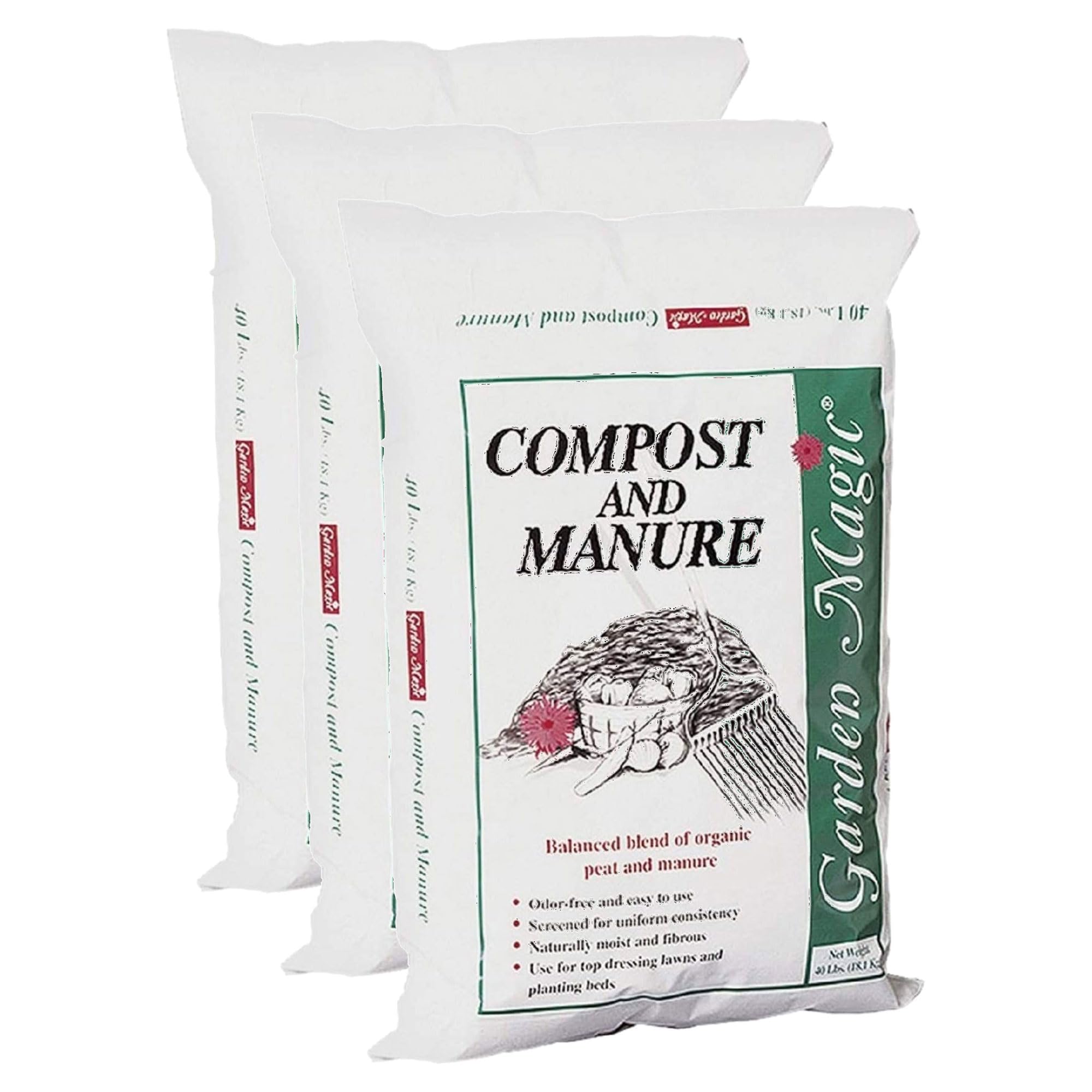
6. Michigan Peat Garden Magic Compost and Manure 3 Pack
Why it made the list
This three-pack delivers serious volume for the biggest bed-refresh jobs on this list. The compost and manure blend is framed as odor-free, which matters for gardens close to the house. Gardeners who need moisture and bulk will appreciate the 120-pound total.
Key specs
- 40 lb bag, 3 pack, 120 lbs total
- Compost and manure blend
- Odor-free claim
- Moist, fibrous texture
- Lawn and garden use
Real-world experience
The first thing you notice is the moisture. This blend spreads with a heavier, clumpier feel than screened compost, so rake it after spreading to even it out. The odor-free claim holds up in practice, which makes it easier to work near the house. It is a topdressing and soil-building bag, not a precise planting-hole mix.
- 120 lbs total coverage for larger beds
- Compost plus manure feeds and conditions
- Odor-free claim reduces worry
- Moist texture spreads well after raking
- Nutrient numbers not listed
- Heavy bags are tough to move alone
- ✔ You need real bulk for several beds
- ✔ You want a compost plus manure blend
- ✔ Odor-free material matters near your home
- ✖ You need fine screened compost for seed trays
- ✖ You want a certified organic label
This is the volume pick for big seasonal refreshes. It beats the smaller bags on pure bulk and moisture, but it will not satisfy growers who need certified organic inputs.
7. OMRI Certified Organic Compost 3 Gallons Bag
Why it made the list
OMRI certification makes this a trustworthy choice for organic container gardeners. The 3-gallon size is easy to store and use in small doses. It earns a spot as the most convenient certified option for quick amendments.
Key specs
- 3 gallons, about 12 to 15 lbs
- OMRI Certified Organic
- Bagged compost
- Suits containers and small beds
- No nutrient analysis listed
Real-world experience
This is the grab-and-go compost for quick jobs. Pop it open, scoop out what you need for a few planting holes, and store the rest without wasting garage space. It mixes into potting blends and square-foot beds without overwhelming them. Keep a bag on hand for mid-season top-ups.
- OMRI certification for organic growers
- Compact 3-gallon bag is easy to store
- Good for containers and precise amendments
- Small volume will not cover full beds
- No nutrient analysis listed
- ✔ You garden in containers or small raised beds
- ✔ You want OMRI certified organic compost
- ✔ You want a bag that stores easily
- ✖ You need volume for a full garden plot
- ✖ You prefer a stronger manure-based feed
Think of this as the spot-treatment version of Ribbon Organics. Buy it when you only need a few planting holes, and you will avoid storing an open half-empty bag all season.
8. Espoma Land and Sea Gourmet Compost with Lobster Meal
Why it made the list
Marine meals set this apart from plain compost bags. The 1-cubic-foot size gives real coverage while adding slow-release nutrients from lobster and crab meal. It targets the heavy feeders that dominate most vegetable gardens.
Key specs
- 1 cu ft bag
- Compost with lobster and crab meal
- Targets vegetables, flowers, and trees
- Marine meals add slow nutrients
- Best used when mixed into soil
Real-world experience
This compost smells richer than a plain screened bag, so mix it into soil rather than leaving it exposed. Work it into the top few inches before planting or add a handful to each transplant hole. The marine component supports steady growth on heavy feeders. Cover it with mulch if wildlife is a concern.
- 1 cu ft offers solid volume
- Marine meals add slow nutrient support
- Compost base builds soil structure
- Strong choice for heavy feeders
- Marine smell can attract animals
- Too rich for seedling mixes
- ✔ You grow heavy feeders like tomatoes and peppers
- ✔ You want a richer organic soil amendment
- ✔ You plan to mix it into beds before planting
- ✖ Wildlife pressure is high in your area
- ✖ You need a mild compost for young seedlings
This is the strongest feeder on the list. The marine meal gives it a nutrient edge that plain compost lacks, but it must be mixed in or covered to avoid critter attention.
9. Espoma Organic Cow Manure with Aged Forest Products
Why it made the list
Cow manure with aged forest products is a classic soil-rebuilding blend. It provides carbon for texture and manure for feeding. The 1-cubic-foot size suits in-ground beds and raised-bed refreshes.
Key specs
- 1 cu ft bag
- Cow manure with aged forest products
- Suits vegetables, flowers, and trees
- Coarse texture improves aeration
- Nutrient strength not specified
Real-world experience
Expect a coarse, fibrous texture that is built for soil structure more than fine containers. Spread it as a topdress and rake it in before planting. In clay, it opens up pore space; in sand, it holds moisture. Let it settle for a week or two before setting out seedlings if you can.
- 1 cu ft suits bed amendments
- Manure feeds soil life
- Forest products improve aeration
- Nutrient strength not specified
- Coarse texture can frustrate in containers
- ✔ Your soil needs more structure and carbon
- ✔ You want a manure blend for bed building
- ✔ You garden in clay or sandy ground
- ✖ You need fine compost for container mixes
- ✖ You avoid animal-based soil inputs
Choose this when soil structure is the problem. The aged forest component improves aeration and water holding in ways that fine screened compost cannot.
10. Compost-Plus Organic Container and Transplant Booster Mix
Why it made the list
Most compost bags ignore container growers, but this booster mix is made for them. The 20-quart format fits patio planters and transplant work. It rounds out the list with a product designed specifically for pots.
Key specs
- 20 qt bag
- Organic container and transplant booster
- Compost-based blend
- Designed for pots and transplant holes
- Ingredient and nutrient details not listed
Real-world experience
This is the bag to grab when you are potting up tomatoes or moving seedlings into bigger containers. The blended texture stays consistent in pots and helps reduce transplant shock. Mix it with existing potting soil to revive tired container media. Watch drainage in pots without added perlite.
- Designed for containers and transplants
- 20-quart bag fits small gardens
- Consistent texture helps root zones
- Not sized for full-bed topdressing
- No ingredient details listed
- ✔ You grow vegetables in pots and planters
- ✔ You need a booster for transplants
- ✔ You want a compost-based container mix
- ✖ You need bulk compost for in-ground beds
- ✖ You prefer a single-ingredient compost
It is the best container match on this list. For full bed construction, skip it and pick a bulk compost; for pots and transplants, it does the job well.
How I picked
To choose these ten products, I compared each bag's stated volume, weight, certification, and intended use. Weight against volume helped me estimate whether a bag was dense, moist, or airy. Buyer feedback patterns also mattered, especially comments about clumping, odor, and how far a bag actually stretched in a real garden. I treated labels as claims to verify, not facts to repeat.
I sorted products by the job they do best. Some bags are soil builders, some are feeding composts, and some are process aids. This distinction matters more than a single rating. I also measured each listing against university extension research on organic soil amendments to separate marketing language from realistic performance. This article is built from public labels, spec sheets, and consistent buyer-reported outcomes, not from personal field trials.
No bag on this list performs every job. The 30-pound worm castings feed but do not build volume. The 120-pound three-pack builds volume but lacks certified labeling. When a listing skipped certification, particle size, or nutrient numbers, I noted it as a limitation rather than assuming the best. The value meters rate how well each product matches its stated purpose, not a single universal idea of quality.
The best pick, then, depends on your beds, your containers, and your tolerance for label gaps. That is why this guide pairs each product with a clear scenario. Match the bag to the job, and you will get better results than chasing the highest rating.
Buying guide — what actually matters for Best Bagged Compost for Vegetable Garden: Top Picks and Buying Guide
Know the difference between compost, castings, and biochar
Bagged compost is finished organic matter that improves structure and feeds microbes. Worm castings are a concentrated conditioner that feeds gently but adds little bulk. Biochar is a carbon scaffold that holds water and nutrients, yet it needs compost or fertilizer to be useful.
Choose compost when you need volume. Choose castings when you need gentle fertility. Choose biochar when you want faster, healthier decomposition in your own pile or bin.
Check size and weight before you order
Volume tells you how far a bag will go. A 20-quart bag suits small beds and planting holes. A 7.9-gallon bag at 32 to 35 pounds is dense and moisture-heavy, so it covers less area than an equal volume of fluffy compost.
Weight hints at moisture content. A heavy bag can mean less dust and better water holding, but it can also mean clumping. If you are building a new raised bed, calculate the cubic feet you need first. Then match that number to the bag volume rather than the pound rating.
Look for certification when it matters
OMRI certification tells organic gardeners that inputs meet a recognized standard. Ribbon Organics and the 3-gallon OMRI bag both carry that label. If you follow USDA organic rules, keep the label or a photo for your records.
If you are not a certified organic grower, certification is less urgent. What matters more is feedstock and finishing. Look for clear language about aged or cured material. Manure blends should smell earthy, not raw.
Match the amendment to the crop
Heavy feeders like tomatoes, peppers, and squash respond well to richer composts. Espoma Land and Sea adds lobster and crab meal for slow nutrient release. Leafy greens and root crops do fine with a milder compost like Ribbon Organics.
Container vegetables need a mix that drains well. Compost-Plus is formulated for pots, but you may still add perlite or bark. For heat-loving crops, container color choices also matter, since dark pots warm up faster.
How to apply bagged compost in a vegetable garden
For new beds, spread a 1 to 2 inch layer and work it into the top 6 inches. For established beds, topdress with a thin layer and let soil life do the mixing. For transplants, put a handful in the planting hole and blend it with native soil.
Avoid piling compost against stems. A thick layer can hold too much moisture and encourage rot. Break up clumps before spreading so coverage stays even. If you add fresh plant debris directly to beds, remember that green grass trimmings decompose much faster than dry stems and woody stalks.
A woody compost can take longer to disappear into the bed. That is not a failure; it means the material is still building structure. Compare feedstocks before you buy, since shredded bark and branches are a good example of slow-to-finish organic matter.
Frequently Asked Questions (FAQ)
Can bagged compost go bad or expire?
Bagged compost does not spoil like food, but it can dry out or lose microbial activity over time. An unopened bag can sit for a year or more if it stays moist. Once opened, keep it slightly damp and out of direct sun. If it smells sour, spread it thin and let it air out before use.
What is the difference between compost and potting soil?
Compost is decomposed organic matter used as a soil amendment. Potting soil is a growing medium that often includes compost, peat or coir, and perlite. Compost improves native soil, while potting soil supports roots in containers. Pure compost in pots can compact and drain poorly, so use a container mix for potted vegetables.
How much bagged compost should I add to a vegetable bed?
For a new bed, work a 1 to 2 inch layer into the top 6 inches of soil. For an established bed, a 1 inch topdressing each season is enough. Measure your bed in square feet and multiply by the depth you want to find the volume you need. Start lighter with manure blends until you know their strength.
Can worm castings replace compost?
No. Castings are a concentrated booster, not a bulk soil builder. They add biology and gentle nutrients, but they do not provide the physical structure that compost adds. Use castings to feed transplants and heavy feeders, and use compost to build the bed. Combining both gives better results than choosing one.
Is manure-based compost safe for vegetable gardens?
Manure-based compost is safe when it is fully composted or aged. Fresh manure can carry pathogens and burn roots. Look for labels that say aged, cured, or composted. The poultry manure timeline shows how long a hot pile needs to finish. When in doubt, apply manure compost in fall rather than right before harvest.
Why does my bagged compost smell bad?
A healthy compost smells earthy, not sour or like ammonia. A sour smell usually means anaerobic conditions and too much moisture. Spread the compost out and let it dry for a day before use. If it smells like raw manure, it may not be fully cured, so mix it into soil and wait before planting.
Final verdict
Brut Organic Worm Castings 30 LB is the top pick for most vegetable gardeners because it feeds gently across pots, transplants, and open beds. Ribbon Organics is the runner-up if you want a certified organic compost in a simple compost-only bag.
Affiliate disclosure: This post contains affiliate links. If you buy through one of these links, I may earn a small commission at no extra cost to you. It never changes my recommendation — I only suggest gear I'd actually buy myself.


One Comment