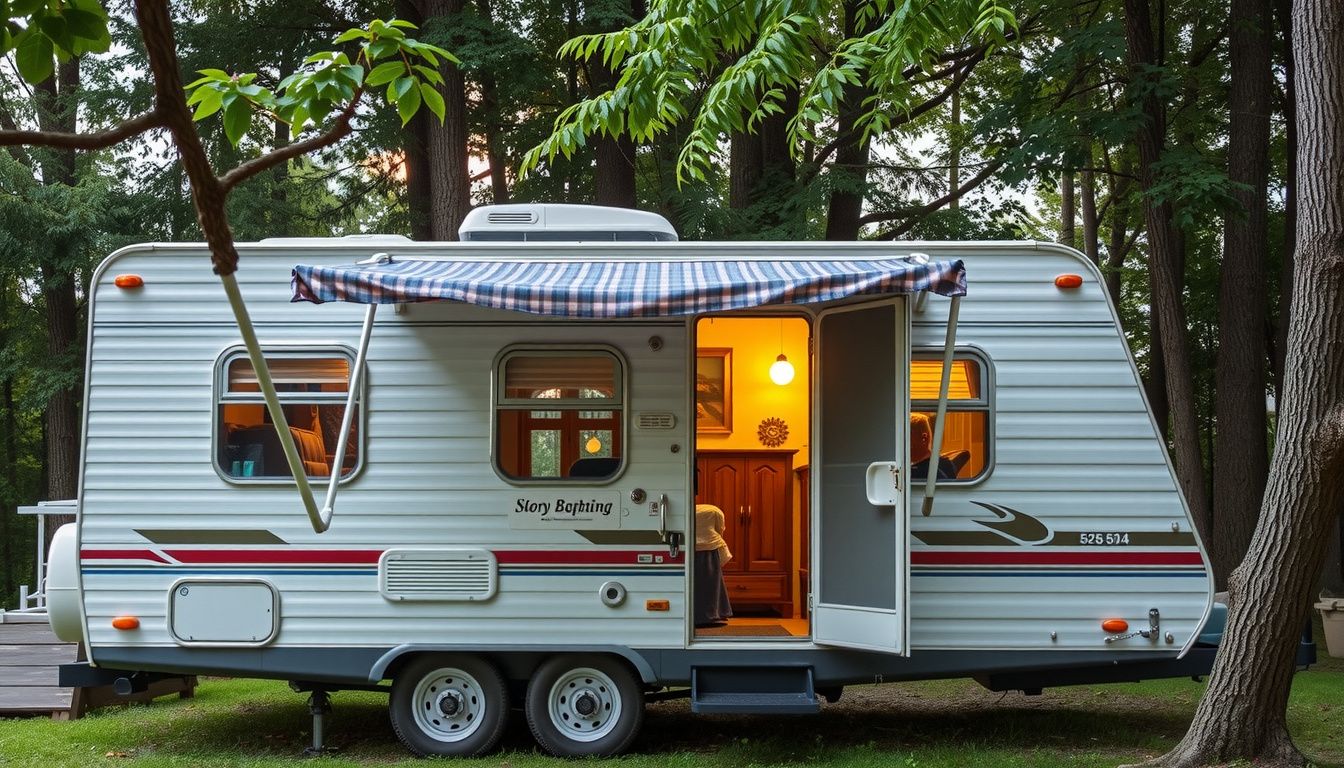
How to Install Camper Awning for a Secure, Straight Fit
Wondering how to install camper awning without drilling into the wrong spot or ending up with a sagging canopy? They can do it safely and cleanly with the right measurements, sealants, and a simple step-by-step plan.
The process usually comes down to locating solid backing on the camper wall, mounting the rail and brackets level, sealing every fastener, then testing the awning’s extension and pitch. Done right, it improves shade, protects the entry area, and reduces interior heat on bright days.
Look, the details matter. A practical example: a weekend RVer installs a 10-foot manual awning on a fiberglass travel trailer, marks studs with a magnet and manufacturer diagram, uses butyl tape behind the rail, then finishes with self-leveling lap sealant to prevent leaks after the first rain.
They’ll learn how to choose compatible hardware, prep the surface, and avoid common alignment errors. The guide also covers:
- Tool and material checklist (sealants, fasteners, level, torque control)
- Mounting sequence for rails, brackets, and arms
- Final adjustments, tensioning, and leak checks
- Quick troubleshooting for binding arms, uneven pitch, or water intrusion
Confirm Awning Compatibility and Choose the Mounting Location
Now they’ll confirm the awning actually fits the camper and pick a mounting spot that won’t cause leaks or door conflicts. This step sets the whole install up for success. A wrong match can force extra holes, awkward brackets, or a canopy that never sits square.
They should verify how to install camper awning starts with the basics: awning type, rail style, and wall construction. Most RV awnings mount to an awning rail (track) plus two wall brackets, but some campers use roof-rack adapters or a cassette-style housing.
- Measure the available run: confirm the awning width fits between lights, speakers, and trim.
- Check wall structure: locate studs/backing plates or confirm a manufacturer-approved mounting zone.
- Confirm clearance: ensure the awning won’t hit entry doors, slide-outs, or window frames when deployed.
- Match pitch and drop: verify the fabric drop won’t block windows or rub against the sidewall.
For mounting location, they should aim for a straight, level line that’s high enough for head clearance yet low enough to reach for adjustments. Look for factory marker lines, pre-installed rails, or documented reinforcement points in the camper’s manual.
Practical example: a 16-foot travel trailer may have a porch light 10 inches from the door. If the awning rail is placed too close, the roller tube can interfere with the light housing when retracting. Shifting the rail 2–3 inches forward avoids contact while keeping the arms clear of the door swing.
Gather Tools, Hardware, and Sealants Before You Start
Once the location is set, they should stage every tool and consumable before the first screw goes in. Awning installs often pause mid-step while someone hunts for a bit, a sealant, or the correct fastener. That’s when alignment errors happen.
They’ll want to confirm what the awning kit includes versus what must be sourced. Many kits provide the rail screws and brackets, but not always the correct length for every wall thickness. Sealants matter just as much as hardware.
- Tools: tape measure, level, drill/driver, sharp bits, center punch, caulking gun, plastic scraper.
- Hardware: stainless screws/bolts, backing plates (if required), washers, butyl tape, threadlocker (as specified).
- Sealants: non-sag RV lap sealant (where appropriate), polyurethane sealant for sidewall penetrations, isopropyl alcohol for prep.
- Safety/handling: step ladder, gloves, painter’s tape, a second person for lifting and alignment.
They should also prep surfaces: clean oxidation, remove old caulk, and dry-fit brackets. If the camper has fiberglass, they’ll avoid overtightening fasteners that can spider-crack gelcoat.
Practical example: if they install a bracket with only silicone on the screw threads, it may peel and leak after a season. Using butyl tape behind the bracket flange, then sealing the perimeter with a compatible RV sealant, creates a layered seal that holds up through rain and vibration.
Measure, Mark, and Level the Awning Rail and Bracket Positions
Now they’ll translate the chosen mounting location into exact, repeatable marks. This step prevents a twisted roller tube, uneven fabric tension, and arms that bind during deployment. It’s also where small measurement errors become big functional problems.

They should start by confirming the awning rail line is straight relative to the camper body, not the ground. A camper can sit slightly nose-up at a site, so the rail must reference the RV’s own trim lines or window frames. A long level or laser level makes this fast.
- Measure the usable rail span and confirm clearance for doors, windows, lights, and slide-outs through their full travel.
- Mark the rail’s top edge with painter’s tape, then use a level/laser to extend a straight reference line.
- Dry-fit the rail and end caps, then mark pilot locations for fasteners and any bracket/arm mounts per the manufacturer’s spacing.
- Double-check arm geometry: the arms should land on solid structure and open without hitting grab handles or trim.
Pro tip: They can “proof” the line by snapping a chalk line on tape, not directly on paint. It’s clean, visible, and wipes off easily.
Common mistake: measuring from the roof edge on a camper with wavy trim. A better reference is a consistent feature like the top of a window frame.
Example: If they’re mounting over an entry door, they can mark the door’s top corners, then set the rail line so the deployed canopy clears the door by a few inches while keeping the rail parallel to that door frame.
Prep the Camper Wall: Clean, Protect Wiring, and Seal Fastener Points
With locations marked, they’ll prep the wall so sealant bonds and fasteners don’t create leaks. This phase is about surface chemistry and risk control. Done right, it keeps water out for years.
They should wash the mounting strip with soap and water, then wipe with isopropyl alcohol to remove wax and road film. Sealants won’t adhere reliably to oxidized aluminum, chalky fiberglass, or silicone residue. If the surface is glossy gelcoat, a light scuff with a fine pad can help—only where the rail will cover.
- Locate wiring and framing using a stud finder rated for RV walls, plus interior reference points (lights, outlets, cabinets).
- Protect hidden wiring by limiting drill depth with tape on the bit or a stop collar.
- Seal every penetration: inject sealant into pilot holes, then bed the rail/bracket with a continuous bead.
Pro tip: They should run a small test bead of sealant on scrap material to confirm cure time and toolability in current temperature and humidity.
Common mistake: relying on a thin “outline” bead. A continuous, slightly compressed bead is what blocks capillary water intrusion.
Example: If they suspect a porch light wire runs near the mark, they can remove the interior light fixture, visually confirm the wire route, then shift the bracket a small amount before drilling—saving a costly electrical repair.
Install the Awning Rail and Mounting Brackets Securely
Now they’ll move from layout to permanent mounting, starting with the rail that carries the awning bead and then locking in the brackets that support the arms. Accuracy matters here because small alignment errors show up later as binding, uneven roll-up, or a canopy that tracks crooked.
They should run a continuous bead of sealant behind the awning rail, then position the rail on the level marks and start fasteners from the center outward. This approach keeps the rail from “walking” off the line as screws bite. Each fastener should be snug, not crushed into the siding.
Action checklist:
- Apply sealant behind the rail and at each fastener hole.
- Drive screws from the center toward both ends, checking level every few screws.
- Tool the squeezed-out sealant into a clean fillet to shed water.
Next, they’ll mount the upper and lower brackets at the marked locations, using backing plates if the wall structure is thin. Brackets should sit flat without rocking; if they don’t, the installer should correct the surface or shim per manufacturer guidance, then reseal.

Common mistakes: skipping sealant under the rail, over-torquing screws and deforming the rail, or missing structural framing and relying on soft wall material. A quick pull test on each bracket (firm hand pressure) should reveal any movement before the awning is hung.
Hang the Awning Assembly and Set Arm Tension and Pitch
With the rail and brackets solid, they can hang the awning assembly and dial in how it deploys. This is the phase where the awning should feel controlled—no sudden arm snap, no drifting roller, and no fabric rubbing the camper wall.
They should feed the awning’s polycord into the rail channel and slide the assembly into position, keeping it supported to avoid tearing the bead. Once centered, they’ll secure the rail stop screws (or end caps) so the awning can’t migrate during travel.
Set-up steps:
- Attach the arms to the mounting brackets per the kit’s sequence.
- Extend the awning partially and confirm the roller is parallel to the rail.
- Adjust arm tension so extension is smooth and retraction is firm.
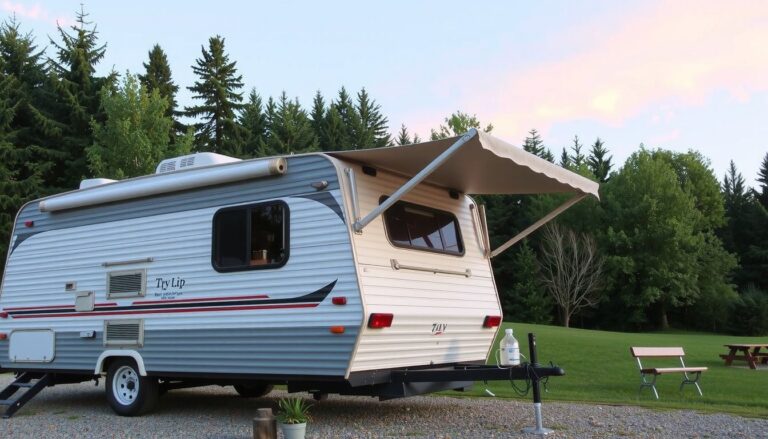
Now they’ll set pitch for drainage. One side should be slightly lower so water can run off instead of pooling and stretching the fabric. A practical field target is a visible slope over the awning length, then fine-tuned after a hose test.
Practical example: if a 12-foot awning on a travel trailer forms a “bathtub” during rain, they can drop the curb-side arm one notch and recheck; the canopy should shed water within seconds. Common mistakes: leaving both arms level, over-tensioning until the arms bind, or forgetting to lock travel latches before towing.
Test Operation, Check for Leaks, and Finish with Safety Checks
Now it’s time to prove the install works; this is where how to install camper awning becomes a safe, repeatable routine. They should test the awning in calm conditions first, with a spotter watching the arms and rail. Small issues show up here, not on the highway.
They’ll extend the awning 12–18 inches, pause, then continue to full extension. Watch for binding, uneven roll-up, or fabric tracking to one side. If it drifts, they should retract and re-center before tensioning further.
- Operation check: extend/retract 3 full cycles; confirm the latch locks cleanly.
- Arm behavior: arms should deploy evenly; no “snap” or twist at the shoulder joints.
- Pitch and drainage: set one side lower; verify water would run off, not pool.
Next, they’ll check sealing. A controlled hose test beats guessing: spray above the awning rail for 3–5 minutes, then inspect inside for dampness. Don’t blast directly at seams; that can force water where rain wouldn’t.
Practical example: after a hose test, they notice a faint drip at the front bracket bolt. They dry the area, snug the fastener a quarter-turn, and add a small bead of compatible sealant around the bolt head, then retest.
- Confirm all fasteners are torqued to spec and capped.
- Verify wiring/lighting (if present) is secured and strain-relieved.
- Stow travel locks/straps and confirm the awning can’t creep open.
Putting It Into Practice
Now the install shifts from “done” to dependable. When someone learns how to install camper awning, the real win is a setup they can trust on the road, in wind, and after rain. They should treat the first few outings as a short validation period, watching how the awning behaves under normal use.
A simple field routine keeps the system reliable and prevents small issues from becoming wall damage. They should plan to:
- Re-check hardware after the first drive and again after the first storm.
- Track fabric behavior for rubbing, uneven roll-up, or arm drift.
- Log adjustments (tension, pitch preference) so settings stay consistent.
Example: after a weekend at a coastal campground, they notice a slight looseness at one bracket from road vibration; a quick re-torque and a note in their maintenance log prevents repeat movement.
Next step: they should schedule a 10-minute inspection after their next trip and keep the tools and sealant used on the install in the camper’s kit.