How to Cook Pork Ribs on BBQ: Step-by-Step Tender Ribs
Few things test a home cook's patience like a rack of pork ribs. You've watched the competition crews make it look effortless—glossy mahogany bark, meat that pulls cleanly from the bone, and that telltale smoke ring. Then your own attempt comes off the grill tough, dry, or charred on the outside while still chewy in the middle.
The good news? Tender, competition-worthy ribs are absolutely achievable on a standard backyard kettle or gas grill. You don't need a $2,000 offset smoker or a culinary degree. What you need is a repeatable system: proper heat control, honest seasoning, and the patience to let time do the heavy lifting. You can also read our guide on charcoal bbq how to cook.
This guide walks through every phase of the process—from choosing the right cut to slicing for clean bones—so you can cook ribs with confidence, whether it's your first rack or your fiftieth.
Choosing the Right Cut of Ribs
Before you light a single charcoal briquette, you need to understand what you're working with. Not all pork ribs are created equal, and choosing the wrong cut for your schedule is a common reason ribs fail.
Baby Back Ribs
Despite the name, baby back ribs don't come from young pigs. They're cut from the top of the ribcage, near the spine, and they're actually the shorter ribs on the rack. They're leaner, more tender, and cook faster than other cuts—typically in 4–5 hours at 250°F. If you're short on time or feeding people who prefer a lighter bite, baby backs are your friend.
St. Louis-Style Spare Ribs
These are spare ribs trimmed into a neat rectangle, with the cartilage, flap, and sternum bone removed. They're meatier, fattier, and more forgiving than baby backs because that extra fat bastes the meat as it renders. Expect a 5–6 hour cook. The extra marbling translates to deeper flavor and a more satisfying bite.
Full Spare Ribs
These are the untrimmed version—larger, with a flap of meat on one end. They're cheaper per pound, but you'll do more trimming work. If you're comfortable with a knife, they're a great value option.
What About Country-Style Ribs?
These aren't actually ribs at all—they're cut from the shoulder blade. They cook more like pork chops and won't follow the same low-and-slow timeline. Save them for the oven or a quick grill session instead.
| Cut | Cook Time at 250°F | Meat Character | Best For |
|---|---|---|---|
| Baby Back | 4–5 hours | Lean, tender | Quick cooks, lighter preference |
| St. Louis | 5–6 hours | Meaty, rich | Classic BBQ, feeding a crowd |
| Full Spare | 5–7 hours | Varied, fatty | Budget cooks, trimming practice |
For your first few cooks, St. Louis-style spare ribs offer the best balance of forgiveness and flavor. If you're comparing options for your next cookout, our guide to cutting your teeth on easier proteins can help you build confidence before tackling more demanding meats.
Setting Up Your BBQ for Low-and-Slow Cooking
Ribs need indirect heat—not direct flame. The goal is to cook them slowly at 225–275°F so the collagen breaks down into gelatin without the outside burning.
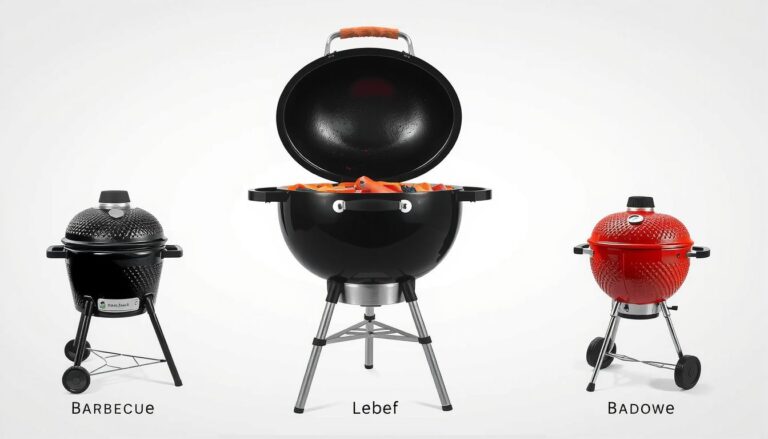
Two-Zone Setup (Charcoal)
Bank all your lit coals to one side of the grill, leaving the other side empty. Place a drip pan in the empty zone. This creates a hot zone and a cool zone. Ribs go on the cool side, away from direct heat.
An easy technique for long cooks is the snake method: arrange unlit briquettes in a two-wide line around half the grill's perimeter, then place 8–10 lit coals at one end. The fire slowly snakes its way around, maintaining steady heat for hours without refueling.
Indirect Setup (Gas)
On a gas grill, light one burner on low and leave the others off. Place the ribs over the unlit burner. Use a foil drip pan beneath them to catch drippings and prevent flare-ups.
Temperature Management
Buy an instant-read thermometer or leave-in probe—this is non-negotiable. Grate-level temperature is what matters, not the dial on the lid.
- Too hot? Close the vents slightly (charcoal) or reduce the burner output (gas).
- Too cool? Open the vents gradually or add a few lit coals. Avoid big swings.
- Aim for stability. A 20°F fluctuation is fine. Wild swings of 50°F or more wreak havoc on your cook.
When using charcoal, a chimney starter makes lighting coals fast and even. And if you're experimenting with other uses for your grill—perhaps a pizza night between rib cooks—check out which BBQ setups handle high heat best.
Preparing the Ribs: Trimming and Membrane Removal
Proper prep takes fifteen minutes and saves you hours of disappointment.
Trim Loose Edges
Square off the rack by removing any ragged flaps of meat or bone. These thin pieces burn before the rest of the rack cooks through. Don't go overboard—you're removing trouble spots, not sculpting.
Remove the Membrane
The silver skin on the bone side is tough and chewy. It also blocks smoke and seasoning from reaching the meat. Here's how to remove it:
- Slide a butter knife under the membrane near a middle bone to loosen an edge.
- Grab the loosened edge with a paper towel (it's slippery).
- Pull firmly in one slow, steady motion—it should come off in one sheet.
If it tears, just restart from a new spot. It's not a race.
For full spare ribs, you can trim them into St. Louis style yourself and save the rib tips for snacking during the cook.
Seasoning for Maximum Bark and Flavor
Seasoning is where home cooks go wrong in two opposite directions: too heavy (the rub clumps and tastes like salt) or too light (the meat tastes like nothing). The fix is a simple, consistent approach.
The Binder Question
A binder—yellow mustard, hot sauce, or neutral oil—helps the rub adhere to the meat. It does not add flavor at this stage. Use just enough to lightly gloss the surface. A tablespoon per rack is plenty. Too much creates a pasty layer that never forms proper bark.
Applying the Rub
Apply rub in two passes:
- Base layer: A light dusting to prime the surface.
- Build layer: A more deliberate coat to create depth and texture.
Press the rub in gently rather than rubbing aggressively—friction can clump the spices and leave bald patches. Season the edges and ends too; bark develops there as well.
Rest After Seasoning
Let the seasoned ribs rest 20–40 minutes at room temperature. This lets the rub hydrate and adhere. For a drier surface and better bark, place them uncovered in the fridge for 2–12 hours. The surface should feel tacky, not dusty, before hitting the grill.
The Cooking Process: Smoke, Temperature, and Patience
This is the part that tests your willpower. Once the ribs are on the grill, your job is to maintain conditions and resist the urge to peek.
Choosing Your Wood
For pork ribs, fruitwoods are the ideal starting point:
- Apple: Mild, slightly sweet—the classic choice
- Cherry: Mild with a touch of tartness, adds color
- Hickory: Stronger, best used sparingly
- Pecan: Nutty, medium intensity, excellent on pork
Use chunks rather than chips if you can. Chunks burn slower and produce cleaner smoke. Two small chunks is enough for a standard cook. More wood means bitter, acrid smoke that makes the bark taste like ash.
Maintaining the Cook
Target 250°F at grate level. Check your temperature through the vents or a probe port—not by lifting the lid. Every lid opening costs you heat and extends the cook.
- Dirty white smoke? Too much wood or insufficient airflow. Open the vents slightly.
- Thin blue smoke? This is what you want—clean, flavorful, and invisible.
- Temperature climbing? Close the vents a fraction before it overshoots.
A small water pan on the cool side can help stabilize temperatures, though it won't directly make the meat juicier. Its main benefit is temperature moderation on windy days.
The 3-2-1 Method vs. No Wrap
You've probably heard of the 3-2-1 method: three hours unwrapped, two hours wrapped in foil, one hour glazed. It works, but it can produce ribs that are mushy or fall-off-the-bone soft.
For firmer, more traditional BBQ texture with bark intact, consider skipping the wrap entirely and cooking at 250°F until done. This produces chewier ribs with a better crust, but it takes longer and requires more patience.
If you're planning a backyard cookout, mastering timing across multiple proteins helps. Whether you're cooking ribs alongside burgers with the right timing or another crowd favorite, having a plan keeps everything landing on the table together.
How to Tell When Ribs Are Done
Temperature is a guide, but feel is the final judge. Ribs are done when they resist the tooth, then give way with a clean bite—not when they fall apart.
The Bend Test
Pick up the rack from the center with tongs. A properly cooked rack will arc into a slight U-shape. The surface cracks on one side, and the meat bends without snapping. If it stands stiff, it needs more time.
The Probe Test
Insert a thermometer probe or thin skewer between the bones. It should slide in with the resistance of softened butter. If it meets significant resistance, keep cooking.
Temperature Range
Most racks feel right between 195–203°F at the thickest part. But this is a guideline, not a guarantee. Some racks feel perfect at 190°F; others need 205°F. Rely on the probe test over the number.
Rest Before Slicing
Rest the ribs 10–20 minutes, loosely tented with foil. This lets the juices redistribute. Skip this step and you'll lose moisture to the cutting board.
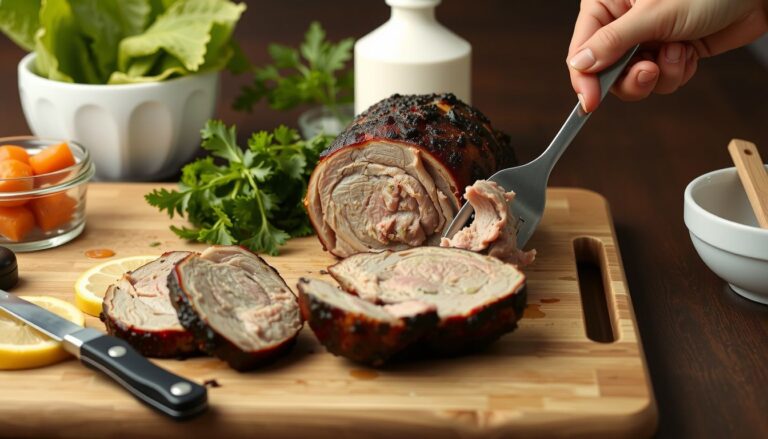
Slicing: Clean Cuts, Clean Presentation
How you slice affects both appearance and texture.
Bone-Side Up
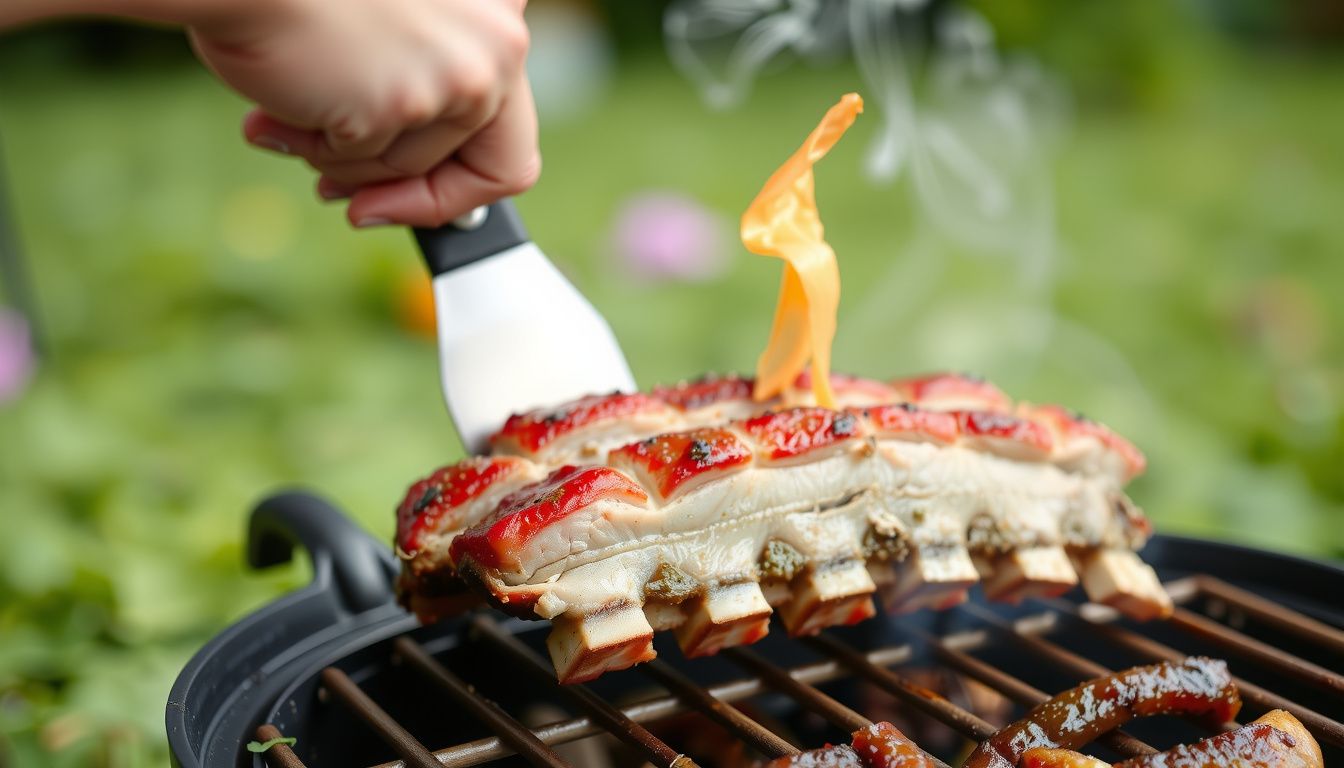
Flip the rack bone-side up. The bones act as a guide, making it easy to center your knife cut between each one. This produces clean, even slices without ragged edges.
Use a Sharp Knife
A long, sharp chef's knife or dedicated slicing knife works best. Wipe the blade between cuts to keep edges clean. If the knife drags, the ribs need more cooking time. If the meat collapses and falls apart during slicing, they've gone too far.
Sauce Considerations
Serve sauce on the side rather than drowning the ribs before serving. This lets guests choose their preference and keeps the bark intact for those who prefer a drier bite. If you must sauce before serving, apply a thin coat and set it under a low broiler or back on the grill briefly to tack up.
Troubleshooting: Common Rib Problems and Fixes
Even experienced cooks hit snags. Here's how to diagnose and fix the most common issues:
| Problem | Likely Cause | Fix |
|---|---|---|
| Tough, chewy meat | Not cooked long enough | Add 30–60 minutes and recheck the probe test |
| Burnt outside, raw inside | Heat too high | Use indirect heat and target 250°F; check thermometer accuracy |
| Bark falls off or washes away | Added too much liquid when wrapping | Use minimal liquid; consider butcher paper instead of foil |
| Rub tastes like raw spice | Not enough cook time to meld flavors | Rest longer; cook longer |
| Metallic or bitter taste | Dirty smoke from oversmoking | Use less wood; open vents for cleaner airflow |
| Meat falls off the bone | Cooked too long | Reduce cook time or skip the wrap phase |
If your ribs consistently come out dry, the issue is usually heat, not moisture. A water pan won't fix overcooked meat.
Frequently Asked Questions
Should I boil ribs before grilling?
No. Boiling leaches flavor and makes the meat mushy. Low-and-slow indirect heat renders fat and breaks down collagen more effectively, creating tender results without sacrificing taste.
How long do pork ribs take on the BBQ?
At 250°F, baby back ribs take roughly 4–5 hours and St. Louis-style spare ribs take 5–6 hours. Temperature fluctuations, rack thickness, and whether you wrap all affect the final time.
Do I really need to remove the membrane?
Yes. The silver skin doesn't break down during cooking. Leaving it on produces a rubbery texture and blocks seasoning and smoke from penetrating the meat. It peels off in under two minutes.
What's the best wood for smoking ribs?
Apple and cherry are the most forgiving choices for beginners—they're mild and sweet. Hickory adds stronger flavor but can overwhelm ribs if used heavily. Start with apple wood.
Can I cook ribs on a gas grill?
Absolutely. Use indirect heat by lighting one burner on low and placing the ribs over the unlit side. A foil pan beneath catches drips and prevents flare-ups. You'll still get tender results, though the smoke flavor will be lighter.
Should I wrap ribs in foil or butcher paper?
Foil speeds up the cook and creates more tender results but softens the bark. Butcher paper preserves more bark texture while still accelerating tenderness. Skipping the wrap entirely produces the firmest bark but the longest cook.
Conclusion
Tender, flavorful BBQ ribs don't require secret ingredients or expensive equipment. They require understanding three fundamentals: indirect heat, patient timing, and proper technique. Choose a good cut, season it simply, cook it low and slow at 250°F, and test for doneness by feel rather than the clock.
The first rack might not be perfect. The second will be better. By the third, you'll have the confidence to cook ribs without checking a recipe—and that's the real goal.
Your next step: pick a weekend, buy two racks of St. Louis ribs, and run the full process. Write down your cook time, temperature, and what you'd change. Compare your results, adjust one variable, and cook again. Consistency beats luck every time.
If you're also expanding your grill repertoire, our guide to baking BBQ boneless pork chops is a solid weeknight alternative when you don't have five hours to spend at the grill. For slow-cooker days, there's also a reliable method for Crock Pot BBQ pork chops that delivers solid results with minimal effort.