How Long Does It Take to BBQ Chicken Legs for Juicy Results
The question "how long does it take to BBQ chicken legs" comes up the moment the grill is hot, the coals are glowing, and a hungry crowd is waiting. Nobody wants to serve drumsticks that are charred outside but raw at the bone, or overcooked to the point of dryness.
The honest answer is that timing depends on several variables: grill temperature, whether the legs are fresh or thawed, their size, and how steady your heat stays. For most backyard setups, plan on 35 to 45 minutes over medium heat. But time alone is a rough guide. The real finish line is internal temperature, not the clock. You can also read our guide on how long to grill chicken legs and thighs.
Chicken legs are dark meat, which means they're naturally more forgiving than breasts. They also taste noticeably better when cooked a bit past the minimum safe temperature. This guide breaks down exactly what affects cook time, how different grill types compare, and the step-by-step process for getting crispy skin, tender meat, and safe results every time.
What Affects How Long It Takes to BBQ Chicken Legs
Once the grill is running, timing comes down to a handful of variables that change how quickly heat travels from the surface to the bone. Drumsticks aren't uniform, and the "done" moment is strictly about internal temperature.
Leg Size and Starting Temperature
Thickness is the single biggest driver of cook time. A meaty drumstick from a larger bird can take noticeably longer than a small one. Cold chicken straight from the fridge also cooks slower than legs that have rested at room temperature for 15 to 20 minutes.
In practice, a common mistake is tossing a mix of large and small legs onto the grill at the same moment and expecting them all to finish together. Grouping similar sizes, or starting the bigger pieces a few minutes earlier, solves most of this problem before it starts.
Grill Temperature and Heat Zone
Heat level and placement matter just as much as size:
| Variable | How It Affects Timing |
|---|---|
| Grill temp below 300°F | Significantly longer cook, softer skin |
| Grill temp at 350–400°F | Ideal balance of browning and even cooking |
| Direct heat only | Fast color, but risk of raw centers |
| Indirect heat | Slower, more even cooking; less scorching |
| Lid closed | Traps heat like an oven, shortens cook time |
| Lid frequently opened | Heat escapes, adding minutes each time |
Sugary sauces add another layer. A BBQ glaze applied too early will blacken before the meat is tender, forcing you to either serve undercooked chicken or pull it early and finish it another way.
Target Finish Temperature
The USDA states that poultry must reach a minimum internal temperature of 165°F for safety. That's the non-negotiable baseline. But for chicken legs, most experienced grillers push further.
Dark meat contains more connective tissue and fat than white meat. Cooking legs to 175–185°F lets collagen break down into gelatin, which is what creates that fall-apart tenderness. At 165°F, a leg is safe but can still feel slightly chewy near the bone.
The most reliable guidance comes from the USDA Food Safety and Inspection Service, which recommends checking temperature in the thickest part without touching bone.
BBQ Chicken Leg Timing by Grill Setup
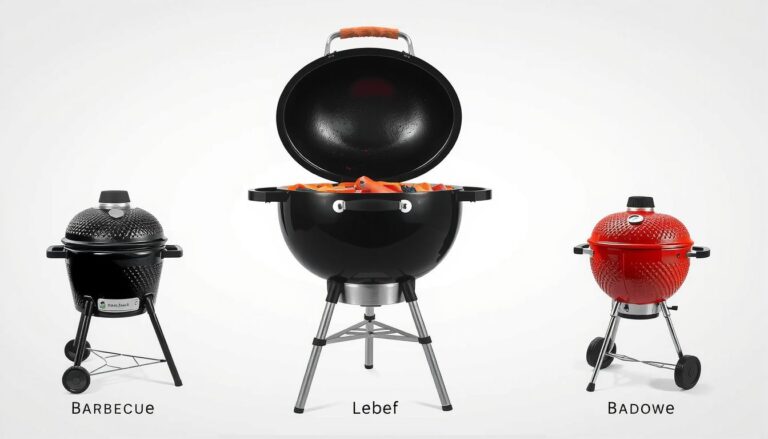
Grill type sets the pace because it controls airflow, moisture, and heat stability. The answer to how long to BBQ chicken legs depends heavily on whether your cooker runs like an oven or an open flame.
Gas Grill
A gas grill offers the most consistent, controllable heat. Most drumsticks take about 30–40 minutes at 350–375°F using a two-zone setup: one burner on medium, the other off. Start the legs on the indirect side, then move them over direct heat for the final few minutes to crisp the skin.
Keeping the lid closed is essential. Every lift drops the temperature and stretches the cook time by several minutes.
Charcoal Grill
Charcoal delivers strong flavor but less predictable temperature control. With coals banked to one side for indirect cooking, legs typically take 35–50 minutes at 325–375°F. Wind, coal load, and how often the lid gets lifted all move the finish time.
A common approach is to start with a full chimney of lit coals, bank them on one side, and add a chunk of hardwood for smoke. The smoke window is early, while the skin is still absorbing flavor.
Pellet Grill
Pellet grills cook steadily with light smoke, but they're often slower at lower settings. At 275°F, legs commonly need 45–60 minutes. At 325°F, the time drops to 35–45 minutes. Many pellet grill owners finish over a sear station or bump the temperature for the last few minutes to tighten the skin.
Quick Reference: Timing by Grill Type
| Grill Type | Temperature | Typical Cook Time |
|---|---|---|
| Gas (two-zone) | 350–375°F | 30–40 minutes |
| Charcoal (banked coals) | 325–375°F | 35–50 minutes |
| Pellet | 275°F | 45–60 minutes |
| Pellet | 325°F | 35–45 minutes |
If you're still getting comfortable with fire management, starting with a forgiving cut like a beginner-friendly steak can build confidence before you tackle trickier timing on bone-in chicken.
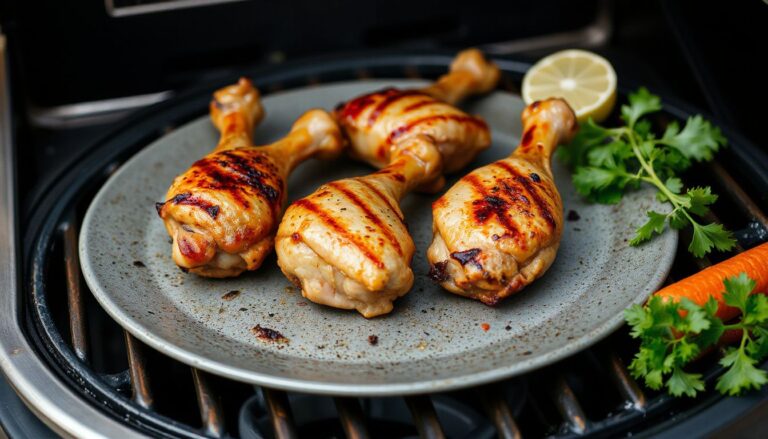
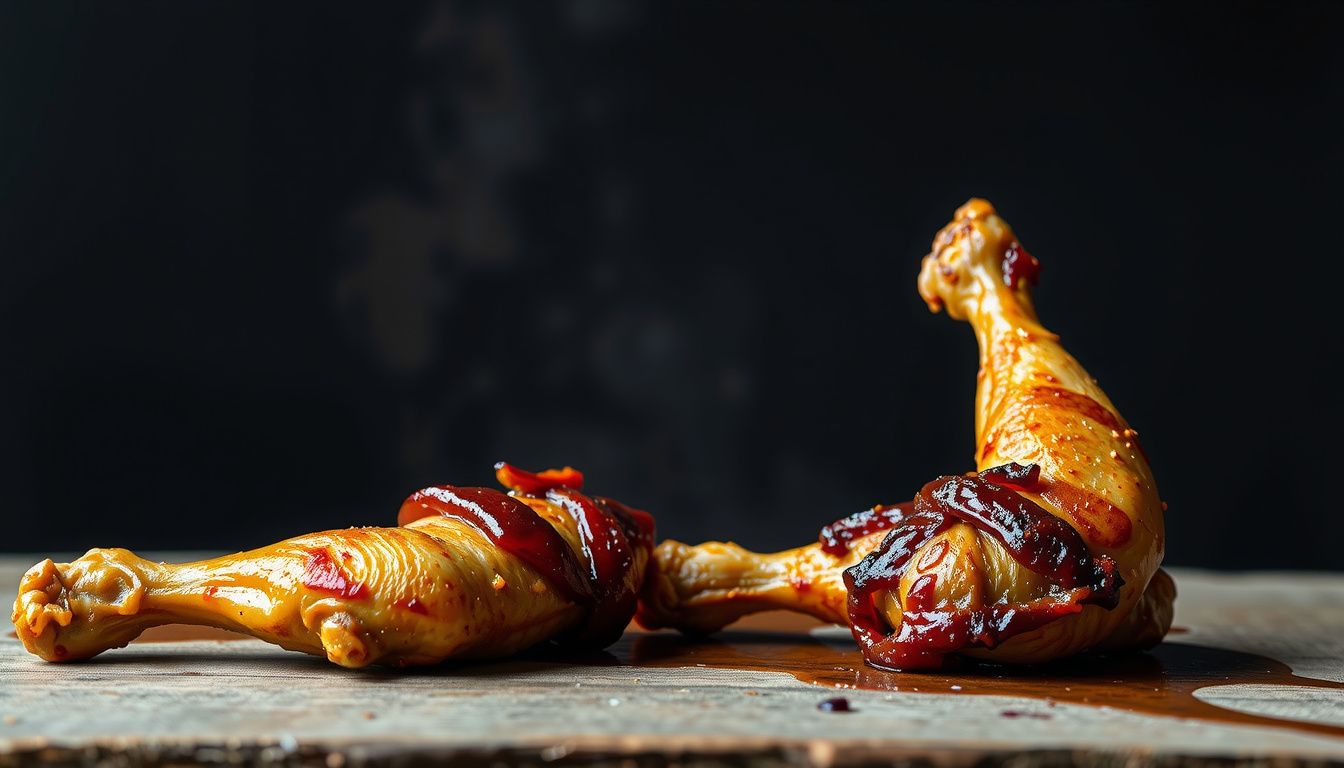
 Perfectly grilled drumsticks should show deep color without blackened sugar or raw spots near the bone.
Recommended Grill Temperatures and Target Internal Temp
The right grill temperature balances two goals: rendering the fat under the skin and browning the outside without scorching it.
The Sweet Spot for Grate Temperature
For most backyard cooks, 350–375°F at the grate is the target. That range browns steadily, keeps flare-ups manageable, and produces predictable timing. It also gives you enough buffer to move legs around as hot spots appear.
If the grill runs hot at 425°F or more, drumsticks can develop dark exteriors long before the bone-side meat is done. Lower the burner, close the vents slightly on a charcoal grill, or move the legs farther from the fire.
Internal Temperature: Safety vs. Texture
- Minimum safe temp: 165°F
- Best texture for dark meat: 175–185°F
- Carryover cooking: Expect the temperature to climb 3–8°F while resting
At 175°F and above, the collagen around the leg and joint has begun to melt. The meat pulls cleanly from the bone but still holds its shape. This is why the best BBQ joints don't stop at 165°F for drumsticks and thighs.
How to Check Temperature Correctly
Insert an instant-read thermometer into the thickest part of the drumstick, approaching from the side rather than straight down. Keep the probe tip away from bone, which conducts heat and reads artificially hot. Check a second spot—ideally on a different leg—before pulling the batch.
For consistently safe poultry, you'll find clear guidance on minimum temperatures and proper thermometer use from the USDA Food Safety and Inspection Service.
Step-by-Step Timeline: From Seasoning to Resting
Breaking the cook into stages makes the process repeatable and removes the guesswork. This timeline assumes a gas or charcoal grill running at 350–375°F with a two-zone fire.
0:00–0:10 — Prep
Pat the legs thoroughly dry with paper towels. Moisture on the surface creates steam, which prevents browning and makes the skin soggy. Lightly coat with oil, then season with a salt-forward rub. Letting the seasoned legs sit for 10 minutes allows the salt to pull out surface moisture and begin forming a light dry brine.
0:10–0:20 — Preheat
Heat the grill with the lid closed until it reaches 350–375°F. For gas, set up two zones. For charcoal, bank the coals to one side. Clean the grates with a grill brush, then oil them lightly just before the legs go on.
0:20–0:45 — Indirect Cook
Place the legs on the cooler side of the grate, thicker ends facing the heat. Close the lid and avoid lifting it. Flip the legs once around the 10–12 minute mark to promote even rendering.
0:45–0:55 — Temperature Check and Crisp
Begin checking internal temperature after about 25 minutes on the grill. When the legs read 165–170°F, move them over direct heat for 2–4 minutes per side to crisp the skin. Watch for flare-ups from dripping fat.
0:55–1:00 — Sauce Set
If using a BBQ sauce, brush it on now. A thin layer cooked for 1–2 minutes per side creates a glossy glaze. Sugar-heavy sauces burn quickly, so keep the lid open and stay close.
1:00–1:08 — Rest
Pull the legs at 175–185°F and rest them for 5–8 minutes under loose foil. Resting lets the juices redistribute through the meat instead of running out onto the cutting board.
For a 6:30 p.m. serve time, aim to pull the legs at about 6:22, rest, and plate at 6:30 with hot, juicy meat.
If you're curious how chicken legs compare to other cuts on the same grill, the timing fundamentals for burgers are a useful reference for managing two different proteins at once.
How to Tell Chicken Legs Are Done Without Overcooking
Drumsticks can look fully cooked on the outside while remaining underdone near the bone. On the flip side, they can swing from juicy to dry in just a few minutes if left over strong heat. The skill is in knowing exactly when to pull.
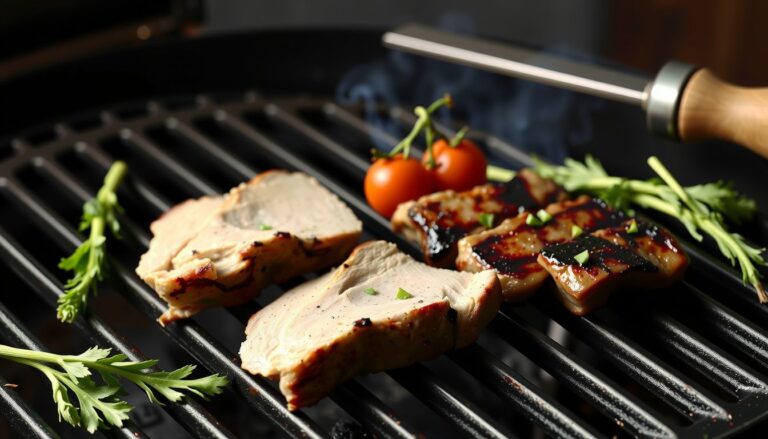
 Insert the probe into the thickest part of the leg, avoiding the bone for an accurate reading.
Reliable Doneness Indicators
- Internal temperature: 175–185°F for tender dark meat, with 165°F as the absolute minimum.
- Probe feel: The thermometer slides through the meat with little resistance, similar to softened butter.
- Juices: Juices run mostly clear, and the meat near the bone shows no raw or translucent spots.
- Joint looseness: Wiggle the drumstick at the joint. When collagen has relaxed, the joint moves more freely.
Carryover cooking works in your favor. If a leg reads 172°F on the grill, it can climb a few more degrees while resting, especially if it's hot and sauced. That buffer prevents overshooting into dryness.
A practical check at a cookout: probe three legs from different zones of the grill. Two read 178°F and feel tender. A third near the cooler edge reads 168°F. Pull the first two to rest under foil, give the cooler leg 4–6 more minutes, and recheck before serving.
Common Timing Mistakes That Make Drumsticks Dry or Undercooked
Even with a solid plan, small errors stack up quickly. Most failed drumsticks trace back to uneven heat, rushed flipping, or deciding by the clock instead of the thermometer.
The Most Common Errors
- Cooking only by minutes: Wind, lid openings, and charcoal fade all change the pace. A "30-minute" leg can need 40.
- Running too hot the whole time: High direct heat chars the outside while the center stays undercooked near the bone.
- Flipping constantly: Frequent turning prevents steady browning and slows fat rendering, leading to rubbery skin.
- Saucing too early: Sugary sauces burn quickly, forcing an early pull before the meat is actually tender.
- Skipping the rest: Cutting in immediately dumps juices onto the board and makes properly cooked legs taste dry.
- Crowding the grate: When drumsticks touch, steam builds and the surface never dries. You extend the cook time and still end up with pale, soft skin.
Undercooking vs. Dryness
Undercooking often comes from temperature probes touching bone and giving a falsely high reading, or from crowding that creates a steaming rather than roasting environment.
Dryness typically shows up when legs sit over strong heat well past the point of tenderness. Dark meat tolerates higher temperatures, but it still dries out if held too long while someone "waits for the last batch."
If you enjoy dark-meat chicken cooked low and slow, the techniques for baking BBQ chicken thighs translate well to the grill.
Quick Timing Chart and FAQs
For a fast answer when real-life variables show up, use the chart below. Times assume average-size drumsticks and a steady grill with minimal lid lifting.
| Scenario | Best Move | Time Impact |
|---|---|---|
| Frozen drumsticks | Thaw first; grill from frozen only if necessary | Plan 50–100% longer |
| Overnight marinated (oil/acid) | Shake off excess; pat dry before grilling | Usually +0–10% |
| Thick sugary sauce | Apply late; finish with short glaze set | Add 5–10 minutes total |
| Mixed leg sizes | Group similar sizes; start large ones earlier | Varies per piece |
Can You BBQ Frozen Chicken Legs?
You can, but it's unreliable. The outside can over-darken while the center lags behind. If you must cook from frozen, use gentler indirect heat and expect a significantly longer cook. Thawing overnight in the refrigerator is always the better path.
Does Marinade Change Timing?
Slightly. Wet surfaces steam before they brown, so marinated legs may look done early when they aren't. Patting the surface dry before grilling reduces premature scorching and gives you a truer read on doneness.
When Should Sauce Go On?
Late. Brush sauce during the last 10 minutes, flipping once or twice. That gives the sugars time to set into a glaze without burning. For thicker, sugar-heavy sauces, apply even closer to the end.
A practical example: you start six thawed legs, then realize two are still icy in the center. Keep the frozen pair on the cooler edge of the grate and sauce only the thawed ones near the end, pulling each batch separately so nothing sits too long.
For a completely different protein with similar low-and-slow appeal, the timing principles for smoking fish show how cooking to temperature matters beyond chicken.
Saucing and Glazing for Better Flavor Without Burning
Sauce is where many grilled chicken legs go wrong. Applied too early, sugary sauces carbonize into a bitter black crust. Applied too late, they never set and slide right off.
The Late-Sauce Rule
For any sauce with meaningful sugar — classic BBQ, teriyaki, honey-based glazes — wait until the legs have reached roughly 160–165°F internally. Then brush a thin layer and cook for 1–2 minutes per side. This sets the sauce into a tacky, glossy coating without burning it.
Building Layers
Instead of one heavy coat, use two or three thin layers in the final stretch. Each layer gets a minute or two over direct heat to set before the next goes on. This creates depth and a lacquered finish.
Dry Rub Alternative
For crispy skin with intense flavor, skip the sauce entirely and use a dry rub before cooking. The rub forms a crust during the cook, and the skin stays crisp. You can always offer warm sauce on the side.
If you want to explore outdoor cooking beyond the standard grill, a BBQ setup designed for pizza can bring wood-fired heat to more than just drumsticks.
What to Serve With BBQ Chicken Legs
Chicken legs are versatile enough to anchor a full meal. The cook time gives you a natural window to prepare sides while the grill does its work.
Classic pairings include:
- Coleslaw for crunch and acidity
- Corn on the cob, grilled alongside the chicken during the last 10 minutes
- Potato salad made ahead of time
- Grilled vegetables like zucchini, peppers, or asparagus
- Warm buns or rolls for piling pulled leg meat into sandwiches
For a faster weeknight meal, the same sides that work for boneless pork chops pair just as well with drumsticks, and both proteins share similar prep logic.
60-Second Recap
The big takeaway: how long does it take to BBQ chicken legs depends on heat control, leg size, and how often the lid stays closed. When the process is set up properly, the cook becomes predictable and repeatable rather than guesswork.
- Plan for variability: Thicker legs and colder starting temperatures add minutes.
- Track internal temperature: 175–185°F gives the best dark-meat texture; 165°F is the safe minimum.
- Use two-zone heat: Indirect first, direct at the end for crispy skin.
- Sauce late: The last 10 minutes, in thin layers.
- Rest the meat: 5–8 minutes makes the difference between juicy and dry.
Next step: choose one grill method, run a timed cook this week, and note the actual minutes for your specific setup. One recorded cook makes the next one nearly automatic.
Conclusion
BBQ chicken legs are done when the thickest part reads 175–185°F — not when the timer beeps at an arbitrary mark. For most grills running at 350–375°F with a two-zone setup, that translates to roughly 35 to 45 minutes of cook time, plus a short rest.
The difference between juicy, tender drumsticks and disappointing ones comes down to a few habits: checking temperature instead of relying on color, saucing only in the final minutes, and letting the meat rest before serving. Master those three, and chicken legs become one of the easiest, most reliable items you can grill.
For your next cookout, try the indirect-to-direct method on a gas or charcoal grill, pull the legs at 178°F, and rest them under loose foil for eight minutes. You'll taste the difference immediately.
Looking for a change of pace from chicken? Explore the timing for cooking pork chops in a slow cooker when you want tender, saucy meat with minimal grill attention.