How Long Does It Take to BBQ a Tri Tip for Perfect Doneness?
A 2–2.5 lb tri tip on a 375–400°F two-zone grill usually takes 28–45 minutes of total grill time for medium-rare, followed by a 10–15 minute rest. At a lower 300–325°F, plan for 45–70 minutes. The real answer depends less on the clock and more on thickness, grill stability, and your target internal temperature. If you’re newer to grilling beef, a forgiving starter cut can build confidence, but tri tip rewards a simple system: steady heat plus a reliable instant-read thermometer.
The Variables That Actually Control Tri Tip Cook Time
Tri tip is not a uniform steak. It is thicker in the center, tapers at one end, and carries a fat cap that changes how heat moves through the meat. That means two roasts of the same weight can finish minutes apart. You can also read our guide on charcoal bbq how to cook.
Key variables include:
- Thickness more than weight: a compact, thick roast takes longer than a wide, flat one.
- Starting temperature: straight from the fridge adds 5–10 minutes versus a roast rested briefly at room temperature.
- Grill setup: two-zone indirect heat is more predictable than direct-only grilling.
- Grill stability: wind, cold weather, low fuel, or repeated lid lifting can drop heat and stretch timing.
- Desired doneness: medium-rare finishes faster than medium or medium-well.
- Carryover cooking: the internal temperature climbs 5–10°F after pulling.
Unlike quick-cooking burgers that can go from raw to done in minutes, tri tip’s uneven shape means one end may be medium while the thick center is still rare. That’s why temperature checkpoints matter more than a timer.
Tri Tip BBQ Time Chart by Weight and Temperature
Use this chart as a planning range, not a rigid rule. Times assume a two-zone grill at steady heat, cooking indirect first, then a fast sear at the end. Rest time is not included.
| Tri Tip Weight | Grill Temp | Medium-Rare (130–135°F after rest) | Medium (140–145°F after rest) |
|---|---|---|---|
| 1.5–2.0 lb | 375–400°F | 22–30 min | 28–38 min |
| 2.0–2.5 lb | 375–400°F | 28–38 min | 36–48 min |
| 2.5–3.0 lb | 375–400°F | 35–48 min | 45–60 min |
| 2.0–3.0 lb | 300–325°F | 45–70 min | 60–90 min |
If you sear first rather than reverse searing, subtract roughly 5–10 minutes from the roast phase because the surface already has a head start.
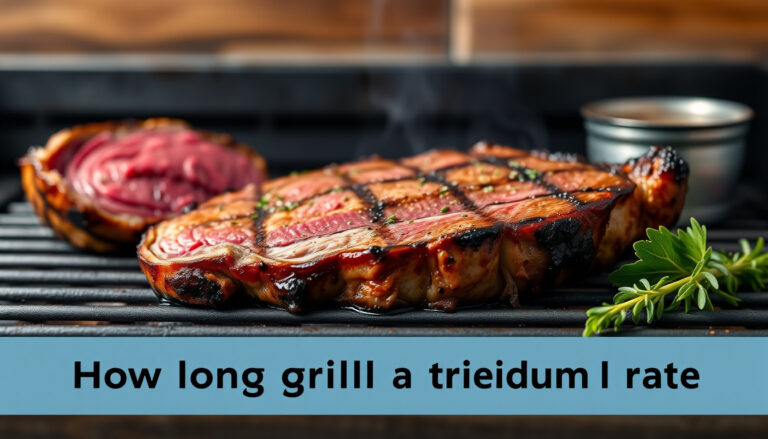
 A trimmed tri tip sears over direct heat before moving to the cooler indirect side.
Best Grill Setup: Two-Zone Heat for Predictable Timing
The fastest way to make tri tip timing repeatable is to control the fire. A two-zone setup gives you a hot side for browning and a cooler side for gentle roasting. That separation prevents the outside from burning while the center is still undercooked.
- Gas grill: light one or two burners on high and leave one burner off.
- Charcoal grill: bank the coals to one half of the kettle.
- Pellet grill: set an indirect temperature, then finish over a hot spot or separate sear zone if available.
Preheat with the lid closed so the grate and grill body hold heat. Many cooks place a drip pan on the cool side to reduce flare-ups and stabilize temperature. If you’re unsure about your specific model, consult two-zone cooking guides from grill manufacturers before you light the fire.
A practical setup for a three-burner gas grill is running burners 1–2 on high, leaving burner 3 off, and roasting on the unlit side at 350–400°F with the lid closed. That layout produces cleaner, more predictable results.
Prepping the Tri Tip Before It Hits the Grill
Good timing starts before the meat touches the grate.
- Trim the fat cap to about 1/4 inch. A thick cap acts as insulation and can cause flare-ups during the sear.
- Dry the surface thoroughly. Moisture delays browning and can make the roast steam instead of sear.
- Season heavily. A simple kosher salt, coarse black pepper, and garlic rub works well. Salt 30–45 minutes ahead if possible so it can absorb rather than sit on the surface.
- Let it rest at room temperature for 20–30 minutes. This short rest helps the center cook more evenly.
A common mistake is using a sugar-heavy rub too early. Sugar burns quickly over direct high heat, so if your rub contains sugar, apply it just before searing or save it for lower-heat roasting.
Step-by-Step Timing Method: Sear, Roast, and Check
There are two reliable approaches: sear-first and reverse sear. Both work, but they shift the timeline.
Sear-First Method
- Place the seasoned tri tip over direct high heat with the lid open.
- Sear about 4–6 minutes per side until a deep crust forms.
- Move the roast to the indirect side, close the lid, and cook until the target temperature is near.
- Flip every 8–10 minutes if one side receives more radiant heat.
Reverse Sear Method
- Start on the indirect side at 300–400°F with the lid closed.
- Cook until the internal temperature reads about 110–120°F.
- Move to direct heat and sear 1–2 minutes per side to finish the crust.
- Pull at your target temperature and rest.
Reverse sear gives you more control because the roast is nearly done before the aggressive browning stage begins. If you enjoy a slower, smoky process, the patience required is closer to low-and-slow smoked fish than to a fast steak cook.
Internal Temperature and Rest Time: The Real Finish Line
The clock gets you close, but internal temperature decides when the tri tip is done. Probe the thickest part from the side, aiming for the center. Take a second reading near the thinner end. If the two numbers differ widely, the roast needs more time.
| Doneness | Pull Temperature | Resting Temperature |
|---|---|---|
| Rare | 120–125°F | 125–130°F |
| Medium-rare | 125–130°F | 130–135°F |
| Medium | 135–140°F | 140–145°F |
| Medium-well | 145–150°F | 150–155°F |
The USDA safe temperature guidance lists 145°F with a three-minute rest as the minimum for whole-muscle beef. That is a food-safety baseline, not a doneness requirement for every preference. Medium-rare tri tip at 130–135°F is common, but anyone serving higher-risk groups should lean toward the USDA-recommended minimum.
Carryover heat typically adds 5–10°F, sometimes more if the roast is pulled directly from a hot zone and tightly wrapped. Rest the tri tip for 10–15 minutes loosely tented with foil. That stabilizes the temperature and keeps juices from flooding the cutting board.
Common Timing Mistakes That Ruin Tri Tip
Most timing failures come from small habits that quietly change cook speed.
- Chasing minutes per pound: thickness matters more than weight.
- Probing too shallow: hitting hot outer meat reads high and causes an early pull.
- Pulling at the final target temperature: carryover heat then overshoots the finish.
- Lifting the lid too often: every peek dumps heat and adds unpredictable minutes.
- Slicing immediately: juices run out and the meat tightens.
- Parking over one hot spot: you get a dry edge and an underdone center.
- Flipping constantly: steady, intentional moves beat constant turning.
A practical example: if you want medium and pull at 145°F, then slice right away, carryover and moisture loss can leave it dry. Pulling at 138–140°F and resting for 12 minutes usually finishes the cook while keeping the roast juicy.
Slicing and Serving Without Losing the Results
 Cutting against the grain keeps each slice tender instead of stringy.
Tri tip has two grain directions. Before slicing, look for where the grain shifts, often near the center. Cut the roast in half at that seam, rotate each piece, and slice across the grain into thin strips. About 1/4-inch slices are ideal for most serving styles.
If guests are running late, hold the roast whole rather than sliced. Wrap it in foil, then a towel, and place it in a small cooler for 30–60 minutes. Slices can also be kept covered with warm drippings, but dry heat will continue cooking and drying them out.
Final Thoughts
The answer to “how long does it take to BBQ a tri tip” comes down to predictable control. A steady grill, a reliable thermometer, and a written note of what worked will improve your timing faster than any single chart. Plan a buffer for resting and slicing so dinner lands on time even if the cook runs a few minutes long.
This week, run one practice cook with your exact grill setup. Note the weight, heat zones, pull temperature, and rest time. Once tri tip feels comfortable, expand your timing instincts with an oven-baked pork chop method or a barbecue chicken thigh guide for your next mixed-protein cookout.
Frequently Asked Questions
How long does it take to BBQ a tri tip at 350°F?
A 2–2.5 lb tri tip at 350°F typically takes 35–50 minutes for medium-rare, plus resting time. Because 350°F sits below a high-heat roast but above a true low-and-slow cook, you get a gentle rise in internal temperature with enough heat to still build a decent crust during a final sear.
What temperature should tri tip be when it’s done?
Medium-rare tri tip should be pulled at 125–130°F and rest to 130–135°F. Medium should be pulled at 135–140°F and rest to 140–145°F. For food-safety minimums, the USDA recommends 145°F for whole-muscle beef with a three-minute rest.
Is it better to sear tri tip first or reverse sear it?
Both work. Sear-first is faster and builds crust early. Reverse sear gives more control, especially on thicker roasts, because the interior is nearly finished before high-heat browning. Beginners often find reverse sear easier to time accurately.
How long should tri tip rest after grilling?
Rest tri tip for 10–15 minutes loosely tented with foil. This allows carryover heat to finish the cook and lets muscle fibers reabsorb juices. Skipping the rest or slicing immediately causes more moisture loss and a tighter, chewier texture.
Can I grill tri tip from frozen?
You can, but it is not ideal. A frozen roast cooks unevenly, often leaving a cold center and overcooked exterior. For the best texture and timing, thaw the tri tip fully in the refrigerator, then rest it at room temperature for 20–30 minutes before grilling.
Why is my tri tip tough after grilling?
The most common causes are slicing with the grain instead of across it, pulling too late, or skipping the rest. Tri tip has two grain directions, so cutting only one direction still leaves half the roast chewy. Use a thermometer, rest the roast, and find the grain shift before slicing.