How To Grill Baked Potatoes Fast: Quick Method For Crispy Skins And Fluffy Centers
A hot grill and smart heat control can deliver baked potatoes in about 35–45 minutes—crispy outside, fluffy inside, and ready before your steak even rests. The secret isn't cranking the flame; it's a two-zone setup that cooks the center through before searing the skin. This guide walks you through the exact method, from prep to plating, so you can serve potatoes that actually taste grilled rather than steamed.
Why Most Grilled Baked Potatoes Fail
Grilling potatoes often goes wrong in one of two ways: the skins turn dark and leathery while the centers stay firm, or the interior finally cooks but the exterior is pale and soft. Both problems stem from the same mistake—treating a dense potato like a quick-cooking food. If you've tried before and ended up with either outcome, you're not alone; it's the most common frustration with grilled spuds. You can also read our guide on how to grill baked potatoes fast.
A raw potato is roughly 80% water. That moisture must heat to around 205°F inside for the starches to gelatinize into a fluffy, tender texture. Put the potato directly over high heat and the outside dehydrates and browns long before the center gets anywhere close to done. Understanding this dynamic is the first step toward fixing it. The potato needs gentle, steady heat first and a brief blast of intense heat only at the end.
What "Fast" Really Means for Baked Potatoes
Forget the foil-wrapped, 90-minute method. A fast grilled baked potato is fully tender and ready to serve in 45 minutes or less from the moment it hits the grate. That requires two distinct cooking phases:
- Indirect heat to gently steam and soften the interior
- Direct heat to crisp and brown the skin
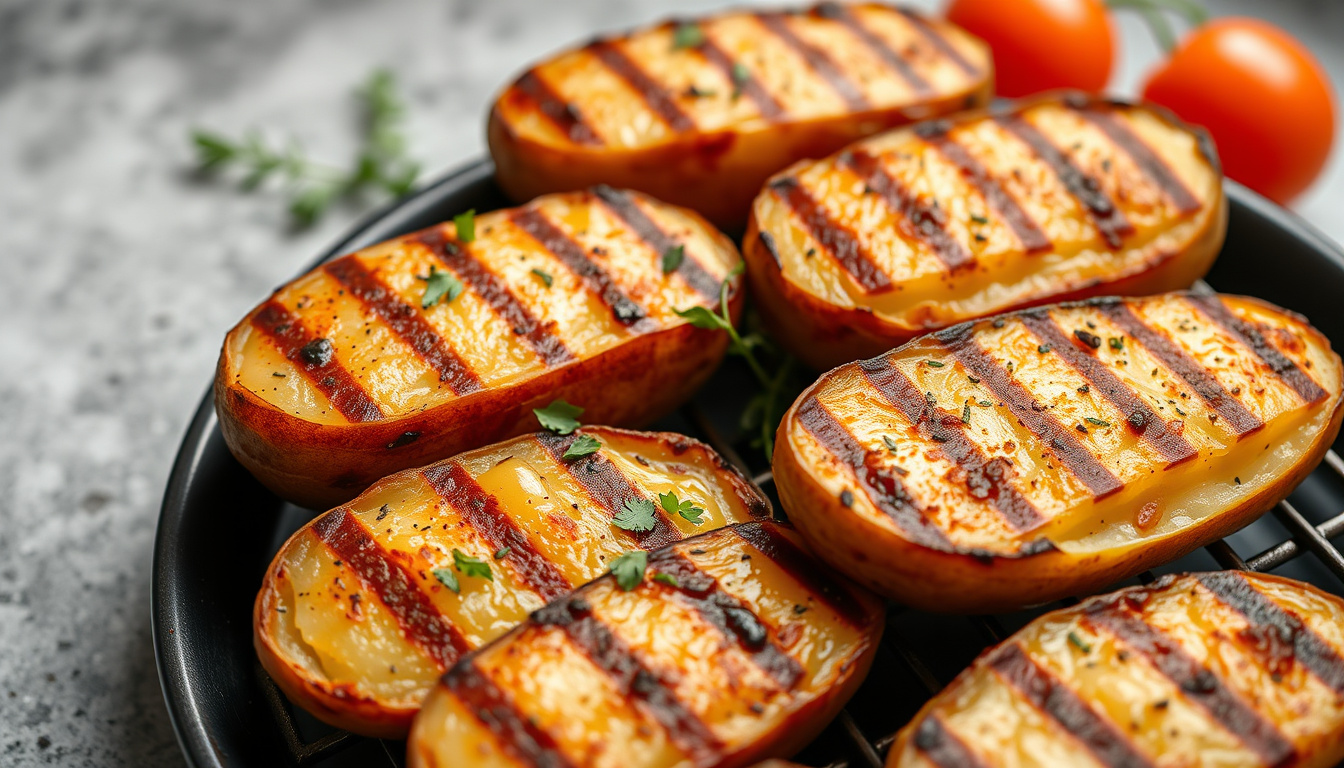
A 10-ounce russet typically needs 25–35 minutes over indirect heat, followed by just 2–4 minutes over direct heat. The goal is an internal temperature around 205–210°F and a skin that crackles when you squeeze it. If you're new to managing multiple heat zones, the same principles apply when you're choosing an easy cut for the grill—control beats intensity every time. You can also read our guide on how to grill ribs on charcoal fast.
The Two-Zone Setup: Your Fastest Path to Done
Two-zone grilling is the backbone of this method. It lets you control heat delivery instead of fighting a single, uniform flame. With a two-zone fire, you can cook the dense interior gently while saving the searing heat for the finale.
How to Set Up Two Zones
On a charcoal grill: Light a chimney of coals and pour them onto one side of the grill. Leave the other side empty. Place a drip pan on the empty side to catch rendered oil and prevent flare-ups. You can also read our guide on how to grill chicken drumsticks on gas grill.
On a gas grill: Turn the burners on one side to medium-high and leave the other side off. If your grill has three or more burners, light only the outer ones to create a true indirect middle zone.
Temperature Targets
| Zone | Temperature | Purpose |
|---|---|---|
| Indirect side | 375–400°F | Cooks interior evenly |
| Direct side | 450–500°F+ | Crisps skin at the end |
Preheat the grill with the lid closed for at least 15 minutes before placing potatoes on the grate. A fully preheated grill is the single biggest time-saver in this entire process—it ensures the cooking starts immediately rather than slowly warming up. In practice, a grill that hasn't fully preheated can add 10–15 minutes to your total time, even with the right technique.
Manage Vents and Airflow
Keep the lid closed as much as possible. Every time you lift it, heat escapes and you add minutes to the cook. Position the top and bottom vents about half open, then adjust in small increments after the first 10 minutes. Resist the urge to open them fully—excessive airflow can actually cool the chamber and slow the cook, especially on windy days.
Prepping Potatoes for Maximum Speed
Proper preparation dramatically shortens the time heat needs to reach the center. This is where you can cut 10–15 minutes off the total cook without changing a single burner setting.
Choose the Right Size
Medium potatoes in the 6–10 ounce range are the sweet spot. They cook quickly while still giving you a substantial baked potato. Anything over 12 ounces will need noticeably more time—16-ounce spuds can push 60 minutes even with perfect technique. If the only option is large potatoes, cut them in half lengthwise before grilling and treat the cut side as the presentation side for extra browning.
Clean, Dry, Then Score
Scrub the potatoes clean and dry them thoroughly with a kitchen towel. Moisture on the surface will steam the skin instead of crisping it, so this step matters more than most people realize. A dry surface is what allows the oil to adhere and the skin to blister rather than turn rubbery.
Cut shallow crosshatches about 1/4-inch deep across the surface. This increases surface area for heat penetration and gives the skin more texture for crisping. Keep the cuts shallow—splitting the potato open exposes the starchy interior, which can steam and make the skin soggy.
Oil, Then Salt
Coat the potatoes lightly with a neutral oil like canola or grapeseed, using your hands to spread a thin, even film. Then season generously with salt. The oil and salt create a seasoning layer that browns quickly without burning. In practice, kosher or sea salt works better than fine table salt because the larger crystals create a delicate crust without over-salting.
Timing tip: Apply the salt after the oil has had a minute to set. Salting wet potatoes traps surface water and slows heat transfer.
The Parboiling Shortcut
If time is truly tight, parboiling can shave 15–20 minutes off the grill time. Here's how to do it without ruining the texture:
- Place whole potatoes in boiling salted water
- Cook for 8–10 minutes, until a fork meets slight resistance at the center
- Drain and dry thoroughly—this is critical
Parboiled potatoes need to be bone-dry before oiling, or they will steam on the grill. If the skin still looks moist, pat them down again and let them air-dry for a few minutes before proceeding. This shortcut is especially useful when you're also grilling a main dish and want everything to hit the table at once.
Step-by-Step: Grilling Potatoes in Under 45 Minutes
Follow this sequence for consistent results, whether you have 4 potatoes or 8 on the grate.
1. Preheat the Grill
Set up your two-zone fire and preheat with the lid closed for 15 minutes. The indirect zone should hold steady at 375–400°F before you put anything on the grate. A common mistake is rushing this step—if the grates aren't hot enough, the potatoes stick and cook unevenly.
2. Start on Indirect Heat
Place the prepared potatoes on the indirect side with at least an inch of space between them for airflow. Close the lid and walk away for the first 15 minutes. Resist the urge to peek—every lift of the lid costs you cooking time and lets precious steam escape.
3. Rotate at the 20-Minute Mark
After about 20 minutes, flip each potato and rotate it 90 degrees. This prevents hot spots from creating uneven doneness. Check that your grill temperature has stayed stable; if the indirect zone has dropped below 350°F, nudge the burner or add a few coals.
4. Check for Tenderness
At the 30-minute mark, start checking for doneness. Insert a skewer into the thickest part of a potato. It should slide in with little resistance. If you have an instant-read thermometer, aim for 205–210°F at the center. This is the most reliable test—appearance alone can be deceiving.
5. Crisp on Direct Heat
Once the interiors are tender, move the potatoes to the direct heat zone. Cook for 2–4 minutes, turning once, until the skin is dark golden brown and blistered in spots. Watch closely—the difference between crisp and charred is a matter of seconds, especially with oiled skins.
6. Rest Before Serving
Remove the potatoes and let them rest for 5 minutes. This brief pause lets the interior finish setting while the skin firms up. Cutting into a potato immediately releases steam and leaves you with a drier texture. A rested potato also splits open more cleanly, revealing the fluffy center instead of tearing.
Timing Guide by Potato Size
Use these ranges as starting points, then verify with a thermometer or skewer test:
| Potato Size | Indirect Heat Time | Direct Heat Finish | Total Time |
|---|---|---|---|
| 6–8 oz | 20–25 min | 2–3 min | ~25 min |
| 9–12 oz | 25–35 min | 2–4 min | ~35 min |
| 13–16 oz | 35–45 min | 3–5 min | ~45 min |
| 17–24 oz | 45–70 min | 4–6 min | ~70 min |
Remember that size isn't the only factor. Dense, moisture-heavy potatoes take longer than airy ones of the same weight. Grid temperature, potato starting temperature, and even ambient weather all influence the final time. Always judge by internal tenderness, not elapsed time.
Tools That Make It More Predictable
You don't need expensive gear, but a few simple tools remove guesswork and make the process repeatable.
Instant-Read Thermometer
This is the single most valuable tool for grilled potatoes. A skewer can glide through a potato that's still raw in the center because the outer layers soften first. A thermometer gives you an accurate read at the core. Look for 205–210°F in the thickest part. Once you start checking by temperature instead of feel, you'll never remove a potato early again.
Perforated Grill Rack
A perforated rack keeps smaller potatoes from falling through wide grates and improves heat circulation around each potato. It also makes flipping and moving easier when you're working with multiple spuds. If you grill potatoes often, a dedicated vegetable rack is one of the best low-cost upgrades you can make.
Foil Boats (Used Strategically)
You don't need to wrap potatoes entirely in foil—that steams them and prevents crisp skin. But a small foil boat underneath each potato catches oil drips and prevents flare-ups when you move to direct heat. This gives you the insurance of foil without sacrificing the texture you're after.
Common Mistakes and Quick Fixes
Even experienced grillers hit these pitfalls. Here's what goes wrong and how to course-correct.
Mistake: Skin Burns Before the Center Cooks
Why it happens: Too much time over direct heat early in the cook.
Fix: Cap direct heat exposure to 4–5 minutes per side at the beginning or skip it entirely until the end. The two-zone method exists specifically to prevent this issue. If you see dark spots forming before the 20-minute mark, move the potatoes fully to the indirect side.
Mistake: Dry, Shriveled Interiors
Why it happens: Potatoes were cut open too early after cooking, or the skin was under-oiled.
Fix: Always rest potatoes for 5 minutes before serving. Reapply a thin oil film if you notice dry patches during cooking. In practice, a light second coat just before the direct-heat finish can rescue slightly dry skins.
Mistake: Hard Centers Despite Browned Skin
Why it happens: Pulling potatoes based on appearance rather than internal temperature.
Fix: Trust the thermometer. If the skin looks done but the center resists, move to indirect heat for another 8–10 minutes and recheck. The skin can handle a longer indirect stay without significant extra browning, so don't panic if you need more time.
Mistake: Gummy or Soggy Skin
Why it happens: Excess surface moisture from a rushed dry step or overcrowding on the grate.
Fix: Dry thoroughly before oiling, and leave at least an inch between potatoes. Overcrowding traps steam and turns crisp potential into soggy disappointment.
What to Serve With Grilled Baked Potatoes
A crispy-skinned grilled baked potato is a versatile side, but it shines brightest next to bold, smoky mains. If you're already firing up the grill, use the leftover direct heat to cook a simple cut of steak—knowing how long to barbecue a burger helps you coordinate timing so both the meat and potatoes land hot on the plate together.
For a lower-effort main, try oven-barbecued pork chops with a sweet-tangy glaze. The potato's salty, crispy shell balances the sauce without competing. And if you're prepping ahead, slow-cooked pork chops keep the grill free for the potatoes' final sear while still delivering a tender, flavorful main.
Expert Tips for Even Better Results
- Start with similar-sized potatoes so they finish at the same time. Mixed sizes mean some will be overdone while others are still firm.
- Use russet potatoes for the fluffiest centers. Waxy varieties like red potatoes or Yukon Golds hold their shape but never reach the same cloud-like interior.
- Let the potatoes come to room temperature for 20–30 minutes before grilling if you have time. Cold centers take longer to reach 205°F, which can stretch your cook by 10 minutes.
- Don't skip the rest. Even 5 minutes makes a visible difference in how cleanly the potato splits open.
- Reheat leftover grilled potatoes in a dry skillet or back on the grill, never the microwave, to preserve the skin's crispness.
- For extra flavor, rub the skins with a little smoked paprika or garlic powder along with the salt before grilling. The seasoning toasts into the crust during the direct-heat finish.
FAQ
What is the fastest way to bake potatoes on a grill?
Use a preheated two-zone setup with medium potatoes (6–10 oz). Dry them thoroughly, oil and salt the skin, cook over indirect heat until tender, then finish briefly over direct heat. Parboiling before grilling can shave off another 15–20 minutes.
How do I grill baked potatoes without foil?
Foil isn't necessary—many grillers prefer foil-free potatoes for crispier skin. Dry the potatoes well, oil and season them, cook over indirect heat with the lid closed, and finish on direct heat. No foil required.
How long does it take to grill potatoes at 400°F?
Medium potatoes take about 30–40 minutes at 400°F with a two-zone setup. Larger potatoes require additional time because the center takes longer to equalize with the heated exterior.
How do I know when grilled potatoes are done?
Check with an instant-read thermometer—205–210°F at the center means done. A skewer should slide in with little resistance. The skin should feel crisp, not rubbery.
Should I parboil potatoes before grilling?
Parboiling for 8–10 minutes reduces grill time and produces more even interiors. Dry the potatoes thoroughly after boiling before oiling and grilling, or the skin will steam instead of crisp.
Can I grill sweet potatoes with this method?
Yes, but sweet potatoes cook faster and have more natural sugar, so watch them closely during the direct-heat finish. Aim for an internal temperature around 205°F, but expect the skin to darken more quickly than a russet's.
Conclusion
Fast grilled baked potatoes come down to managing heat in two zones: indirect heat to cook the center through, then direct heat to crisp the skin. Preheat properly, keep the lid closed, and verify doneness with a thermometer rather than guessing by time. Preparation matters too—dry potatoes, a light oil coating, and shallow crosshatching set you up for success.
Your next move: fire up the grill with a two-zone setup, prep 4–6 medium russets, and follow the 45-minute method above. Once you see how easily the centers fluff while the skins crackle, you'll never settle for microwaved baked potatoes again. While the grill is hot, you can also master the right cut with an easy steak for beginners or plan a full barbecue spread with slow-cooked chops.