How Long to Cook Pork Tenderloin on Charcoal Grill Safely
There’s a moment every backyard cook knows: the coals are glowing, the pork tenderloin is resting on the cutting board, and suddenly the question hits—how long do I actually cook this thing? Unlike a fatty pork shoulder that forgives every mistake, tenderloin is lean and cooks fast. Charcoal heat only adds to the pressure, swinging from gentle to blazing in a matter of minutes.
The good news? Once you understand the mechanics, cooking a perfect pork tenderloin on a charcoal grill is one of the most reliable things you can master. It takes about 20 minutes of active cooking, a simple two-zone fire, and one essential tool: a reliable meat thermometer. The magic number is 145°F internal temperature for juicy, safe-to-eat pork. For more on this, see our guide on how long to cook bbq pork chops in.
In this guide, you’ll learn the exact timing for different tenderloin sizes, how to set up your charcoal grill for success, and the common mistakes that turn a beautiful cut into dry disappointment. By the time you finish reading, you’ll be ready to grill with confidence and get consistent results every single time.
Why Pork Tenderloin Is Different From Other Cuts
Before getting into the numbers, it helps to understand what you’re working with. Pork tenderloin is the filet mignon of the pig—a long, narrow muscle that does very little work. That means it’s incredibly tender but also very lean, with almost no marbling to keep it moist during cooking. This is the reason timing and temperature matter more here than with almost any other cut. For more on this, see our guide on how long does it take to bbq a.
A typical tenderloin weighs between 1 and 1.5 pounds and measures about 1.5 to 2 inches thick at the center. The shape is not uniform, however. One end will always be thinner than the rest, which means it will reach the target temperature sooner. If you handle this incorrectly, you end up with a perfectly cooked center and a dry, overdone tail.
Because of the leanness, traditional advice about “cooking until the pink is gone” simply doesn’t apply. The USDA’s current guidance, as outlined on FoodSafety.gov, confirms that pork is safe to consume at a minimum internal temperature of 145°F with a three-minute rest. At this temperature, the meat will still have a slight blush of pink in the center—and that’s exactly what you want. For more on this, see our guide on how to cook a pork loin on a.
The Two-Zone Charcoal Setup: Your Foundation for Success
The most reliable way to cook pork tenderloin on a charcoal grill is the two-zone method. This setup gives you a hot side for searing and a cooler side for gentle, even cooking. It’s the difference between guessing and having complete control over the process.
How to Build the Fire
Start by filling a chimney starter about three-quarters full with briquettes or lump charcoal. Once the coals are glowing and covered with a light gray ash—usually 15 to 20 minutes—pour them onto one side of the grill. Leave the other side completely empty. This creates your two distinct zones. For more on this, see our guide on how long to cook 3 lb tri tip.
For most kettle-style grills, this quantity of charcoal will produce a hot side in the 400–450°F range. That’s plenty of heat for getting a good crust on the tenderloin. The empty side will act as a gentle oven, typically running 300–350°F when the lid is closed, which is perfect for finishing the meat without drying it out.
Managing Airflow
Vents are your temperature control. Start with the bottom vent halfway open and the top vent fully open. Position the top vent over the meat side of the grill. This pulls heat and smoke across the tenderloin as it cooks, giving you that subtle charcoal flavor you want. For more on this, see our guide on how long to cook fish from frozen.
Make adjustments in small increments and give the grill five minutes to respond before making another change. The goal is steady, consistent heat—not a fire you’re constantly wrestling with.
Grate Preparation
Before placing any meat on the grill, preheat the grate over the hot coals for about five minutes. This step is often skipped, but it matters. A properly heated grate sears the meat immediately, preventing sticking and promoting that mahogany crust that makes grilled foods so irresistible. After preheating, scrape the grate clean and apply a light coat of oil using a paper towel held with tongs.
 The two-zone fire setup: glowing coals on one side, empty cooking space on the other.
How Long to Cook Pork Tenderloin on Charcoal Grill: Time Chart
Now for the answer you came for. The total cooking time for pork tenderloin on a charcoal grill falls into a fairly predictable range, usually 16 to 25 minutes for an average-sized piece. However, the exact time depends on several key factors.
| Pork Tenderloin Size | Grill Temp (Lid Closed) | Typical Total Time |
|---|---|---|
| 0.75–1 lb (thin, under 1.5 inches thick) | 375–450°F | 12–18 minutes |
| 1–1.25 lb (average, 1.5–2 inches thick) | 375–450°F | 16–22 minutes |
| 1.5–2 lb (thick, over 2 inches) | 350–425°F | 20–30 minutes |
Breaking Down the Timing
The cooking process splits into two distinct phases: searing and roasting.
During the sear phase, you’ll place the tenderloin directly over the hot coals for 2 to 3 minutes per side. That’s roughly 6 to 8 minutes total, rotating every minute or so to color all sides evenly. You’re not trying to cook the meat through here—just building a flavorful crust.
After searing, move the tenderloin to the cooler side of the grill, put the lid down, and let it roast. For a standard 1.25-pound tenderloin cooking at around 400°F, expect the indirect phase to take 8 to 14 minutes. This is where the meat finishes cooking gently, and this is where your thermometer becomes essential.
A practical example: if you’re grilling a 1.25-pound tenderloin over medium-high coals, the usual flow is 2–3 minutes per side over direct heat, then about 10–12 minutes on the indirect side until the internal temperature reaches 140°F. After pulling it off and letting it rest, the temperature will climb into the safe zone.
Target Internal Temperature: The Only Number That Matters
Timing charts get you close, but temperature determines the outcome. Pork tenderloin should be pulled off the grill at 140–145°F. The residual heat will continue cooking the meat during rest, bringing it to a final temperature of 145–150°F. This is the sweet spot for juicy, tender results.
Why Temperature Beats Time
The lean nature of pork tenderloin means there’s a very narrow window between perfectly cooked and dry. On a charcoal grill, where heat can fluctuate, relying on a timer alone is a recipe for inconsistent results. The thermometer is your ultimate authority, taking the guesswork out of the equation.
Pull the pork too early and you’re serving undercooked meat that hasn’t fully reached the safe zone. Wait too long and the muscle fibers tighten, squeezing out moisture and leaving you with tough, chalky slices. A good instant-read thermometer removes all of this guesswork.
Carryover Cooking During Rest
When you remove meat from heat, the temperature doesn’t stop climbing. Heat continues moving from the hotter exterior toward the cooler center. For a pork tenderloin, count on a rise of 3–7°F during a 5–10 minute rest. This is why pulling at 140°F works—it will naturally finish around 145°F.
The rest period also allows juices distributed throughout the meat to settle. Cut too early and those juices end up on your cutting board instead of in the slices. Letting the meat rest under a loose foil tent for at least five minutes makes a tangible difference in the final texture.
Step-by-Step: How to Grill Pork Tenderloin from Start to Finish
The theory is straightforward: sear, roast, rest. Now let’s walk through each step so you know exactly what to do when the coals are ready.
Step 1: Prepare the Meat
Take the tenderloin out of the fridge and pat it completely dry with paper towels. Surface moisture is the enemy of good browning. Next, trim off any visible silverskin—that shiny, tough membrane that can be unpleasant to chew. If one end is especially thin, fold it under and secure with kitchen twine so the whole piece cooks at a more even rate.
Brush the meat lightly with a neutral oil with a high smoke point, like canola or avocado oil. This helps the seasonings stick and promotes even browning. Season generously with a dry rub or simply salt and pepper, then let the meat sit at room temperature for 15 to 20 minutes. Starting from room temperature—rather than straight from the fridge—shortens the cooking time and produces more even results.
Step 2: Sear Over Direct Heat
Place the seasoned tenderloin over the hot side of the grill. Let it sear undisturbed for 2 to 3 minutes, then rotate it a quarter turn. Rotating, rather than flipping, builds a more even crust across all surfaces. After another 2 to 3 minutes, flip it over and repeat until all four sides have deep golden-brown color.
The total searing time typically runs 6 to 9 minutes. Resist the urge to leave it longer—you’re building color, not cooking the meat through.
Step 3: Roast Over Indirect Heat
Slide the tenderloin to the cool side of the grill and close the lid. Now begins the gentle finishing phase. Insert a leave-in probe thermometer if you have one, or plan to check frequently with an instant-read model. Keep the lid closed as much as possible—every time you open it, heat escapes and the coals surge.
Roast until the internal temperature hits 140–143°F. This typically takes 8 to 14 minutes for a standard 1.25-pound tenderloin, depending on how hot the coals are running and the thickness of the meat.
Step 4: Rest and Slice
Remove the tenderloin from the grill and place it on a cutting board. Tent it loosely with aluminum foil and let it rest for 8 to 10 minutes. This is a non-negotiable step. The rest allows the temperature to equalize and lets the juices redistribute throughout the meat.
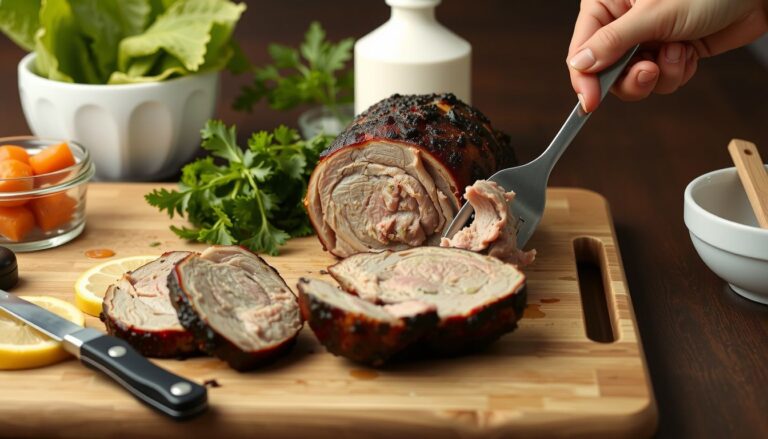
After resting, slice the tenderloin against the grain into medallions about half an inch thick. Slice only what you plan to serve immediately. Stored whole, leftovers will stay moister than pre-sliced meat.
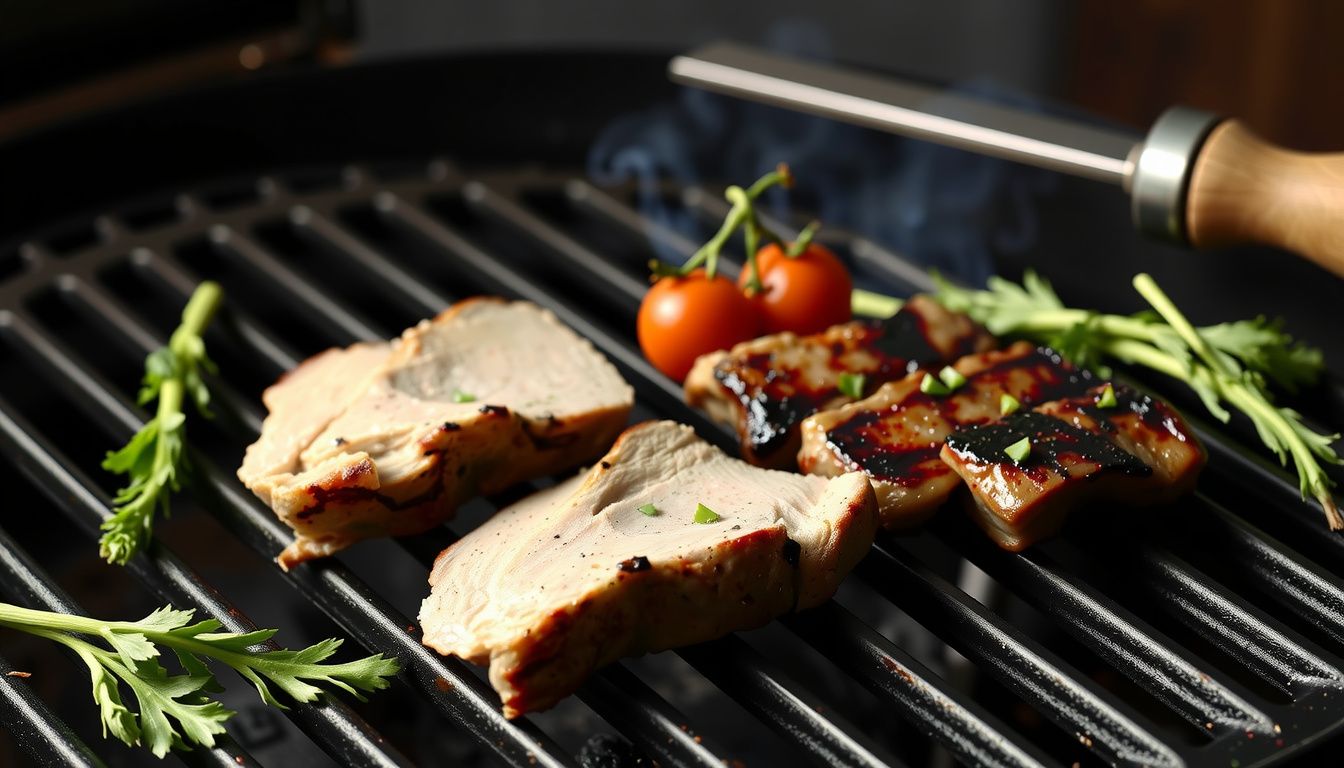
 Perfectly grilled pork tenderloin medallions showing a caramelized crust and juicy interior.
Proper Thermometer Use: Getting an Accurate Reading
The thermometer is the difference between hoping your pork is done and knowing it is. But only if you use it correctly. Here are the pitfalls that skew readings and how to avoid them.
- Insert from the side, not the top. This positions the probe tip in the center of the thickest part rather than measuring edge-to-edge.
- Avoid fat and bone. The probe must be in solid muscle tissue. Fat reads hotter than meat, leading to an early pull and undercooked center.
- Keep the tip away from the grate. The grill grate can heat the metal of the probe and produce an artificially high reading.
- Take multiple readings. Check two or three spots to confirm the temperature is consistent. Use the lowest reading as your decision-maker.
For charcoal grilling with the lid closed, a probe thermometer designed for leave-in use is ideal. For spot checks, choose an instant-read model with a fast response time. Whatever tool you use, wash the probe between readings to prevent cross-contamination.
Common Mistakes That Dry Out Pork Tenderloin
Most dry pork tenderloin isn’t ruined by cooking it several degrees too long. It’s ruined by small errors that compound over the cook. Here are the most common problems and how to fix them.
Cooking by Time Alone
Setting a timer and trusting it completely is the number-one way to dry out lean meat. Because charcoal fires fluctuate, no time estimate is ever guaranteed. The solution is simple: check temperature at the estimated finish time and let the number make the call.
Over-Searing the Exterior
Longer sear times don’t equal better flavor after a certain point. Once the crust is a deep golden-brown, continuing to cook over direct heat only tightens the muscle fibers and pushes the exterior past its ideal state. Move the meat to the cool side sooner rather than later.
Constant Lid Peeking
Every time you lift the lid to check progress, you dump heat from the cooking chamber and send the coals surging. This leads to longer cooking times and a hotter, more aggressive fire. Stick to a schedule: flip the meat, check the temperature, close the lid, and leave it alone.
Skipping the Rest
With such a lean cut, skipping the rest is particularly punishing. Without time to redistribute, the juices run out immediately when you slice. The result looks dry and tastes drier. Never rush this step.
Adjusting Cook Times: Thickness, Weather, and Marinades
Every variable you bring to the grill changes the timing. Thickness is the most important, but weather and preparation methods also play a role.
Thicker and Thinner Tenderloins
A tenderloin thicker than 2 inches at the center requires a significantly longer indirect phase. Plan for 5-10 additional minutes compared to a standard cut. Conversely, a very thin tenderloin can overshoot its target quickly, so start checking temperature earlier and more frequently.
If one end of the tenderloin is markedly thinner than the rest, fold it under and secure with twine, or shield that end with a small piece of foil. Both approaches help the entire piece finish at approximately the same time.
Cold and Windy Conditions
Cold air and wind pull heat from the grill surface faster than you might expect. On a 45°F day with a brisk breeze, you may need 20% more charcoal or a longer finishing time. Position the grill in a sheltered spot and avoid opening the lid unnecessarily. The wind can increase the heat of a charcoal grill dramatically, so keep the vents adjusted to maintain your target temperature.
Sugary Marinades and Glazes
Anything with sugar—whether a barbecue sauce, honey glaze, or teriyaki marinade—will burn over high heat. Sugary surface treatments are best applied during the last few minutes of cooking, after the sear is complete. This gives you the caramelized flavor without the bitter, charred spots.
Safety First: Handling Pork on a Charcoal Grill
Safe food handling matters as much as delicious results. Wash your hands and all surfaces that touched raw pork before they contact anything else. Use separate cutting boards for raw and cooked meat, and never place cooked food on the same plate that held raw tenderloin.
The USDA recommends cooking pork to a minimum internal temperature of 145°F, followed by a three-minute rest. For detailed guidance on pork safety and handling, the USDA Food Safety and Inspection Service provides authoritative information on proper cooking temperatures and safe handling practices. For a firm texture with mostly white centers, cook to 150°F. If you prefer well-done, reach 155°F, but know this is the point where the leanness of the cut tends to produce dry results.
Frequently Asked Questions About Grilling Pork Tenderloin
How long does it take to cook a 1-pound pork tenderloin on a charcoal grill?
Approximately 14–18 minutes total: 6–8 minutes of searing over direct heat, then 8–10 minutes of indirect roasting until the internal temperature reaches 140°F.
Should the lid be on or off?
Keep the lid closed for the majority of the cook. This stabilizes the temperature and traps the smoky heat. Open it only briefly when flipping or checking temperature.
How often should you flip the tenderloin?
During the sear, flip every 2–3 minutes. During the indirect roast, one flip halfway through is plenty. Constant flipping prevents crust formation and slows cooking.
What if I don’t have a meat thermometer?
A thermometer isn’t optional with this cut of pork. Tenderloin cooks quickly and the window between undercooked and overcooked is small. Pick up an instant-read thermometer before you attempt this recipe.
Should the pork be at room temperature before grilling?
Yes, allowing the meat to sit at room temperature for 15–20 minutes before grilling improves temperature consistency throughout the cook. A chilled center requires much longer cooking time.
What to Serve With Charcoal Pork Tenderloin
A perfectly grilled tenderloin deserves sides that complement without overwhelming it. Grilled vegetables make easy use of the cooler side of the fire. Corn on the cob, zucchini, and asparagus all work beautifully. For a more substantial pairing, consider a fresh green salad with a tangy vinaigrette to cut through the smoky flavor.
Conclusion
Cooking pork tenderloin on a charcoal grill is one of the most rewarding skills you can build. It’s quick enough for a weekday dinner but impressive enough for company. The fundamentals come down to three things: setting up a two-zone fire, using a thermometer to hit 145°F, and letting the meat rest before slicing.
Here’s your next step: try grilling a 1.25-pound pork tenderloin this week using the two-zone setup and timing guidelines covered above. Write down the total time and finish temperature on your first attempt. Use that note as a personal baseline, making small adjustments from there until you get results you’re happy with every time.