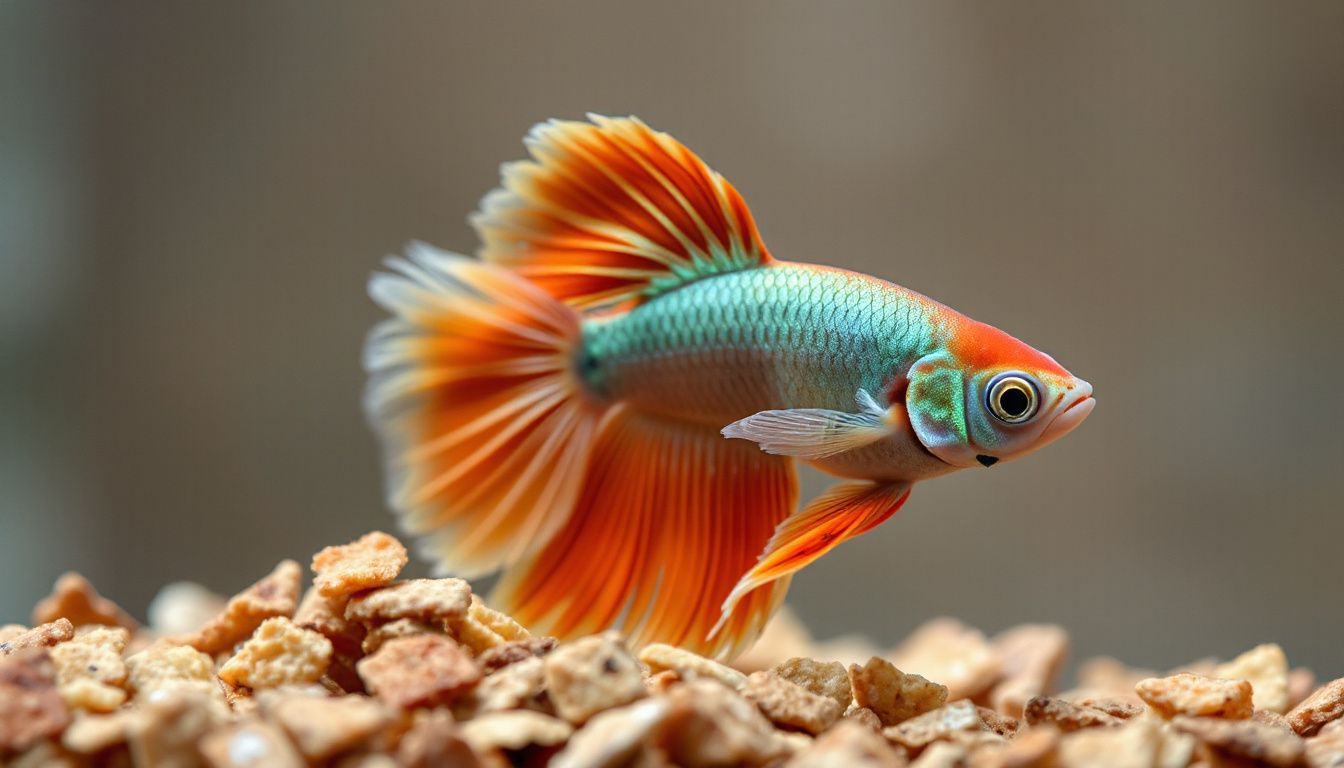
How Often Do You Feed a Betta Fish Flakes for Health
Feeding a betta fish seems simple until you’re standing over the tank, flake container in hand, while your fish performs an Oscar-worthy “I’m starving” routine every time you walk past. The real question isn’t just how often, but how to get the frequency right so your betta stays healthy, active, and free from the digestive issues that plague so many aquarium fish.
Bettas have incredibly small stomachs—roughly the size of their eye—which surprises most new owners. Combined with a digestive system designed for small, frequent insect meals rather than large infrequent ones, this anatomical reality changes how you should approach flake feeding entirely. Feed too much and you risk bloating, constipation, and ammonia spikes. Feed too little and your fish loses condition, color, and energy. You can also read our guide on how often to feed small fish.
In practice, most keepers find that a consistent daily rhythm with tiny, controlled portions outperforms any “feed once every two days” or “feed until full” approach. The fish in front of you matters more than the label on the flake container. Your betta’s age, activity level, water temperature, and even tank setup all influence how often it genuinely needs to eat.
This guide walks through a complete feeding framework: how often to offer flakes, how much to give per meal, how to spot problems early, and how to adjust without guessing. You’ll finish with a clear, repeatable routine you can start today. For more on this, see our guide on how often do you clean a betta fish.
Understanding Betta Digestive Biology (Why Frequency Matters)
Before setting a schedule, it helps to understand what you’re actually managing. Bettas evolved as insectivores in warm, slow-moving Southeast Asian waters. In the wild, they graze opportunistically on small prey—mosquito larvae, tiny crustaceans, insect fragments—spread throughout the day rather than sitting down to a single large meal.
Their digestive tract is short and geared toward processing high-protein animal matter quickly. What they can’t process well is bulk: plant-heavy fillers, oversized meals, or food that swells after ingestion. When a betta gulps down more than its system can handle, the food sits in the gut, ferments, and leads to the bloated belly so many owners see after an enthusiastic feeding. For more on this, see our guide on best live plants for betta fish.
This matters because flakes behave differently from pellets or live food. Flakes are lightweight, break apart easily, and often contain more plant-based binders than protein-dense alternatives. A betta eating flakes may need slightly more careful portioning than one eating compact pellets, simply because the food disperses faster and is easier to overoffer.
A practical observation: a betta fed 6 large flakes in one sitting will often look distended for hours, while the same fish fed 3 small meals of 2 flakes each stays comfortable and active. Frequency isn’t just about routine—it’s about matching the fish’s natural digestive rhythm.
What Determines How Often a Betta Should Eat Flakes
The right feeding rhythm depends less on the flake container’s instructions and more on the fish in front of you. Several variables change how quickly a betta uses calories, and a one-size schedule rarely fits every tank.
Age and Life Stage
Juvenile bettas are growing rapidly and need more frequent, smaller meals—often three micro-feedings per day. Their metabolism runs hot, and they burn through calories quickly. Adult bettas usually do well on one or two daily feedings, while older, slower fish often need reduced portions and occasional lighter days.
Water Temperature
Betta metabolism is temperature-dependent. At the ideal 78–80°F, digestion proceeds efficiently and appetite is steady. Drop the water into the low 70s and everything slows: the fish moves less, digests slower, and needs fewer calories. A betta kept at 74°F on the same feeding schedule as one at 79°F will likely show bloating or leftover food within a week.
Activity Level
A betta that patrols a planted 10-gallon, flares at its reflection, and explores constantly burns more energy than one resting on a broad leaf all day. Tank size, enrichment, and even gentle current from a filter all add up. More activity means slightly higher caloric demand—but not as much as many owners assume.
Flake Composition
Not all flakes are equal. High-protein formulas with insect or fish meal as primary ingredients digest more efficiently than plant-heavy blends with wheat or soy fillers. Dense flakes may satisfy hunger faster, while light, crumbly flakes can disappear into the water column without the fish actually eating much.
Recommended Feeding Frequency: A Daily Schedule That Works
For most healthy adult bettas, once or twice daily feedings provide the best balance of nutrition, digestion, and water quality. Consistency matters more than the exact hour.
Twice-Daily Schedule (Most Common)
Feed small portions twice a day—morning and evening—separated by at least 8 hours. Each meal should be tiny: what the fish can finish in 30–60 seconds. This mirrors wild grazing behavior and keeps the digestive system moving without overwhelming it.
Example: 7 a.m. and 7 p.m., 2–3 small flakes per meal.
Once-Daily Schedule (Works for Busy Keepers)
A single daily feeding can absolutely work if the portion is truly small and the fish maintains a sleek, healthy profile. This is often easier for working owners and reduces the temptation to overfeed throughout the day.
Example: 6 p.m., 4–5 tiny flakes, watched carefully.
Weekly Fast Day
Many experienced betta keepers incorporate one fasting day per week. This gives the digestive tract time to clear completely, reducing the risk of constipation that flake-heavy diets sometimes cause. It’s especially useful for bettas prone to bloating.
Sample weekly routine:
| Day | Morning | Evening |
|---|---|---|
| Monday–Friday | 2–3 small flakes | 2–3 small flakes (skip one meal if bloated) |
| Saturday | 2–3 small flakes | Fast |
| Sunday | 2–3 small flakes | Resume normal |
The key is observation. If your betta starts looking thin, add a few flakes. If the belly stays rounded hours after eating, cut back. Adjust one variable at a time and give it 4–7 days before changing again.
How Much Flake Food to Give Per Feeding (Portion Control)
 Crushing flakes into smaller pieces makes portion control easier and prevents choking or spitting behavior.
Timing is half the equation. The other half—often where owners struggle—is portion size. With flakes, the goal is a small meal that’s fully eaten fast, not a slow buffet that breaks apart and sinks.
The 2–4 Flake Baseline
A reliable starting point for most adult bettas is 2–4 small flakes per feeding. The operative word is small. Flakes vary dramatically by brand: some are thin and delicate, others thick and leathery. If the flakes are large, crush them between your fingers into pieces your betta can swallow without spitting or gulping air.
The 60–90 Second Rule
A proper portion disappears within 60–90 seconds. If food is still floating or drifting after that window, you’ve offered too much. Remove the remainder immediately with a fine net or turkey baster.
Portion Judging Checklist
- Flakes hit the substrate: portion too large or flakes too powdery—reduce next time.
- Betta gulps air or spits food out: pieces too large or too dry—crush more finely or pre-soak briefly.
- Belly looks slightly rounded after eating, flat within 2–3 hours: portion is about right.
- Belly stays distended for 4+ hours: overfed—cut portion by one flake and reassess.
Adjusting Flake Feeding for Age, Size, and Activity Level
Portions aren’t one-size-fits-all, and neither is frequency. A juvenile betta in a warm, active tank needs a different approach than a mature fish in a quiet 3-gallon setup.
Juveniles and Growing Bettas
Young bettas grow quickly and often handle slightly more food per day, divided into smaller, more frequent meals. Three or even four micro-feedings daily can work, as long as each is tiny. The goal is steady growth without a permanently round belly.
Average Adults
Healthy adult bettas do best with one or two daily meals that keep the body streamlined. From above, the fish should look like a smooth torpedo—not thick through the midsection and not pinched behind the head.
Older or Sedentary Bettas
Senior fish and those in smaller, calmer tanks need less. Reduced activity means fewer calories burned and slower digestion. Cut portions by 20–30% and monitor for constipation. Older bettas often benefit from a fasting day more than younger fish.
Practical adjustment example: Two adult bettas are fed the same brand of flakes. The active fish in a planted 10-gallon gets 3–4 small flakes per feeding and stays lean. The calmer fish in a quiet 5-gallon begins to look thick, so the keeper drops to 2 flakes per feeding, adds one fast day per week, and reassesses after 7 days.
How Water Temperature and Tank Setup Change Feeding Needs
Environment is the quiet driver of appetite. The same flake amount can be perfect one week and too much the next, simply because the tank changed.
Temperature Effects
At 78–80°F, digestion is efficient and appetite steady. Below 75°F, everything slows—metabolism, digestion, activity—and the same feeding creates waste. If your heater struggles or the room runs cool, reduce portions or extend the gap between feedings until conditions stabilize. Temporary feeding cuts during a heater failure are safer than risking bloat and ammonia.
Tank Size and Biofiltration
Small, new, or lightly filtered tanks punish overfeeding quickly because there’s less water volume and biological filtration to absorb the waste. A mature, planted 10-gallon with established beneficial bacteria can buffer minor errors; a brand-new 3-gallon cannot. If your betta lives in a smaller setup, err toward smaller, less frequent portions.
Current and Enrichment
A betta constantly swimming against a filter current or exploring a heavily scaped tank burns more energy than one in stagnant water. This doesn’t justify big portion increases—maybe 1–2 extra flakes per day—but it does explain why two fish on identical schedules may look different.
Choosing the Right Flakes for Your Betta
Not all flakes deserve space in your pantry. Since bettas are insect-focused carnivores, flake formulas heavy in plant fillers provide less usable nutrition per bite. Choosing better flakes means your feeding frequency and portions actually deliver what the fish needs.
What to Look For
Prioritize flakes listing whole fish, fish meal, insect meal, or shrimp meal among the first ingredients. Protein content in the 40–50% range suits most adult bettas. Avoid formulas where wheat, soy, or corn dominate the ingredient list—these fill the stomach without supporting muscle, color, or immune function.
Soaking and Preparation
Many experienced keepers pre-soak flakes for 10–20 seconds in a small cup of tank water before feeding. This softens the flakes, making them easier to swallow and less likely to expand inside the gut. It also reduces floating fragments that drift into gravel and rot.
Storage Matters
Flakes lose nutritional value quickly once opened, especially if exposed to heat, light, or humidity. Buy small containers, keep them sealed, and replace open food every 2–3 months. Old flakes won’t poison your fish, but they deliver less nutrition—meaning your betta may act hungry even when portion size is technically correct.
Signs of Overfeeding and Underfeeding (What They Look Like)
 Viewing from above reveals body condition better than side view alone: a slight curve is ideal, a bulge means overfeeding, and a pinched look means underfeeding.
Bettas are convincing beggars, so behavior alone can mislead. The clearest clues show up in the fish’s body shape, the tank bottom, and post-meal behavior.
Overfeeding Signs
- Persistent bloating or a “marble” look behind the gills that doesn’t flatten within a few hours
- Stringy or pale poop, or visible constipation
- Food debris collecting on the substrate or filter intake
- Lethargy after eating, hovering near the surface
- Cloudy water or rising ammonia despite regular water changes
Underfeeding Signs
- Sunken belly, especially visible from above
- Sharp, bony profile behind the head
- Low energy and reduced exploration
- Faded coloration or slow fin regrowth after minor tears
- Constant, desperate chasing at the water surface even right after eating
Practical example: If a betta eats flakes quickly but stays bloated and leaves debris on the gravel, cut the portion first—not the frequency—then siphon leftovers and reassess within 3–5 days. Conversely, if a betta eats everything instantly and looks pinched from above, increase by one flake per meal and monitor for a week.
Best Practices for Feeding Flakes Without Fouling the Water
Keeping the tank stable while feeding flakes requires a little technique. Flakes break apart fast, and the smallest crumbs drift into gravel where they rot, driving ammonia production and cloudy water—even when the feeding schedule itself is reasonable.
The Control-Point Method
Feed from the same spot each time, away from the filter outflow so flakes don’t scatter. This creates a feeding association and makes it easy to see exactly how much your betta actually consumes versus what drifts away.
Pre-Soaking
Soak flakes in a small cup of tank water for 10–20 seconds before introducing them. This reduces floating fragments, softens the food, and helps the fish swallow without spitting pieces back out.
Cleanup Routine
- Turn off the filter for 3–5 minutes during feeding to limit drift.
- Feed slowly: pinch, wait, then offer the next pinch only if the first is eaten.
- Remove leftovers immediately with a turkey baster or fine net.
- Restart filtration afterward for oxygenation.
The proper portion is usually gone within 60–90 seconds with no crumbs drifting to the bottom. If you consistently see debris, reduce portion size before changing frequency.
When Flakes Aren’t Enough: Balancing Diet With Other Foods
Even with clean feeding technique, flakes alone don’t always cover a betta’s long-term nutritional needs. Many flake formulas lean on plant fillers, and bettas are insect-focused carnivores that thrive on variety. A more diverse menu supports steady energy, stronger color, and better body condition without forcing larger flake portions.
The Rotation Approach
Treat flakes as a “base” food and rotate in higher-protein options. Quality betta pellets often deliver more consistent nutrition per bite, while frozen or thawed foods add enrichment and mimic natural prey. Keep variety controlled so the fish doesn’t swing between heavy meals and fasting.
| Food Type | Frequency | Portion |
|---|---|---|
| High-quality flakes | 5–6 days per week | 2–4 small flakes per meal |
| Betta pellets | 1–2 days per week | 2–3 small pellets |
| Frozen daphnia or brine shrimp | 1–2 days per week | Tiny portion, thawed |
| Live food (reputable source) | Occasional treat | 2–3 small organisms |
If a betta consistently spits flakes, loses interest, or looks thin despite eating, the issue is often diet quality rather than feeding frequency. Upgrading the food itself matters more than feeding more often.
Common Feeding Mistakes to Avoid
Even experienced keepers slip into patterns that harm their fish. These are the most frequent flake-feeding errors, and they’re all fixable.
Following the Container Label Blindly
Flake containers often suggest amounts that would foul a small betta tank within days. Use the label as a rough starting point only, then adjust based on what your fish and aquarium actually show you.
Feeding “Because the Fish Begs”
Bettas will beg constantly. It’s a fixed action pattern, not genuine hunger. Stick to your schedule regardless of the surface theatrics. A begging betta on a stable weight is nourished; a betta that’s fed whenever it asks will develop bloat and water-quality problems.
Changing Multiple Variables at Once
If you change portion size and frequency simultaneously, you can’t tell which adjustment helped or hurt. Change one thing, observe for a week, then reassess. This applies to any feeding adjustment you make.
Ignoring Water Temperature
Assuming a room-temperature tank is “fine” while the fish sits at 72°F creates a mismatch between what you feed and what the fish can digest. Stable, warm water within the betta’s preferred range makes every other feeding decision easier. If you’re also troubleshooting water clarity issues, understanding how long organic waste lingers before breaking down puts the ammonia risk in perspective—the same decomposition principle applies to uneaten flakes.
Frequently Asked Questions
How many flakes should I feed my betta per day?
Most healthy adult bettas do well on 4–8 small flakes total per day, divided into one or two feedings. The exact number depends on flake size, fish size, activity level, and water temperature. Start with 2–4 per feeding and adjust based on body condition.
Can I feed my betta flakes once a day?
Yes. Once-daily feeding works when the portion is genuinely small and the fish maintains a sleek, healthy profile. Many busy keepers use this successfully. Watch for a pinched belly or low energy—if those appear, switch to twice daily with smaller portions.
Why does my betta look bloated after eating flakes?
Bloating usually comes from overfeeding, flakes expanding in the gut, or plant-heavy formulas that digest slowly. Reduce portion size, crush flakes smaller, pre-soak before feeding, and consider a weekly fast day. If bloating persists, switch temporarily to a higher-protein food.
Should I fast my betta fish?
Many experienced keepers incorporate one fasting day per week to let the digestive tract clear completely. It helps prevent constipation, especially with flake-heavy diets. Healthy adult bettas handle this well; juveniles and underweight fish should not be fasted.
Are pellets better than flakes for bettas?
Quality betta pellets often provide more consistent, protein-dense nutrition per bite and foul the water less than flakes. Flakes can work as a staple if chosen carefully, but many keepers use pellets as the base and reserve flakes for occasional variety.
What if my betta refuses to eat flakes?
Some bettas dislike certain flake formulas, especially dry or plant-heavy ones. Try pre-soaking, crushing smaller, or switching to a higher-protein brand. If refusal continues, transition to quality pellets or frozen foods you can confirm the fish accepts. Persistent refusal warrants attention to water parameters as well.
The Bottom Line
The answer to how often you feed a betta fish flakes for health is straightforward: once or twice daily, in tiny portions, with one consistent schedule. Most healthy adult bettas thrive on two micro-meals per day of 2–4 small flakes each, adjusted based on their body condition, water temperature, and activity. A weekly fast day adds a useful margin of safety against bloat.
What matters more than the exact number of flakes is consistency and observation. Pick a schedule, stick to it for two weeks, and watch what your fish and tank tell you. A slightly rounded belly after eating that flattens within a few hours means you’re on track. Clear water, steady activity, and a sleek body shape confirm the routine works.
If you’re adjusting your overall fish-care setup alongside feeding, keeping other aspects of your aquarium stable—like managing maintenance routines that protect tank balance—helps create an environment where good feeding habits actually show results. Start with the routine above, adjust one variable at a time, and your betta will thank you with better color, energy, and longevity.



One Comment