How Much Does It Cost to Winterize A Boat: Price Ranges
Winterizing a boat is not a single flat-rate service. The true cost depends on what you own, where you store it, and how much work you are willing to do yourself. A small outboard skiff on a trailer can be protected for a few hundred dollars, while a twin-engine cruiser with a generator, air conditioning, and multiple plumbing systems can easily top $1,500 before storage fees enter the picture.
The good news is that most winterization costs are predictable once you break them into three parts: engine and drive protection, onboard water systems, and storage-related services. Understanding those categories helps you compare quotes accurately and avoid paying for work you do not need.
Whether you run a compact outboard or an affordable pontoon, the goal is the same: prevent freeze damage, control corrosion, and make spring commissioning faster. This guide walks through realistic price ranges, cost drivers, DIY material budgets, and the hidden fees that often surprise owners at the yard.
What Winterizing a Boat Actually Includes
Winterization is best understood as a checklist rather than one procedure. A shop or owner is really performing several independent jobs that protect different systems from cold weather, moisture, and inactivity.
The main areas of concern are:
- Engine and drive protection: draining raw-water cooling passages or filling them with marine antifreeze, flushing the engine, and protecting the lower unit or outdrive.
- Fuel system stabilization: adding a marine fuel stabilizer, topping the tank to reduce condensation, and running the engine long enough to circulate treated fuel.
- Oil and filter service: changing engine oil and gear lube so acidic combustion byproducts do not sit against internal surfaces all winter.
- Battery care: disconnecting the battery, cleaning terminals, storing it in a cool dry place, and keeping it on a maintenance charger.
- Freshwater systems: draining tanks, water heaters, pumps, heads, and washdown lines, then pushing non-toxic antifreeze through every line.
- Moisture and mildew control: ventilating the cabin, removing cushions or propping them up, and adding desiccants or a dehumidifier.
Standards published by the American Boat and Yacht Council describe seasonal layup practices designed to reduce freeze damage and electrical risks. In practice, a complete winterization should leave no standing water in any part of the boat that can freeze and expand.
Before any of this begins, a thorough wash removes salt, fish residue, and grime that can trap moisture against gelcoat or metal for months. Skipping this step means you are storing dirt and corrosion promoters inside a sealed cover.
Typical Price Ranges for Winterization
The most useful way to estimate cost is to separate professional service from do-it-yourself materials. Professional quotes usually reflect labor, shop supplies, and the volume of antifreeze and filters required.
These planning ranges reflect typical 2026 marina pricing, but local labor rates and yard fees vary widely. Use them as a starting point, not a guarantee.
| Boat Type | Typical Professional Service Range |
|---|---|
| Small outboard boat, basic systems | $150–$350 |
| Single inboard or sterndrive runabout | $300–$700 |
| Twin inboards or sterndrives | $600–$1,400+ |
| Sailboat auxiliary diesel plus plumbing | $250–$900 |
Common add-ons change the total quickly. Shrink-wrapping often runs $12–$25 per foot. Off-season storage may add $20–$60 per foot depending on region and whether it is indoor or outdoor. Oil, gear lube, filters, and anodes can add $50–$250 or more on larger engines.
A practical example: a 22-foot bowrider with a single sterndrive might be quoted $450 for engine and drive winterization, then $350 for shrink-wrap, landing near $800 before storage. A similar-length outboard on a trailer could stay under $300 if it needs only fuel stabilization, fogging, and basic freeze protection.
For owners doing the work themselves, typical material budgets fall between $60 and $250 for a single-engine runabout. The exact amount depends on how many gallons of antifreeze your plumbing requires and whether you need new filters, gaskets, or gear lube.
Cost Factors That Move the Price
Two boats of the same length can produce very different winterization invoices. Shops price the job around labor time, materials used, and how difficult the boat is to access.
The biggest driver is propulsion type and system count. A single outboard is quick to drain and fog. Twin inboards with closed cooling, a generator, air conditioning, and a water heater take far more labor and antifreeze.
Key factors include:
- Engine type and quantity: outboard vs. sterndrive vs. inboard, single vs. twin.
- Plumbing complexity: multiple heads, showers, washdowns, hot water tanks, and ice makers.
- Storage setup: heated indoor storage costs more up front but often reduces spring recommissioning work.
- Access and haul-out: boats on trailers are easier to reach than boats in slips requiring a travel lift.
- Service depth: a basic drain-and-fill is cheaper than a full service with oil change, filters, and inspection.
- Cooling system design: raw-water-cooled engines need more antifreeze than closed-cooling engines in freeze-prone areas.
If you run an aluminum hull, off-season paint protection and corrosion checks matter too, especially near saltwater. A small paint blister ignored in fall can become a costly repair by spring.
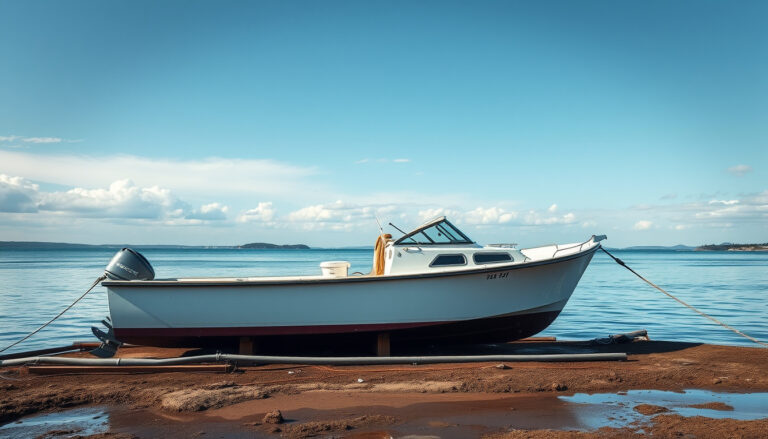
 Engine access and cooling system design heavily influence labor time during winterization.
A real-world scenario: a 24-foot sterndrive bowrider stored outdoors may receive a low initial quote until the technician finds a clogged block drain. Clearing it adds labor, extra antifreeze, and a replacement hose clamp. That is how a standard price becomes a higher invoice.
Winterization Costs by Boat Type and Size
Pricing tends to scale with length, systems, and engine layout rather than the brand on the hull. Smaller boats often fit into flat-rate brackets, while cruisers and sailboats are usually billed hourly because their systems vary so much.
Typical patterns seen at many yards include:
- 14–22 ft outboard boats: lower cost; fewer plumbing lines and faster labor. Most of the work is fuel, gearcase, and battery care.
- 18–26 ft sterndrive runabouts: mid-range; more cooling passages and tighter engine-bay access require extra time.
- 26–40 ft inboard cruisers: higher cost; generators, air conditioning, multiple heads, and larger antifreeze volumes all add up.
- Sailboats: widely variable; a small auxiliary diesel can be modest, but haul-out fees, mast handling, and complex plumbing raise totals.
- Pontoon boats: outboard-based winterization is usually straightforward, but multiple livewells, sinks, and carpeted areas need extra attention.
Pontoon owners who handle their own trailering still need full outboard and plumbing prep. Trailering makes access easier, but it does not remove the need to drain livewell pumps and freshwater lines.
A 34-foot cruiser with twin inboards and a generator typically costs more to winterize than a 34-foot sailboat with a single diesel and minimal plumbing, even though the lengths match. The number of systems drives labor and materials.
DIY Winterization: Materials, Tools, and Real Costs
Doing the work yourself can cut the cash outlay by half or more, but it shifts the cost into time, preparation, and mechanical confidence. A mistake here can be far more expensive than the service fee you avoided.
For a typical single-engine runabout, most DIY budgets land between $60 and $250 in materials, assuming no surprises. The biggest variables are engine type, freshwater system complexity, and how much corrosion protection you choose.
Common materials include:
- Non-toxic marine antifreeze: often 2–6 gallons depending on engine and plumbing.
- Fuel stabilizer and a water-separating fuel filter.
- Fogging oil: used on many outboards and some inboards to coat internal surfaces.
- Gear lube and drain plug gaskets: needed for sterndrive or outboard lower units.
- Corrosion inhibitor spray and marine grease.
Tools matter too. A basic kit might include a lower-unit gear lube pump, flushing muffs or a hose adapter, a socket set, an oil extractor for some engines, and a wet/dry vacuum for draining lines. If you need to buy tools from scratch, add roughly $40–$200.
A practical example: a 19-foot sterndrive bowrider might spend about $35 on stabilizer and fogging oil, $40–$90 on antifreeze, $25–$45 on gear lube and gaskets, and $20 on a hose adapter. That is roughly $120–$190 if basic tools are already on hand.
The U.S. Coast Guard Boating Safety Division emphasizes proper fuel handling and ventilation during layup. Fuel vapor is heavier than air and can accumulate in an enclosed engine bay, so work in a ventilated area and avoid open flames near the fuel system.
Professional Winterization: What You Are Paying For
A professional service trades DIY effort for a documented checklist and trained eyes. Shops usually price by engine type, access, and whether the boat needs systems winterization beyond the engine.
Labor is the core cost. Many marinas quote a flat package, while independent mechanics may bill hourly with a minimum. The flat package is often the better deal when the boat is clean, accessible, and has no known issues.
A standard professional package usually includes:
- Fuel stabilization and a timed engine run-up to circulate treated fuel.
- Cooling system protection using either the drain method or antifreeze fill.
- Fogging when appropriate for the engine type.
- Battery disconnect guidance or removal.
- Basic moisture control recommendations for the cabin and storage area.
Add-ons are where totals climb. Common upsells include oil and filter service, lower-unit gear lube changes, freshwater system winterization, head and holding tank treatment, generator winterization, and shrink-wrap coordination.
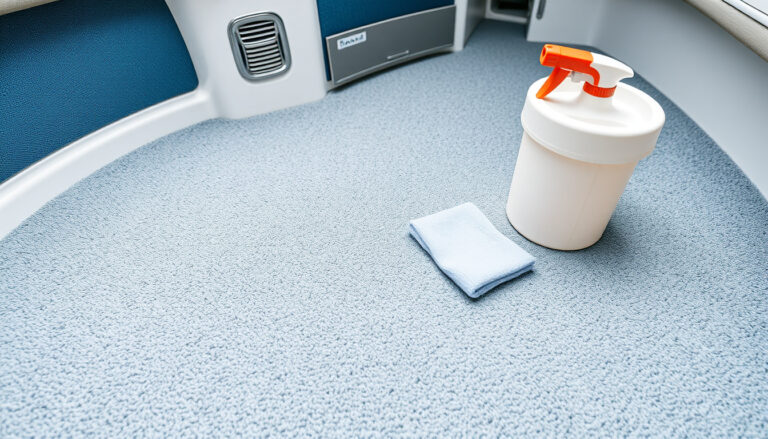
Before storing indoors, deep-cleaning the carpet reduces the mildew that can develop in a closed cabin. A clean interior also makes spring commissioning more pleasant and protects resale value.
A practical example: a 24-foot cuddy cabin with an inboard/outdrive might receive a $299 winterization package, then add $120 for an oil change and $60 for a lower-unit service. The invoice reaches about $479 before storage or shrink-wrap. A reputable shop documents what was done and notes any freeze-risk issues found.
Storage, Haul-Out, and Shrink-Wrap Costs
Winterization is only part of the total seasonal bill. Many marinas and yards bundle service with storage, haul-out, and covering fees. The line-item total often surprises owners who compared only the engine service quote.
Common bundled charges include:
- Haul-out and launch: travel-lift or trailer handling at the beginning and end of the season.
- Pressure wash: removing marine growth before the boat sits for months.
- Blocking and stands: safely supporting the hull on land.
- Shrink-wrap or cover setup: protecting the topsides, cockpit, and deck hardware.
- Outdoor or indoor storage: charged by the foot for the season.
 Shrink-wrapping protects the boat during storage but adds a separate per-foot charge to the winterization bill.
Indoor heated storage costs more, often $50–$80 per foot in colder regions, but it reduces mildew, battery drain, and freeze risk. Outdoor storage is cheaper but requires stronger coverings and more frequent checks after storms.
Small line items add up quickly when a boat stays on site for months. Environmental and disposal fees, shop supplies, electricity access for chargers, and extra strapping for high-wind areas can all appear on the final invoice.
A practical example: a 22-foot bowrider quoted $450 for winterization might also be billed $250 for haul-out, $120 for pressure washing, $300 for outdoor storage, and $280 for shrink-wrap. The advertised $450 job becomes a $1,400 season total.
If your storage bill makes you question whether keeping the boat is worthwhile, weigh the cost of disposal before investing more. Sometimes an older hull costs more to store and repair than it is worth.
How to Estimate a Realistic Quote and Avoid Surprise Fees
The easiest way to control cost is to demand clarity before anyone touches the boat. A realistic quote separates labor, materials, and storage, then lists optional work as opt-in. If a shop will not provide that structure, the final invoice is likely to be just as vague.
Ask specific intake questions: engine type, outdrive or inboard, closed versus raw-water cooling, generator, water heater, head system, and where the boat will sit. If the shop does not ask these questions, the quote is probably generic and incomplete.
Request a written estimate that includes:
- A not-to-exceed authorization threshold for unexpected repairs.
- Itemized storage terms with dates, indoor or outdoor rate, and electricity access.
- Exact materials billed, including gallons of antifreeze and filter part numbers.
- Clear exclusions such as impellers, bellows, batteries, and detailing.
A practical example: a customer approves a not-to-exceed limit of $950. When the technician finds a torn drive bellows, the shop calls before proceeding, explains the water intrusion risk, and gets approval for the extra repair instead of surprising the owner at pickup.
When comparing quotes, compare scope rather than the headline number. The best quote reads like a checklist with quantities and documented steps, not a vague promise of protection.
Ways to Reduce Winterization Costs Without Cutting Corners
Savings should come from reducing friction, not skipping critical protections. A shop can work faster and charge less when the boat is clean, accessible, and already prepared for service.
Practical ways to lower the bill include:
- Bundle tasks in one visit: schedule winterization with the final haul-out or service day to avoid extra yard moves and call-out fees.
- Prep the boat before drop-off: remove personal gear, empty lockers, label keys, and make the battery accessible.
- Standardize consumables: approve oil, filters, and antifreeze specifications up front to prevent inflated shop-supplied markups.
- Decline vague packages: pay for documented checks, not bundled promises that do not list steps or quantities.
- Book early: last-minute winterization often comes with rush pricing and fewer scheduling options.
Removing gear and deep-cleaning the carpet before drop-off reduces the time a technician spends moving items or cleaning around them. That time savings can translate directly into a lower labor charge.
A practical example: a 23-foot runabout owner arrives with the boat washed, batteries accessible, and a printed checklist of approved fluids. The shop finishes faster, avoids troubleshooting delays, and the invoice drops by an hour of labor without changing any freeze-protection steps.
Regional and Climate Considerations
Where you boat changes what winterization should cost and which steps matter most. A boat stored in Michigan faces different risks than one kept in coastal Virginia or the Pacific Northwest.
In hard-freeze regions, raw-water-cooled engines and freshwater plumbing need aggressive protection. Marine antifreeze volume rises, and indoor or heated storage becomes more attractive. In milder climates, owners sometimes skip full engine winterization, but they should still stabilize fuel, service batteries, and control moisture.
Saltwater environments add corrosion as a year-round concern. An off-season is the right time to rinse thoroughly, inspect anodes, and apply corrosion inhibitor to electrical connections. Boats stored near the coast often need more frequent washdowns even in winter.
Freshwater lakes and rivers may reduce corrosion pressure, but they do not eliminate freeze risk. Standing water in a lower unit, livewell, or water heater can still crack a housing when temperatures drop.
If you are unsure how cold your storage area gets, plan for the worst case. The cost of extra antifreeze is small compared with the cost of replacing a cracked engine block, manifold, or water heater.
Common Winterization Mistakes That Lead to Expensive Repairs
Many spring failures trace back to a skipped step or a shortcut taken the previous fall. The following mistakes are among the most expensive:
- Using automotive antifreeze in potable water systems: it is toxic and not safe for drinking water lines. Marine antifreeze is non-toxic and designed for boats.
- Forgetting the block drain plugs: trapped water freezes, expands, and cracks the block or manifold.
- Leaving seacocks open or closed incorrectly: improper positioning can trap water in the wrong place.
- Skipping fuel stabilizer: ethanol-blended fuel absorbs water and degrades over a long layup.
- Leaving the battery connected: parasitic draws can kill the battery and lead to sulfation.
- Ignoring the lower unit: old gear lube with water in it can freeze or damage bearings.
- Sealing a wet boat: covering a damp interior without ventilation promotes mildew and rot.
A common mistake is treating winterization as only an engine job. In practice, the freshwater system and lower unit are just as vulnerable. A cracked water heater or split washdown line can cost far more than the antifreeze that would have protected it.
Signs Your Boat Was Winterized Poorly
If you inherit a boat or take delivery in spring, a few warning signs can tell you whether winterization was done properly.
Look for:
- Water stains or mineral streaks below the block, manifolds, or water pump.
- A fuel tank that smells sour or varnished.
- A battery that will not hold a charge.
- Green or blue antifreeze stains in the bilge, indicating a possible leak during layup.
- A strong mildew odor in the cabin or under the deck.
- Corrosion or white powder around electrical connections.
If you spot these signs, have a marine technician pressure-test the cooling system and inspect the lower unit before launching. Catching a problem at the dock is far cheaper than a failure underway.
How to Choose a Marine Service Provider
A trustworthy shop saves money over time, even if its winterization quote is not the cheapest. Look for providers that communicate clearly, document their work, and understand your specific engine and systems.
When evaluating a shop, ask:
- Do they provide a written itemized estimate with a not-to-exceed limit?
- Will they photograph completed steps or walk you through the checklist?
- Do they specialize in your engine type, or is your boat outside their normal scope?
- What are their storage terms, and are they itemized separately from service?
- Do they note potential freeze risks they find during inspection?
In practice, a good shop will answer these questions without hesitation. A vague answer usually predicts a vague invoice.
Frequently Asked Questions
How much does it cost to winterize a boat yourself?
Most single-engine runabouts cost $60 to $250 in materials if you do the work yourself. That includes marine antifreeze, fuel stabilizer, fogging oil, and gear lube. Buying specialized tools for the first time may add $40 to $200.
What is included in a standard boat winterization?
A standard service typically covers engine and drive freeze protection, fuel stabilization, battery care, and basic moisture control. Oil changes, gear lube service, freshwater plumbing, generators, and shrink-wrap are usually billed as add-ons rather than included by default.
How long does boat winterization take?
For a professional, a single outboard or sterndrive often takes one to three hours. Twin engines, generators, and multiple plumbing systems can take half a day or more. DIY work usually takes a full day, especially the first time.
Is winterization necessary for an outboard boat?
Yes. Even outboards need fuel stabilization, lower unit inspection, fogging, and battery care. In freezing climates, the cooling passages and lower unit must be drained or protected. A cracked gearcase or water pump is expensive to replace.
Can I use automotive antifreeze in my boat?
No. Automotive antifreeze is toxic and should never be used in drinking water lines or areas where it can enter the water. Marine-grade non-toxic antifreeze is formulated for potable water systems and is the correct product for winterizing a boat.
When should I winterize my boat?
Winterize before the first hard freeze in your area. Many owners schedule service in late fall, but booking early avoids rush pricing. In mild climates, you may only need fuel stabilization and moisture control, but freeze-prone regions require full engine and plumbing protection.
Conclusion
How much it costs to winterize a boat depends on the systems aboard, your climate, and whether you choose professional service or do the work yourself. A simple outboard may cost $150–$350 to have winterized, while a twin-engine cruiser can run well over $1,000 before storage and shrink-wrap fees.
The right target is not the lowest number. It is the price that reliably prevents cracked blocks, corroded drives, dead batteries, and moldy interiors. Get an itemized quote, compare scope rather than headline price, and do not skip the steps that protect the most expensive parts of your boat.
Next step: write down your boat’s engine type, cooling system, and onboard plumbing, then request two itemized quotes or build a DIY materials list before the first freeze. Start this week, and you will avoid the last-minute rush pricing that catches so many owners.