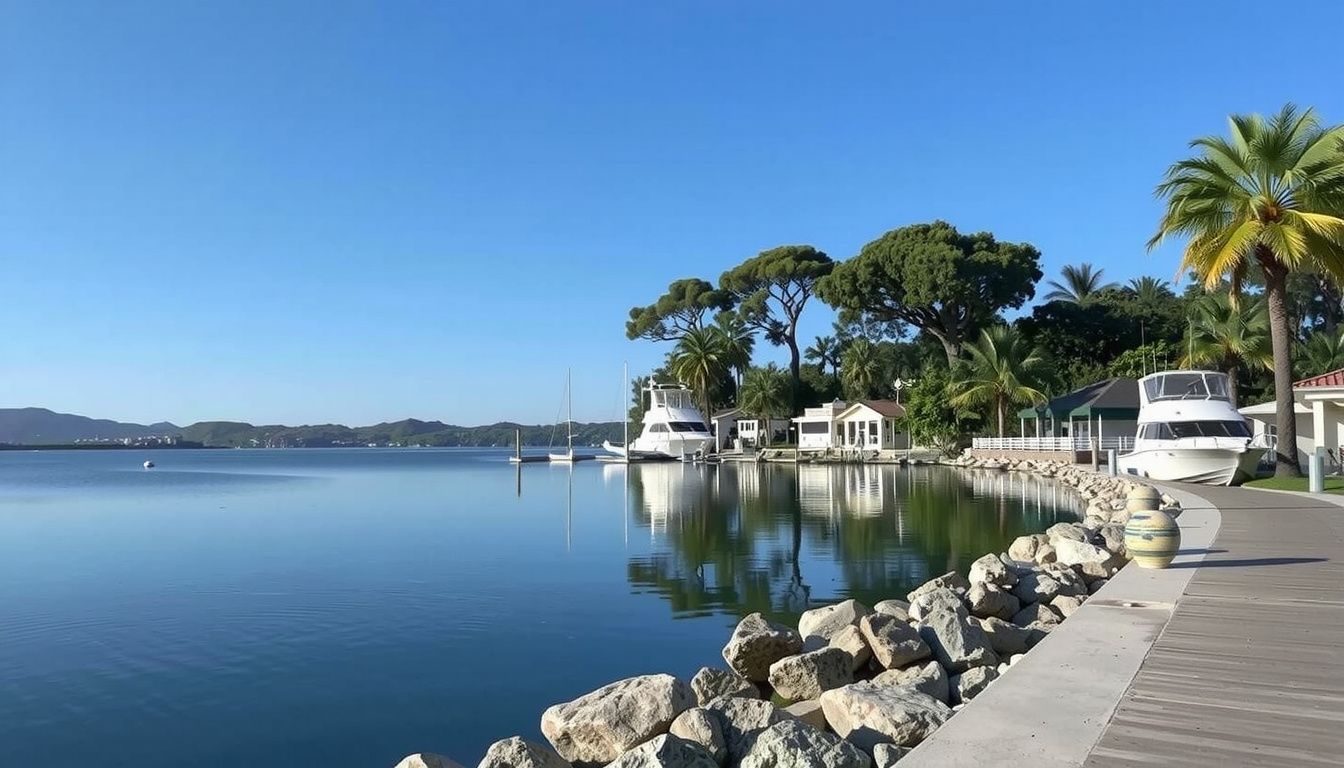
How Do You Get to Fisher Island: Ferry, Parking, Tips
Fisher Island sits just off the coast of Miami Beach—close enough to see from downtown, yet far enough to feel like another world. There’s no public bridge, no public road, and no casual drive-up access. That exclusivity is precisely why people visit, but it also means getting there requires more planning than a typical Miami destination. Understanding the ferry system, parking realities, and security expectations before you leave can mean the difference between a smooth arrival and being turned away at the dock.
Where Fisher Island Is and Why Access Is Limited
Fisher Island is a 216-acre barrier island located in Biscayne Bay, positioned between South Beach and Virginia Key. It’s technically part of Miami-Dade County, but it operates as a private residential community with one of the highest per-capita incomes in the United States. The island is home to a luxury resort, private residences, a golf course, and a deep-water marina, all behind controlled access points. For more on this, see our guide on how to get rid of an old boat.
The reason access is limited comes down to one word: privacy. Fisher Island is not a public park or tourist attraction. It’s a gated community surrounded by water, and security procedures are designed to keep unauthorized visitors out while ensuring residents and their guests move efficiently. There is no public roadway or pedestrian bridge connecting the island to Miami Beach or the mainland.
This physical separation means that access is strictly tied to authorization. In practice, this means residents, their invited guests, resort guests with confirmed reservations, employees, contractors with approved work orders, and marina visitors with prior clearance are the only people who typically get past check-in. Simply showing up at the terminal without a valid reason will not get you a ferry ticket. For more on this, see our guide on how do you start a boat after winterizing.
Key access points to understand:
- No public bridge or road connects Fisher Island to Miami Beach or downtown Miami.
- Entry requires verification at a staffed terminal before boarding.
- Casual sightseeing, walk-up visits, and unannounced drop-ins are not permitted.
A practical example: if you’re staying in South Beach and want to dine at a Fisher Island restaurant, your hotel concierge or the venue itself must place your name on an access list before you arrive. Without that step, security has no way to confirm you’re an expected guest, and you won’t board the ferry.
How Do You Get to Fisher Island by Ferry: The Main Route
For most authorized visitors, the ferry is the primary and most reliable route to Fisher Island. The crossing itself is short—typically under 10 minutes—but the process around it is structured like airport security more than a casual water taxi ride. For more on this, see our guide on how often do you clean a betta fish.
The ferry operates from the Fisher Island ferry terminal, located near Terminal Island just south of PortMiami and east of downtown Miami. You access the terminal via the MacArthur Causeway, which connects downtown Miami to Miami Beach. The terminal is not well-suited to random drop-ins; it’s a controlled point with staffed gates, ID checks, and access-list verification.
Ferry access works on pre-approval. That approval generally comes from one of four sources: a resident host who has added your name to the guest list, a confirmed reservation with the Fisher Island Club or another on-island venue, employment credentials, or a logged service appointment. Without one of these, you will not be permitted to purchase a ticket or board. For more on this, see our guide on how often do you feed a betta fish.
What to bring to the ferry terminal:
- A government-issued photo ID that exactly matches the name on the access list.
- Confirmation details from your host, venue, or employer—ideally saved offline.
- Extra time. Verification can take longer during peak weekend hours and events.
A common mistake is assuming the ferry is a public shuttle you can hop on like a city bus. It isn’t. Think of it as a controlled transit point where permission matters more than ticket price. If your name isn’t on the list, the conversation ends before you reach the dock.
Getting to the Ferry Terminal: Driving, Rideshare, and Public Transit
Once your access is confirmed and you know the ferry is your route, the next step is getting to the terminal itself. The ferry dock sits near the east end of the MacArthur Causeway, close to PortMiami cruise terminals. That location creates unique traffic and navigation challenges for first-time visitors. For more on this, see our guide on fisher speaker bluetooth how to connect.
Driving is the most practical option for families, groups, or anyone carrying luggage. Approach via I-395 or I-195 onto the MacArthur Causeway, then follow signs toward PortMiami and Terminal Island. Budget extra time for cruise ship traffic, especially on weekends when multiple ships are in port. Drawbridge openings can also cause sudden delays, so check live traffic before leaving and allow a 15-to-20-minute buffer beyond your normal drive time.
Rideshare is often the lowest-stress choice for solo travelers and couples staying in downtown Miami, Brickell, or South Beach. Set your destination to the Fisher Island ferry terminal or the PortMiami Terminal Island area—not “Fisher Island” itself, which is unreachable by car. A useful tip: screenshot the pickup pin when you arrive. Cell service and GPS accuracy can drift near the port, and having the pin saved makes your return trip much easier.
Public transit is the least forgiving option but workable on a budget. You can take Metrorail or Metromover to downtown Miami, then connect to a Miami-Dade Transit bus heading toward PortMiami. The last leg often requires a short rideshare or a walk where pedestrian access is safe and permitted. This option works best if you’re traveling light and your schedule has flexibility.
Choosing your approach:
| Method | Best For | Tradeoff |
|---|---|---|
| Driving | Families, luggage, control | Parking cost and cruise traffic |
| Rideshare | Solo travelers, convenience | Surge pricing near port |
| Public transit | Budget travelers | Time and last-mile complexity |
In practice, most visitors find that rideshare or driving to a nearby garage and taking a short rideshare from there strikes the right balance between cost, speed, and stress.
Parking Options Near the Terminal and What They Should Know
Parking near the Fisher Island ferry terminal is one of the most underestimated parts of the trip. The area around PortMiami is dense with cruise terminals, restricted lanes, and long-term parking garages that aren’t designed for short ferry visits. There is no dedicated public parking lot for Fisher Island ferry passengers.
For drivers, the safest approach is to park in a designated public garage or lot near PortMiami or downtown Miami, then complete the final leg by rideshare or a short walk where allowed. PortMiami operates official parking garages at several cruise terminals, but availability can fluctuate based on cruise schedules and port events. Parking there without knowing which terminal your ferry departs from can leave you walking farther than expected.
Downtown Miami garages offer more flexibility and often clearer public access. Many charge by the hour with daily maximums, while port-adjacent lots may charge flat event rates during cruise days. Take a photo of your parking level and zone, and keep a record of the payment method and validation rules. Re-entry policies vary, and losing track of where you parked is surprisingly common after a long day on the island.
Parking strategies worth considering:
- Closest option: PortMiami garages—convenient but often busy and restricted.
- More flexible: Downtown Miami public garages with straightforward entry.
- Lowest stress: Park farther out, then rideshare the last mile.
Timing matters too. Mid-morning through early afternoon is the hardest window, particularly when cruise embarkation overlaps with weekday commuter traffic. During major Miami events like Art Basel or boat show weekends, parking fills earlier and costs more. If your visit coincides with one of these, assume you’ll need an extra 30 minutes just to park and reach the terminal.
What to Expect on Arrival: Security, Check-In, and Getting Around
Stepping off the ferry onto Fisher Island feels less like arriving at a beach and more like entering a gated resort community. Security remains present throughout the island, and the atmosphere is intentionally controlled and low-key.
Security at the terminal and on the island checks identification and confirms your reason for visiting. Have your ID accessible—not buried in a bag—and be ready to state your host’s name or your reservation details. Staff are professional and used to visitors, but they move faster when you have your information organized.
Check-in depends on your purpose. Resort guests typically head to the front desk at the Fisher Island Club, while day visitors may be directed to a specific venue entrance. Restaurant guests, spa clients, and marina visitors each have their own arrival path. Confirm those instructions with your host or venue before you board, so you’re not wandering once you land.
Arrival checklist:
- Keep your ID in hand, not in luggage.
- Have your reservation or guest confirmation pulled up on your phone.
- Ask staff where the appropriate drop-off or pickup zone is before walking off.
Getting around the island is deliberately low-speed. Many residents and guests use golf carts, resort shuttles, or pre-arranged rides. Walking distances can be longer than they appear on a map, and spontaneous transport options are limited. If you’re arriving for a timed appointment—like dinner or a spa service—ask the venue to arrange a golf cart pickup when you confirm your booking. That one step can save you a 15-to-20-minute walk and prevent a late arrival.
 The island’s controlled marina and ferry approach, seen from above.
Alternative Ways to Reach Fisher Island: Private Boat and Charter
If you already have access to a boat or you’re coordinating a special event, arriving by water offers more flexibility than the ferry schedule. Private boats and charters let you set your own timing, but they still operate under the island’s security rules.
Private boat access means docking at an approved marina or designated slip and entering through the island’s controlled pathways. You’ll face the same identification and authorization checks as ferry passengers, so don’t assume arriving by yacht bypasses security. Coordinates for the marina are available through the Fisher Island Club, but docking arrangements must be confirmed in advance with the marina office.
Charters are the simplest hands-off alternative for groups who want a predictable experience. A licensed operator handles navigation, docking coordination, and timing, while you focus on arrival logistics. The tradeoff is cost—private charters are significantly more expensive than the ferry—and you’ll need to confirm where the charter is permitted to land and who is authorized to meet your group. Event charters are common for weddings, private dinners, and corporate functions, especially when the venue coordinates approved arrival windows.
Water access options compared:
| Option | Best For | Key Requirement |
|---|---|---|
| Private boat | Yacht owners and experienced operators | Approved marina slip and guest authorization |
| Charter or water taxi | Groups wanting set timing | Licensed operator and landing permission |
| Event transfer | Coordinated functions | Venue-arranged access window |
Always confirm weather conditions, cancellation terms, and whether luggage, coolers, or equipment are allowed before booking. On the water, small rules become big problems fast, and a midday thunderstorm can scramble even the best-laid plan.
 Private charters offer flexibility but still require marina approval and guest authorization.
Common Questions and Mistakes to Avoid When Planning the Trip
Most first-time visitors assume Fisher Island works like a public beach shuttle, and that assumption causes most of the problems. The island operates on controlled access, and small planning errors compound quickly at security.
One of the most frequent questions is whether anyone can buy a ferry ticket. The answer is no—ticket access depends on verified authorization. Your name must match the reservation, and the ID you present must match the name used to book. A mismatch can trigger delays while staff reconcile the discrepancy.
Common mistakes to avoid:
- Arriving right on time without a buffer for check-in and ID verification.
- Relying on cell service to pull up a confirmation email that won’t load.
- Bringing oversized coolers, unapproved deliveries, or gear that creates a security issue.
- Forgetting to confirm the return ferry schedule or your host’s pickup plan.
A common real-world scenario: a couple booked under a nickname, while their IDs showed their legal names, and the confirmation email was buried in a spam folder. They lost half an hour at check-in while staff reissued access. The fix is simple—use your legal name when booking, save confirmation details offline, and keep your host’s contact number handy.
Pre-trip verification list:
- Confirm your access with your host or venue before leaving.
- Match your booking name to your ID exactly.
- Save confirmations offline; don’t rely on connectivity.
- Know your return plan before you board the ferry outbound.
If you’re staying in the Miami area as part of a longer trip, you might compare the planning mindset here to other logistics-heavy outings. For example, understanding how to handle gear and timing on the water is similar whether you’re visiting a private island or booking one of the best pontoon boats for a family day out.
Frequently Asked Questions
Can anyone visit Fisher Island as a day visitor?
No. Fisher Island is a private community, and day visits are only possible with a confirmed reservation at the resort, an invitation from a resident, or approved business. Walk-up sightseeing is not permitted.
How much does the Fisher Island ferry cost?
Ferry access is tied to authorization rather than a public fare. For authorized residents, employees, and guests, access may be included or billed through the venue or employer. There is no standard public ticket price.
Can I drive my car onto Fisher Island?
No. There is no public vehicle access to Fisher Island. Authorized residents and service vehicles with specific permits may use the barge system, but visitors cannot drive personal cars onto the island.
Is there parking at the Fisher Island ferry terminal?
There is no dedicated public parking lot for ferry passengers. Visitors typically park at PortMiami or downtown Miami garages and take a short rideshare to the terminal. Confirm parking availability in advance during cruise-heavy days.
Do I need a reservation for the Fisher Island ferry?
Yes. Ferry access is based on a confirmed guest list, venue reservation, or approved service order. Without prior authorization, you cannot board, regardless of when you arrive.
What is the fastest way to get to Fisher Island?
For most authorized visitors, the ferry from the Terminal Island dock is the fastest and most direct option. Private charters can save time for groups, but only if marina access and guest clearance are arranged in advance.
How early should I arrive at the ferry terminal?
Arrive at least 30 to 45 minutes before your intended ferry time. Security checks, ID verification, and unexpected lines can delay boarding, especially on weekends and during major Miami events.
Conclusion
Getting to Fisher Island isn’t complicated once you understand the core rule: access is controlled, and planning beats spontaneity every time. The ferry from the Terminal Island area is your main route, but only after your name is on an authorized list. Parking near the dock requires strategy, security checks require preparedness, and on-island movement works best when arranged ahead of time.
Your next step is simple: confirm your access with your host or venue, save your confirmation offline, and arrive early enough to handle the unexpected. Do that, and the rest of the experience—the private beaches, the quiet marina, the sense of being somewhere few people ever see—is yours to enjoy.