Starting a Fish Tank for Beginners: Step-by-Step Setup
A new fish tank looks simple until the water turns cloudy, a fish hides all day, or the first water test shows ammonia you didn’t expect. The problem is rarely the fish. In most cases, it comes down to rushing the setup, skipping the nitrogen cycle, or buying equipment that doesn’t match the tank’s real needs.
The good news: a beginner aquarium becomes predictable when you treat it as a small, living system rather than a box of water. Get the order right—tank, equipment, hardscape, cycling, then fish—and the first month is far calmer.
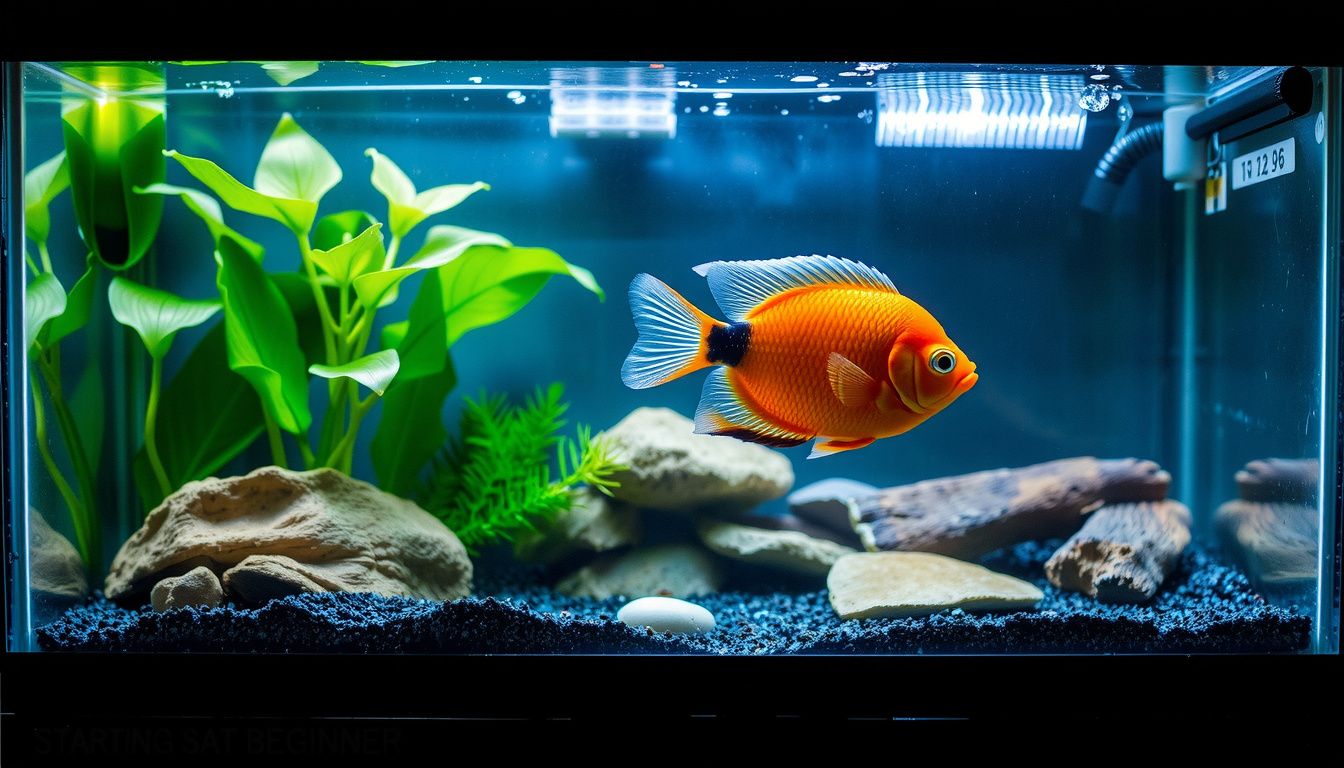
This step-by-step guide covers everything from choosing the right tank size to safe stocking and weekly maintenance. Use it as a working checklist, not a quick skim.
What Beginners Need to Know Before Buying a Fish Tank
Before spending money, understand one concept: an aquarium is not a glass container. It is a closed ecosystem where fish waste, uneaten food, and respiration all affect water chemistry. Most first-tank failures happen because the biological filter—millions of beneficial bacteria—has not had time to establish.
That process is called the nitrogen cycle. Fish produce ammonia through their gills and waste. Ammonia is highly toxic. One group of bacteria converts ammonia into nitrite, which is also toxic. A second group converts nitrite into nitrate, which is far less harmful and is removed through regular water changes. If you add fish before these bacteria exist, ammonia and nitrite can spike within days.
Budget realistically. A reliable heater, an appropriately sized filter, water conditioner, a thermometer, and a liquid test kit are not optional extras. Skipping the test kit is the most common reason a tank “looks fine” right before fish start gasping at the surface.
Plan for these basics:
- Time: A fishless cycle usually takes 2–6 weeks, depending on temperature, ammonia source, and whether bottled bacteria are used.
- Water changes: Expect weekly partial water changes, not monthly deep cleanings.
- Stocking: Choose fish based on adult size and temperament, not juvenile store labels.
- Source water: Check whether your tap water contains chlorine or chloramine, and whether it is hard or soft.
In practice, the most expensive mistake is buying a tank, adding five fish on day one, and then feeding heavily to “help them settle.” Within 48 hours, ammonia climbs, fish gasp, and the owner buys medication instead of doing water changes and letting the cycle finish.
Choosing the Right Tank Size, Location, and Stand
Bigger tanks are more forgiving than small ones. A 20-gallon long tank gives you more water volume to dilute waste, more swimming length for active fish, and slower temperature swings. A 5- or 10-gallon tank can work for a single betta or a shrimp colony, but it demands stricter feeding and more frequent water testing.
For most beginners, 20 gallons is the sweet spot. It is large enough to buffer minor mistakes but small enough to carry, clean, and place in a normal room. Avoid very tall or narrow tanks for community fish; most species prefer horizontal swimming space.
Placement is structural, not just aesthetic. Water weighs about 8.3 pounds per gallon before gravel, rock, and glass. A filled 20-gallon aquarium can easily weigh over 200 pounds. That load must sit on a level, purpose-built stand that supports the entire bottom frame evenly. A dresser, shelf, or flimsy table can twist under the weight, stressing the silicone seams.
Choose a location that avoids:
- Direct sunlight, which fuels algae
- Heating or air-conditioning vents, which cause temperature swings
- High-traffic areas where the tank may be bumped
- Spaces where you cannot open the lid fully or fit a siphon
A common beginner mistake is placing the tank near a window “for the view,” then fighting green algae for months. Keep the tank away from sunlight and put the light on a timer instead.
Essential Equipment Checklist (Filter, Heater, Light, and More)
Now that the tank location is set, choose equipment that supports stable conditions. You do not need the most expensive gear, but you do need gear that fits the tank and is easy to service.

A filter, heater, thermometer, test kit, and water conditioner cover the minimum beginner setup.
Filter
A filter performs two jobs. It removes floating particles, and it provides surface area for beneficial bacteria. For most beginner tanks, a hang-on-back filter is the easiest to clean and maintain. Sponge filters are gentle and inexpensive, making them good for bettas and small tanks. Canister filters work well on larger aquariums but add complexity.
Size the filter for your tank volume, and if possible choose one rated slightly above your tank size. The flow should turn the surface without blasting fish around the tank.
Heater
Most tropical fish need stable temperatures between 75°F and 79°F (about 24–26°C), but check the needs of your specific species. Use an adjustable heater paired with a separate glass or digital thermometer. Preset heaters are convenient, but they can drift, and you need an independent reading to catch problems.
A rough starting point is 3–5 watts per gallon for average room temperatures, but verify with the thermometer and adjust gradually if needed.
Light
Fish-only tanks need basic illumination to view the fish. Planted tanks need stronger, plant-capable LEDs. Put the light on a timer for 8–10 hours per day. Consistent light duration helps prevent algae outbreaks better than constantly switching the light on and off.
Other essentials
| Item | Why it matters | Beginner tip |
|---|---|---|
| Water conditioner | Neutralizes chlorine and chloramine in tap water | Dose for the full tank volume every refill |
| Liquid test kit | Tracks ammonia, nitrite, nitrate, and pH | Avoid test strips for cycling; liquids are more reliable |
| Gravel vacuum and bucket | Removes debris during water changes | Reserve both for aquarium use only |
| Fish net | Moves fish safely | Soak the net in tank water before use |
| Algae scraper | Keeps glass clear without chemicals | Use a plastic blade on glass, not acrylic |
| Lid | Reduces evaporation and prevents jumping | Use a tight-fitting lid for known jumpers |
Before you buy, save or print this checklist so you can compare brands at the shop without forgetting a piece.
Setting Up the Tank: Substrate, Decor, Plants, and Water Prep
The setup order matters more than most beginners expect. Rushing this stage causes cloudy water, floating debris, and hardscape that shifts after the tank is filled.
Substrate
Start with rinsed gravel or sand. Rinse in small batches outdoors or in a bucket until the water runs mostly clear. Unrinsed substrate creates a dust storm that can take days to settle.
Choose grain size based on fish behavior. Sand is ideal for bottom-dwellers like corydoras catfish. Gravel is easier to vacuum and works well for general community tanks. Avoid very fine or very coarse materials that trap waste or make vacuuming difficult.
Decor and hardscape
Place heavy rocks and driftwood directly on the bottom glass or on a thin support mat before adding the full substrate depth. If you place them on top of the substrate, digging or burrowing fish can undermine them, causing a rock slide against the glass.
Avoid sharp ornaments and plastic plants with rough edges. Fins catch and tear easily. Also avoid garden wood chips, fresh mulch, or unseasoned wood as aquarium décor. Their decomposition behavior underwater is very different from cured driftwood and can leach organics that foul the water.
Plants
Hardy live plants make a tank more stable by absorbing some nitrate, but they do not replace the filter or the nitrogen cycle. Beginner-friendly choices include anubias, java fern, and vallisneria. Anubias and java fern are rhizome plants: do not bury the horizontal rhizome. Tie or glue them to rock or wood instead.
For a simple aquascape, place taller plants toward the back and leave open swimming space in front. The same visual-balance thinking used for plant containers on a patio can help you avoid a cluttered look.
Water prep
Fill slowly. Place a clean plate or plastic bag on the substrate and pour water onto it to prevent craters. Fill the tank about halfway, adjust the hardscape if needed, then finish filling.
Always add water conditioner for the full tank volume before or immediately after filling. Start by understanding your source water. Check your municipal water provider’s report or the EPA’s drinking water guidance for chlorine, chloramine, pH, and hardness ranges before you choose fish.
After filling, install the heater and filter, then let the system run for several hours. Confirm the temperature is stable and the water is clear before moving on to cycling.
Cycling the Aquarium: Establishing Beneficial Bacteria Correctly
Clear water is not safe water. A brand-new tank can look perfect while containing enough invisible ammonia to kill fish. Cycling is the process of building the bacteria that process that ammonia.
A fishless cycle is the most controlled method for beginners. You add an ammonia source to the empty tank, feed the growing bacteria, and test daily until the system can process ammonia and nitrite quickly. Bottled nitrifying bacteria can speed the process, but they should never replace testing.
Fishless cycle steps
- Set the heater to your planned stocking temperature and run the filter 24/7.
- Add a pure ammonia source to reach about 2 ppm ammonia.
- Test ammonia and nitrite daily.
- When ammonia starts falling, nitrite will rise.
- When both ammonia and nitrite drop to 0 within 24 hours after dosing ammonia, and nitrate is measurable, the cycle is complete.
Cycling is not instant. It is a biological process with a lag phase, similar to the way organic scraps in a compost pile need time and the right microbes to stabilize before they become safe for garden use.

Test the water before adding fish; clear water can still contain toxic ammonia or nitrite.
Avoid large water changes during the active cycle unless ammonia or nitrite reaches extreme, dangerous levels. Once the cycle is complete, do a partial water change to lower nitrate below about 20–40 ppm before adding fish.
Target readings before stocking:
- Ammonia: 0 ppm
- Nitrite: 0 ppm
- Nitrate: measurable but low, often 5–20 ppm
- pH: stable and within the range of your planned fish
A common mistake is testing once, seeing 0 ammonia, and assuming the tank is cycled. You must dose ammonia and verify it disappears within 24 hours. Otherwise, the bacteria population may not handle the waste load from fish.
Adding Fish Safely: Stocking Plans, Acclimation, and Compatibility
Stock slowly. A newly cycled filter has a small bacteria population. Adding too many fish at once overwhelms it and causes a mini-cycle with ammonia and nitrite spikes.
Start with 25–40% of your planned bioload. Add a small group, wait one to two weeks, test daily, and only add more if ammonia and nitrite remain at 0. Quarantining new fish in a separate tank for 2–4 weeks is ideal, though many beginners skip it. At minimum, choose fish that appear active, breathe normally, and show no white spots or clamped fins.
Species compatibility matters more than color preference. Fish that share temperature and pH ranges usually coexist well. Avoid mixing aggressive fin-nippers with slow, long-finned species. Schooling fish like tetras and rasboras need groups of six or more to feel secure.
Acclimation
Store water and home water rarely match in temperature, pH, or mineral content. Float the sealed bag in the tank for 15–20 minutes to equalize temperature. Then open the bag and gradually add small amounts of tank water every 5–10 minutes for 30–40 minutes. Net the fish out and release them into the tank. Never pour store water into your aquarium.
Feed lightly for the first week. Overfeeding after stocking is one of the fastest ways to create an ammonia spike in an otherwise healthy tank.
Routine Care and Troubleshooting: Maintenance, Testing, and Common Mistakes
A stable aquarium comes from small, repeatable habits. Set a weekly routine and stick to it.
Weekly maintenance
- Replace 20–30% of the water with dechlorinated tap water matched roughly to tank temperature.
- Vacuum debris from the substrate. Move the siphon slowly so waste lifts from between grains. It is more like working a vacuum across a porous surface than simply draining old water.
- Wipe algae from the glass.
- Top off evaporation with dechlorinated water.
Reserve one bucket and siphon strictly for aquarium use. Do not rinse them with soap, bleach, or household cleaners. The same habit that keeps boat cleaning supplies from contaminating surfaces applies to your fish tank.
Testing
Test ammonia and nitrite any time fish act off. Test nitrate weekly to guide water-change volume. Do not chase pH with quick-fix chemicals; a stable pH that is slightly outside the “ideal” range is usually better than a fluctuating one.
Common problems
- Cloudy water: Usually a bacterial bloom or overfeeding. Reduce feeding, keep the filter running, and continue small water changes.
- Fish gasping at the surface: Low oxygen or high ammonia/nitrite. Increase surface agitation and test immediately.
- Algae spikes: Too much light or nutrients. Shorten the photoperiod, remove excess waste, and avoid overfeeding.
- High nitrate: Do a large water change today, a second in two days, then reduce feeding and check filter flow.
When cleaning the filter, never rinse media under tap water. Chlorine kills beneficial bacteria. Squeeze or rinse filter media gently in old tank water instead. Replace only part of the media at a time, not all at once.
30-Day Beginner Checklist
Use this simple order to stay on track during the first month.
| Day | Action |
|---|---|
| Day 1 | Set up tank, substrate, decor, and water; install heater and filter |
| Day 2–3 | Begin fishless cycle; dose ammonia to 2 ppm |
| Daily during cycle | Test ammonia and nitrite; record results |
| When ammonia and nitrite reach 0 | Dose ammonia again and confirm 24-hour processing |
| Before stocking | Do a partial water change to lower nitrate |
| First stocking day | Acclimate and add a small group; feed lightly |
| Weekly | Change 20–30% water, vacuum substrate, test nitrate |
Keep a simple log with test results, feeding notes, and observations. It removes the guesswork when something looks off.
Frequently Asked Questions
How long does a fish tank need to cycle before adding fish?
A fishless cycle typically takes 2–6 weeks. The tank is ready only when you can add ammonia, then see both ammonia and nitrite fall to zero within 24 hours, while nitrate is measurable. Use a liquid test kit, not a calendar, to decide when stocking is safe.
Can I use tap water for my aquarium?
Yes, but treat it with a quality water conditioner to neutralize chlorine and chloramine. Check your municipal water report for pH, hardness, and disinfectants. If your tap water has extreme chemistry, you may need to choose fish suited to those parameters rather than chase constant adjustments.
How many fish can I put in a 10-gallon tank?
It depends on adult size, activity level, and waste output, not the number on a store tag. A 10-gallon tank suits a single betta, a small shrimp colony, or a very small group of nano fish. Start with fewer fish than you think you can keep, then test before adding more.
Why is my new fish tank cloudy?
Cloudiness usually comes from a bacterial bloom, unrinsed substrate dust, or overfeeding. A bacterial bloom often appears during cycling and clears on its own. Stop adding food, keep the filter running, and do small water changes only when ammonia or nitrite levels require it.
Do I need a heater for a freshwater tank?
It depends on the species. Most tropical fish need a stable temperature in the mid-70s to low-80s Fahrenheit, so a heater is essential. Coldwater fish like white cloud mountain minnows can often go without one, but even coldwater tanks benefit from stable room temperatures.
How often should I clean my fish tank?
Do a 20–30% water change weekly, vacuum the substrate, and wipe the glass. Clean the filter media less often—usually every 2–4 weeks—and only in old tank water. Avoid deep cleaning everything at once, because that removes the beneficial bacteria your tank depends on.
The Bottom Line
Starting a fish tank for beginners is not about buying the biggest setup or the most colorful fish. It is about following the biological order: cycle first, stock slowly, test weekly, and change water consistently.
When you get that right, the tank becomes easier over time, not harder. Fish stay active, water stays clear, and problems show up early enough to fix with a water change instead of a medication aisle panic.
Your next step is simple: choose a start date, gather the equipment on the checklist, and begin the fishless cycle. Commit to the 30-day routine, log your results, and you will build the kind of stable aquarium that actually feels relaxing.