Fish Tank Thermometer How to Read: Step-by-Step Guide
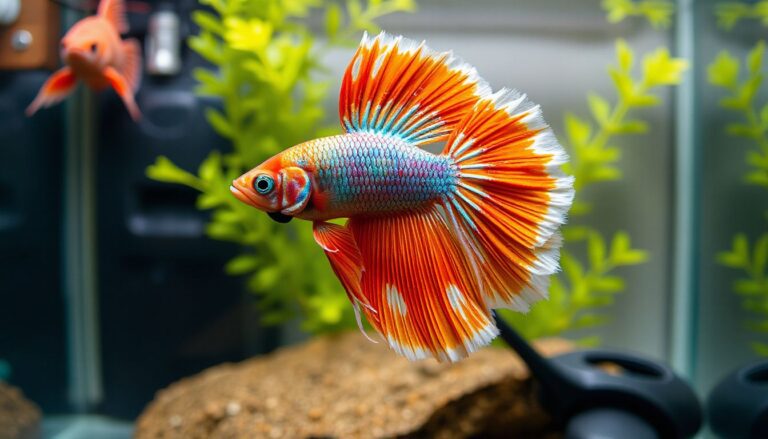
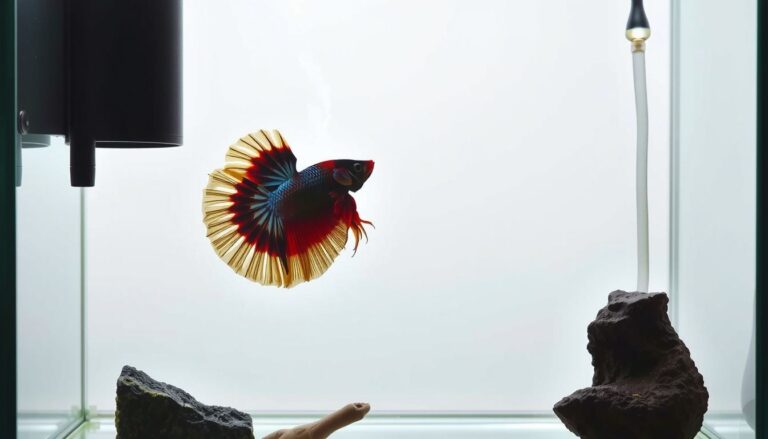
Fish tank thermometer how to read becomes urgent when they notice a betta hovering near the heater, moving slower than usual. The tank looks fine. The filter runs.
Yet one small number can explain the change faster than any water test strip.
Reading a thermometer sounds simple, but aquarium models vary, and tiny markings are easy to misinterpret. This guide shows them how to check temperature accurately, spot false readings, and confirm what the heater is really doing, so fish aren’t stressed by silent swings.
For example, they might see a stick-on strip showing 78°F while a glass thermometer reads 74°F. That gap is a red flag: one device may be placed poorly, calibrated differently, or influenced by nearby equipment.
- Identify the thermometer type (digital probe, glass, stick-on strip)
- Read the scale correctly (°F vs °C, tick marks, color bands)
- Verify accuracy by cross-checking and proper placement
Look, the goal isn’t perfection—it’s consistency. Once they know what to look for, they can keep the tank stable and make heater adjustments with confidence.
Identify the Thermometer Type and Its Scale
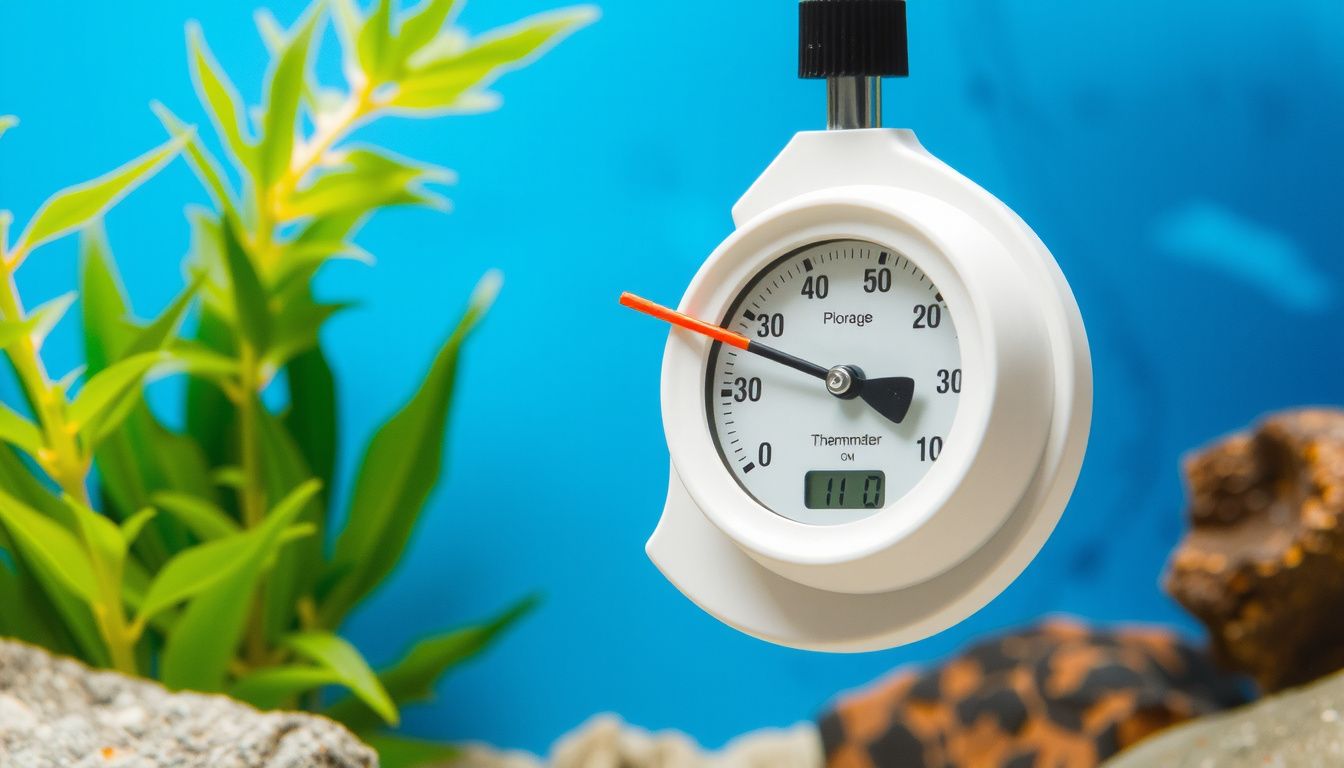
Now, the quickest way to avoid a bad reading is to identify what kind of thermometer they’re holding and what scale it uses. Most aquarium thermometers are either glass alcohol, stick-on (liquid crystal), digital probe, or infrared. Each reports temperature differently, and some are easier to misread than others.
They should first check the unit label: °F or °C. Many mistakes come from assuming Fahrenheit when the device is showing Celsius (or vice versa). Look for tiny print near the numbers, the app setting on smart models, or a “C/F” toggle button on digital units.
- Glass alcohol: read the top of the colored column at eye level; avoid parallax from angled viewing.
- Stick-on: read the brightest, fully lit number; half-lit blocks indicate in-between temps.
- Digital probe: wait for the reading to stabilize; confirm the probe is submerged, not against the heater.
- Infrared: it reads surface temperature, not water core; it’s best for quick checks, not calibration.
Practical example: if a stick-on strip shows “78” bright and “80” faint, they should record about 78–79°F, not 80°F. That small difference can change heater adjustments and stress-sensitive species behavior.
Gather Prerequisites Before You Start
Before they focus on fish tank thermometer how to read, they’ll get better accuracy by setting up a few basics. It takes minutes. It prevents chasing false temperature swings caused by placement, bubbles, or rushed readings.
They should gather tools and confirm the tank is in a stable state. If a water change just happened or the heater was unplugged, they should wait 20–30 minutes for the system to normalize.
- A clean microfiber cloth or paper towel (for wiping glass and removing condensation)
- A timer or phone stopwatch (to standardize “settle time” for digital probes)
- A second thermometer for cross-checking (cheap digital or glass is fine)
- Notebook/app for logging readings by time and location in the tank
They should also pick a consistent measurement spot: mid-water, away from the heater, filter outflow, and direct sunlight. Those zones run warmer or cooler than the tank average and can mislead adjustments.
Practical example: when a digital probe is suction-cupped right beside the heater, it may show 82°F while mid-tank water is 78°F. Moving the probe to mid-water and waiting 3 minutes often reveals the true operating temperature.
Place the Thermometer Correctly in the Tank
Now that the tools are ready, placement becomes the make-or-break factor for fish tank thermometer how to read accurately. A thermometer can be perfectly calibrated and still lie if it’s sitting in a hot or cold micro-zone.

They should position it where fish actually live: mid-water, away from direct heater output and away from the filter’s strongest outflow. The goal is to measure the tank’s average temperature, not a localized hot spot.
For most setups, a reliable placement checklist looks like this:
- Height: mid-level in the water column, not touching substrate or floating at the surface.
- Distance: 2–4 inches away from the heater and not pressed against the glass near it.
- Flow: gentle circulation nearby, but not directly in the filter jet.
- Visibility: easy to read without moving décor or stressing fish.
Look for sneaky placement errors. A stick-on strip reads the glass temperature, so placing it right beside the heater often shows warmer than the water. A floating thermometer can drift into the outflow and show cooler or warmer depending on where it parks.
Practical example: in a 10-gallon betta tank with a small internal filter, they can place the thermometer on the opposite side of the heater, halfway down the glass. If the heater is set to 78°F, that spot should reflect the overall water temperature the betta experiences.
Wait for the Reading to Stabilize
Once the thermometer is in the right spot, they need to give it time. Most “bad readings” happen because someone checks too fast, then adjusts the heater based on a number that hasn’t settled.
Stabilization time depends on the thermometer type and what just changed in the tank. If they’ve just done a water change, moved the heater, or opened the lid for a long time, the tank can take a while to re-balance.
Use these timing rules as a practical baseline:
- Digital probe: wait 60–180 seconds after placing the probe, then re-check once more.
- Glass/alcohol thermometer: wait 5–10 minutes for the liquid column to stop creeping.
- Stick-on strip: wait 20–30 minutes after any major change, since the glass must equalize.
A pro tip: they should read at the same time each day for a week. Consistent timing reveals true trends, not momentary swings from lights, feeding, or room temperature.
Common mistake: adjusting the heater repeatedly during warm-up. Practical example: after a 30% water change, they should wait 20–30 minutes, then confirm the temperature twice, five minutes apart. If both readings match closely, it’s stable enough to act on.
Read the Temperature Accurately on Each Thermometer Type
Now that the reading has stabilized, the next job is interpreting it correctly for the specific thermometer in use. Small misreads happen fast, especially when glare, bubbles, or curved glass distort the view.
For glass floating or stick-on strip models, they should read at eye level and in steady light. With a floating glass thermometer, they should align the top of the liquid column with the nearest tick mark and note the unit (°F or °C). For stick-on LCD strips, they should read the brightest, most solid color block, not the faint “in-between” squares.
For digital probe thermometers, they should wait until the numbers stop changing, then record the value. If the display “jumps” by 1–2 degrees, they should let it run another minute; some probes average readings in cycles.
- Pro tip: Wipe condensation off the outside glass before reading stick-on strips.
- Pro tip: Read during normal room lighting; blue aquarium LEDs can skew LCD strip visibility.
- Common mistake: Reading a floating thermometer while it’s touching the heater or filter outflow.
Practical example: If a strip shows 78°F in green and 80°F in brownish-green, they should log 78°F. That “almost 80” block often reflects edge heat from a nearby heater, not the tank’s average.

Verify Accuracy with a Second Measurement
Look, even a perfectly read thermometer can be wrong. Verifying with a second measurement is how they confirm the actual water temperature before adjusting a heater or diagnosing fish stress.
They should compare two different thermometer types when possible, since shared flaws can match. A digital probe paired with a glass thermometer is a strong combo. If both are the same type, they should place them on opposite sides of the tank to check for temperature gradients.
- Take the first reading and write it down.
- Move the second thermometer (or probe) to a different area of the tank.
- Wait for stabilization, then record the second reading.
- Compare results; a difference of more than 1–2°F (0.5–1°C) needs investigation.
- Pro tip: Test near the substrate and mid-water; warm water can stratify in low-flow tanks.
- Common mistake: Calibrating by “feel” or by heater dial markings.
- Common mistake: Checking right after a water change before temperatures equalize.
Practical example: If a betta tank reads 82°F on a stick-on strip but 78°F on a probe placed mid-tank, they should trust the probe and reposition the strip away from the heater zone, then recheck after 15 minutes.
Adjust Heater Settings Based on the Reading
Now that the temperature has been verified, the next move is to translate that number into a safe heater adjustment. When following fish tank thermometer how to read correctly, the goal isn’t “a warmer tank,” it’s stable temperature within the species’ range.
They should adjust the heater in small increments. Most aquarium heaters overshoot if changed too aggressively, especially in smaller tanks where water volume can’t buffer swings.
- Change the heater dial by 1–2°F (0.5–1°C) at a time.
- Wait 30–60 minutes before judging the new reading.
- Recheck again after 3–4 hours to confirm it’s holding.
- Keep the heater fully submerged (if rated) and away from strong direct flow that can create hot spots.
Pro tip: they should set the heater slightly above the target temperature, then let the thermostat cycle. Common mistake: chasing the number every few minutes; that creates instability and stress.
Example: a 20-gallon community tank reads 74°F but the target is 78°F. They raise the heater 2°F, wait an hour, then confirm it’s trending upward without jumping past 78°F. If it lands at 79–80°F, they back the dial down 1°F and recheck later.
Troubleshoot Unstable or Incorrect Temperature Readings
Look, when the reading jumps around or doesn’t match expectations, the issue is usually placement, equipment, or water movement patterns. They should treat inconsistent temperature as a problem to solve, not a number to ignore.
They can isolate the cause with a quick, structured check. The goal is to determine whether the thermometer is wrong, the heater is inconsistent, or the tank has true temperature gradients.
- Rapid swings (2–4°F in minutes): check for a failing heater thermostat or a heater turning on/off too frequently.
- Persistent mismatch vs. a second device: suspect calibration drift, low battery (digital), or a damaged probe.
- Different readings in different spots: strong filter output, poor circulation, or heater too close to the thermometer.
Pro tip: they should measure in two locations—near the heater and on the opposite side—then average the results if the tank is large. Common mistake: leaving a probe wire pinched under a lid, which can wick water and cause erratic digital readings.
Example: a 55-gallon tank reads 82°F near the heater but 77°F at the far end. They reposition the heater closer to flow, add a small circulation pump, and confirm both ends stabilize near 78–79°F.
You’re Ready
Now the process is simple: fish tank thermometer how to read becomes a quick habit, not a guessing game. The goal is consistency—steady temperature checks that protect fish, plants, and beneficial bacteria. When the numbers are trustworthy, every other choice gets easier.
They should set a small routine that fits the tank’s rhythm. A quick check works best when it’s tied to normal tasks, so it doesn’t get skipped.
- Pick a checkpoint (morning, lights-on, or feeding time) and stick to it.
- Log trends for a week to spot drift early.
- Act on patterns, not one-off blips, unless fish show stress.
Real-world example: after a weekend away, they notice the tank runs 2°F warmer than usual; the log shows it started when the room heater kicked on, so they adjust the environment before livestock is affected.
Next step: they should choose one daily checkpoint and start a 7-day temperature log today.
Related read: Blackstone Grill How to Use: Step-by-Step Setup to Cook