Air Stone For Fish Tank How To Use: Step-by-Step Setup
Air stone for fish tank how to use is a question many aquarists ask right after they notice fish hovering near the surface or a filter outlet that barely ripples the water. The tank looks fine, but the water feels “still,” and the fish act a little off. That’s usually the moment someone considers adding bubbles.
An air stone doesn’t “make oxygen,” but it improves gas exchange by moving the surface and circulating water. Used correctly, it can stabilize oxygen levels, reduce dead spots, and support healthier behavior—without turning the aquarium into a noisy bubble storm.
Look: the setup is simple. For example, a 20-gallon community tank with a sponge filter can benefit from a small 1-inch air stone placed near the back corner to boost flow and surface agitation, especially during warm weather when oxygen drops faster.
This guide walks through choosing, installing, and tuning an air stone so it helps—not harms. They’ll learn how to:
- Pick the right air pump, tubing, and stone size
- Place the stone for better circulation and quieter operation
- Prevent back-siphon and common bubble-related issues
Understand What an Air Stone Does (and When It’s Needed)
Now that the basics are clear, it helps to understand what an air stone is really doing in the tank. An air stone turns airflow from a pump into fine bubbles, increasing surface agitation. That agitation improves gas exchange, which supports steadier oxygen and carbon dioxide levels.
It’s not a “magic oxygen maker.” It mainly helps oxygen enter and carbon dioxide leave at the water’s surface, and it can reduce stagnant zones. Many aquarists also use it for gentler circulation in corners where debris settles.
An air stone is usually needed when any of these conditions show up:
- Warm water (holds less dissolved oxygen than cooler water)
- High stocking or heavy feeding (more waste and oxygen demand)
- Low surface movement from filters or lids that limit agitation
- Medication periods (some treatments reduce available oxygen)
Practical example: in a 20-gallon community tank kept at 80°F, fish may act sluggish during summer heat. Adding an air stone can stabilize nighttime oxygen dips, especially if live plants stop producing oxygen after lights-out.
Common mistake: running bubbles so aggressively that they stress long-finned fish or strip too much CO2 in planted tanks. Pro tip: aim for steady, fine bubbles and visible surface rippling, not a boiling effect.
Gather Supplies and Check Compatibility Before You Start
Look, setup goes smoother when compatibility is checked first. The key is matching the air pump’s output to the tank depth and the air stone’s size, then using safe materials that won’t kink or leak.
They’ll typically need the following items:
- Air pump sized for the aquarium (gallons and depth both matter)
- Airline tubing (standard silicone or PVC)
- Air stone (disc, bar, or cylinder)
- Check valve to prevent back-siphon during power loss
- Control valve (optional) to fine-tune bubble volume
Compatibility checks should be quick but deliberate. The pump must overcome water pressure; deeper tanks need stronger pumps. If the stone is too “dense” for a small pump, bubbles will be weak or inconsistent.
Practical example: if an aquarist places a small pump on a shelf below a 29-gallon tank, a check valve becomes non-negotiable. Without it, water can siphon down the airline during an outage and damage the pump.
Common mistake: skipping the check valve or using brittle tubing that cracks near the pump nipple. Pro tip: cut tubing ends cleanly and keep runs short to reduce airflow loss, which directly impacts air stone for fish tank how to use success.
Choose the Right Air Stone Size and Type for the Tank
Now that the equipment checks out, the next decision is sizing and style. A good match keeps bubbles consistent, noise low, and oxygen transfer steady.
Air stones are usually sold as cylinders, discs, bars, or flexible “bubble wands.” The “right” one depends on tank footprint, livestock sensitivity, and how much air the pump can push.
- Small tanks (5–10 gal): 1–2 inch cylinder or small disc to avoid a turbulent “boil.”
- Medium tanks (10–30 gal): 2–4 inch disc or short bar for broader coverage.
- Large tanks (30+ gal): bar or wand to spread bubbles across a long base.
Material matters. Fine-pore ceramic or limewood creates smaller bubbles and better gas exchange, but it clogs faster and needs regular cleaning or replacement.

Pro tip: pick an air stone rated slightly below the pump’s maximum output, then control flow with a valve. Common mistake: oversizing the stone, which makes the pump strain and bubbles pulse.
Practical example: a 20-gallon community tank with tetras and shrimp often does best with a 3-inch ceramic disc run at moderate flow, rather than a long bar that pushes fish away from their resting zones.
Plan Placement for Best Circulation and Minimal Stress
Look, placement is where an air stone either improves the tank—or annoys everything in it. The goal is gentle circulation that lifts surface film without turning the aquarium into a whirlpool.
Start by placing the stone low in the tank so bubbles travel farther upward. That longer rise pulls more water with it, improving overall movement.
- Position it near the back corner to keep equipment discreet and reduce direct blast on fish.
- Aim for surface agitation, not splashing; the surface should ripple, not churn.
- Keep it away from delicate plants’ leaves and loose substrate that can be blown around.
Pro tip: if the filter outlet already breaks the surface, place the air stone on the opposite side. This creates a slow “loop” of circulation that reduces dead spots.
Common mistake: placing the stone under a cave or driftwood arch. That traps bubbles, creates noise, and can startle bottom-dwellers.
Practical example: in a 29-gallon tank with a hang-on-back filter on the right, placing the air stone low on the left rear corner often evens out flow and keeps calmer species from hugging the glass to escape turbulence.
Install Airline Tubing
Now that placement is planned, they can connect the system starting with the airline. They should cut tubing to the shortest practical run, leaving a gentle service loop so the pump can be moved for cleaning.
They’ll push the tubing fully onto the pump’s outlet nozzle, then route it to the tank rim and down to the air stone. If the tubing kinks, airflow drops and bubbles become uneven.
- Measure the path from pump to stone, then cut cleanly with scissors.
- Warm the tubing end in tank water for 10–15 seconds to soften it.
- Press the tubing onto barbed fittings until it seats past the ridge.
- Use suction clips to keep the line tidy and off heater surfaces.
Pro tip: If the tubing fights the air stone’s nipple, they can briefly soften the end with warm water, not a lighter. Heat damage causes micro-cracks and slow leaks.
Common mistake: Running tubing behind the stand where it’s pinched by doors or hinges. A quick visual check along the entire route prevents silent restrictions.
Practical example: In a 20-gallon community tank, they might run 3 feet of tubing from a shelf-mounted pump, clip it along the back glass, and leave a 4-inch loop near the rim so water changes don’t tug the connection loose.
Check Valves, and the Air Pump
Next, they should add a check valve and confirm the pump’s position. A check valve helps stop back-siphon if power fails, protecting the pump and nearby outlets.
They’ll install the valve in the airline outside the tank, ideally a few inches above the waterline for easy inspection. Orientation matters; the arrow on the valve must point toward the tank and air stone.
- Cut the airline at a straight section near the tank.
- Insert the check valve between both tubing ends, arrow toward the aquarium.
- Mount the air pump above the waterline when possible.
- If the pump must sit below, use both a check valve and a drip loop on the power cord.
Pro tip: They can test the valve by blowing through it; air should pass only in the tank direction. If it leaks both ways, replace it—cheap valves fail often.
Common mistake: Placing the valve underwater “to hide it.” That increases failure risk and makes troubleshooting harder.
Practical example: If the pump sits inside a cabinet under a 55-gallon tank, they should install the check valve just under the rim and route the power cord into a drip loop before it reaches the outlet.

Prime, Start, and Adjust Airflow for Stable Bubbles
With the line secured, they can start the system and tune it for consistent bubbles. They’ll plug in the pump, watch the air stone, and confirm a steady stream rather than sporadic bursts.
If bubbles lag at startup, they should check for pinched tubing, a reversed check valve, or a loose connection. New stones sometimes need a minute to “wet out” before producing uniform microbubbles.
- Start the pump and observe bubble pattern for 60–90 seconds.
- Adjust the pump’s dial or inline valve to a gentle, stable output.
- Reposition the stone slightly if bubbles slam fish or uproot plants.
- Listen for rattling; place the pump on foam to reduce vibration.
Pro tip: They should aim for surface agitation, not a boiling effect. Too much airflow can stress long-finned fish and drive off CO2 in planted tanks.
Common mistake: Cranking airflow to “add more oxygen” while ignoring circulation. Stable bubbles and good surface ripple beat noisy turbulence.
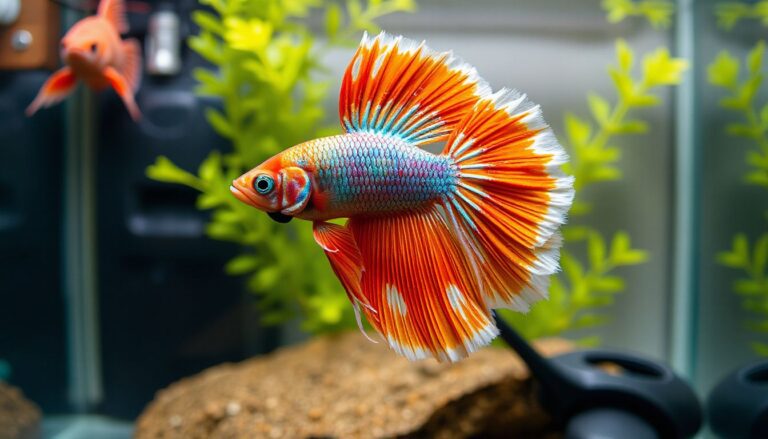
Practical example: In a betta tank, they might set airflow to a light shimmer at the surface, keeping the bubble column near a back corner so the fish can rest without fighting current.
Maintain and Clean the Air Stone to Prevent Clogging
Once the bubbles are stable, maintenance keeps output consistent and fish stress low. Most air stones slowly clog with biofilm and mineral scale, which forces the pump to work harder and reduces oxygen transfer.
They should set a simple schedule based on water hardness and stocking level. A quick visual check during weekly tank care is usually enough to catch early clogging before it becomes a full airflow drop.
- Weekly: confirm bubble pattern is even; wipe algae off the stone’s surface during routine cleaning.
- Monthly: remove the air stone and rinse it in dechlorinated water; never use soap.
- As needed: if pores look “sealed,” soak it in a 1:10 bleach-to-water solution for 10 minutes, then rinse and dechlorinate thoroughly.
Look for warning signs: larger bubbles, one-sided bubbling, or a “hissing” pump sound. Those often mean the pores are restricting air and pressure is building in the line.
Practical example: a 20-gallon community tank on hard tap water may show reduced bubbles after 3–4 weeks. In that case, a short soak and a full dechlorinator bath can restore fine bubbles without replacing the stone.
Common mistakes include scrubbing with abrasive tools (damages pores) and skipping dechlorination after bleach. If the stone still won’t recover, replacement is usually cheaper than running a strained pump.
Troubleshoot Common Issues: Weak Bubbles, Noise, and Backflow
When performance changes, they should troubleshoot in a fixed order: air source, line restrictions, then the stone. This prevents unnecessary replacements and helps pinpoint whether the issue is mechanical or maintenance-related.
For weak bubbles, they can first confirm the pump intake isn’t blocked by dust and that the pump sits above the waterline or uses a check valve. Then they should inspect the airline for kinks, tight bends, or water trapped in low spots.
- Weak bubbles: clogged stone, pinched tubing, undersized pump, or a clogged pump intake filter.
- Noise/vibration: pump touching glass, worn diaphragm, or hard airline pulling the unit off level.
- Backflow: missing/failed check valve, reversed valve direction, or power outages with the pump below water level.
Noise is often fixable fast: place the pump on a foam pad, keep it from contacting the stand, and add a gentle “drip loop” in the airline to reduce tugging. If rattling persists, they should consider a diaphragm rebuild kit or replacement.
Practical example: after a water change, bubbles weaken and water appears in the airline. They can unplug the pump, drain the line, verify the check valve arrow points toward the tank, then restart—restoring normal flow in minutes.
If backflow keeps happening, they should replace the check valve and relocate the pump above the waterline where possible. That single change protects floors, equipment, and livestock.
You’re Ready
Now they know air stone for fish tank how to use in a way that supports steady oxygen exchange and calmer tank flow. The setup is only “done” when it stays consistent day after day. That means watching the tank’s response, not just the bubbles.
They should use quick check-ins to confirm the system is still helping, not distracting. Look for stable behavior and predictable performance, then make small changes only when there’s a clear reason.
- Observe fish and plants: normal breathing, active swimming, no constant surface-gasping.
- Confirm output: bubbles remain even across the stone, not pulsing or drifting.
- Verify comfort: no sandstorms, no dead zones, no stressed fish hiding from the current.
Example: if they notice a betta avoiding one corner after a new air stone is added, they can slightly redirect the bubbles to restore a calm resting area. Next step: they should monitor the tank for 48 hours and log one adjustment only if the livestock’s behavior calls for it.
Related read: Blackstone Grill How to Use: Step-by-Step Setup to Cook