How Long to Compost Vegetable Waste: Best Proven Timeline for Effective Results
Carrot peels, lettuce leaves, onion skins, potato scrapings — a typical kitchen sends several pounds of vegetable waste to the bin every week. In landfill, those scraps break down without oxygen and release methane, a potent greenhouse gas. In a compost pile, the same scraps turn into a free, nutrient-rich soil amendment. The only real question is: how long does it take?
The honest answer is that how long to compost vegetable waste depends less on the scraps themselves and more on the conditions you create. With active management, expect finished compost in 8 to 12 weeks. With a hot-composting routine, you can cut that to 3 to 6 weeks. With a cold, hands-off pile, allow 3 to 6 months. You can also read our guide on how long does it take for compost to decompose.
This guide covers realistic timelines for every common system, the variables that speed up or slow down decomposition, a week-by-week schedule you can follow, and the exact checks to confirm your compost is ready before you spread it.
The Short Answer: Vegetable Composting Timelines at a Glance
There is no single date that works for every pile. Different methods produce different speeds because they manage oxygen, moisture, and heat differently.
| Composting method | Typical time to finished compost | Best for |
|---|---|---|
| Hot compost pile (turned regularly) | 3–6 weeks | Gardeners with enough material to build a large, active pile |
| Tumbler or enclosed bin (turned often) | 6–10 weeks | Households with small batches and limited space |
| Open pile, turned weekly | 8–16 weeks | Backyard gardeners with a steady supply of yard waste |
| Cold / no-turn pile | 3–6 months | Low-effort composting where time is not a concern |
These ranges assume you are composting vegetable scraps only as part of a balanced mix. A pile made almost entirely of wet kitchen waste will run slower, smell worse, and take longer no matter what the calendar says.
What Counts as “Finished” Compost?
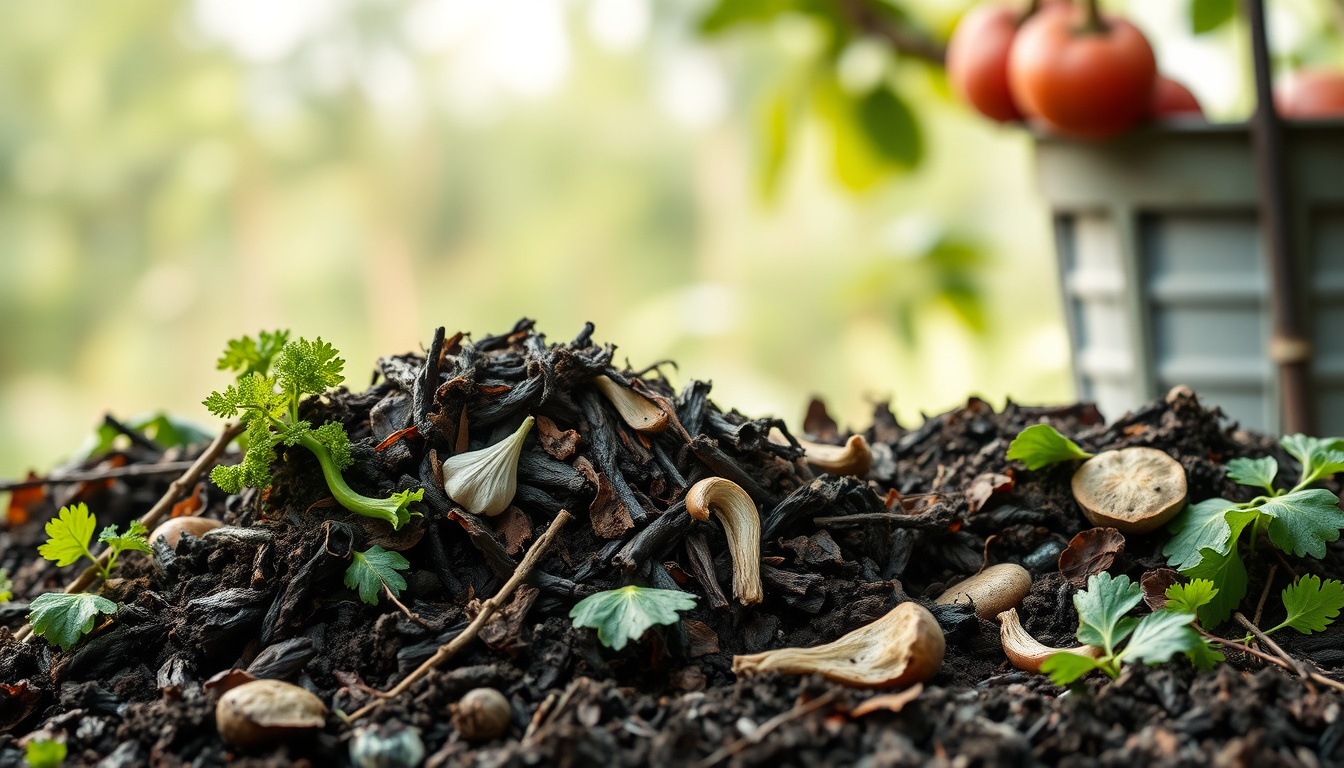
Finished compost is dark, crumbly, and smells like forest soil. It contains no recognizable vegetable pieces, does not reheat strongly after turning, and holds moisture without becoming slimy.
Time alone is not proof of readiness. A pile can sit for four months and still contain intact onion skins, or it can finish in six weeks if conditions are ideal. The timeline gets you into the right ballpark; the sensory and texture checks at the end of this article confirm that the batch is actually done.
What Actually Controls How Fast Vegetable Waste Breaks Down
Four factors determine how quickly vegetable scraps decompose: oxygen, moisture, particle size, and the balance of carbon to nitrogen. Get these right and the pile does most of the work for you. Get one wrong and the whole system stalls.
- Oxygen. Vegetable scraps need aerobic microbes to decompose quickly. When scraps are packed too tightly or drowned in water, the pile turns anaerobic, producing foul odors and slowing to a crawl.
- Moisture. The ideal moisture level is a wrung-out sponge. The pile should feel damp to the touch, release a few drops when squeezed, and never drip water in your hand.
- Particle size. Chop stems, corn cobs, and fibrous stalks into roughly 2–5 cm pieces. More surface area means faster microbial attack, but pieces that are too fine compact into an airless mat.
- Carbon-to-nitrogen ratio. Vegetable scraps are nitrogen-rich “green” material. They need a partner: dry “brown” material such as leaves, shredded cardboard, or wood chips. A balanced mix is roughly two to three parts brown material to one part green material by volume.
In practice, a common mistake is loading the bin with wet scraps and nothing else. The pile sours, attracts fruit flies, and stays cold. Adding dry browns at every layer prevents this before it starts.
The same principles apply to other common garden inputs. For example, fresh lawn trimmings decompose on a similar timeline when treated the same way, which is why they show up again and again in compost recipes.

Layering wet vegetable scraps with dry leaves keeps air moving through the pile and prevents the material from turning anaerobic.
The Proven 8-Week Composting Schedule for Vegetable Scraps
Most home composters get reliable results with a simple weekly routine. This schedule assumes you add scraps once a week, turn the pile every three to four days, and keep moisture in the wrung-out-sponge range.
Weeks 1–2: Build and Heat
Start by building layers rather than dumping scraps in one spot. Add 2–3 inches of brown material, then a thin 1–2 inch layer of chopped vegetable scraps, then another layer of browns. Water each layer as you go.
Within 48 to 72 hours, the center of the pile should warm noticeably. If it does not, the pile may be too small, too dry, or too short on browns. A pile needs at least 1 cubic metre — roughly three feet wide, tall, and deep — to hold heat effectively in cool weather.
Weeks 3–4: Peak Breakdown
This is the hottest phase, with interior temperatures commonly reaching 130–150°F. Turn the pile every three to four days, moving the cooler outer material into the center. Each turn reintroduces oxygen and spikes microbial activity.
If the pile exceeds 160°F, it is too hot and the microbes start to die off. Turn it and add a little dry material to pull the temperature back down.
Adding coarse woody material at this stage helps maintain air channels so the center never collapses into a wet clump.
Weeks 5–6: Cooling and Recolonisation
Heat begins to drop as the easiest-to-digest material is consumed. This is normal, not a stall. Fungi, worms, and beetles move in to finish the tougher fibers.
Turns can slow to once a week now. Check moisture every time you turn — the pile can dry out quickly once it stops steaming.
Weeks 7–8: Cure and Verify
By week seven, the pile should look dark and feel crumbly. Turn it one last time and watch for a strong reheating. A mild warmth deep in the center is fine; vigorous steaming means the pile needs another week or two.
If the compost passes the visual, smell, and sieve checks described later, it is ready to use. If it still looks coarse or smells sour, give it another two weeks before testing again.
How to Speed Up the Timeline: The 4-Input Heat Build
If you want compost in 18 to 30 days, turn your pile into a miniature heat engine. The principle is simple: give the microbes a balanced meal, plenty of oxygen, and enough mass to hold heat.
The Four Inputs
- Carbon base — 2 to 3 parts dry leaves, shredded cardboard, or torn paper. This provides the slow-burning energy microbes need and keeps the pile porous.
- Scrap charge — 1 part vegetable waste, chopped into small pieces. Add it in thin layers, never as one solid dump.
- Activator — 1 to 2 cups of finished compost or healthy garden soil. This introduces a concentrated population of decomposers and gives the pile a running start.
- Moisture lock — water added gradually until a squeezed handful releases a few drops and holds its shape.
The Conditions That Compress the Timeline
- Critical mass. Keep the pile at least 1 cubic metre. Smaller piles lose heat faster than the microbes can produce it.
- Temperature. Aim to hold the core between 130–160°F for as many consecutive days as possible. That sustained heat is what compresses the timeline from months into weeks.
- Turning rhythm. Turn every two to three days once heat peaks. Each turn adds oxygen and sparks another heating cycle.
- Moisture checks. Re-test the squeeze test after every turn. Hot piles dry out quickly, and dry piles go dormant.
There is an honest trade-off: hot composting requires a large batch and a regular turning schedule. A small countertop tumbler simply does not hold enough mass to sustain thermophilic heat, which is why it will always land in the 6–10 week range rather than the 3–week range.
What to Do When Your Compost Pile Stalls
A stalled pile is not short on time — it is usually short on oxygen. Before you add more scraps or wait another month, diagnose the actual problem.
Read the Symptoms
| Symptom | Likely cause | Quick fix |
|---|---|---|
| Rotten egg or sewage smell | Anaerobic, too wet | Turn the pile and mix in dry browns |
| Sharp ammonia smell | Too much nitrogen | Add shredded leaves or cardboard |
| Dry, dusty, and cold | Not enough moisture | Water while turning until evenly damp |
| Cold, wet, and slimy | Overloaded with wet greens | Remove excess moisture with dry carbon |
| Flies or pests at the surface | Exposed food scraps | Bury new scraps at least 10 cm deep |
The Recovery Routine
- Stop adding fresh scraps for two to three days. The pile needs time to fix its current imbalance.
- Probe the center. Check temperature and feel the material at the core, not just the surface.
- Turn the pile thoroughly. Pull the cool, dry outer shell into the middle and break up any clumps.
- Add dry carbon if needed. If the material feels wet or smells foul, mix in shredded leaves, cardboard, or paper until the texture is loose and fibrous.
- Wait 24 to 48 hours and re-check. A recovering pile should warm up again and the odor should shift from sour to earthy.
If the pile smells strongly of ammonia even after turning, the nitrogen fraction is too high — the same imbalance that can derail poultry litter composting when it is not balanced with enough carbon. Correct it by mixing in browns and turning again.
What If It Still Will Not Heat?
If the pile stays cold after two full recovery rounds, check the basics again. It may be too small, too dry, or sitting in a spot with poor drainage. Move it to full sun if possible, or combine it with another pile to reach critical mass.
Composting Times by System: Bin vs. Tumbler vs. Open Pile
The best system is the one you will actually maintain. Here is how the common options compare for vegetable waste.
| System | Typical time | Turning needs | Main risk | Best for |
|---|---|---|---|---|
| Countertop compost bin | 6–10 weeks | Mix weekly | Getting too wet indoors | Small kitchen volumes |
| Tumbler | 2–6 weeks | Rotate every 1–3 days | Moisture pooling in the drum | Gardeners who want speed |
| Open pile | 8–16 weeks | Turn weekly | Drying out or getting waterlogged | Large backyard volumes |
| Cold / no-turn pile | 3–6 months | Rarely | Slow finish, coarse end product | Low-effort gardeners |
A tumbler is not automatically faster. It is faster only if you rotate it regularly and check moisture every time. Vegetable waste shrinks as it decomposes, so a tumbler can develop wet pockets along the walls even when the center looks fine. Add a handful of dry browns whenever the contents start to clump.
An open pile is the most forgiving system for beginners. It holds heat better than a small bin, and it is easier to turn with a pitchfork than a drum is to spin. Cover the top with a tarp in rainy weather to keep the pile from becoming saturated.
Common Mistakes That Add Weeks to Your Composting Timeline
Most delays come from handling shortcuts, not from the scraps themselves. These are the mistakes that keep otherwise healthy piles stuck:
- Adding scraps without chopping them. Large stems and intact rinds take months to break down. Chop them and they finish in weeks.
- Loading too much at once. A thick layer of wet scraps creates an airless mat. Keep each green layer to 1–2 inches and cover it with browns.
- Forgetting the browns. Vegetable scraps alone will not compost well. Every additions needs roughly twice as much dry material by volume.
- Overwatering or letting the pile dry out. Both extremes stop microbial activity. Re-check moisture after every turn, not just at the beginning.
- Turning too little during the hot phase. Oxygen is the fuel for fast decomposition. Weekly turning is a minimum; every few days is better.
- Using the pile too early. Compost that is still reheating can rob soil of nitrogen and harm seedlings. Verify maturity before spreading.

Checking compost texture by hand — finished material crumbles apart instead of forming a wet smear.
The good news is that most stalls recover within 48 hours of fixing the root cause. If you respond when the pile first stops heating, you rarely lose more than a week of progress.
How to Tell When Vegetable Compost Is Ready (and Safe)
A calendar date is useful, but it is not the final verdict. Use these checks before putting compost on your garden.
The Sensory Test
Ready compost looks uniformly dark brown or black, with only a few small woody fragments remaining. It smells like damp soil. Any sour, putrid, or ammonia-like odor means decomposition is still active.
The Sieve Test
Sift a handful through a 1 cm screen. If most of the material passes through and the rest is soft and fibrous, the batch is close. If large pieces remain intact or the material smears into a paste, it needs more curing time.
The Heat-Rebound and Safety Check
Turn the pile and monitor it for two days. If it steams or climbs back to 130°F, it is still actively composting and should not be used yet. If it stays cool and mild, it has stabilized.
Food-safety concerns are handled through time and temperature. Prolonged heat of 130°F or higher, combined with a curing period afterward, is what breaks down potential pathogens in food waste — the same principle reflected in public guidance from the US EPA. Once the pile no longer reheats after turning and smells earthy, the biological work is essentially complete.
FAQ: How Long to Compost Vegetable Waste
How long does it take to compost vegetable scraps?
Expect 8 to 12 weeks in a regularly managed pile, 3 to 6 weeks in a hot compost system, and 3 to 6 months in a cold pile. The quality of aeration and moisture matters more than the exact starting date.
How long does vegetable waste take in a tumbler?
A well-managed tumbler finishes vegetable scraps in roughly 2 to 6 weeks. Rotate it every one to three days, keep the contents at wrung-out-sponge moisture, and add dry browns whenever the material starts to clump.
What makes vegetable composting faster?
Chopping scraps into small pieces, balancing them with two to three parts dry browns, maintaining steady moisture, and turning the pile often — all while keeping the core in the 130–160°F range — produces the fastest results.
Why does my vegetable compost smell bad and take so long?
A bad smell almost always means an oxygen shortage. Vegetable scraps have packed together and turned anaerobic. Turn the pile, mix in dry carbon material, and stop adding fresh scraps for a few days.
How do I know my compost is ready?
It looks dark and crumbly, smells like forest soil, passes a sieve test, and does not reheat after turning. Coffee-ground textures and occasional small fibrous bits are normal.
Is a pile or a bin faster for vegetable waste?
Both can be fast — the operator is the deciding factor. A pile needs enough bulk and regular turning. A bin or tumbler needs consistent rotation and moisture management. Choose the one you will stick with.
Conclusion
How long to compost vegetable waste comes down to this: a well-managed pile finishes in about 8 to 12 weeks, a hot pile can finish in under a month, and a neglected pile takes months or longer. Oxygen, moisture, particle size, and the green-to-brown balance control the entire process. When a pile goes wrong, fix the conditions — do not simply wait longer.
The fastest way to start is also the simplest. This week, chop one bucket of vegetable scraps, mix in two buckets of dry leaves, and turn the pile once. You will have usable compost sooner than you expect, plus a repeatable system for every batch after that.
Once your batch is ready, put it to work where it matters — planter color choices in containers can affect root temperatures and watering needs, so matching your compost with the right pot helps your plants get the full benefit.