How Long to Cook Ribs in Oven at 375 for Tender Results
Cooking ribs in the oven at 375°F is one of the most reliable ways to get tender, juicy meat without a smoker or grill. A standard rack of baby back ribs typically needs 1 hour 45 minutes to 2 hours 15 minutes, while spare ribs and St. Louis-style racks require 2 hours 15 minutes to 3 hours. But timing is only half the story. Understanding how to read doneness cues—internal temperature, the bend test, and probe resistance—is what separates fall-apart tender ribs from tough, disappointing ones.
The good news: oven-baked ribs are forgiving once you grasp a few fundamentals. Unlike grilling, the oven provides steady, even heat that slowly breaks down collagen and connective tissue. At 375°F, you’re working with a temperature high enough to render fat efficiently but low enough to avoid drying out the meat before it becomes tender.
Why Oven Temperature Matters for Ribs
The magic of 375°F lies in its balance. At lower temperatures like 275°F, ribs cook slower and may require significantly more time—often 3 to 4 hours or longer. At higher temperatures above 400°F, sugars in rubs and sauces burn quickly, and the exterior dries out before the interior collagen has time to melt.
When you cook ribs at 375°F, you’re aiming for an internal temperature between 195°F and 203°F. This is the range where collagen breaks down into gelatin, giving ribs their signature tender, pull-off-the-bone texture. The USDA recommends cooking pork to a safe minimum internal temperature of 145°F for food safety, but for ribs to be truly palatable, you need to exceed that temperature significantly to render the connective tissue.
A meat thermometer is your most reliable tool here. Insert it into the thickest part of the meat between two bones, avoiding any bone contact, and wait for the reading to stabilize in the target range.
Factors That Change Cooking Time at 375°F
Rib Type: Baby Back vs. Spare vs. St. Louis
Baby back ribs come from the upper portion of the rib cage near the spine. They’re leaner, shorter, and more curved than other cuts, which is why they cook faster at 375°F. A typical baby back rack weighs 1.5 to 2.5 pounds and finishes in about 2 hours.
St. Louis-style ribs are spare ribs with the sternum bone, cartilage, and flap meat removed. They’re meatier and more rectangular, making them easier to cook evenly. Expect them to take closer to 2.5 hours.
Full spare ribs contain additional brisket bone and cartilage that requires extra time to soften. These can run 3 hours or slightly longer, depending on thickness. In practice, full spare ribs are less common in home kitchens because St. Louis-style trimming is now standard at most grocery stores.
Rack Thickness and Meatiness
Not all racks are created equal. A thick, meaty rack from the center of the rib cage will need more time than a thinner rack from the ends. As a rule of thumb, add 15–20 minutes for every extra half-inch of thickness. A common mistake is assuming all baby backs cook at the same rate—two racks of the same type can differ by 20 minutes or more depending on where they were cut from the pig.
Starting Temperature
Cold ribs straight from the refrigerator will add 15–20 minutes to your cook time. Let the ribs sit at room temperature for 20–30 minutes while your oven preheats. This isn’t a food safety concern for a short rest, and it helps the meat cook more evenly from edge to center.
Bone Configuration
Curved, uneven racks cook less predictably than uniform ones. If one end is noticeably thicker, rotate the pan halfway through cooking, and consider shielding the thinner end with a small piece of foil during the final stretch.
How to Oven-Proof Your Setup for Even Cooking
Choose the Right Pan and Rack
A rimmed baking sheet catches drips and prevents sugar-heavy rubs from smoking and burning on the oven floor. Placing a wire rack inside the pan elevates the ribs, allowing hot air to circulate underneath. This prevents the bottom from steaming and helps the fat render evenly. If you don’t have a wire rack that fits, a crumpled sheet of aluminum foil shaped into loose coils works as a makeshift riser.
Use Foil Strategically
Tightly wrapping ribs in aluminum foil creates a mini-braising environment. The trapped steam accelerates collagen breakdown and prevents the surface from drying out. This technique typically reduces total cooking time by 15–20 minutes.
For added moisture, add 2–3 tablespoons of apple juice, chicken broth, or beer to the foil packet before sealing. The liquid creates steam, which keeps the meat moist and adds subtle flavor. In practice, apple juice is the most forgiving option because its natural sugars won’t overpower the pork, while beer can impart bitterness if you choose a heavily hopped variety.
Seasoning Considerations
Salt in your dry rub draws moisture to the surface, which then reabsorbs, improving the meat’s bite and flavor penetration. Apply the rub at least 30 minutes before cooking, or ideally the night before.
Be mindful with sugar-based rubs. At 375°F, sugars can caramelize and darken quickly, especially on an unwrapped rack. If your rub contains brown sugar or honey, consider keeping the ribs wrapped for most of the cook and adding the sugar component later in the process.
How Long to Cook Baby Back Ribs in the Oven at 375
Baby back ribs are the fastest cut at 375°F. Plan for 1 hour 45 minutes to 2 hours 15 minutes total, with most average-sized racks landing near 2 hours.
A Simple Timing Structure
- Wrapped phase (1 hour 30 minutes to 1 hour 45 minutes): Place the seasoned ribs meat-side down on a foil-lined pan, cover tightly, and bake. This phase renders fat and breaks down collagen.
- Unwrapped phase (15–25 minutes): Remove the foil, flip the ribs meat-side up, and let the surface dry and set. This is when bark forms and the exterior tightens.
- Sauce phase (last 10–15 minutes): Brush on thin coats of sauce and return to the oven. The surface should look glossy but not burnt.
- Rest (10 minutes): Tent loosely with foil and let the ribs rest before slicing. This redistributes juices and allows carryover cooking to finish the process.
Doneness Indicators for Baby Backs
The meat should have pulled back from the bone ends by about 1/4 to 1/2 inch. A toothpick or thermometer probe should slide into the thickest meat with very little resistance—like into softened butter. If the meat still feels tight, wrap again and check every 10–15 minutes.
How Long to Cook Spare Ribs and St. Louis Ribs at 375
Spare ribs and St. Louis-style ribs need more time. Plan for 2 hours 15 minutes to 3 hours, depending on thickness.
Recommended Cooking Schedule
- Wrapped phase (1 hour 45 minutes to 2 hours 15 minutes): The extra time traps steam and breaks down the higher fat content.
- Unwrapped phase (20–35 minutes): Expose the surface to dry heat and deepen the color.
- Sauce phase (10–15 minutes): Apply two thin coats of sauce, allowing each to set before adding more.
- Rest (10–15 minutes): These ribs benefit from a longer rest due to their density.
Testing Readiness
The rack should bend easily when you lift it from one end with tongs—the top surface should crack slightly without the meat separating from the bone entirely. The internal temperature in the thickest section should read 195–203°F.
If the exterior looks caramelized but the meat still feels tight, the collagen hasn’t fully broken down. Wrap the rack again and return to the oven in short intervals until the texture softens.
Foil-Wrapped vs. Unwrapped at 375°F
The choice between wrapped and unwrapped is about texture tradeoffs, not just cook time.
Foil-wrapped ribs finish faster, typically 15–20 minutes sooner than unwrapped racks. The trapped steam keeps the meat exceptionally moist and creates a fall-apart texture. The downside is softer bark and less pronounced roasted flavor because the surface can’t dry and brown as aggressively.
Unwrapped ribs take longer—often 30–45 minutes more—because collagen must break down without the benefit of trapped moisture. The payoff is a firmer bite, darker exterior, and more intense roasted flavor. The risk is drying out, particularly with lean baby backs or if your oven runs hot.
The hybrid approach works best for many home cooks: wrap for the majority of cooking to achieve tenderness, then unwrap for the final 15–20 minutes to set the bark and build color. This gives you the best of both worlds without sacrificing texture or flavor.
Step-by-Step Method for Oven Ribs at 375°F
Here’s a complete, start-to-finish method you can follow the first time you try this technique.
1. Remove the Membrane
Flip the rack bone-side up. Slide a butter knife or spoon handle under the thin, silvery membrane at one end, grip it with a paper towel, and pull it off in one steady motion. This step is essential—the membrane doesn’t render during cooking and leaves an unpleasantly chewy layer between you and the meat.
2. Season Generously
Apply your dry rub evenly on both sides, pressing it into the meat. A simple base of salt, black pepper, garlic powder, onion powder, and smoked paprika works well. Let the ribs sit at room temperature for 20–30 minutes while the oven preheats to 375°F.
3. Set Up the Pan
Line a rimmed baking sheet with heavy-duty foil for easy cleanup. If using a wire rack, place it on top. Arrange the ribs meat-side up on the rack.
4. Wrap and Bake
Create a tight foil tent or fully enclose the ribs in a foil packet with 2–3 tablespoons of apple juice or broth. For baby backs, bake for 1 hour 30 minutes to 1 hour 45 minutes. For spare or St. Louis ribs, bake for 1 hour 45 minutes to 2 hours 15 minutes.
5. Unwrap and Finish
Carefully open the foil (watch for steam), flip the ribs meat-side up, and return to the oven uncovered for 15–25 minutes. This sets the bark and deepens the color.
6. Sauce in Layers
If saucing, brush on a thin coat 10–15 minutes before the end of cooking, then add a second coat 5 minutes later. This builds a glossy glaze without burning.
7. Rest, Then Slice
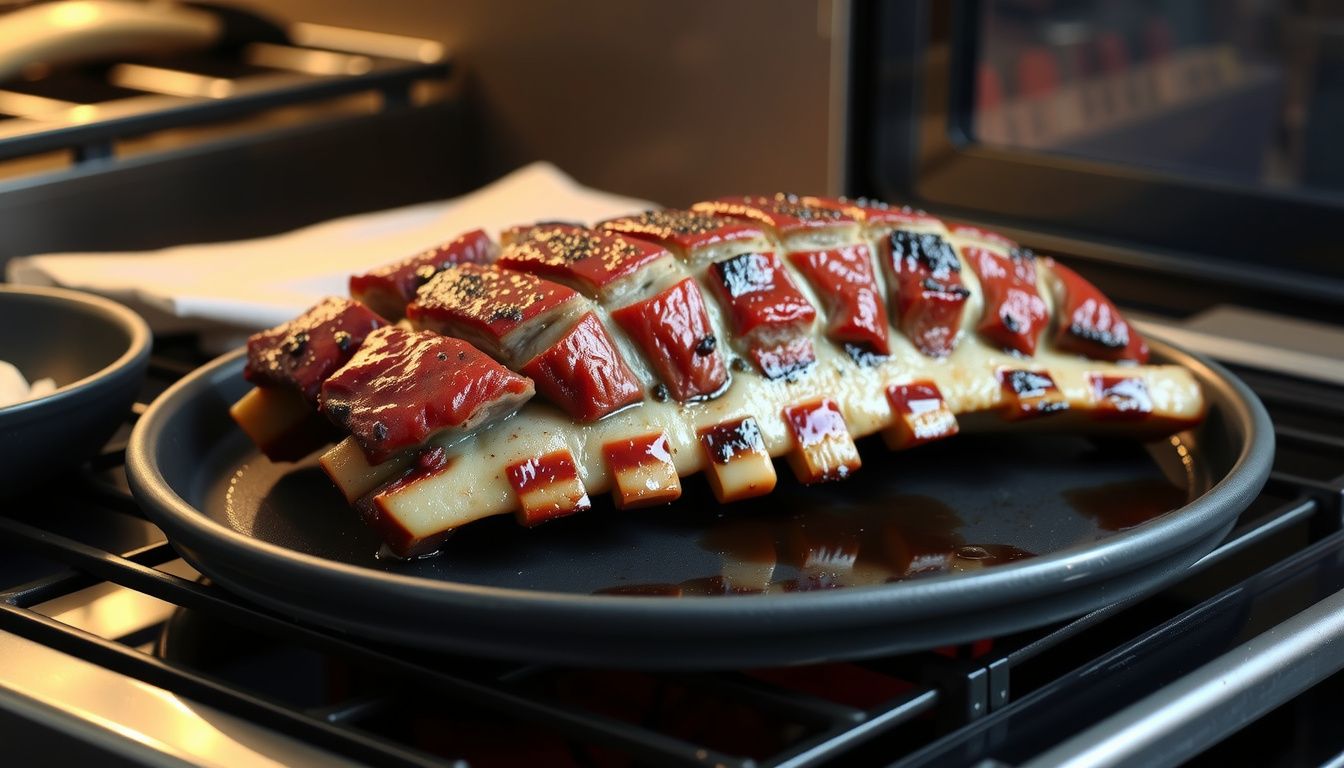
Rest the ribs under loose foil for 10–15 minutes. Flip meat-side down to see the bones, and slice between them with a long, sharp knife.
How to Tell When Ribs Are Done
You can rely on multiple doneness indicators together for the most reliable results.
The Temperature Test
Insert an instant-read thermometer into the thickest part of the meat between bones, avoiding bone contact. You’re looking for 195–203°F. Below 190°F, the collagen hasn’t fully rendered, and the meat will be tough. Above 210°F, the ribs risk becoming dry and crumbly.
The Bend Test
Grip the rack with tongs at one end and lift. A properly cooked rack will bend noticeably and the meat on top will crack slightly. If the rack stays stiff, it needs more time.
The Probe Test
Slide a toothpick, cake tester, or thermometer probe into the meat between two bones. It should slide in with minimal resistance. This test is more reliable than temperature alone because it directly measures tenderness.
The Visual Cue
Meat pulls back from the bone ends as it cooks. You should see about a quarter to half an inch of exposed bone. If you see less, the ribs need more time; if you see significantly more, they may be approaching overcooked.
Finishing Steps for Ribs in the Oven
How to Sauce Without Burning
Sugar-based sauces burn quickly at 375°F, so apply them in thin, even coats. Start with a base layer 10–15 minutes before finishing, then add a second coat 5 minutes later. This builds a glossy, caramelized glaze without turning bitter.
If you have a thick, molasses-heavy sauce, consider thinning it slightly with water or apple cider vinegar before applying. This helps it spread evenly and prevents pooling, which can create burnt spots.
Broiling for Extra Color
To get a deeper char, switch the oven to broil for the final 2–4 minutes. Keep the pan 4–6 inches from the heating element and watch it continuously—sugar can go from golden to black in under a minute. Brush on sauce, broil briefly, and remove immediately.
Resting Is Non-Negotiable
Never skip the rest. Ribs need 10–15 minutes under loosely tented foil after leaving the oven. This allows juices to redistribute through the meat, preventing them from running out when sliced. Resting also lets the glaze set, so it stays on the meat rather than smearing onto your cutting board.
Slicing for Clean Presentation
Flip the rack meat-side down so you can see the bones from underneath. Slice between the bones using a long, sharp knife. Wipe the blade clean between cuts for neat edges. This small step makes a noticeable difference when you’re serving guests.
Common Problems and How to Fix Them
Ribs Are Too Tough
The ribs likely needed more time at a steady heat, not a higher temperature. Return the rack to the oven, cover tightly with foil, and bake in 10–15 minute increments until the probe slides in easily. Resist the urge to crank the heat—this will dry the exterior before the interior softens.
Ribs Are Too Dry
Broiling too long, saucing too early, or leaving ribs uncovered during the final stretch are the usual culprits. To rescue dry ribs, brush with warm sauce mixed with a few tablespoons of the pan drippings, then rest under foil for 10 minutes. The steam from the sauce will help rehydrate the surface.
Uneven Cooking
Hot spots in your oven cause one end to finish faster than the other. Rotate the pan halfway through cooking and keep the rack centered rather than pushed toward the back. If one end consistently cooks faster, shield that end with a small strip of foil for the final stretch.
Starting the Clock Too Early
Ovens take time to recover after you open the door. Always let the oven come back to full temperature before starting your timer, and avoid opening the door more than once or twice during cooking.
Frequently Asked Questions
Do I need to wrap ribs in foil at 375°F?
Wrapping is optional but recommended for faster, more tender results. Foil traps steam, accelerating collagen breakdown and preventing dryness. If you prefer a firmer bite with more bark, skip the wrap and extend the cook time by 20–30 minutes.
Should I boil ribs before baking them in the oven?
No, boiling removes flavor and makes the meat mushy. Instead, use a foil wrap with a few tablespoons of liquid. The trapped steam tenderizes the meat without diluting the flavor.
How long can I leave ribs in the oven at 375°F?
Ribs left in the oven after reaching 203°F will gradually become stringy and dry. Remove them as soon as they pass the probe test. If dinner is delayed, keep them warm by wrapping in foil and holding in an oven set to 170°F.
What’s the best way to reheat leftover ribs?
Wrap individual portions in foil with a tablespoon of sauce or broth and reheat at 300°F for 10–15 minutes. This prevents drying and preserves tenderness. Avoid microwaving, which toughens the meat.
Do I need to remove the membrane before cooking?
Yes. The silver skin on the bone side doesn’t render during cooking, leaving a chewy, unpleasant layer. Slide a spoon under the membrane, grip with a paper towel, and pull to remove it before seasoning.
Why are my ribs falling off the bone—is that normal?
Meat that falls completely off the bone indicates the collagen has broken down past the point of ideal texture. While some prefer this, most pitmasters aim for ribs that pull cleanly from the bone with a light tug and hold their shape when sliced.
Quick Reference: Rib Cooking Times at 375°F
| Rib Type | Total Time | Wrapped Phase | Unwrapped Phase |
|---|---|---|---|
| Baby back ribs | 1 hr 45 min – 2 hr 15 min | 1 hr 30 min – 1 hr 45 min | 15–25 min |
| St. Louis-style ribs | 2 hr 15 min – 2 hr 45 min | 1 hr 45 min – 2 hr 15 min | 20–30 min |
| Spare ribs | 2 hr 30 min – 3 hr | 2 hr – 2 hr 30 min | 25–35 min |
These times assume an average rack size of 2–3 pounds and a properly preheated oven. Always confirm doneness with temperature, probe, and bend tests rather than relying on the clock alone.
Final Checklist for Tender Oven Ribs at 375°F
- Remove the membrane and season at least 30 minutes before cooking
- Let ribs sit at room temperature while the oven preheats
- Use a rimmed baking sheet with a wire rack for even airflow
- Wrap in foil with a splash of liquid for faster, more tender results
- Rotate the pan halfway through cooking
- Test with temperature, probe, and bend tests together
- Sauce in thin coats during the final 10–15 minutes
- Rest for 10–15 minutes before slicing between the bones
Conclusion
Cooking ribs in the oven at 375°F delivers reliably tender results when you approach it as a process rather than a countdown. Baby backs finish in roughly 2 hours, while spare and St. Louis-style racks need closer to 2.5 to 3 hours—but the real keys are wrapping with a splash of liquid, testing doneness with a probe and bend test, and resting before slicing. Internal temperature between 195°F and 203°F is your target, but the probe test is what confirms that collagen has actually broken down.
Your next step is simple: pick a rack, remove the membrane, season it well, and try the wrapped-then-unwrapped method this weekend. If you’re planning a larger cookout, getting the timing right on other classic proteins—like a perfect steak or bone-in pork chops—rounds out the spread. You might also be interested in using your barbecue for pizza or getting the timing right for burgers on the grill. Once you’ve mastered oven ribs at 375°F, you’ll have a go-to method that works every single time.