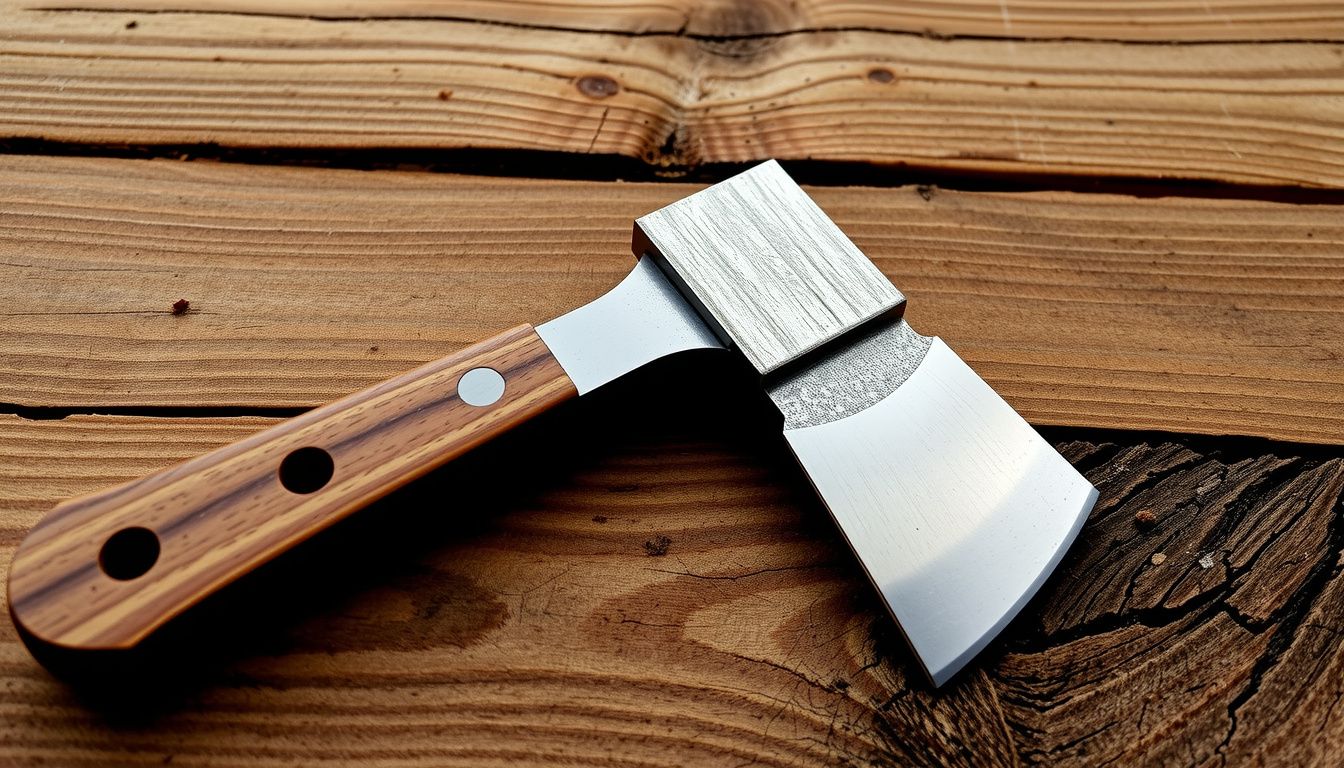
How to Sharpen a Hatchet With a File for a Clean Edge
A dull hatchet is more dangerous than a sharp one. When the edge skips, glances, or crushes wood instead of biting, you instinctively swing harder, lose control, and invite accidents. The good news is that restoring a clean, predictable edge with a hand file is not complicated, expensive, or time-consuming once you understand the process.
This guide covers a complete, controlled sharpening method using a simple mill file. You will learn how to inspect, assess edge damage, choose the right file, secure the head, rebuild the bevel, remove the burr, and test the sharpness safely. The goal is a clean cutting edge that starts a cut on the first swing and holds up through real work. For more on this, see our guide on how to clean camper black tank 2.
Why a File Is Still the Best Starting Point
Power tools sharpen quickly, but they also remove steel quickly and can overheat the edge if you are not careful. A hand file gives you direct feedback through sound, feel, and visible steel removal. In practice, a single-cut mill file is accurate enough to reset a damaged bevel while gentle enough to leave a clean apex that strop or fine stone can finish.
 A well-supported hatchet and long, even file strokes keep the bevel flat and consistent.
Assess the Hatchet Edge and Choose the Right File
Before touching the file, inspect the edge under strong light. Sap, rust, and caked-on dirt hide the true condition of the steel. Wipe the bit clean with a dry rag or use a little mineral spirits for heavy resin, then dry the surface completely. For more on this, see our guide on how to clean a boat.
Look along the cutting edge with a headlamp or shop light angled across the bevel. A rolled edge shows as a glinting wire or rounded line. Chips appear as missing notches you can see with the naked eye. Uneven bevel width often indicates past sharpening errors or one-sided wear from repeated use.
Run three quick checks.
- Visual check: a shiny line at the very edge usually means the steel has rolled or rounded.
- Fingernail check: a nick catches the nail, while a roll feels smooth but dull.
- Bevel symmetry: compare both sides; uneven width means one side needs more correction.
For most hatchets, a 10 to 12-inch single-cut mill bastard file is the workhorse. It is coarse enough to remove damage efficiently but fine enough for controlled finishing. If the edge has deep chips, start with a coarser mill file and move to the bastard file once the worst damage is gone. A fine second-cut file reduces deep tool marks before finishing. For more on this, see our guide on how to clean boat carpet.
Match the file profile to the edge shape. A flat file works for straight sections, while a half-round file helps with tight curves near the heel. Do not file without a handle. Bare tangs can puncture your palm during a slip, and a handle also gives you better stroke control.
Set Up a Safe Work Area and Secure the Hatchet
A stable setup is the difference between a clean bevel and a wavy, gouged edge. Filing is quiet, so you might be tempted to do it on your lap. Do not. Control comes from a stable work surface and an immobile head. For more on this, see our guide on how to clean black tank on camper 2.
Choose a bench height that keeps your forearms roughly parallel to the floor. Good lighting matters more than most people expect because shadows can hide the true edge line. Lay down cardboard or an old mat to catch steel filings.
Gloves are optional but helpful. Thin work gloves provide enough protection without killing feel. Eye protection, however, is not negotiable. Fine metal dust and tiny chips can flick upward during filing.
The best setup is a vise with wood blocks protecting the hatchet head.
- Clamp the head, never the handle.
- Place the bevel facing up and the edge facing away from your body.
- Use wooden blocks or leather jaw pads to avoid marring the cheeks.
- Tighten until the head cannot twist under moderate hand pressure.
No vise? You can still work safely. Seat the head on a stump and pin it with a knee, edge facing away. Or clamp a heavy board to a table, then clamp the hatchet head to that board. Chock the handle so it cannot pivot. Avoid clamping the handle alone. A vibrating handle produces chatter and a wavy bevel.
Clean and Mark the Bevel to Guide Consistent Filing
A marked bevel removes guesswork. It shows exactly where metal comes off and where it does not, helping you hold a steady angle and avoid overcorrecting. Start by cleaning the bit again if it picked up any dust from clamping. Then mark the entire bevel on both sides from the shoulder down to the edge.
A permanent marker is the simplest option. Layout fluid also works well.
- Color the full bevel face on each side, not just the edge line.
- Re-mark whenever the ink wears away.
- Use bright light to spot unfiled ink islands.
Run a few light file strokes and read the marks. If the file removes ink near the shoulder but not at the edge, the file is riding too high. If ink disappears only at the edge, you are contacting too low. Adjust the angle until ink removal is even from shoulder to edge.
File the Bevels Step by Step to Rebuild the Edge
With the bevel marked, filing becomes purposeful. The goal is to remove steel evenly until both bevels meet in one clean, straight apex. Begin on the more damaged side.
Set the file flat against the bevel plane, then push away from your body in smooth, controlled strokes.
- Take five to ten strokes on one side at a consistent angle.
- Check ink removal and the edge line before switching sides.
- Match stroke counts on both bevels to keep them symmetrical.
- Continue until a light burr forms along the full length of the edge.
Use the full length of the file. Long strokes cut flatter and reduce dishing in the middle of the bevel. Keep pressure moderate. Forcing the file creates deep grooves that take extra work to remove later.
Once a continuous burr appears, reduce pressure and alternate single strokes per side. This centers the apex and shrinks the burr so it is easier to remove in the finishing phase.
A common mistake is working one side until it looks sharp, then quickly hitting the other. That usually shifts the edge off-center and makes the hatchet glance or steer during cuts. Sight down the edge as you work. If it leans left or right, correct by filing the thicker side in short, even sets.
 Marker ink makes it easy to see whether the file is hitting high, low, or evenly across the bevel.
Remove the Burr and Refine the Edge for Smooth Cutting
A rebuilt bevel often feels sharp but still carries a thin wire edge, or burr. If you leave it, the hatchet seems razor-like for a few swings, then dulls quickly when the burr folds over. The goal is to remove the burr and blend both bevels into one clean apex.
Check for the burr by lightly dragging a fingernail from the cheek toward the edge, never along the edge. If it catches on one side, the burr is present.
- Take two to four light passes on the opposite bevel to weaken the burr.
- Alternate sides with one to two strokes per side.
- Feather the pressure near the end of each stroke so the file does not hook the edge.
Keep the file clean with a file card when it loads up. You are close when the burr becomes intermittent instead of continuous. Finish with a few ultra-light, full-length strokes that follow the existing angle. This straightens micro-waves left by heavier filing without removing much steel.
Pressing harder to finish or chasing shiny spots with random angles will rebuild a fresh burr and leave a fragile edge. For a camp hatchet used on kindling, stop as soon as the burr disappears and the edge feels uniform. Over-refining toward a mirror edge can thin the apex too much for knotty wood.
Test Sharpness and Protect the Edge to Keep It Sharp
Safe, repeatable tests tell you whether the edge is actually ready.
- Paper slice test: slice printer paper at a shallow angle. A sharp edge cuts cleanly without tearing.
- Thumbnail bite test: with very light pressure, the edge should grab the nail instead of sliding.
- End-grain shaving: on dry softwood, the hatchet should take thin curls rather than crush fibers.
If the edge fails, diagnose before grabbing the file again. Tearing paper often means a remaining burr or micro-dents. Sliding on the nail means the apex is not meeting. Crushing wood points to an overly obtuse or rolled edge.
Once sharp, protect the steel. Wipe the bit clean, then apply a thin coat of oil or corrosion inhibitor, especially if the hatchet lives in a garage or truck. Rust pits behave like tiny chips and dull the edge quickly.
- Store the hatchet in a sheath or edge guard.
- Avoid striking soil or rocks.
- Touch up early with a few light strokes instead of waiting for a full reprofile.
After a long splitting session, wipe sap off with mineral spirits, oil the edge, and sheath the hatchet. That five-minute routine keeps the next sharpening short and corrective instead of a rescue mission.
Maintaining the Edge Between Sharpening Sessions
A file resets the geometry, but daily maintenance keeps you from needing the file as often. In practice, a strop loaded with polishing compound is the fastest way to restore a still-healthy edge. A dozen light passes per side realigns the apex and removes the early signs of rolling.
If you use the hatchet heavily around camp or on fishing trips, keep a small file and strop in your kit. Many anglers and campers pack a compact hatchet for processing firewood or clearing shoreline brush. A quick touch-up by headlamp is easier than working with a dull edge the next morning. If you also maintain outdoor gear, the same routine discipline applies to cleaning a boat or protecting a camper after trips.
Frequently Asked Questions
What type of file is best for sharpening a hatchet?
A 10 to 12-inch single-cut mill bastard file is the best general-purpose choice. It removes steel efficiently while leaving a controllable finish. For deep chips, start with a coarser file, then move to the bastard file. A fine second-cut file can reduce tool marks before finishing.
Can you sharpen a hatchet with just a file and no stone?
Yes. A file alone can reset the bevel and create a working edge. For smoother performance, you can refine with a fine file and strop, but a well-filed edge is already sharp enough for splitting and general camp use. The key is removing the burr completely.
How often should I sharpen my hatchet?
Touch up the edge whenever it stops biting cleanly. Light users may only need a few strokes every few weeks. Heavy users should strop after each outing and file when the edge shows chips, rolls, or rounded shoulders. Sharpening early prevents a full reprofile later.
How do I know when the hatchet is sharp enough?
Use practical tests: the edge should slice paper cleanly, grab your thumbnail under light pressure, and shave thin curls from dry softwood. If it does all three without tearing, sliding, or crushing, the apex is clean and ready for work.
Is a sharp hatchet safer than a dull one?
Yes. A sharp hatchet bites predictably and requires less force, which reduces glancing and loss of control. Dull edges encourage hard swings and erratic cuts. A controlled, well-maintained edge is always the safer option.
Can I sharpen a hatchet without a vise?
Yes. Seat the head on a stump and stabilize it with a knee, or clamp a heavy board to a table and clamp the hatchet head to that board. Always keep the edge facing away from your body and ensure the head cannot twist during filing.
Conclusion
Sharpening a hatchet with a file is about control, not brute force. Inspect the edge, choose the right file, secure the head, mark the bevel, file evenly until a burr forms, then remove that burr and test the results. The process is repeatable, inexpensive, and reliable enough to keep a working hatchet performing like new.
Your next step is to pick up your hatchet, clean and inspect the edge, and run a few controlled file strokes on the dull side. If you also spend time outdoors with other gear, apply the same maintenance mindset to related tasks such as keeping your boat surfaces clean or protecting your camper between trips. Ten focused minutes now will save you from fighting a dull edge on your next outing.






2 Comments