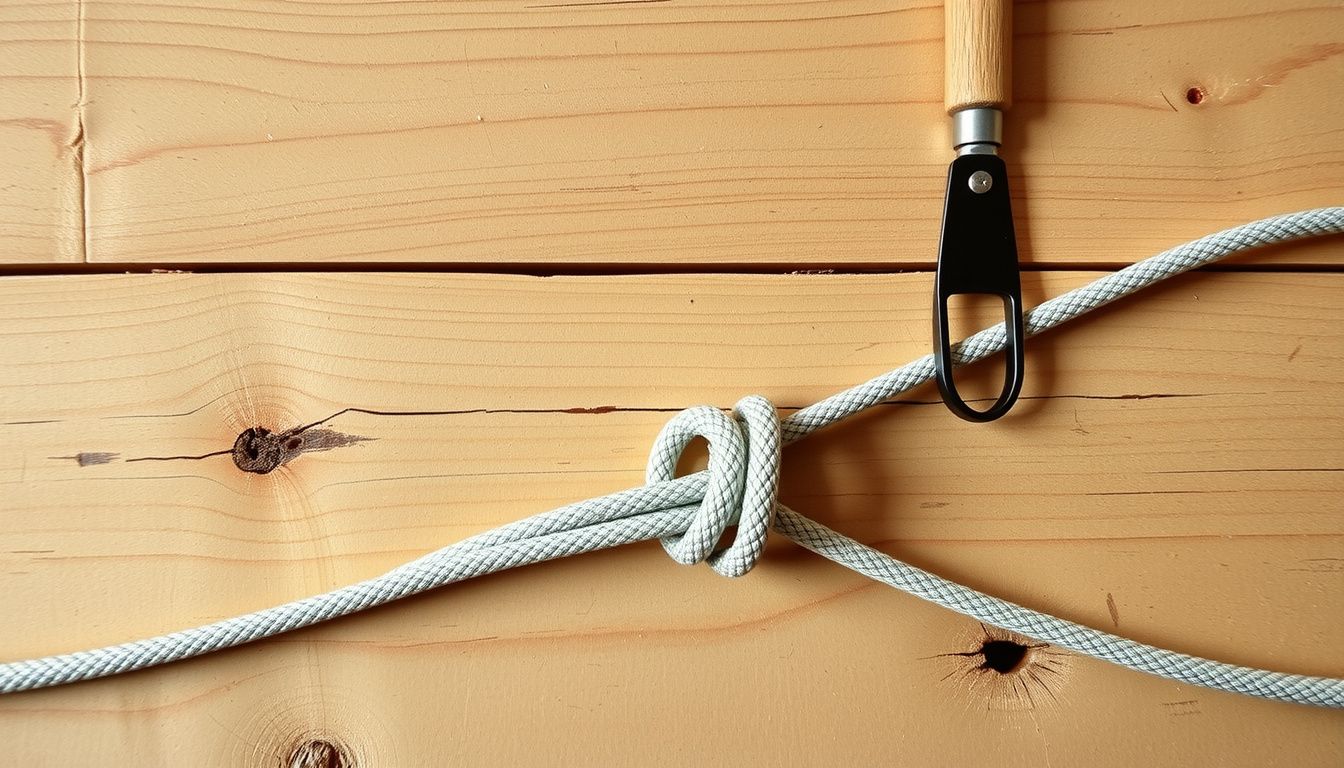
How to Tie a Boat Knot Step-by-Step for Secure Docking
A boat that drifts away from the dock is every skipper’s nightmare. Whether you’re dealing with a sudden gust of wind, boat wake from a passing vessel, or simply the natural movement of the tide, the knot you tie can mean the difference between a secure tie-up and a damaged hull. Learning how to tie a boat knot properly isn’t complicated, but it does require understanding which knot to use, when to use it, and how to execute each one correctly.
This guide covers the essential knots every boater needs for secure docking. You’ll find clear step-by-step instructions, practical tips from real docking experience, and troubleshooting advice for when things go wrong. By the end, you’ll be able to tie a secure dock line confidently in any conditions—even with wet, cold hands and a boat that won’t stay still. You can also read our guide on how to shrink wrap a boat.
Understanding the Basics: Rope, Load, and Hardware
Before you ever tie a knot, you need to understand the three elements that determine whether your docking setup will hold: the rope itself, the direction of the load, and the hardware you’re attaching to.
Choosing the Right Dock Line
Not all rope is created equal, and choosing the right one for docking is a critical first step. Here’s what to look for when inspecting or selecting dock lines:
| Line Type | Stretch | Best Use | Watch Out For |
|---|---|---|---|
| Nylon (3-strand or double-braid) | High stretch | Docking and anchoring | UV degradation over time |
| Polyester | Low stretch | Mooring and tying off | Chafe at contact points |
| Polypropylene | Minimal stretch | Floating lines, temporary use | Weakens in sunlight quickly |
| Dyneema/Spectra | Very low stretch | Dock lines requiring minimal give | Expensive, slippery when new |
In practice: Most boaters prefer nylon for docking because it stretches under load. This stretch acts as a shock absorber when waves or wake hit the boat. A 3/8-inch nylon line is adequate for boats up to 20 feet, while 1/2-inch or 5/8-inch lines suit vessels in the 25-35 foot range. When in doubt, go one size up—thicker lines are easier on your hands and tolerate chafe better. For more on this, see our guide on how to tie a boat to a dock.
Inspecting Your Line Before Tying
A knot tied in a damaged rope is a failure waiting to happen. Take 30 seconds to run your line through your hands before each outing:
- Check for glazing (melted or shiny spots) on the surface
- Look for cuts, nicks, or broken strands that could snap under tension
- Feel for hard or brittle sections that have lost their flexibility
- Test for “memory” or stiffness that makes the rope difficult to work with
If you find damage beyond surface wear, replace the dock line. A new line is far cheaper than hull repairs or injury.
Understanding Cleats, Pilings, and Rings
The hardware you’re tying to matters just as much as the knot itself. Give this topic a closer look before heading out on the water. For more on this, see our guide on how to tie a boat to 4 pilings.
- Cleats: Mounted on docks and boat decks, these horns are designed to take docking loads. Always confirm the cleat is firmly bolted, not just screwed into a thin deck.
- Pilings: Wooden or metal posts driven into the seabed. When tying to a piling, protect against chafe with a chafe guard or wrap the line in a protective sleeve.
- Rings and bollards: Common on mooring buoys and marina docks. These require knots with a fixed loop, as you can’t wrap a ring the same way you would a cleat.

Inspecting the working end of a dock line before tying a knot ensures no hidden damage will compromise the tie-up.
The Five Essential Boat Knots You Need to Know
Different docking situations call for different knots. While you don’t need to be a knot-tying expert, mastering these five will cover nearly every scenario you’ll encounter at the dock:
- Cleat Hitch — For tying to a dock cleat
- Bowline — For creating a fixed loop over a piling or mooring ring
- Round Turn and Two Half Hitches — For securing to rings, posts, or pilings
- Sheet Bend — For joining two lines of different diameters
- Clove Hitch — For quick temporary attachment to a piling or rail
Quick-Release Knots: When You Need to Leave Fast
There’s a time for maximum security and a time for speed. When you’re docking in a current or quick weather changes, a knot that releases with one pull can be a lifesaver.
The Slipped Cleat Hitch
A slipped cleat hitch (also called a “departure hitch”) uses a bight instead of a taught tail for the final locking turn. To tie it:
- Follow the standard cleat hitch process: base wrap, then figure-eight turns.
- On the final turn, fold the rope back on itself to create a loop (bight).
- Place the bight over the horn instead of pulling the tail through.
- Pull the standing part tight to lock the knot in place.
To release: Simply pull the exposed tail of the bight, and the entire knot falls apart. This is invaluable when you’re single-handed and need to leave the dock quickly. For more on this, see our guide on best pontoon boat for the money.
The Slipped Bowline
The same principle applies to a bowline. After completing the knot, fold the tail back through the collar to create a release loop. This gives you the security of a bowline with the quick-release convenience of a slipped knot.
How to Tie a Cleat Hitch Step-by-Step
The cleat hitch is the workhorse of boat docking. It’s what most boaters use every single time they come alongside a dock. Done correctly, it holds tight, handles shock loads, and releases easily. Done poorly, it will creep, slip, and jam. For further reading, see amsa.gov.au.
Here’s the exact sequence to tie a perfect cleat hitch:
Step 1: Make the Base Wrap
Bring the line to the base of the cleat and make one full wrap around the base (the center section between the horns). This wrap transfers the initial load to the cleat’s base, which is the strongest point.
Step 2: Create the First Figure-Eight Turn
Take the working end across the top of one horn, then diagonally across the cleat to wrap around the opposite horn. You’ve now created the first crossing “X.”
Step 3: Add the Second Figure-Eight Turn
Repeat the same crossing pattern, producing a second set of turns on top of the first. Both horns now have two wraps of rope over them. These turns create friction, which does most of the work.
Step 4: Lock It with a Bight
Make a small bight (a doubled section of rope) in your working end. Place this bight over one horn with the loop oriented away from the direction of pull. Pull the standing part tight to seat the locking bight.

A properly dressed cleat hitch shows clean, flat figure-eight turns with a locking bight seated on the horn.
Cleat Hitch Common Mistakes to Avoid
Even experienced boaters make these errors. Let’s walk through the most common ones:
| Mistake | Problem | Fix |
|---|---|---|
| Skipping the base wrap | Load sits entirely on the horns | Always start with a full turn |
| Crossing turns irregularly | Knot jams or slips unpredictably | Keep turns flat and parallel |
| Omitting the locking bight | Knot releases under cyclic load | Always finish with the locking bight |
| Over-tightening final turns | Knot becomes impossible to untie | Use steady pressure, not violent pulls |
| Leaving a short tail | Bight pulls out under load | Leave at least 6 inches of tail |
Practical tip: After tying the cleat hitch, give it a firm tug to seat the turns. Then walk the line back to the boat and check the angle. If the line pulls sharply upward or sideways off the cleat, adjust the boat’s position or add another line to change the load angle.
How to Tie a Bowline for Docking and Mooring
The bowline creates a fixed loop that won’t close under load. This is indispensable when you need to slip a loop over a piling or mooring ring before returning to the boat. It’s also a reliable way to attach a line to the boat itself when you need a fixed-size loop.
Step-by-Step: The Standard Bowline
Create a small loop in the standing part (the long, load-bearing section of the rope), holding the rope so the standing part passes under the loop. Think of it as making a small “hole” in the rope.
Pass the tail up through the loop from underneath. The tail should emerge from the loop and point away from you.
Wrap the tail around the standing part in a complete circle, going behind the standing part and bringing the tail back to the front.
Pass the tail back down through the loop — the same hole you went up through.
Dress the knot by pulling the standing part while holding the loop. The collar should sit snugly against the knot body.
Tighten the tail to set everything firmly.
How to Test Your Bowline
After tying, check the three elements of a correct bowline:
- The collar wraps around the standing part, not the loop
- The tail lies inside the loop, pointing back toward the knot
- The loop size matches your needs (large enough to slip over a piling)
The Slipped Bowline for Quick Release
As mentioned earlier, tie your bowline normally, then create a bight instead of pulling the tail all the way through the collar. Tuck the bight through the final wrap. Pull the tail to release — the entire knot opens instantly.
Round Turn and Two Half Hitches: The Heavy-Duty Option
When conditions get tough — strong current, heavy chop, or blowing weather — the round turn and two half hitches provides superior grip. It’s the go-to knot for attaching a line to a ring, eye, or post where you need maximum friction and security.
Step-by-Step Instructions
Pass the working end around the post or ring — this is your first wrap.
Complete a second full wrap around the post for a full round turn. This provides double the friction surface and reduces load on the half hitches.
Tie your first half hitch — bring the working end over, then under the standing part, then through the loop formed. Pull tight.
Tie a second half hitch in the same direction, right next to the first.
Dress the knot so the round turn lies flat and both half hitches sit parallel.
Why it works: The round turn holds most of the load through friction, so the half hitches only need to keep the turns in place — not bear the full force. This makes the knot incredibly secure and relatively easy to untie even after heavy loading.
Tying Two Lines Together: The Sheet Bend
Sometimes you need to join two dock lines — either because one isn’t long enough or you need to extend a line to reach a distant piling. The sheet bend is the knot to use, especially when the two lines have different diameters.
Step-by-Step Instructions
Form a bight in the thicker (or more stiff) line.
Pass the second line’s working end up through the bight from underneath.
Wrap the second line around the bight’s closed end — go behind both parts of the bight.
Tuck the working end under itself — pass it between the standing part and the wrap you just made.
Dress and tighten by pulling all four rope parts away from each other.
Pro tip: For extra security in slippery rope, add a second wrap before tucking — this creates a “double sheet bend,” which is more secure than the basic version.
Docking Techniques Every Boater Should Know
Tying a knot is only half the battle. Knowing where to place your lines and how to use them makes docking predictable and safe. A solid docking setup typically includes:
The Four Classic Dock Lines
| Line Type | Purpose | Placement |
|---|---|---|
| Bow line | Keep the bow from drifting | From bow cleat to dock cleat/cleat/piling |
| Stern line | Keep the stern from swinging | From stern cleat to dock cleat |
| Forward spring line | Stop forward movement | From bow cleat back to stern dock cleat |
| Aft spring line | Stop backward movement | From stern cleat forward to bow dock cleat |
Setting Up a Spring Line
Spring lines are the unsung heroes of secure docking. A properly set spring line keeps the boat from moving forward and backward — essential when other boaters create wake or tides shift.
To set a forward spring line:
- Secure one end to your bow cleat.
- Route the line aft and secure it to a dock cleat near the stern.
- The line should lead diagonally, with minimal slack.
To set an aft spring line:
- Secure one end to your stern cleat.
- Route the line forward and secure it to a dock cleat near the bow.
- Tighten to keep the boat snug against the dock.
Choosing the Best Dock Lines for Your Vessel
If you’re still using tired, frayed line, a new set of quality dock lines is the cheapest insurance you can buy for your boat. Here’s a quick guide to what to look for:
| Boat Length | Recommended Diameter | Total Line Needed |
|---|---|---|
| Under 20 ft | 3/8 inch | 2 × 20 ft lines |
| 20–25 ft | 1/2 inch | 2 × 25 ft lines |
| 25–35 ft | 5/8 inch | 2 × 35 ft lines |
| Over 35 ft | 3/4 inch | 2 × 50 ft lines |
Material priority: Nylon double-braid is the professional choice for dock lines. It offers excellent stretch, easy handling, and good UV resistance compared to other options.
Check chafe gear: Wherever your line touches a dock edge or piling, add a chafe guard or wrap the line in a protective sleeve. This prevents the line from wearing through just when you need it most.
Common Docking Knot Mistakes and How to Fix Them
Even seasoned boaters can develop bad habits over time, especially if those habits are never corrected.
Slipping Under Load
Symptom: Your knot slowly loosens as the boat surges against the line.
Fix: Add a second locking turn or use a more aggressive knot (round turn and half hitches instead of a simple hitch). Make sure you’ve properly tightened the knot — drying, setting, and snugging every component.
Knot Jamming Unrecoverably
Symptom: The knot is cinched so tight you need a knife to cut it free.
Fix: This usually happens when a wet line is pulled extremely taut and left under load. To prevent this, dress the knot carefully, use a slipped version for lines you’ll need to untie quickly, and never over-tighten final locking turns.
Flipped or Capsized Knot
Symptom: The knot looks wrong — parts have rolled over or reconfigured themselves under load.
Fix: Retie with attention to proper dressing. A well-dressed knot seats correctly under load; a poorly dressed one capsizes. Practice tying each knot until the dress looks identical every time.
Chafe Failure
Symptom: The line shows excessive wear at contact points — broken strands, fuzz, or powder.
Fix: Remove the line from the sharp edge, add chafe protection, or reposition the line entirely. Chafe is one of the leading causes of dock line failure, and it’s fully preventable.
Seasonal Care and Storage for Dock Lines
Your dock lines work hard all season, exposed to sun, salt, and constant load. At the end of the season, inspect them thoroughly and replace any line that shows significant wear.
Care tips:
- Rinse lines with fresh water at the end of each day to remove salt crystals
- Air dry completely before coiling and storing
- Store in a cool, dark place — out of direct sunlight
- Hang lines on a wide-diameter hook to avoid creating sharp bends
- Rotate your lines between seasons to distribute wear
Red flags:
- Core visible through the cover
- Hard, glazed areas that have lost flexibility
- Stiffness that prevents proper knot dressing
- Any sign of chemical damage or melting
Frequently Asked Questions
What is the best knot for tying a boat to a cleat?
The cleat hitch is the standard knot for securing to a dock cleat. It’s strong, easy to tie, holds under load, and releases cleanly. For quick-release situations, tie a slipped cleat hitch — the same knot but with a pull-tail on the final bight.
How many turns should a cleat hitch have?
A properly tied cleat hitch has one full base wrap around the cleat’s center, followed by two figure-eight turns over the horns, finished with a locking bight on one horn. The first base wrap is essential — it takes the initial load and prevents the knot from creeping.
Which is stronger: a bowline or a cleat hitch?
Neither knot is inherently “stronger” — both are rated similarly in terms of breaking strength on the line itself. What matters is proper application. The bowline creates a fixed loop for slipping over pilings, while the cleat hitch attaches to cleat hardware. Using the wrong knot for the hardware reduces overall security.
How do you keep a dock line from slipping on a smooth piling?
Add a half hitch or two above your main knot, or use a round turn and two half hitches instead. The extra friction from multiple wraps ensures the knot holds even against smooth, wet pilings. You can also wrap the line several times around the piling before tying your knot.
What length should a dock line be?
As a general rule, a dock line should be one and a half times the boat length. For a 25-foot boat, this means roughly 35-40 feet of line per dock line. This allows enough length for various tie-up configurations, including spring lines.
How often should you replace dock lines?
Inspect dock lines at the start of each season. Replace them every 2-3 years with regular use, or immediately if you spot structural damage, hard spots, or significant fraying. If you use your boat seasonally, consider changing dock lines every third season as a precautionary measure.
Conclusion
Learning how to tie a boat knot correctly transforms docking from a stressful experience into a straightforward routine. The cleat hitch and bowline are the two knots you’ll use most, but adding the round turn and two half hitches, sheet bend, and clove hitch to your skill set covers virtually every docking scenario you’ll encounter.
Start by practicing these knots on dry land — have a piece of rope nearby and tie each knot five times until the movements feel natural. Then, on your next outing, use them at the dock. Focus on dressing each knot neatly, setting it firmly, and rechecking after the first wake passes.
With a little practice, these steps become second nature, and you’ll spend less time worrying about your lines and more time enjoying the water. If you’re a boater looking to keep your vessel in great shape beyond docking skills, take a look at basic hull maintenance like knowing how to clean boat carpet and other essential upkeep tasks that protect your investment.
Next step: Grab a dock line and tie each of the five knots covered in this guide. Time yourself. Repeat until you can tie them in under 30 seconds each, even with your eyes closed. That’s the skill level that makes docking in wind and current feel effortless.



One Comment