How to Keep Mice Out of Camper for Winter: Step-by-Step
Many RV owners assume winter mouse prevention is as simple as tossing in a few mothballs or setting one trap before locking the door. That mistake shows up in spring as chewed wiring, shredded insulation, and a sour smell that will not leave.
The real answer is less about repellents and more about a repeatable exclusion process: block access, remove attractants, and make the camper hostile to nesting. Mice do not need an open door. They need a gap no wider than a pencil, plus a little warmth and soft material. For more on this, see our guide on how to rent out your camper.
This step-by-step guide walks through the entire winterization sequence, from inspection to spring reopening. It also covers the traps, sealants, monitoring routine, and common mistakes that separate a mouse-free camper from a costly cleanup.
Why Winter Storage Invites Mice
A stored camper is exactly what mice look for when temperatures drop: a dark, quiet, sheltered space with hidden cavities, soft insulation, and occasional food residue. For more on this, see our guide on how to clean black tank on camper 2.
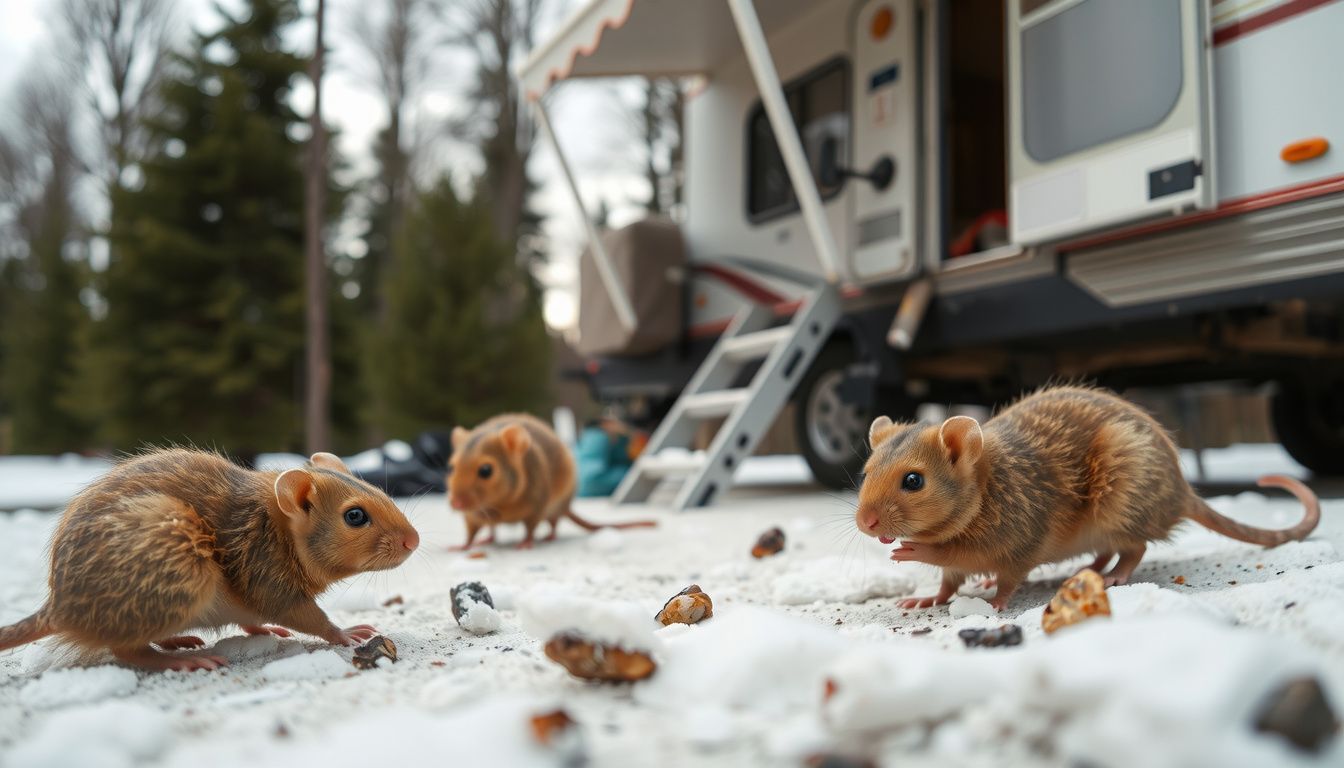
Mice can squeeze through openings as small as 1/4 inch. Once inside, they build nests in bed platforms, behind cabinets, under the refrigerator, and around furnace ducts. They chew constantly to keep their teeth worn down, which puts wiring, PEX plumbing, vinyl flooring, and foam cushions at risk.
The damage is not just cosmetic. Chewed electrical insulation can create short circuits or fire hazards. Urine and droppings contaminate surfaces and can carry disease. The longer mice remain, the more deeply they nest and the harder the camper is to restore in spring. For more on this, see our guide on how to charge camper battery 2.
A successful winter plan treats the problem in layers: inspection, sanitation, sealing, interior hardening, and ongoing monitoring.
Step 1: Inspect the Camper’s Exterior, Interior, and Underbelly
Start with a structured walkthrough rather than a quick visual scan. You are looking for daylight gaps, rub marks, chewed edges, droppings, and any opening that could admit a pencil. For further reading, see epa.gov.
Work in three passes:
- Outside: Walk the perimeter at ground level. Inspect doors, baggage compartments, slide-out corners, vents, and every penetration where a wire, pipe, or hose passes through the wall.
- Inside: Open cabinets, remove drawers, and check under sinks, behind the furnace, around the water heater, and inside bed platforms. Look for droppings, urine staining, shredded paper, or seed shells.
- Underneath: Crawl under the frame if possible. Check coroplast seams, tank penetrations, frame pass-throughs, and the area around the hitch and stabilizer jacks.
A bright headlamp and a small inspection mirror help you see into hidden corners. If you spot a gap, photograph it with a coin next to the opening for scale so you can match the right material later.
Before you focus on the underbelly, repair any failing roof seams so moisture and cold do not create hidden voids that rodents exploit. A dry, intact exterior reduces the number of small gaps that develop during freeze-thaw cycles.
Supplies to Stage Before You Start
Running to the hardware store mid-job usually leads to skipped gaps and rushed work. Keep these on hand:
- Copper mesh or stainless steel wool
- Exterior-grade polyurethane sealant or pest-resistant foam
- Aluminum flashing or 1/4-inch hardware cloth
- Tin snips, utility knife, and screwdriver
- Work gloves, a respirator or N95 mask, and a headlamp
- Snap traps and enclosed bait stations
- Gasketed storage bins for bedding and food
Step 1: Remove Food, Odors, and Nesting Materials That Attract Mice
Mice follow scent trails, not just visible crumbs. Even a camper that looks clean can have enough trace food residue or soft material to invite overwintering rodents.
Empty and clean every food zone:
- Pantry shelves, spice racks, and forgotten snack bins
- Stove drip trays, oven drawer, and microwave interior
- Refrigerator door seals, freezer shelf edges, and toaster crumb trays
- Under dinette cushions, in seat bases, and along floor edges
- Pet food, bird seed, drink mixes, and camping food storage tubs
Sanitize hard surfaces with a mild degreaser, then vacuum baseboards, cabinet corners, and along plumbing lines with a crevice tool. Pay special attention to edges, because mice use walls and cabinet sides as runways.
Next, remove nesting supplies. Paper goods and fabrics are premium winter bedding. Take home or move into hard-sided, gasketed bins:
- Paper towels, napkins, cardboard boxes, and spare manuals
- Blankets, throw pillows, sleeping bags, and extra clothing
- Cleaning rags, yarn, and any loose fabric scraps
A common mistake is leaving food in thin plastic or cardboard packaging. Mice chew through both quickly. If dry goods must remain, transfer them to metal or thick polycarbonate containers with tight-fitting lids.
 Clean edges and baseboards, not just visible surfaces.
Before closing up, complete holding-tank maintenance so any odor that could attract mice is removed. A thorough sanitation pass covers the water system as well as the pantry.
Step 2: Seal Entry Points and Vulnerable Gaps Around the Exterior
Mice can squeeze through openings as small as 1/4 inch, so treat the camper exterior like a weatherproofing job. Start low and work upward, because most access points sit near the ground.
Anywhere a pipe, wire, or hose passes through a wall deserves a close look. Daylight, rub marks, or chewed edges around a penetration are clear signs that a seal has failed.
Use the right material for the location:
| Gap or opening | Recommended seal | Why it works |
|---|---|---|
| Small cracks and irregular gaps | Copper mesh plus exterior sealant | Rodents cannot chew through copper mesh; sealant locks it in place |
| Hollow voids behind panels | Pest-resistant expanding foam | Fills irregular cavities without sagging |
| Large openings or chewed edges | Aluminum flashing or hardware cloth | Creates a durable physical barrier |
| Entry doors and baggage doors | New door sweeps and gaskets | Closes the most common low access point |
Steel wool alone is not a permanent seal. It rusts, breaks apart, and can be pulled out over a winter season. Layer it with a durable barrier and sealant.
Inspect these commonly missed zones:
- Furnace and water-heater access doors
- Refrigerator vents and outside kitchen hatches
- Shore-power inlet and cable/satellite pass-throughs
- Generator exhaust routing and compartment walls
- Coroplast underbelly seams and tank drain openings
The U.S. Environmental Protection Agency recommends sealing openings larger than 1/4 inch and removing food and water as the foundation of rodent control. For campers, that means checking the underbelly just as carefully as the living space.
A layered repair works best. For example, if a storage-bay corner shows daylight where the frame meets the floor, pack copper mesh into the seam, apply a bead of polyurethane sealant, and cover the edge with aluminum flashing screwed into the frame. That assembly survives freeze-thaw cycles and chewing attempts.
Recheck seals after the first hard freeze. Sealant applied over dirty or wet surfaces often fails within weeks, reopening the entry route.
Step 3: Protect Interior Hotspots, Wiring, and Soft Materials From Chewing
Once the exterior is tightened, make the interior hard to nest in and risky to chew. Mice prefer quiet, warm, undisturbed zones. In a camper, that means hidden cavities and soft storage areas.
Focus first on these hotspots:
- Under the sink and behind drawers
- Beneath the refrigerator and around the furnace
- Inside bed platforms, bench seats, and sofa bases
- Behind electrical panels and water pump compartments
These areas often contain wiring looms, pex lines, and insulation, exactly what rodents use for tunnels and nests.
Take three protective steps:
- Bundle and elevate wiring. Use loom clamps or screw-in clips to lift slack wire runs off the floor and away from walls.
- Wrap exposed wiring. Split-loom conduit or rodent-resistant wrap adds a chew-resistant jacket to critical runs.
- Block large interior voids. Secure hardware cloth over open cabinet backs, bed bases, or toe-kick gaps where mice can enter wall cavities.
Stand removable cushions upright instead of stacking them flat. This reduces the cave-like pockets that mice treat as ready-made nesting chambers.
During this step, inspect wiring for existing chew marks. If you find damage, disconnect shore power first, then re-sleeve the run and secure it every 8 to 12 inches. Do not close up a camper with exposed copper or damaged insulation.
Keep traps staged inside during storage, even after sealing. One missed gap can still let a single mouse inside, and a trap catches it before it causes major damage.
Avoid loose poison bait inside a camper. Rodents may die in an inaccessible wall cavity, create lasting odor, and pose secondary exposure risk to pets or wildlife.
Step 4: Set Traps and Use Deterrents as a Monitoring Layer
Traps are not a one-and-done task. They are a monitoring system that catches the few mice still testing the perimeter and gives you early evidence of a failed seal.
Place traps where mice naturally travel: along walls, behind appliances, inside cabinet toe-kicks, and near plumbing or electrical chases. The trigger end should sit tight against a vertical surface, because mice hug edges as they move.
| Trap type | Best use in a camper | Notes |
|---|---|---|
| Snap traps | Fast verification and quick kills | Inexpensive and reliable; check weekly |
| Enclosed bait stations | Protected placement near cabinets or floors | Reduces pet access and mess |
| Electronic traps | Tight, hard-to-reach cavities | Requires batteries; good for repeat catches |
Use only a pea-sized dab of bait, such as peanut butter mixed with a few oats. Too much bait lets mice steal it without triggering the trap. Wear gloves when handling traps to minimize human scent.
Deterrents such as peppermint oil, dryer sheets, and ultrasonic devices can support control, but results vary widely by camper and placement. Treat them as bonus coverage, never as a replacement for sealing and trapping.
 Place traps tight to vertical surfaces where mice travel.
For a typical travel trailer, set at least four traps: two near the galley water lines, one inside the front storage bench, and one by the rear electrical access panel. After the first week, use findings to add traps near any active runways.
Check traps weekly during early storage. A sprung trap, fresh droppings, or disturbed bait tells you exactly where to reinforce your seal.
Step 5: Inspect Monthly and Reopen Safely After Winter Storage
Winter is long, and conditions change. A monthly inspection keeps small issues from becoming a full infestation and shows whether your exclusion plan is actually holding.
During each visit:
- Do a slow exterior walk-around, looking for fresh gnaw marks, disturbed seals, or new gaps.
- Check and reset traps. Replace any that are dusty, contaminated, or no longer snapping cleanly.
- Open the camper briefly and scan corners, cabinets, and counter edges for droppings or shredded material.
- Listen for scratching and smell for a sharp ammonia odor, both signs of active rodents.
- Inspect wiring and soft goods near heaters, plumbing, and the battery compartment.
If you find droppings, do not sweep or vacuum them dry. Ventilate the space, wear gloves and a mask, wet the area with disinfectant, and wipe the waste into a sealed trash bag. Remove heavily contaminated insulation or nesting material the same way.
When reopening in spring, stage the process. Open vents and windows, inspect food storage areas and bedding, and check the electrical bay before restoring power. If you see chewed wiring, stop and have it repaired before connecting the battery or shore power. During spring startup, flush the holding tank and check the dump valve before your first trip, so the sanitation side of winterization is fully closed out.
Keep a short phone log with inspection dates, trap results, and photos. Repeat activity near one corner usually means a missed entry point still needs attention.
Common Mistakes That Undo a Mouse-Proofing Job
Even careful owners lose a camper to mice because of one avoidable error:
- Relying on scent repellents alone. Peppermint and dryer sheets fade and shift. They cannot replace a physical barrier.
- Using loose rodenticide inside. Poison can cause hidden carcasses and persistent odor problems.
- Sealing over wet or dirty surfaces. Sealant fails early and reopens the gap.
- Ignoring the underbelly. Coroplast seams and tank penetrations are among the most common overlooked entries.
- Leaving paper products or bedding out. One forgotten blanket can become a spring nest.
- Setting traps once and forgetting them. Rodent pressure changes with weather and food availability.
Fix these before they become the reason for a spring rewiring project.
Frequently Asked Questions
What smell keeps mice out of a camper?
Peppermint oil is the most commonly recommended scent, but its effect is inconsistent in open or well-ventilated spaces. It works best in small, enclosed compartments and must be refreshed every few weeks. Scent deterrents should supplement sealing and trapping, not replace them.
How small of a hole can a mouse fit through in a camper?
A young mouse can squeeze through a gap as small as 1/4 inch, roughly the diameter of a pencil. Adult mice need only slightly more room. Seal every opening larger than 1/4 inch, including cracks around pipes, wires, slide-out corners, and door gaskets.
Do dryer sheets keep mice out of campers?
Dryer sheets may provide a temporary scent barrier in enclosed storage compartments, but evidence is inconsistent. Mice often push them aside or use them as nesting material. They are not a reliable standalone solution and should be treated as a minor supplement to exclusion.
Can mice get into a camper through vents?
Yes. Furnace vents, refrigerator vents, and damaged or missing screens are common entry routes. Inspect all exterior vents for gaps, torn mesh, or warped frames. Cover non-operational vents with 1/4-inch hardware cloth and replace any damaged screens before winter storage.
Are mothballs safe to use in a camper?
Mothballs are not recommended indoors. Their active ingredient produces strong, lingering fumes that can be harmful in enclosed living spaces and are difficult to remove from fabrics and surfaces. Safer alternatives include sealing, sanitation, and snap traps placed during storage.
How often should I check mouse traps in a stored camper?
Check traps weekly during the first month of storage, then at least once a month through winter. More frequent checks help you identify new entry points before an infestation develops. Any sprung trap or fresh activity means you should inspect nearby seals immediately.
Conclusion
Keeping mice out of a camper for winter comes down to a consistent sequence: remove food and bedding, seal every gap wider than a pencil, protect wiring and soft materials, and monitor with well-placed traps. There is no single miracle product, but a layered exclusion plan works.
Start with a full inspection this week, eventually sealing every penetration you find and staging clean traps before the first hard freeze. The goal is not to chase mice all winter. It is to make your camper so difficult to enter and so unappealing to nest in that rodents move on.