How to Deep Fry Fish in a Pan With Oil, Crisp Every Time
There’s a moment of quiet satisfaction when you lift a golden fillet from a pan of hot oil and hear that shattering crunch. Pan-deep-frying fish is one of those kitchen skills that looks intimidating but rewards patience with exceptional results. You don't need a dedicated deep fryer, a mountain of equipment, or professional training—just a heavy pan, the right oil, and a method that prioritizes temperature control and proper technique.
This guide walks you through every step: selecting the right fish, building a crust that stays put, managing oil temperature like a pro, and troubleshooting the common pitfalls that turn crispy fillets into soggy disappointments. By the end, you'll have the confidence to produce restaurant-quality fried fish on a regular weeknight, without the mess or the guesswork. You can also read our guide on blackstone grill how to use.
Why Pan-Frying Beats a Dedicated Fryer
Many home cooks assume that achieving crispy fried fish requires a specialized appliance. In reality, a deep, heavy skillet filled with a few inches of oil can outperform a standard fryer for small batches. Pan-frying gives you direct control over temperature changes and allows you to see the crust developing in real time. It also uses less oil, heats faster, and takes up far less storage space than a bulky countertop appliance.
The physics work in your favor too. When fish hits hot oil, moisture evaporates rapidly from the surface, creating steam that pushes outward and prevents the coating from absorbing excess oil. This is what creates that coveted crispy exterior. The key is maintaining oil temperature between 350°F and 375°F—hot enough to crisp instantly, but not so hot that it burns the coating before the fish cooks through. For more on this, see our guide on how long does it take to deep fry.
Gather Your Equipment and Ingredients
Preparation makes the difference between a smooth frying session and one filled with frantic searching. Set up your station before you even take the fish out of the refrigerator.
Essential Tools
You don't need professional-grade equipment, but the right tools make the process safer and more consistent:
| Tool | Why It Matters |
|---|---|
| Heavy-bottomed skillet or Dutch oven | Holds heat steadily; prevents hot spots that cause uneven browning |
| Instant-read or clip-on thermometer | Eliminates guesswork; the single most important tool |
| Long tongs or spider strainer | Keeps your hands away from hot oil; allows gentle placement |
| Wire rack over a sheet pan | Lets air circulate around fried fish, keeping the crust crisp |
| Splatter screen | Reduces mess and protects hands while frying |
A cast-iron skillet is ideal, but any heavy stainless steel or enameled pan works well. Skip thin nonstick pans—they cool too quickly when you add fish and encourage the oil temperature to plummet. For more on this, see our guide on how hot does oil need to be to.
Selecting the Right Oil
Choose an oil with a high smoke point and neutral flavor. Peanut oil is the classic choice for frying fish—it has a smoke point around 450°F and imparts no off-flavors. Canola, sunflower, and refined avocado oil are equally reliable alternatives.
Fill your pan to a depth of 1 to 1½ inches. That's enough to partially submerge most fillets without creating dangerous splatter. A common mistake is under-filling the pan, which leaves fish sitting on the bottom where it can stick and cook unevenly.
Choosing Fish That Holds Up to Frying
Not every fish is suited for pan-deep-frying. The best candidates are firm, mild white fish that won't flake apart when handled. Understanding what makes certain fish behave differently in hot oil will dramatically improve your results.
Best Fish Choices
- Cod and haddock: The gold standard for fish and chips; firm, flaky, and mild
- Catfish: Slightly sweeter, holds up beautifully with cornmeal coatings
- Tilapia: Budget-friendly, cooks quickly, and takes seasoning well
- Halibut: For special occasions; meaty texture that stays moist
- Pollock: Comparable to cod, generally more affordable
Oily fish like salmon and mackerel can be fried, but they brown faster and can taste heavy. If you do fry them, lower the oil temperature by about 25°F and keep the pieces thinner.
Cutting for Even Cooking
Uniform thickness is crucial. A fillet that's 1½ inches thick on one end and ½ inch on the other will be overcooked at the thin end by the time the thick end reaches doneness. Cut fillets into portions about ¾ to 1 inch thick. A thick fillet can be butterflied or sliced horizontally into two flatter pieces.
This step matters more than most people think. When fillets cook evenly, they finish at the same time, and the crust develops uniformly without undercooked or burnt spots. For those who enjoy managing a bigger cookout spread, firing up a pellet grill for pizza is another technique worth exploring, but the patience for even heat applies to both.
Build a Crust That Stays Crisp
The coating is the first line of defense between the fish and the oil. A well-constructed breading locks in moisture, creates texture, and prevents the fish from absorbing excess oil.
Start With a Dry Surface
Pat the fish dry with paper towels until it feels tack-free. Any surface moisture creates steam that prevents the coating from adhering and causes oil to spit unpredictably. This step alone solves more soggy-coating problems than any other fix.
Season the Fish, Not Just the Flour
Lightly season each fillet directly with salt and pepper before dredging. This ensures the seasoning reaches the fish rather than getting trapped in the coating. Add garlic powder, paprika, or cayenne to personalize the flavor profile.
The Three-Step Breading Method
For the crispiest results, use a proper breading station:
- Dry dredge: Combine ¾ cup all-purpose flour with ¼ cup cornmeal, 1 teaspoon salt, and ½ teaspoon black pepper
- Wet dip: Beat one egg with 2 tablespoons buttermilk or water
- Final coat: Return the fish to the dry mixture, pressing gently to ensure adhesion
The cornmeal adds craggy texture, while the egg wash helps the final coating adhere firmly. For extra crunch, add 1 tablespoon of cornstarch to the dry mix—it promotes browning and creates a lighter, crispier texture.
Let the Coating Rest
After breading, let the fish rest on a wire rack for 5–10 minutes. This allows the starch to hydrate and the coating to bond, preventing it from falling off during frying. It's a small step that dramatically reduces bald spots and floating breading in your oil.
Master the Oil Temperature
Temperature control separates amateur frying from professional results. Too cool, and the coating absorbs oil, becoming greasy. Too hot, and the outside burns before the inside cooks.
Heat Gradually, Use a Thermometer
Place the pan over medium heat and allow the oil to come up to temperature slowly over 8–12 minutes. Check with a thermometer—350°F to 375°F is your sweet spot. If you're working without one, test with a pinch of flour: it should sizzle immediately and float rather than sink.
Maintain Temperature Between Batches
The biggest temperature killer is overcrowding. Adding too many pieces at once drops the oil temperature dramatically, causing the coating to absorb oil instead of crisping. Fry fish in small batches—usually two to three pieces at a time in a standard 12-inch skillet.
After each batch, wait for the oil to climb back to 350°F before adding more fish. This means 90 seconds to 2 minutes of patience between batches, but it ensures every piece gets the same treatment. If you're serving a crowd, keep finished fish warm on a wire rack in a 200°F oven while you fry the remaining batches.
The Frying Process: Technique and Timing
When the oil is ready, carefully lower each piece into the pan away from you, using tongs or a spider. Place fish gently to avoid splashing. Wait 10–15 seconds before adding the next piece so the oil temperature recovers slightly.
When to Flip
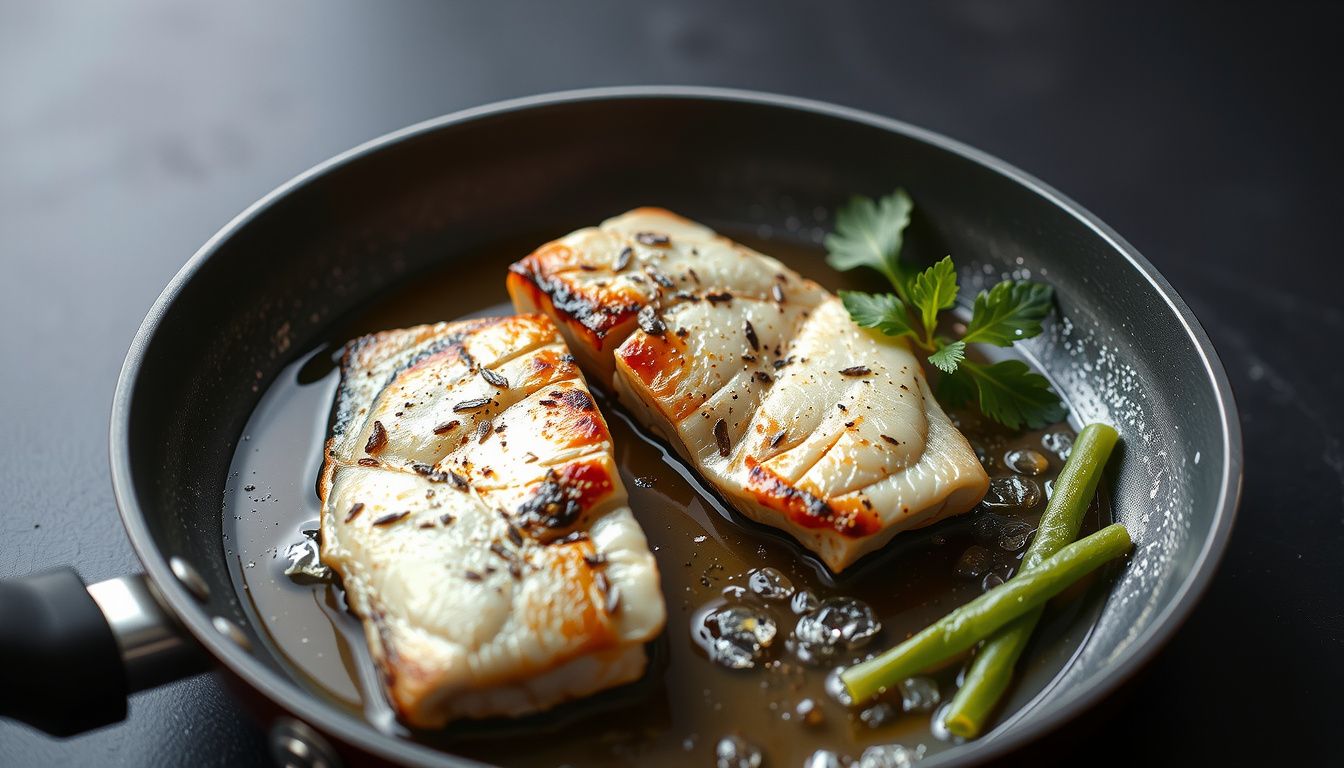
Resist the urge to move the fish immediately. Let the first side cook undisturbed for 3–4 minutes, depending on thickness. The coating will turn golden brown and release from the pan naturally when it's ready. If you try to flip too early, the coating will tear and stick.
Look for visual cues: the bubbling around the fish will slow as moisture cooks off, and the edges of the coating will look set and brown. Flip once and cook for another 2–3 minutes until the second side matches.
How to Know It's Done
The fish is ready when it reaches an internal temperature of 145°F per FDA guidance. A thick fillet will flake easily with a fork and appear opaque throughout. The crust should be deep golden brown—not pale, not burnt.
Here's the realistic timing for a 1-inch cod fillet: about 4 minutes on the first side, 3 minutes on the second, totaling roughly 7 minutes in the oil. Thinner pieces like tilapia may only need 3 minutes per side. The USDA offers comprehensive food safety guidance for fish that's worth reviewing before your first attempt. If you're checking timing for a full meal plan, consider how long does it take to deep fry fish as you coordinate other preparation.
Drain and Rest for Maximum Crunch
How you handle fish after it leaves the oil is just as important as how you fry it. Many home cooks ruin perfectly good fried fish in the last 30 seconds by draining it improperly.
Use a Wire Rack, Not Paper Towels
Paper towels trap steam beneath the fish, softening the crust within minutes. Instead, set a wire rack over a sheet pan and transfer fish directly from the oil to the rack. This allows air to circulate around every surface, keeping the coating crisp while excess oil drips away.
Season Immediately
Sprinkle salt over the fish while it's still hot and glistening. The salt adheres to the surface oil and seasons the crust properly, rather than bouncing off the fish. Done at this moment, even a simple pinch of flaky salt elevates the flavor noticeably.
Rest Briefly Before Serving
Let fried fish rest for 2–3 minutes before serving. This allows surface oil to finish draining and lets internal juices settle so your first bite is clean and crisp rather than steaming and soggy. Don't cover the fish while it rests—covering traps moisture and destroys the crust within minutes.
Troubleshooting Common Frying Problems
Even experienced cooks encounter issues with frying fish. Here are the most common problems and their practical fixes:
Coating Falling Off
This usually happens when fish is too wet or the coating hasn't rested before frying. Ensure surfaces are completely dry, and let breaded fish sit for at least 5 minutes before hitting the oil. It can also help to press the final coating firmly onto the fish.
Greasy, Heavy Texture
Greasy fish almost always means the oil wasn't hot enough. The coating absorbs oil rather than steaming it away. Check your thermometer, wait for full recovery between batches, and avoid overcrowding the pan.
Uneven Browning
Uneven browning typically comes from inconsistent oil depth or overcrowding. Make sure fish is fully submerged by at least half its thickness and that pieces have room to move in the pan.
Burning Before Cooking Through
If the outside browns too quickly, the oil is too hot. Lower the heat and use a thermometer to verify. Alternatively, your fish pieces may be too thick—cut them thinner for faster, more even cooking.
Storing and Reheating Leftovers Safely
Fried fish is best eaten immediately, but leftovers can still be excellent if handled correctly.
Proper Storage
Cool fish to room temperature within 1 hour of cooking, then transfer to an airtight container lined with a paper towel. Refrigerate for up to 3 days. The paper towel absorbs excess moisture and helps preserve crispness.
Reheating Without Sogginess
Skip the microwave—it will turn your crispy fish into a limp, chewy mess. Instead, reheat in a 400°F oven on a wire rack over a baking sheet for 5–8 minutes, until hot and crisp. An air fryer works even better if you have one, producing nearly fresh-from-the-pan results in 3–4 minutes at 375°F. Pair your fried fish with a smoky side—trying thick-cut pork chops in the oven cooked low and slow is a hearty complement for a fish fry spread.
Frequently Asked Questions
What's the best oil for deep frying fish in a pan?
Peanut, canola, and sunflower oil are excellent choices with high smoke points and neutral flavors. Refined avocado oil also works well. Avoid olive oil and butter—their lower smoke points cause burning before the fish cooks through.
How long does it take to deep fry fish in a pan?
A 1-inch fillet typically takes 5–7 minutes total: about 4 minutes on the first side and 2–3 minutes on the second. Thinner fillets cook faster, sometimes in as little as 3–4 minutes. Always verify doneness with an internal temperature of 145°F.
Can I reuse the oil after frying fish?
Yes, but strain it through a fine mesh sieve to remove food particles and refrigerate it promptly. Oil can be reused 2–3 times for fish before developing off-flavors. Discard it if it smells rancid, smokes at lower temperatures, or appears cloudy.
Why does my fried fish stick to the pan?
Fish sticks when the coating hasn't set or the oil temperature is too low. Let the first side cook undisturbed for at least 3 minutes before attempting to flip. If it resists, wait another 30–60 seconds—the crust will release when properly browned.
Should fish be at room temperature before frying?
Partially. Cold fish straight from the refrigerator will drop oil temperature too much. Let flilleted fish sit at room temperature for 15–20 minutes before breading and frying, but no longer than 30 minutes to maintain food safety.
Can I fry fish without eggs for the coating?
Absolutely. For an egg-free alternative, use buttermilk, regular milk, heavy cream, or even cold water for the wet dip step. These still help the flour adhere and create a crispy crust, though the browning may be slightly lighter.
Conclusion
Pan-deep-frying fish isn't about luck or secret techniques—it's about controlling the fundamentals: dry fish, a properly built crust, steady oil temperature around 350°F, and gentle handling throughout. Master these elements, and you'll produce crisp, golden fillets every single time, whether you're cooking for two or feeding a crowd.
Your next step is simple: choose a firm white fish like cod or tilapia, gather your tools, and fry a single batch tonight. Pay attention to the oil thermometer, let the coating rest before frying, and resist the urge to overcrowd the pan. Note what worked and what you'd adjust, then apply those lessons next time. Within two or three attempts, this method becomes second nature—and the uncertainty disappears from your cooking entirely.