How Long To Cook Fish From Frozen: Best Proven Timing For Perfect Results
Frozen fish is a weeknight lifesaver — until it turns into a dry, overcooked exterior with a raw center. The problem is rarely the fish itself; it’s the timing. Most guides offer one generic number and then leave you to guess. This article is built around how long to cook fish from frozen in real kitchens: practical time ranges for the oven, stovetop, and air fryer, plus the temperature check that takes the guesswork out for good.
The short version: a 1-inch frozen fillet takes about 15–22 minutes in the oven at 400°F (200°C), 10–16 minutes in a covered skillet, or 10–12 minutes in an air fryer. It is done when the thickest point reaches 145°F (63°C) — not when it looks brown enough.
Why Cooking Fish From Frozen Is Different
Frozen fish isn’t just thawed fish with a longer timer. Ice crystals change how heat moves through the flesh. Before the fish can actually cook, the heat must first melt the ice near the surface. That phase change absorbs energy without raising the temperature, which is why the outside can look opaque and flaky while the center is still barely defrosted.
This “frozen-to-hot lag” catches most home cooks. In practice, the exterior of a fillet can reach browning temperature in minutes, while the interior is still fighting through ice. That is why cooking times based on color or package labels often fail. You need a time range tied to thickness, then a temperature check at the center.

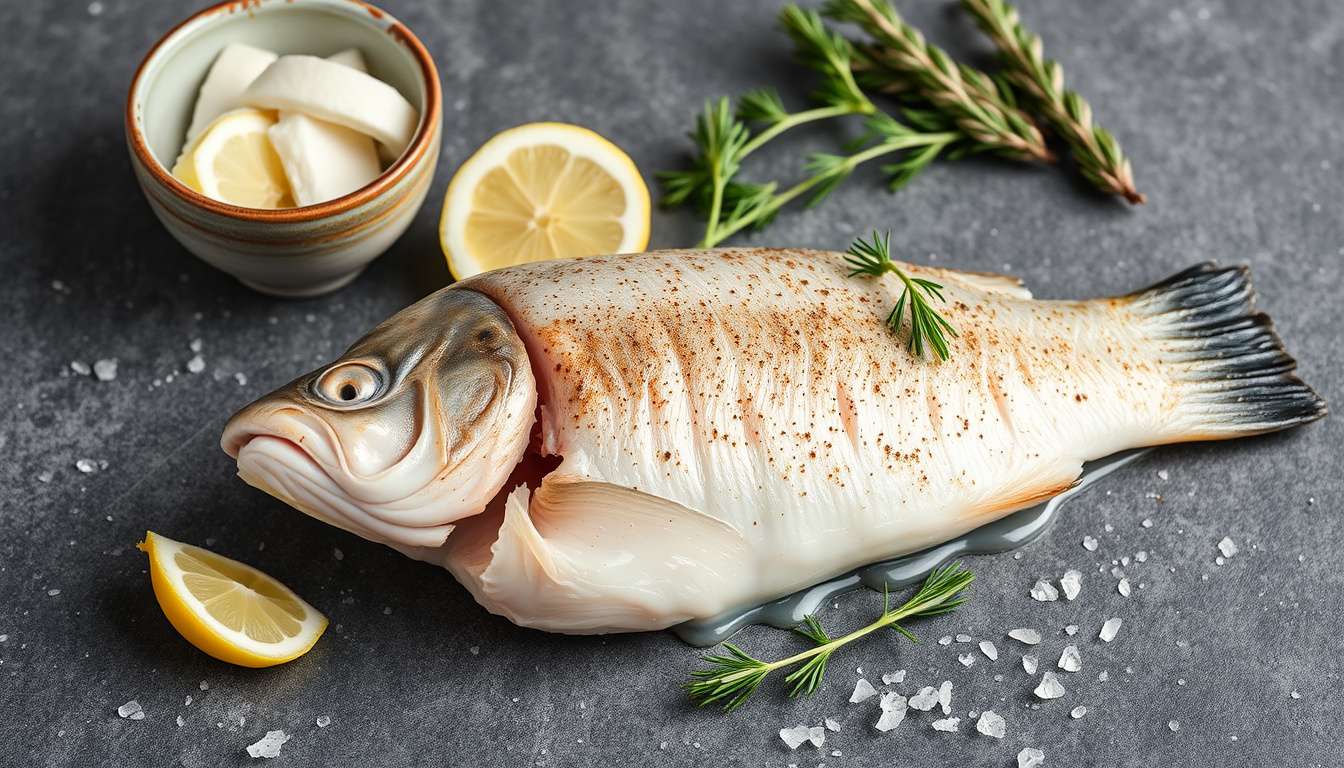
Even frozen fillets cook evenly when the oven is fully preheated and the pieces are spaced apart.
The Only Doneness Number That Matters
Forget flaking, color, and “the fish should smell done.” The reliable benchmark is 145°F (63°C) at the thickest part of the fillet. That is the same target the FDA’s safe-handling guidance for fish gives for fresh and cooked seafood, including fillets that start frozen.
How to check it properly:
- Insert a probe thermometer into the center of the thickest portion.
- Avoid touching skin, bone, or the pan.
- Measure a second spot if the fillet is uneven.
- Keep the probe away from ice pockets or surface moisture.
One common mistake is checking the thin tail end, which reads done while the thick center is still under. The same doneness-check habit is what separates a properly cooked fillet from a raw core — and it also works for juicy burger patties on the grill.
Carryover works in your favor, but only slightly. Fish can rise another 1–3°F after it leaves the heat, especially if it rests in sauce or foil. Do not rely on carryover to fix an undercooked center. Wait until the probe reads at least 145°F before pulling the fish out.
Frozen Fish Cooking Time by Method
Use these ranges for a 1-inch (2.5 cm) frozen fillet. If your fish is thicker or thinner, adjust with the thickness rule in the next section.
| Method | Time range for 1-inch fillet | Texture | Doneness check |
|---|---|---|---|
| Oven-baked | 15–22 minutes at 400°F (200°C) | Moist, even, softer crust | Probe after 15 minutes |
| Pan-seared with covered finish | 10–16 minutes at medium-high | Golden outside, tender center | Probe after 10 minutes |
| Air fryer | 10–12 minutes at 400°F (200°C) | Crisp outside, can dry out quickly | Flip at 6 minutes, probe after 10 |
Oven-Baked Frozen Fish Timing
Preheat the oven fully, then place the frozen fillets on a lined baking sheet. Unbreaded fillets usually finish in 15–19 minutes; breaded or coated fillets need 18–22 minutes because the coating slows heat penetration.
Rotate the tray once halfway through. If the edges brown before the center is done, tent the fish loosely with foil for the last 5 minutes. Add 2–4 minutes for every extra 1/2 inch of thickness. Dark-meat cuts in the oven behave similarly — the thicker the piece, the longer the window, which is true for bone-in chicken thighs as much as for white fish.
Pan-Seared Frozen Fish Timing
Heat a skillet on medium-high and add a thin layer of oil. When the oil shimmers, place the frozen fish in the pan and leave it alone for 3–4 minutes. Flip once, then reduce the heat, cover the pan, and finish for 4–6 minutes.
The lid matters more than most recipes admit. It traps steam and helps heat reach the center instead of just browning the outside. Total time lands around 10–16 minutes. Flipping more than once tears the surface and messes up the timing.
Air-Fryer Frozen Fish Timing
Preheat the air fryer for 3–5 minutes so the fish starts cooking the moment it goes in. Cook at 400°F (200°C) for 10–12 minutes, flipping at the 6-minute mark. Leave 1–2 cm of space between pieces so hot air can circulate.
Thicker portions need 3–5 extra minutes, and breaded fillets may need 1–2 minutes longer for the coating to crisp. Check the center before serving — the air fryer’s crisp exterior can fool you into thinking the inside is ready.
If You’d Rather Fry or Smoke
The same temperature rule applies, but the timing logic changes with the cooking method. For a golden, flour-and-egg coating, the technique used for crispy battered fillets usually assumes a thawed fillet, so expect a few extra minutes if yours is frozen. For a smoky finish, the process runs low and slow; check the timing for smoked fish from start to finish before you light the smoker. And if you prefer hot oil, deep-fried fillets follow a different, much faster set of rules.
How Thickness Changes the Cooking Window
Fish thickness is the single biggest factor in frozen cooking time. A thin 1/2-inch flounder fillet can finish in half the time of a 2-inch cod steak.
Use the 1-inch baseline, then adjust:
- Thinner than 1 inch: reduce time by 2–3 minutes.
- Thicker than 1 inch: add 2–4 minutes for every extra 1/2 inch.
- Uneven fillets: measure the thickest part, not the average.
- Coated fish: add 2–4 minutes because the breading or glaze slows heat transfer.
Fillets often taper, with a thin tail and a thick center. Place the thicker side toward the heat source when possible. A few millimeters of difference can break a single timer, which is why temperature verification matters more than any quoted minute.
The 4-Step Timing Method That Removes Guesswork
Instead of hunting for one perfect number, use this system every time:
- Measure the thickness and note whether the fish is breaded, glazed, or covered in ice.
- Set a baseline from the table, then mark a halfway checkpoint for flipping or rotating.
- Probe the thickest point at the earliest time in the range.
- Adjust in 2-minute increments until the center reaches 145°F (63°C), then rest for 1–2 minutes.
Example: a 1-inch frozen cod fillet goes into a 400°F oven. Check at 15 minutes, rotate, check again at 18 minutes. If the center reads 145°F, rest and serve. If it reads 140°F, give it another 2 minutes and recheck.
That final check is the calibration point, not an optional step.
Common Mistakes That Ruin Frozen Fish Timing
Most failed frozen-fish meals come from repeatable mistakes, not bad recipes:
- Treating frozen fish like thawed fish.
- Crowding fillets into one pan or basket, which traps steam and slows heat transfer.
- Starting with a cold pan or an underheated oven.
- Trusting color and flaking instead of taking an internal temperature.
- Checking the probe near the thin edge.
- Flipping too early and tearing the surface.
- Cooking with a thick ice glaze, which adds several minutes to the clock.
- Following only the package timer, which is often optimistic.
The fix is simple: be honest about thickness, keep the heat high, and confirm doneness with a thermometer. You can also reduce wateriness by patting off loose ice before cooking. Frozen fish naturally releases moisture as ice melts — that is normal, not a sign of failure.
Frequently Asked Questions
Can You Cook Fish Straight From the Freezer?
Yes. Cooking fish from frozen is safe as long as the thickest part reaches 145°F (63°C). Expect roughly 50 percent more time than a thawed fillet, use a thermometer instead of a package timer, and choose the oven or air fryer for thicker cuts.
How Long Do You Cook Frozen Fish in the Oven?
For a 1-inch frozen fillet, bake at 400°F (200°C) for 15–22 minutes. Unbreaded fillets tend to finish in 15–19 minutes; breaded ones need 18–22 minutes. Probe the thickest point and add 2–4 minutes for each extra 1/2 inch of thickness until it reaches 145°F (63°C).
Is It Better to Thaw Fish Before Cooking?
Thawing makes timing more forgiving, seasoning easier, and texture more even. But it is not required. Cooking from frozen works well for thin and medium fillets, especially in the air fryer or oven. For thick steaks, an overnight thaw in the refrigerator gives better control.
How Do You Know Frozen Fish Is Fully Cooked?
The only reliable sign is internal temperature: 145°F (63°C) at the thickest point. Insert an instant-read thermometer into the center, not near the edge or bone. The flesh should also flake easily, but flaking alone can happen before the center is fully cooked.
Why Is My Frozen Fish Watery?
Most frozen fish releases water as ice crystals melt. Pat off loose ice before cooking, use a hot pan or preheated oven, and do not crowd the pieces. Some moisture is normal; a short rest after cooking lets the flesh reabsorb juices instead of pooling on the plate.
Conclusion
Frozen fish does not have to be a gamble. The formula is simple: thickness sets the clock, the method controls heat flow, and a thermometer proves doneness. Start with the baseline ranges above, check at the thickest point, then adjust in short increments until you hit 145°F (63°C).
Next time you pull fillets from the freezer, measure the thickest point before you preheat, then choose your method from the table. Keep the probe nearby, and you’ll get tender, flaky, safely cooked fish every time. Once you master temperature-first cooking, you can apply the same approach to almost anything — including your first steak on the grill.