How Hard Is It to Maintain a Saltwater Fish Tank: Guide
Maintaining a saltwater fish tank feels intimidating at first. There is salt mix, test kits, specialized equipment, and endless online debates about the "right" way to do things. But the honest answer to "how hard is it to maintain a saltwater fish tank?" is this: it is not expert-only, but it does demand more consistency than most freshwater setups.
The reality is closer to keeping a tiny, stable ocean than simply owning an aquarium. Small changes in salinity, temperature, or nutrients can stress fish and invertebrates quickly. The work is not constant, but the routine matters far more than the intensity of any single session. For more on this, see our guide on how often do you clean a betta fish.
Experienced reef keepers often spend just 10 to 15 minutes on a Sunday topping off evaporated water with RO/DI water, checking salinity, and emptying a protein skimmer cup. Those small, repeatable habits prevent the big, expensive problems that make this hobby feel hard.
This guide breaks down what really drives difficulty, including startup planning, weekly upkeep, livestock choices, equipment maintenance, water chemistry, and the budget required to succeed. For more on this, see our guide on best fillet knife for saltwater fish.
What "Hard" Really Means in Saltwater Tank Maintenance
After the initial setup choices are made, "hard" usually does not mean nonstop work. It means consistency and a willingness to measure, adjust, and wait. Saltwater tanks reward steady habits, not rushed fixes.
Maintenance difficulty is best judged by how often the tank drifts away from stable parameters. When salinity, temperature, and nutrients swing, the tank becomes reactive. That is when you end up doing more testing, more corrections, and managing more stressed fish and corals. A truly stable system can feel almost routine. For more on this, see our guide on air stone for fish tank how to use.
In practice, "hard" shows up as time pressure and decision-making. You need to recognize what is normal — a light film of algae on the glass — versus what signals trouble, such as rapid gill movement or sudden coral tissue recession. That judgment improves quickly with a simple logbook and a few weeks of careful observation.
It also includes the cost of mistakes. Overfeeding, topping off with saltwater instead of fresh water, or skipping water changes creates problems that can take weeks to unwind. Saltwater is not fragile, but it is significantly less forgiving than most freshwater systems because small chemistry shifts can cascade. For more on this, see our guide on fish tank thermometer how to read.
A realistic weekly workload includes:
- Checking salinity and topping off evaporated water with fresh RO/DI
- Emptying the protein skimmer cup and wiping away salt creep
- Testing key parameters and doing a small water change when needed
- Inspecting pumps and filters for reduced flow
Key Factors That Make Saltwater Tanks Easier or Harder
Difficulty depends less on the word "saltwater" and more on system design and stocking choices. A lightly stocked, fish-only tank with hardy species can be surprisingly straightforward. A reef tank packed with sensitive stony corals demands tighter control and more frequent monitoring.
Tank size matters more than most beginners realize. Larger volumes dilute mistakes and slow down parameter swings. A 75-gallon tank gives you hours or days to catch a problem; a 10-gallon nano tank can shift dangerously within a single afternoon. Nano tanks punish inconsistent top-offs and overfeeding far more harshly. For more on this, see our guide on how big does betta fish tank need to.
Equipment quality also shifts the workload. Reliable heaters, an automatic top-off (ATO) unit, and strong, well-maintained filtration reduce daily micromanagement. You do not need every gadget on the market, but investing in a few core pieces of dependable equipment prevents a lot of headaches.
Source water and testing habits form the foundation. Using RO/DI water prevents many algae and nutrient issues before they start. Regular, targeted testing keeps you proactive instead of chasing problems after your livestock already shows visible stress. For authoritative guidance on source water standards and marine system basics, the National Oceanic and Atmospheric Administration provides useful foundational information on marine ecosystem care.
A common practical example: a hobbyist runs a 20-gallon nano reef without an ATO and manually tops off "when it looks low." Salinity creeps up over a few days, corals stay closed, and the owner starts making constant corrections. Adding an ATO and setting a fixed feeding schedule often turns that same tank into a predictable routine within two weeks.
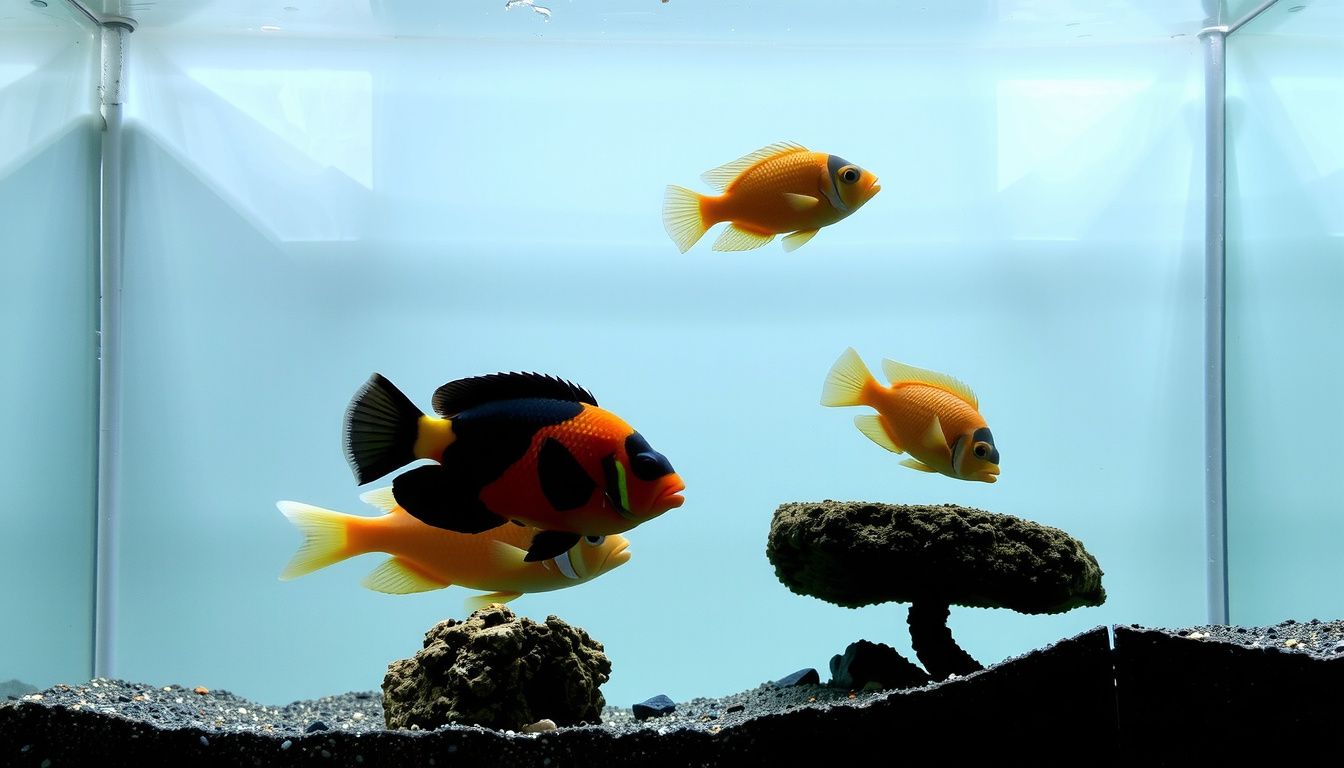
 A healthy nano reef requires stable salinity, consistent flow, and a simple but dependable maintenance routine.
Factors that commonly raise or lower difficulty include:
- Bioload: Heavy feeding and too many fish increase nutrient control needs
- Livestock sensitivity: SPS corals and anemones require tighter stability than soft corals
- Automation: ATOs, timers, and dosing pumps reduce human error
- Maintenance discipline: Small weekly tasks beat big monthly catch-ups
Daily, Weekly, and Monthly Maintenance: What You Actually Do
Once the tank is running, the workload becomes predictable. Most of the "hard" part is consistency, not complexity. A simple routine keeps small issues from turning into expensive ones.
Daily Maintenance: Quick and Visual
Daily maintenance takes less than five minutes. You are watching fish behavior, confirming equipment is running, and feeding carefully so nutrients do not creep up.
- Confirm temperature and salinity look stable
- Feed measured portions and remove any uneaten food after a few minutes
- Spot-check pumps, skimmer foam, and the water level in the return pump chamber
- Look for signs of stress: clamped fins, rapid breathing, or hiding fish
Weekly Maintenance: Protecting Stability
Weekly maintenance is where you protect the tank's stability. You will test a few key parameters, clean light buildup, and correct minor drift before it becomes a swing.
- Test nitrate, phosphate, alkalinity, and calcium if you keep stony corals
- Empty and clean the protein skimmer cup
- Top off with RO/DI water and inspect or replace filter socks or floss
- Wipe down glass and remove salt creep around the rim
Monthly Maintenance: Deeper Housekeeping
Monthly maintenance prevents flow loss, detritus traps, and hidden equipment failures that slowly destabilize the system.
- Clean powerheads and the return pump with a vinegar or citric acid soak
- Calibrate probes or verify your refractometer with calibration fluid
- Perform a water change sized to your tank's nutrient and trace-element needs
- Inspect hoses, clamps, and electrical connections for corrosion
In practice, a 20-gallon nano with two clownfish and a few soft corals needs about 3 to 5 minutes daily, 20 to 30 minutes weekly, and roughly an hour monthly. That is noticeably less time than many people spend maintaining a lawn or deep-cleaning a vehicle, but the tasks require more attention to detail.
Water Chemistry and Stability: The Real Skill Requirement
Water chemistry is not hard because it is mysterious. It is hard because it rewards patience and punishes abrupt fixes. Stability beats chasing "perfect" numbers every single time.
You will track a short list of parameters and build habits around what actually moves in your specific tank. Fish-only systems tolerate wider ranges. Reef tanks demand tighter control, especially for alkalinity and calcium.
The core parameters include:
- Salinity: Stability matters as much as the number. Evaporation raises it quickly in small tanks.
- Alkalinity: The "heartbeat" of many reef tanks. Swings stress corals quickly.
- Nitrate and phosphate: Too high fuels nuisance algae. Too low can starve corals and destabilize the system.
- Calcium and magnesium: Important for coral growth and for keeping alkalinity behavior predictable.
The key skill is interpreting trends, not single numbers. A single test result is a snapshot. A week of logged results is a story. Record your numbers, note any feeding or equipment changes, and adjust slowly — often in 10 to 15 percent increments at most.
A common beginner mistake is overreacting. If alkalinity drops from 8.5 to 7.6 dKH over three days, you do not "correct" it in one massive dose. You calculate the daily consumption rate, split the dosing across multiple days, and re-test at the same time each day to confirm the trend before adjusting again.
When chemistry feels difficult, it is usually one of three things: inconsistent testing schedules, unstable top-off causing salinity drift, or overreacting to normal fluctuation. Fix the process, and the numbers tend to follow.
Equipment Upkeep: Filtration, Lighting, and Flow Responsibilities
Equipment is where many beginners feel the "work" of saltwater keeping, because it demands small, consistent checkups rather than big weekly projects. When maintained well, the tank runs quietly in the background.
Filtration
Filtration upkeep is mostly about keeping efficiency high. Rinse filter socks or floss before they clog, empty the skimmer cup regularly, and remove salt creep that can redirect water flow. If a return pump slows down, it is usually calcium buildup — an easy soak-and-scrub fix.
Lighting
Lighting maintenance is simpler than it sounds but easy to neglect. Wipe splash guards and lenses so salt spray does not block output. Confirm timers and ramp schedules did not reset after a power outage. Watch for shaded areas as corals grow, and keep fan vents dust-free to extend LED life.
 Regular skimmer cleaning keeps waste export efficient and prevents nutrient buildup in reef systems.
Flow
Powerheads and return pumps do the heavy lifting for oxygenation and waste suspension. Clean them so output does not drop. Check for rattling impellers, and verify that no dead spots are forming behind rockwork. A quick visual check often prevents algae from taking hold in low-flow corners.
A practical example: a hobbyist notices the skimmer producing watery foam and the return flow looking weak. They soak both pumps in diluted citric acid for 30 minutes, rinse, reassemble, and the tank's surface film disappears within hours.
- Weekly: Wipe salt creep, empty skimmer cup, rinse mechanical media
- Monthly: Clean powerheads, inspect hoses and clamps, clear overflow teeth
- Quarterly: Deep-clean pumps, replace worn tubing, recalibrate ATO sensors
Common Mistakes That Increase Difficulty (and How to Avoid Them)
Most "hard" saltwater tanks are not hard because of chemistry. They are hard because of preventable habits. Small mistakes stack up, turning routine care into constant troubleshooting. The fix is usually a tighter process, not more gadgets.
A classic issue is overcomplicating equipment early. Beginners add reactors, extra chemical media, or aggressive filtration before the tank's biology stabilizes, then chase side effects like pale corals or recurring algae blooms. A simpler baseline setup makes cause and effect obvious.
Another frequent problem is inconsistent maintenance timing. Cleaning a powerhead only when it stops working, or replacing filter floss only after it overflows detritus back into the tank, guarantees sudden swings in oxygen and waste levels. A light, scheduled cleaning routine keeps performance steady.
Top-off mistakes make tanks feel unforgiving. Letting evaporation run too long, then "correcting" with a large freshwater dump, stresses fish and corals. An ATO and a regularly checked reservoir eliminate the daily salinity roller coaster.
A common practical example: a beginner keeps adjusting light intensity every few days because a coral "doesn't look happy." They stop tuning, hold a stable schedule for three weeks, clean the lenses, and the coral improves once conditions stop changing.
- Mistake: Changing multiple things at once. Fix: One change, then observe for 1 to 2 weeks.
- Mistake: Neglecting pump cleaning. Fix: Monthly soak and impeller check.
- Mistake: Overfeeding to "help" fish. Fix: Measured portions; remove uneaten food.
- Mistake: Skipping quarantine. Fix: Isolate all new fish before adding them to the display.
Real Cost and Time Commitments in 2026
The financial side of saltwater keeping surprises many newcomers. A common misconception is that the tank is the main expense. In reality, ongoing costs for salt mix, RO/DI filters, test reagents, food, and replacement media add up steadily.
A realistic breakdown for a modest 30-gallon setup looks like this:
- Initial setup: Tank, stand, filtration, heater, lighting, live rock, and substrate
- Monthly consumables: Salt mix, test reagents, food, and mechanical filter media
- Ongoing utilities: Electricity for pumps, heater, and lights, plus water for RO/DI production
- Emergency reserve: Replacement heaters, medication, or a backup pump
Fish-only systems cost less to stock and maintain than reef tanks. Coral systems require stronger lighting, more precise test kits, and often automated dosing. You do not need precise numbers to plan well; you need a realistic buffer so an equipment failure does not force you to abandon the hobby.
For perspective, spending time on routine tank care is similar to other detail-oriented maintenance hobbies. The difference is that saltwater keeping rewards those who learn to work with biological systems rather than against them.
How to Choose a Setup That Matches Your Time, Budget, and Goals
The real question is not just "how hard is it to maintain a saltwater fish tank?" but "how hard is it for my lifestyle?" Difficulty usually comes from choosing a tank that demands more stability and oversight than your schedule allows. A smart setup matches time, budget, and goals from day one.
Work through these steps in order:
- Define the goal: Fish-only, soft corals, or mixed reef. Each step up raises sensitivity and cost.
- Choose a forgiving size: Many beginners do best with 20 to 40 gallons — manageable volume without "nano" instability.
- Set a monthly budget: Salt, test reagents, food, and replacement media add up. Coral systems also need higher-end lighting and supplementation.
- Match stocking to your time: Fewer, hardier fish and easier corals reduce troubleshooting and emergency fixes.
A practical example: a busy professional who travels twice a month often succeeds with a 30-gallon fish-only tank, a simple auto top-off, and a conservative stocking plan such as a pair of clownfish and a watchman goby. The upfront cost is lower than a mixed reef, and the system tolerates minor schedule slips far better.
Chasing "cheap" often backfires. Undersized tanks and bargain equipment force constant corrections, turning a calm routine into a weekly fight. If you want reef visuals on a tight schedule, start with hardy soft corals and scale up only after you have demonstrated consistent stability for several months.
A Practical Starter Checklist
Before you buy livestock, work through this checklist. It prevents most of the frustration that makes saltwater feel hard.
- Tank and stand positioned away from direct sunlight and drafts
- RO/DI unit installed and producing zero-TDS water
- Heater and thermometer or controller working reliably
- Filtration and flow equipment tested for 24 hours
- Salt mixed to the correct salinity and temperature
- Ammonia, nitrite, and nitrate showing the cycle is complete
- Lighting on a stable timer or ramp schedule
- A simple logbook or spreadsheet ready for daily and weekly notes
- A quarantine tank or bin available for new arrivals
- Basic test kits for salinity, alkalinity, nitrate, and phosphate on hand
If you can check off every item, you are in a much stronger starting position than most first-time hobbyists.
The Bottom Line
With a clear routine and realistic expectations, the real answer to "how hard is it to maintain a saltwater fish tank?" is this: it is completely manageable when you treat it like a steady habit, not a rescue mission. The difficulty comes less from the physical work and more from consistency, patience, and staying calm when something looks off.
A practical example: when a new hobbyist notices a fish breathing fast, the disciplined response is to pause, verify the basics, and follow a simple checklist before changing anything. That single calm moment often prevents a week of chasing problems.
For most beginners, success comes down to three behaviors:
- Plan time and spending before buying livestock
- Track what changes, when, and why
- Respond with small, measured adjustments instead of dramatic fixes
The hobby rewards patience. Start with a realistic setup, commit to a 30-day routine, and add hardy livestock only after the tank proves stable. Do that, and saltwater keeping stops feeling hard — it starts feeling like a fascinating, sustainable routine.
Frequently Asked Questions
How much time per week does a saltwater tank really require?
Expect 3 to 5 minutes daily for feeding and visual checks, 20 to 30 minutes weekly for testing and cleaning, and about an hour monthly for deeper maintenance. The total time is modest, but missing weekly tasks causes most long-term problems.
Is a saltwater tank harder than freshwater?
Yes, because saltwater parameters like salinity, alkalinity, and calcium must stay in tighter ranges. Freshwater fish tolerate more fluctuation. That said, a simple fish-only saltwater tank with hardy species is easier than many people assume.
Can a beginner start with a nano saltwater tank?
Technically yes, but nanos under 20 gallons are much less forgiving. Small water volumes change fast when you miss a top-off or overfeed. A 20 to 40 gallon tank is a smarter beginner choice because it buffers mistakes better.
Do I need a protein skimmer?
Not always. Fish-only tanks with regular water changes can run without one. Reef tanks and systems with heavier feeding benefit significantly from a skimmer because it removes waste before it breaks down into nitrate and phosphate.
What is the hardest part of saltwater tank maintenance?
For most hobbyists, the hardest part is consistency. Water chemistry rarely fails suddenly; it drifts when testing, top-offs, and cleaning become irregular. Building a simple scheduled routine is more important than buying advanced equipment.
How long should I wait before adding fish to a new saltwater tank?
Wait until your tank fully cycles, which typically takes 4 to 8 weeks. Test ammonia and nitrite daily until both read zero, then add a single hardy fish or small clean-up crew. Rushing livestock introduction is one of the most common beginner failures.