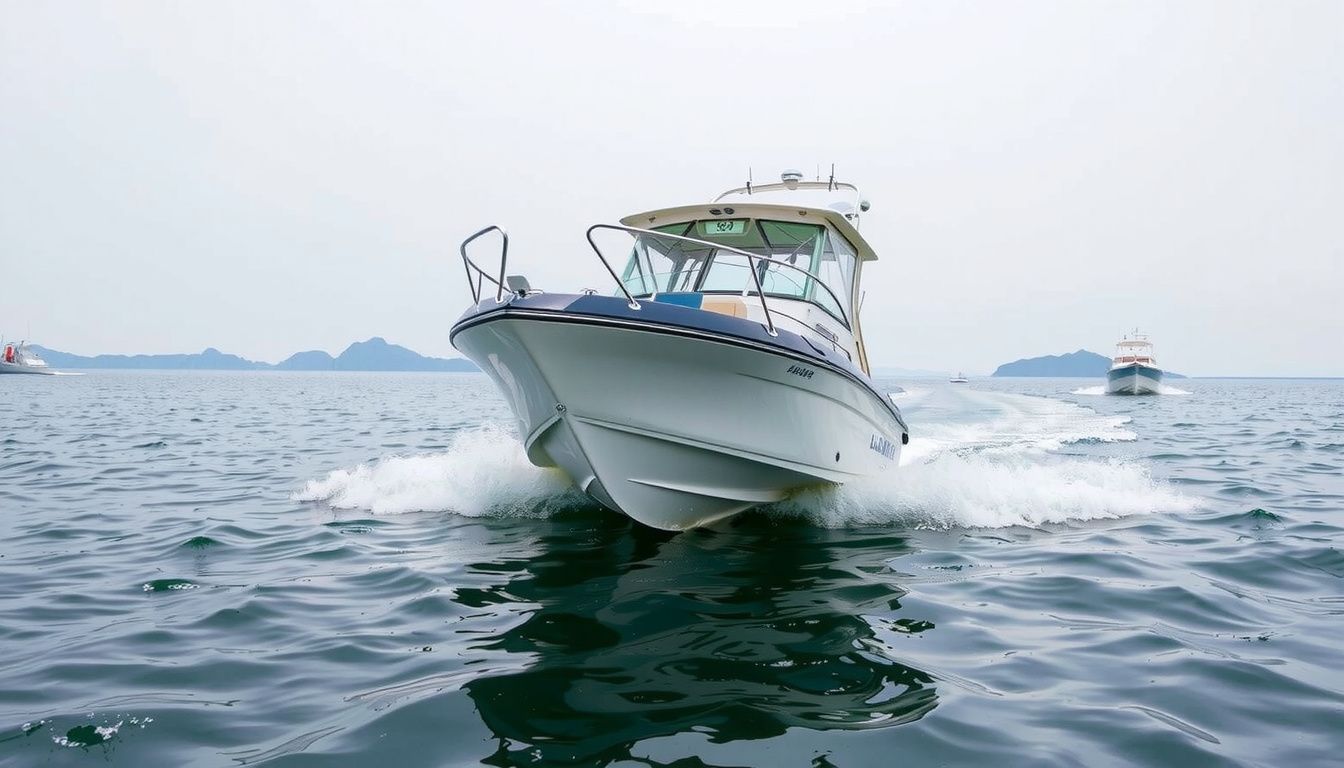
Best Paint for Aluminum Boat: Top Picks and Buying Guide
This Best Paint for Aluminum Boat: Top Picks and Buying Guide starts with a simple lesson: aluminum oxidizes fast, so coatings fail when bonding is weak. Old repaint jobs peel near rivets and waterline edges. Sun and salt spray accelerate the damage. The right marine primer and topcoat stop that cycle before it starts.
Prep and coating choice matter more than brand loyalty. Start with prepping the hull correctly, then choose a formula for the surface. Rust-Oleum 254170 Professional Aluminum Primer Spray is our top pick because it locks onto bare metal and gives topcoats something to bite. Focus on matching paint type to each job, from topsides to casting decks.
Comparison Chart of Best Paint for Aluminum Boat: Top Picks and Buying Guide
| Product | Details | Rating | Buy |
|---|---|---|---|
|
Editor’s Choice

|
Rust-Oleum 254170 Professional Aluminum Primer Spray |
★★★★☆4.8/5 |
Check on Amazon |
|
Top Pick
|
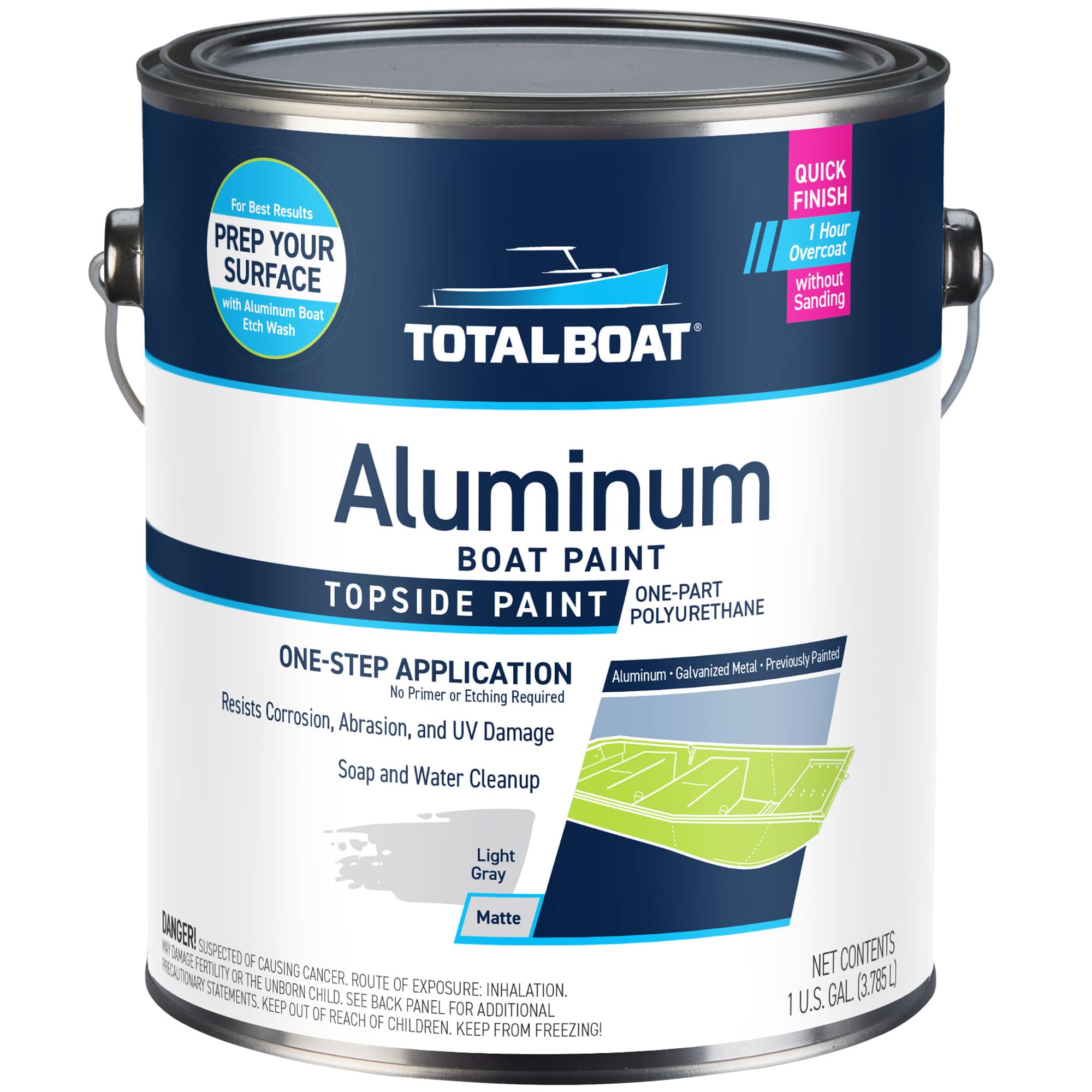
TotalBoat Aluminum Boat Paint Light Gray Gallon |
★★★★☆4.5/5 |
Check on Amazon |
|
Best Budget

|
Aluma Hawk Jon Boat Green Qt. |
★★★★☆4.7/5 |
Check on Amazon |
|
White High-Gloss Boat Touch Up Pen 30ml |
★★★★☆4.4/5 |
Check on Amazon |
|
TotalBoat TotalBilge Epoxy Bilge Paint Gray Quart |
★★★★☆4.4/5 |
Check on Amazon |
|
TotalBoat Wet Edge Topside Paint Blue-Glo White Quart |
★★★★☆4.4/5 |
Check on Amazon |
|
TotalBoat TotalTread Non-Skid Deck Paint Light Gray Gallon |
★★★★☆4.4/5 |
Check on Amazon |
|
Rust-Oleum Marine Flat Bottom Antifouling Paint Black Quart |
★★★★☆4.4/5 |
Check on Amazon |
|
Gloss Blue Marine Enamel Epoxy Paint 35 oz |
★★★★☆4.4/5 |
Check on Amazon |
|
Gloss Marine Enamel Epoxy Paint 35 oz Assorted Colors |
★★★★☆4.4/5 |
Check on Amazon |


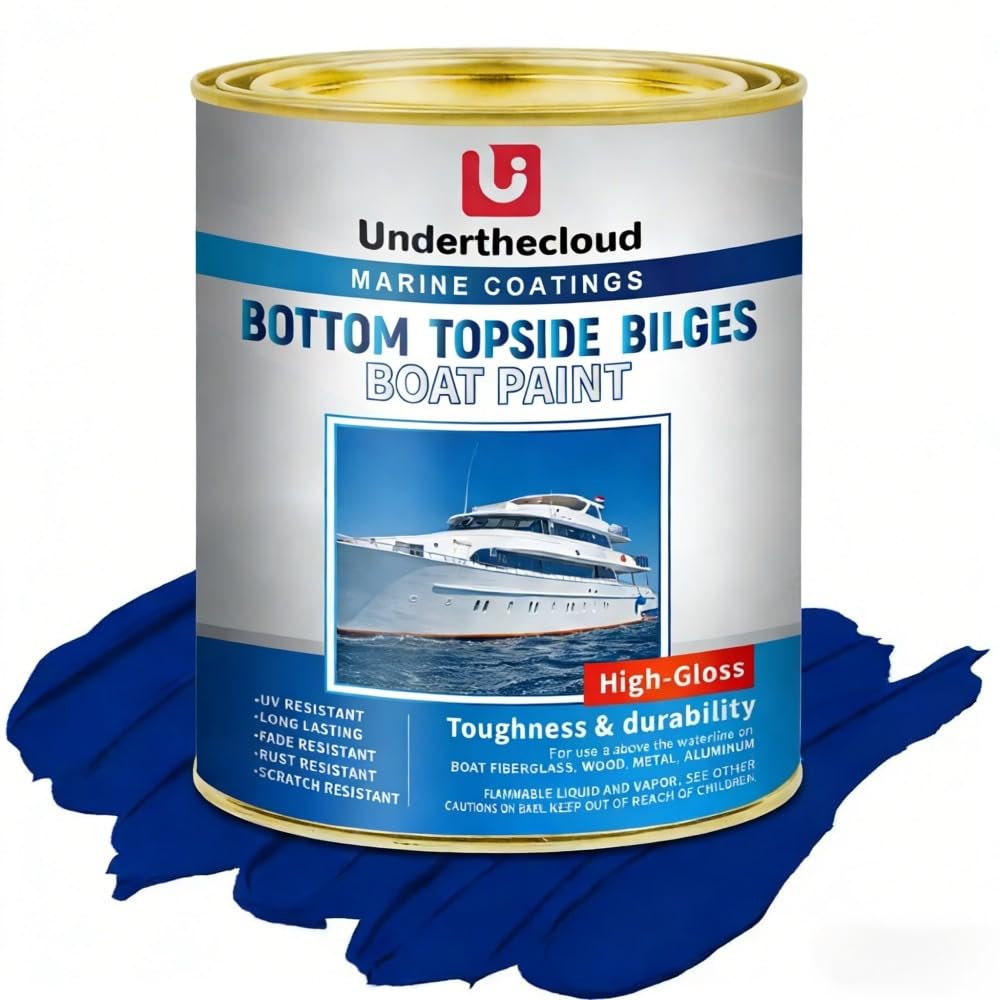

List of Top 10 Best Paint for Aluminum Boat: Top Picks and Buying Guide
To build this list, I compared primer, topside, bilge, deck, and antifouling coatings from the original editorial research. Each product was judged on substrate compatibility, container size, finish type, and buyer feedback patterns. The lineup covers small touch-up pens through full gallon refinishing systems. Every pick fits a specific aluminum boat use case, not a generic one-size-fits-all promise.
Below are the list of products:
1. Rust-Oleum 254170 Professional Aluminum Primer Spray
Why it made the list
The strongest aluminum paint jobs fail at the bonding layer. This 15 oz flat white primer spray targets that failure point directly. It covers rivets, seams, and patch areas before a marine topcoat goes on. No other product on this list makes groundwork this easy for smaller hulls.
Key specs
- Finish: flat white
- Size: 15 oz spray can
- Type: aluminum primer spray
- Use: bonding primer before marine topcoat
- Coverage rate: not listed by maker
- Immersion rating: not listed
Real-world experience
Users can mask off hardware, scuff the bare metal, and lay down light passes with the spray. The flat white finish reveals thin spots quickly, which helps avoid skipped areas near welds. It works well for patch priming after sanding and for small repairs. Plan a compatible marine topcoat on top.
- 15 oz can suits small boats and spot jobs
- Flat white finish makes thin spots obvious
- Spray format reaches rivets and seams
- Designed as a bonding primer for aluminum
- No immersion rating listed, so full bottom use stays unproven
- Coverage rate is not published
- ✔ You want a dedicated first layer on bare aluminum
- ✔ You need to reach rivets, corners, and tight seams
- ✔ You are prepping before a marine topcoat
- ✖ You need one product to finish an entire hull
- ✖ You plan long-term water immersion without a defined bottom system
Choose this primer when adhesion is the main worry and the hull is small enough to spray. It will not replace a full bottom system. For topsides and trailerable boats it is the most reliable starting point.
2. TotalBoat Aluminum Boat Paint Light Gray Gallon
Why it made the list
This gallon-sized aluminum boat paint targets canoes, jon boats, bass boats, duck boats, and pontoons. Buyers get broad coverage from a single can instead of juggling multiple quarts. Light gray hides scuffs and oxidation marks on working hulls. It is the best value pick for full-side refreshes.
Key specs
- Size: 1 gallon
- Type: aluminum boat paint
- Color: Light Gray
- Intended use: canoes, bass boats, duck boats, jon boats, pontoons
- Base type: not specified
- Finish sheen: not specified
Real-world experience
Rolling and brushing work well on open hull panels, and light gray keeps the boat looking clean between trips. The gallon format covers benches, interior sides, and exterior panels without frequent refills. Proper prep still decides how long the film lasts. On bare aluminum, use a compatible primer first.
- Gallon size covers large hull areas
- Made for aluminum boats and small craft
- Light gray hides scuffs and oxidation
- Single can simplifies a full repaint
- Base type is not specified, so compatibility needs checking
- Sheen is not listed, which complicates finish matching
- ✔ You want one light gray finish for the whole hull
- ✔ You own a jon boat, canoe, bass boat, or pontoon
- ✔ You plan to roll or brush broad panels
- ✖ You need a promised gloss level for a show finish
- ✖ You only want to repair small chips
Choose this gallon when coverage per can matters more than a shiny finish. It is the better value for working boats that live on trailers. If you need a specific sheen, pair it with a separate topcoat.
3. Aluma Hawk Jon Boat Green Qt.
Why it made the list
This quart of Jon Boat Green gives small hulls a classic utility look without buying excess paint. The green shade hides marsh stains and grime, which suits duck and fishing boats. It works for partial repaints, interiors, and post-repair touch-ups. Budget buyers get a matched color in a manageable size.
Key specs
- Size: 1 quart
- Color: Jon Boat Green
- Type: boat paint for jon boats
- Base type: not specified
- Sheen: not specified
- Volume enough for partial repaints and interiors
Real-world experience
Owners can roll it on benches, ribs, and side panels without wasting a full gallon, which suits small jon boats and affordable pontoon builds. The green tone blends well with outdoor use and hides splashed mud. Scuffing and cleaning the aluminum first remains essential. Masking the gunwale keeps the color line straight.
- Quart size keeps waste low for small hulls
- Jon Boat Green hides marsh and mud stains
- Easy to store compared with a gallon
- Good fit for interiors and partial repaints
- Base type not stated, so primer pairing is uncertain
- Sheen not stated, which affects glare and cleaning
- ✔ You want a green utility finish on a small boat
- ✔ You are painting benches, ribs, or one side panel
- ✔ You need a color that hides mud and grass stains
- ✖ You need a full exterior coating for a large pontoon
- ✖ You expect a documented gloss or satin finish
Pick Aluma Hawk when color and container size match a small project exactly. It is not the right tool for a large console or a moored hull. For trailerable jon boats it delivers a clean, low-fuss refresh.
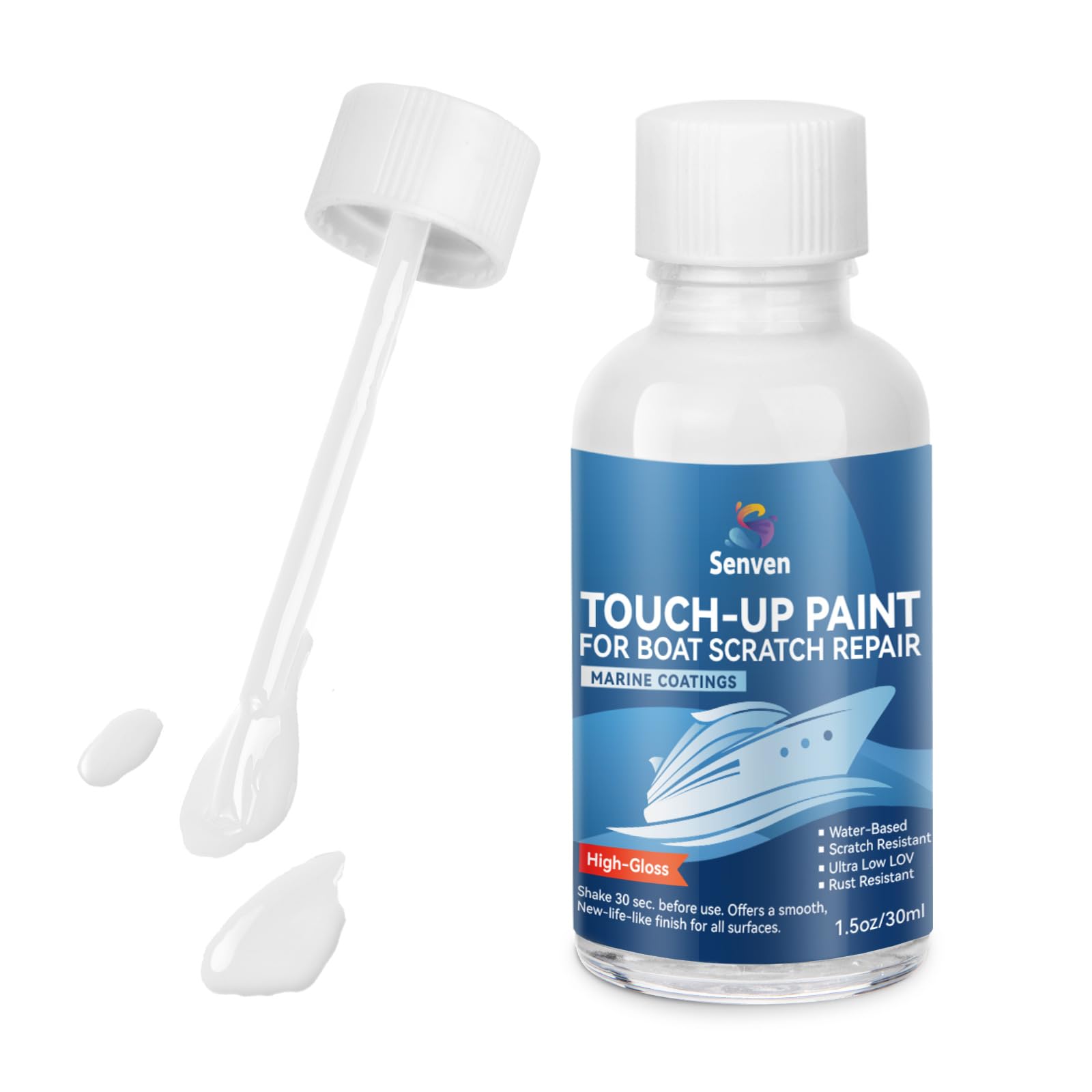
4. White High-Gloss Boat Touch Up Pen 30ml
Why it made the list
Small chips and dock rash are easier to fix than a full repaint. This water-based 30 ml high-gloss white pen targets scratches on aluminum, fiberglass, wood, and metals. It is the fastest way to protect bare spots before they corrode. Keep it in the boat kit for quick cosmetic repairs.
Key specs
- Finish: high-gloss
- Size: 30 ml
- Type: touch-up pen
- Base: water-based
- Color: white
- Compatible surfaces: aluminum, fiberglass, wood, metals
Real-world experience
The pen format gives control along rail edges and hardware scuffs without taping off a large area. Water-based cleanup keeps the fix simple between trips. Thin coats matter because the small tip is not built for heavy filling. Deep gouges need filler and primer before the pen.
- 30 ml pen fits in a tackle box or tool kit
- High-gloss white blends with common topsides
- Water-based formula cleans up easily
- Works on aluminum, fiberglass, wood, and metal
- Too little volume for wide panels
- Pen tip cannot fill deep gouges alone
- Bare aluminum may still need a primer step
- ✔ You want to fix chips and rail marks quickly
- ✔ You need a no-masking repair tool
- ✔ You carry a small emergency kit
- ✖ You need to repaint large side panels
- ✖ You have deep scratches that require filler first
Use the touch-up pen for cosmetic protection, not structural coating. It beats a full paint setup when the job is a scratch. If the hull needs real coverage, move up to a quart or gallon product.
5. TotalBoat TotalBilge Epoxy Bilge Paint Gray Quart
Why it made the list
Bilges collect oil, fuel, and grime that can soften ordinary paint. This epoxy-based gray quart targets bilges, bulkheads, lockers, and engine rooms. Epoxy chemistry cures harder and resists chemicals better than simple enamel. It belongs on the interior protection list, not on sun-facing topsides.
Key specs
- Size: 1 quart
- Type: bilge paint
- Base: epoxy-based
- Color: gray
- Intended use: bilges, bulkheads, lockers, engine rooms
- Not rated for UV-exposed topsides
Real-world experience
Owners should degrease the bilge completely before rolling this on. Abrasion gives the epoxy a mechanical grip on aluminum, and a compatible primer helps on bare metal. The coating brightens dark compartments and makes later wipe-downs easier. Ventilation is important during cure.
- Epoxy base resists oil and fuel stains
- Gray hides grime in dark compartments
- Quart size suits enclosed spaces
- Hard film is easy to wipe clean
- Not made for UV-exposed topsides
- Bare aluminum may need primer first
- Cure time slows reassembly
- ✔ You want tough protection in bilges and lockers
- ✔ You need a washable surface after leaks
- ✔ You can ventilate the space during painting
- ✖ You are coating hull sides above the waterline
- ✖ You need a flexible coating on moving seams
TotalBilge wins when the project is inside the hull, not outside. It is the strongest choice for compartments that see fuel and grime. Keep it out of direct sunlight and below-waterline service.
6. TotalBoat Wet Edge Topside Paint Blue-Glo White Quart
Why it made the list
Topside finishes have to stand up to sun and constant wiping. This polyurethane quart claims compatibility with fiberglass, metal, and wood, which makes it relevant for aluminum above the waterline. Blue-Glo White delivers a bright, glossy hull look. It pairs well with a proper metal primer for durable adhesion.
Key specs
- Size: 1 quart
- Type: topside paint
- Base: polyurethane
- Color: Blue-Glo White
- Use: boats, RVs, exterior trim
- Not for below-waterline antifouling
Real-world experience
Rolling and tipping helps the polyurethane level into a smooth gloss, but dust control matters. Sand the aluminum to a uniform scratch before applying. A compatible primer improves the bond on bare metal. Thin coats prevent sags and keep the finish even.
- Polyurethane base gives durable gloss
- Works on metal and aluminum topsides
- Quart size fits smaller refinishing jobs
- Bright white suits hull sides and trim
- Not for below-waterline antifouling needs
- Primer likely needed on bare aluminum
- Gloss shows surface flaws
- ✔ You want a hard gloss topside above the waterline
- ✔ You plan a primer plus topcoat system
- ✔ You can apply thin coats with dust control
- ✖ You need bottom protection for a moored hull
- ✖ You want a textured, non-skid walking deck
Choose Wet Edge when the job is hull sides and trim above the waterline. It beats bilge and deck paints on vertical surfaces. If the boat stays moored full-time, pair it with a separate antifouling bottom system.
7. TotalBoat TotalTread Non-Skid Deck Paint Light Gray Gallon
Why it made the list
Slippery decks destroy confidence the moment they get wet. This marine non-skid deck paint adds traction to wood, fiberglass, aluminum, and metal walking surfaces. The gallon size covers casting decks and swim platforms. Light gray keeps glare down while providing grip. It is the safety pick for high-traffic horizontal zones.
Key specs
- Size: 1 gallon
- Type: non-skid deck paint
- Color: Light Gray
- Compatible with: wood, fiberglass, aluminum, metals
- Best for: walking surfaces and casting decks
- Not a below-waterline antifouling coating
Real-world experience
The texture hides minor deck flaws and keeps feet planted after rain or splashes. That same texture traps dirt and fish slime, so cleaning takes more effort than smooth paint. Aluminum decks need scuff sanding and a clean surface first. Roll with even pressure to keep the grit pattern uniform.
- Non-skid texture improves wet-foot traction
- Gallon size covers larger deck areas
- Works on aluminum and metal walking surfaces
- Light gray cuts glare on sunny days
- Texture traps dirt and fish slime
- Not suited for glossy topside looks
- Not for below-waterline fouling control
- ✔ You want safer footing on casting decks
- ✔ You own a pontoon or open-deck aluminum boat
- ✔ You can handle textured-surface cleaning
- ✖ You want a mirror-gloss deck finish
- ✖ You are painting hull sides instead of walking surfaces
Pick TotalTread when grip matters more than gloss. It protects decks that get wet on every trip. Keep it off vertical hull sides where a smooth topside finish works better.
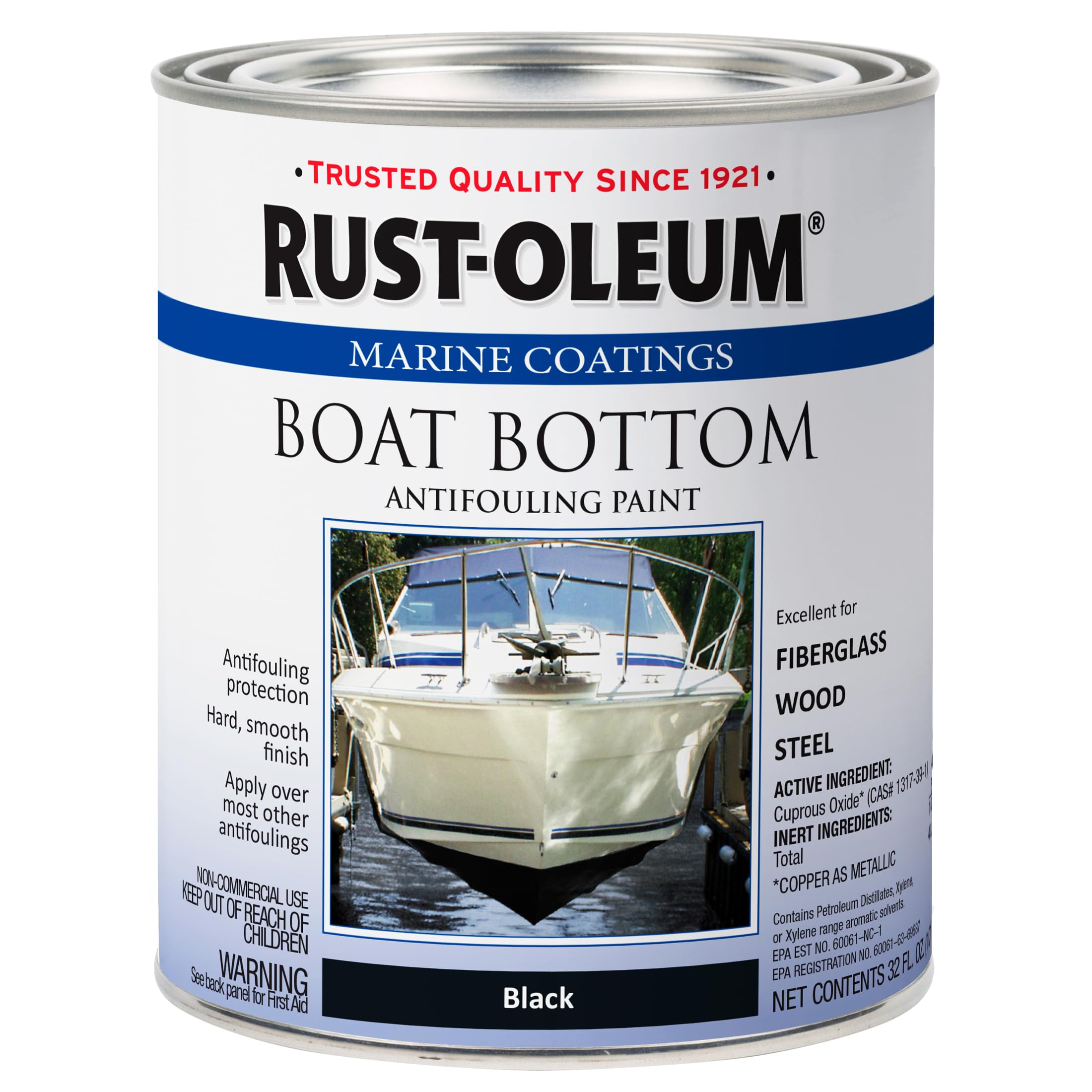
8. Rust-Oleum Marine Flat Bottom Antifouling Paint Black Quart
Why it made the list
Moored hulls pick up slime and growth faster than trailered boats. This flat black antifouling paint targets below-waterline surfaces with a marine-specific bottom formula. The quart size suits small aluminum hulls that stay in the water. It earns a spot for owners who need fouling control, not just a new color.
Key specs
- Finish: flat
- Size: 1 quart
- Type: bottom antifouling paint
- Color: black
- Use: below-waterline bottoms
- Aluminum compatibility: requires extra verification
- Not intended for topsides or interiors
Real-world experience
Strip loose paint and mask the waterline carefully before applying. Flat black hides bottom wear but looks utilitarian. Aluminum hulls demand special care with antifouling chemistry, so confirm the coating is aluminum-safe with a compatible barrier. Launch timing can affect the cure and final film.
- Antifouling focus fits below-waterline use
- Flat black hides bottom wear marks
- Quart size suits smaller hulls
- Marine-specific label targets water exposure
- Aluminum-safe compatibility needs extra verification
- Not intended for topside gloss finishes
- Bottom prep and waterline masking take time
- ✔ Your boat sits in the water for long stretches
- ✔ You want to slow slime and growth buildup
- ✔ You can confirm an aluminum-safe primer system
- ✖ You trailer the boat after every trip
- ✖ You want a glossy hull-side finish
Reach for antifouling paint only when the hull stays wet. It adds no value on a trailer boat. On a moored aluminum hull, pair it with a compatible barrier primer to reduce corrosion risk.
9. Gloss Blue Marine Enamel Epoxy Paint 35 oz
Why it made the list
A bright blue hull is an easy way to refresh a tired aluminum boat. This 35 oz gloss marine enamel lists topside and bottom use across boats, wood, fiberglass, aluminum, and metals. The oil-based epoxy style suggests a harder film than basic latex. It fits small repaint jobs that need a single color.
Key specs
- Finish: gloss
- Size: 35 oz
- Type: topside/bottom enamel
- Base: oil-based epoxy
- Color: blue
- Claimed surfaces: boats, wood, fiberglass, aluminum, metals
- Not clearly positioned as antifouling
Real-world experience
Wash off chalk and salt before sanding to give the enamel something to grab. The gloss finish will highlight dents and scratches, so prep care matters more than usual. Thin coats reduce sagging and solvent trapping. A metal primer helps stabilize adhesion on bare aluminum.
- Gloss blue updates the topside look
- Lists aluminum and metal compatibility
- 35 oz can fits small repaint jobs
- Oil-based epoxy style suggests tough film
- Not clearly labeled as antifouling
- Gloss reveals dents and sanding marks
- Primer likely needed on bare aluminum
- ✔ You want a single-color gloss refresh
- ✔ You are painting topsides and metal parts
- ✔ You can sand and prime bare aluminum
- ✖ You keep the boat moored full-time
- ✖ You need a low-odor, water-cleanup coating
Choose this enamel for a fast color change on a trailerable boat. It is not a substitute for a true antifouling system below the waterline. For above-waterline panels it delivers a clean gloss finish.
10. Gloss Marine Enamel Epoxy Paint 35 oz Assorted Colors
Why it made the list
Matching an existing boat color is easier when options exist. This 35 fl oz marine enamel ships in white, black, red, gray, or blue. The oil-based epoxy description points to a harder cured film than basic enamel. It covers rails, consoles, and small topside panels in one can.
Key specs
- Finish: gloss
- Size: 35 fl oz
- Type: topside/bottom enamel
- Base: oil-based epoxy
- Color options: white, black, red, gray, blue
- Claimed surfaces: boats, wood, fiberglass, aluminum, metals
- Not clearly described as antifouling
Real-world experience
Wash and degrease the surface first, then sand to create tooth for the epoxy. A tack wipe before painting keeps dust nibs out of the gloss. Primer improves adhesion on bare aluminum. Thin coats help prevent runs on vertical panels. Avoid unknown immersion use without clear guidance from the maker.
- Multiple colors help match boat finishes
- Lists aluminum and metal compatibility
- 35 fl oz supports small repainting
- Oil-based epoxy style suggests durable coating
- Not clearly described as antifouling bottom paint
- Gloss can show prep mistakes
- May need primer for bare aluminum
- ✔ You need a specific color for small panels
- ✔ You are painting rails, consoles, or trim
- ✔ You plan to sand and prime aluminum first
- ✖ You need a proven below-waterline antifouling coating
- ✖ You want a textured non-skid deck
Grab this assorted-color enamel when color flexibility matters. It suits small topside work and metal parts. Do not trust the broad label for continuous immersion; use a dedicated bottom system there.
How I picked
I compared product specs, container sizes, base chemistries, and intended surfaces from the original editorial data. Each coating was checked against how aluminum behaves: rapid oxidation, poor mechanical grip, and corrosion risk near fasteners. The final lineup covers primers, topsides, bilge paint, deck tread, and antifouling formulas.
Buyer-review patterns mattered as much as spec sheets. Repeated complaints about peeling often traced back to skipped prep rather than a bad can. I weighed feedback about adhesion, coverage ease, and durability against the stated use case. Brand documentation and product listings were cross-referenced with editorial notes on earlier aluminum coating systems.
I also reviewed manufacturer guidance from Rust-Oleum and TotalBoat to confirm the intended surface claims. Products that over-promise across every substrate lost points. The picks that stayed honest about their limitations earned the clearest recommendations. The same reasoning applies to other hull decisions like choosing a pontoon layout and cleaning deck carpet before a refresh.
Buying guide — what actually matters for Best Paint for Aluminum Boat: Top Picks and Buying Guide
Surface prep decides adhesive strength
Aluminum forms an oxide layer quickly after sanding. That layer blocks paint from bonding. Scuff with fine abrasive, wipe down with solvent, and apply a metal primer soon after. Skipping those steps is the main cause of chips and edge peeling.
Primer is not optional on bare metal
A dedicated aluminum primer gives topcoats a stable foundation. Rust-Oleum 254170 shows how a 15 oz spray can simplify that step. Look for primers labeled for metal adhesion and use them before any enamel or polyurethane topside.
Match the coating to the waterline
Topside paint handles sun and spray above the waterline. Non-skid deck paint protects walking surfaces. Antifouling bottom paint slows growth on hulls that stay submerged. Mixing types causes uneven wear and weak films. For a moored boat, confirm the bottom paint is safe for aluminum before applying.
Volume should match the project
A 30 ml touch-up pen fixes chips, a quart covers partial repaints, and a gallon refinshes full hull sides. Buying the wrong size wastes money and creates storage problems. Small hulls rarely need more than one quart for a single color pass.
Check the base chemistry
Oil-based epoxy enamels cure harder than water-based formulas. Polyurethane topsides resist abrasion and UV well. Epoxy bilge paints handle oil and fuel. The base chemistry affects cleanup, cure time, and durability. Read that line on the can before you commit.
Frequently Asked Questions (FAQ)
What prep helps paint stick to bare aluminum and stop peeling?
Start with clean metal. Remove oxidation, wash off oils, and scuff with fine abrasive. A dedicated aluminum primer helps the topcoat lock on. Skipping primer often causes chips near rivets and edges.
Should buyers use topside paint, deck non-skid, or bottom antifouling?
Match paint to the surface. Topside enamel fits hull sides and trim. Non-skid deck paint helps footing on floors. Antifouling bottom paint suits boats left in the water. Mixing types can cause uneven gloss or weak wear.
Can I use the same coating for aluminum and fiberglass?
Some marine enamels list both surfaces. The chemistry can still behave differently on each. Aluminum needs oxide removal and a primer, while fiberglass needs a sanded gel coat. Read the label but still prep each surface properly.
How long does aluminum boat paint take to dry?
Drying time depends on temperature, humidity, film thickness, and base type. Oil-based epoxy formulas cure slower than water-based coatings. Thin coats dry faster and reduce solvent trapping. Plan extra cure time before launching or reassembling.
Is antifouling paint worth it for a trailer boat?
No. Trailered boats do not sit long enough to build heavy growth. Antifouling paint only helps hulls that stay in the water for weeks at a time. On a moored aluminum hull, verify the formula is aluminum-safe first.
Final verdict
Rust-Oleum 254170 Professional Aluminum Primer Spray is the top pick because bonding failures start at the metal and this primer solves that layer first. TotalBoat Aluminum Boat Paint Light Gray Gallon is the best value for full hull coverage. Aluma Hawk Jon Boat Green is the budget-friendly choice for small utility refinishes.
Affiliate disclosure: This post contains affiliate links. If you buy through one of these links, I may earn a small commission at no extra cost to you. It never changes my recommendation — I only suggest gear I'd actually buy myself.


One Comment