
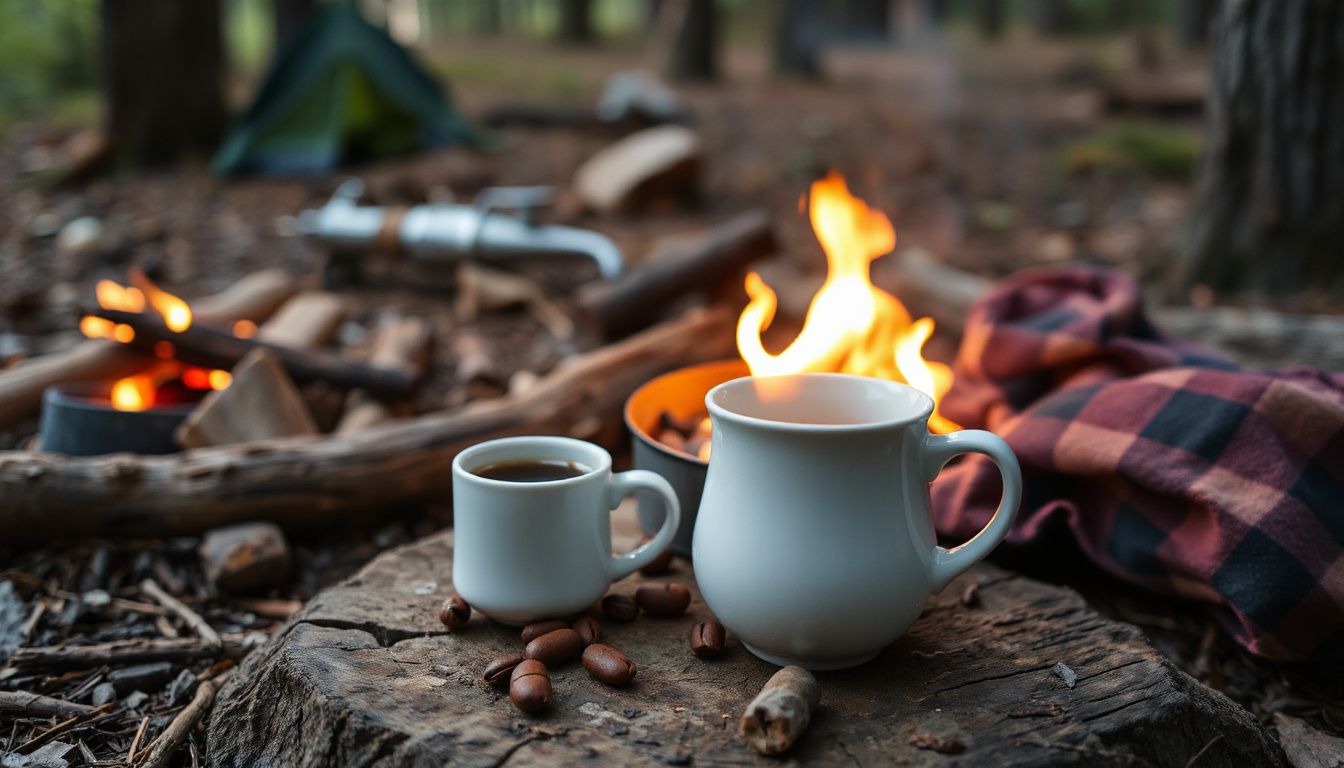
How to Make Coffee Camping: Step-by-Step at Any Campsite
Wondering how to make coffee camping without hauling a full kitchen or settling for bitter instant? You can, and it’s simpler than most people think: match your brewing method to your gear, water access, and time, then control a few fundamentals.
Look, great camp coffee is mostly about clean water, consistent heat, and the right grind. Get those right and you can produce a balanced cup with a French press, pour-over, AeroPress, percolator, or even cowboy coffee. But here’s the thing: each option has trade-offs in weight, cleanup, and reliability in wind.
Here’s a practical example. You roll into a windy lakeside site at dusk with a small stove and one pot. A simple pour-over cone and medium-ground coffee let you boil water fast, brew directly into a mug, and pack out grounds neatly—no glass, no fuss, no fragile parts.
Next, you will learn how to choose a method, pack the essentials, and avoid common mistakes, including:
- What to bring (filters, grinder, kettle or pot, and storage)
- How to brew step-by-step for popular camp methods
- How to fix problems like weak coffee, grit, or scorched flavors
Prepare Before You Start: Choose Gear, Coffee, Water, and Heat
Now that you have a brewing method in mind, the next wins come from preparation. Good camp coffee is rarely an accident. It is usually the result of choosing gear that matches your trip, packing coffee that stays fresh, and planning for water and heat.
Start with the constraints: group size, pack space, and cleanup tolerance. One person on a fast overnighter can go lighter than a family car-camping weekend. Don’t fight your trip style.
Pick a brewer based on reliability and how much control you want. Simple is often better outdoors, especially when wind, cold hands, and limited water make fiddly steps feel expensive.
- Pour-over dripper: light, precise, but needs filters and a steady pour.
- AeroPress: compact, consistent, easy cleanup, but single-cup focused unless you batch.
- French press: great body and volume, but grounds cleanup can be messy.
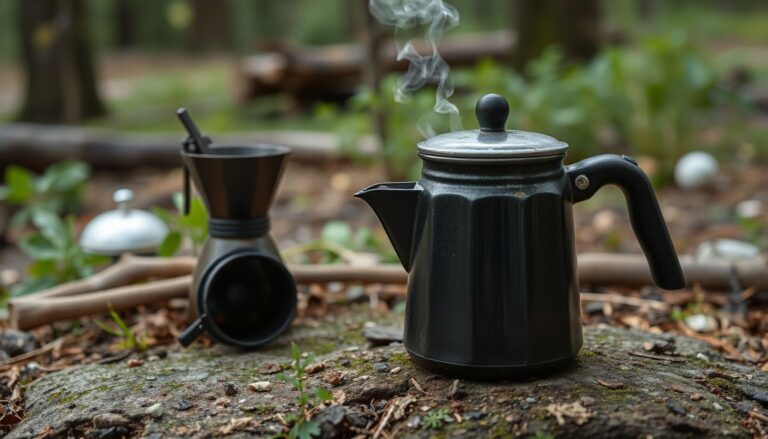
- Moka pot: strong, espresso-like, but requires careful heat control.
- Cowboy coffee: zero gear, but higher risk of grit and bitterness.
Next: coffee format. Whole beans stay freshest, but grinding adds a step and requires a grinder that works without drama. Pre-ground is faster, but stales sooner, so it is best for short trips or airtight packing.
- Whole bean: best flavor; pack in a sealed bag and keep it cool.
- Pre-ground: fastest; buy small amounts and double-bag to reduce odor and moisture.
- Instant: convenient backup; choose specialty instant if taste matters.
Water quality quietly drives the cup. If your water tastes like iodine, chlorine, or a funky lake, your coffee will, too. Filtered water is ideal; otherwise, bring a carbon filter bottle or use treated water that has aired out for a few minutes.
Heat is your other pillar. Canister stoves are quick and clean, while wood fires are romantic but inconsistent. If you plan to brew on a fire, pack a stable grate or use a pot with a wide base to avoid tipping.
Pro tip: pre-portion coffee into small bags by brew. It speeds mornings and prevents over-dosing when you are half awake. Common mistake: packing a great brewer but forgetting fuel, filters, or a pot that actually fits on your stove.
Practical example: for a two-person, two-night car-camping trip, pack a 1-liter kettle, a medium AeroPress, 120 g of whole beans, a hand grinder, and a small carbon filter. You will have repeatable cups, minimal mess, and enough coffee for two morning rounds.
Set Up Your Camp Coffee Station: Grind, Measure, and Boil Safely
Once you arrive, set up a small “coffee station” before you are tired or it is dark. It saves time, reduces spills, and keeps food smells contained. Look for a flat surface away from the tent and at least a few feet from open flames.
Choose a layout that protects the workflow: water, heat, coffee, then cleanup. Keep your mug, brewer, and spoon in one place so you are not hunting through bags with cold fingers. A simple bin or tote works well for car camping.
Grind size should match your method, and consistency matters more outside than you would expect. Wind and uneven heating can already push extraction around. A stable grind keeps the variables under control.
- Pour-over: medium-fine, like table salt.
- AeroPress: medium to fine, depending on steep time.
- French press: coarse, like breadcrumbs.
- Moka pot: fine, but not powdery like true espresso.
Measure coffee and water rather than guessing. You do not need a lab scale, but a small digital scale is one of the highest ROI items you can pack. If you skip it, use a consistent scoop and a marked bottle.

- Starting ratio: 1:15 to 1:17 (coffee:water) for balanced strength.
- Quick field guide: 20 g coffee to 320 g water for a solid single mug.
- Batch option: 40 g coffee to 640 g water for two mugs.
Boil safely. Stabilize the stove on firm ground, block wind with a proper windscreen (not wrapped around the fuel canister), and keep handles turned inward. If you are using a campfire, place the kettle where it cannot be bumped, and avoid boiling directly over roaring flames that soot everything.
Pro tip: preheat your brewer and mug with hot water, then discard it. It reduces temperature loss, which is a common reason camp coffee tastes flat or sour. Common mistake: boiling hard, then letting the kettle sit too long in cold air; water temperature drops fast outside.
Practical example: you are brewing pour-over for two at a windy overlook. Set the stove behind a rock, boil 700 g water, preheat mugs, grind 42 g coffee medium-fine, then brew using 640 g water in slow pulses. The wind is still there, but your process is controlled, and the cups stay consistent.
Brew Step-by-Step: Use French Press, Pour-Over, or Cowboy Coffee
Now that your camp coffee station is set, it is time to brew with intention. The method matters, but the fundamentals stay the same: stable heat, correct ratios, and clean technique. Small details. Big payoff.
Before you start, keep one baseline in mind: about 1:15 coffee-to-water by weight (for example, 20 g coffee to 300 g water). If you do not have a scale, use a consistent scoop and do not change it mid-trip. Consistency beats guessing.
French press (full-bodied, forgiving)
French press is the easiest “real coffee” option when you want speed without fuss. It tolerates wind and minor temperature swings better than pour-over. But here’s the thing: too fine a grind turns it sludgy fast.
- Heat water to just off-boil, then let it sit 30–45 seconds.
- Add coffee (coarse grind) to the press.
- Pour and stir gently to wet all grounds.
- Steep 4 minutes. Put the lid on to retain heat.
- Press slowly, then pour immediately to avoid over-extraction.
Pro tip: If you are brewing for two, decant into mugs right away. Leaving coffee on the grounds keeps extracting and can taste harsh.
Common mistake: Pumping the plunger up and down. It agitates fines and makes the cup gritty.
Pour-over (clean, bright, more control)
Pour-over rewards control, which is why it can taste excellent at camp if you block wind and keep your kettle close. Look, you do not need a gooseneck kettle, but controlled pours help.
- Rinse the filter with hot water, then discard the rinse water.
- Add medium-ground coffee and level the bed.
- Bloom: pour just enough water to saturate grounds; wait 30–45 seconds.
- Pour in stages in slow circles, keeping the bed evenly wet.
- Finish when the brew drains; target 2:30–4:00 total time for a single mug.
Pro tip: If it tastes sour, grind slightly finer or extend brew time. If it tastes bitter, grind slightly coarser or pour faster with less agitation.
Common mistake: Letting the filter run dry between pours. That can channel water and under-extract.
Cowboy coffee (no filter, minimal gear)
Cowboy coffee works when you have a pot, a spoon, and nothing else. It is not fancy. It is reliable.
- Bring water near-boiling, then remove from direct flame.
- Add coarse grounds and stir.
- Steep 3–5 minutes, off heat.
- Settle the grounds: tap the pot, or add a small splash of cool water to drop fines.
- Pour slowly to keep grounds in the pot.
Common mistake: Boiling the grounds hard. That often tastes ashy and overly bitter.
Practical example: Two hikers at a windy overlook want one round fast. They brew 600 ml in a French press: 40 g coarse coffee, 4-minute steep, then pour immediately into insulated mugs. The wind does not ruin it, and cleanup is manageable.
Finish Strong: Serve, Store Leftovers, and Clean Up Without a Trace
Your brew is only “done” when it is served well and cleaned up responsibly. Hot coffee cools quickly outdoors. Grounds attract critters. And a careless rinse can create a smelly campsite.
Serve like you meant it
Start by warming your mug or thermos with a small splash of hot water, then dump it. Simple. Effective. It buys you several minutes of heat retention.

- Decant immediately from a French press to prevent over-extraction.
- Use a lid on mugs when wind is strong or temperatures are low.
- Adjust strength in the cup with hot water rather than re-brewing weaker.
Pro tip: If you share coffee, pour servings back-to-back. Long pauses cool the brewer and change extraction for the last cup.
Store leftovers safely (or do not store them)
Leftover coffee is not automatically “bad,” but it is rarely great after sitting in an open pot. If you want to keep it, move it quickly into a sealed container. Time and oxygen are the enemies.
- Best option: Pour into an insulated thermos right after brewing.
- Short-term option: Seal in a leakproof bottle and keep it shaded.
- Skip it: If it is already lukewarm and bitter, dump it responsibly and brew fresh.
Common mistake: Leaving coffee in a metal pot on the stove “to stay warm.” It often scorches and picks up metallic flavors.
Clean up without a trace
Now the non-negotiable part. Pack out grounds when you can, and keep food smells controlled. Many land managers treat coffee grounds like food waste for a reason.
- Collect grounds: tap them into a small trash bag or used zip bag.
- Wipe first: use a small spatula or paper towel to remove oils before rinsing.
- Use minimal soap if needed, and never wash directly in lakes or streams.
- Dispose of gray water properly: scatter strained water broadly at least 200 feet from water sources and camp, following local guidance.
- Dry and stow: let brewers air-dry to avoid mildew smells in your kit.
Pro tip: Bring a small mesh strainer or a dedicated “grounds bag.” It makes it easier to separate solids from rinse water and keeps your cleanup fast.
Common mistake: Burying wet grounds near camp. Animals dig them up, and the site smells like stale coffee for the next group.
Practical example: After a pour-over breakfast at a dispersed site, you knock the filter and grounds into a sealable snack bag, wipe the dripper with a paper towel, then rinse with a few ounces of water into a pot. You carry that gray water 200 feet away and scatter it. Camp stays clean. No lingering odors.
Quick Answers
You have brewed, served, and cleaned up. Now it is about edge cases. Wind, altitude, and limited water can turn a solid routine into a frustrating one. Use these quick fixes to keep your cup consistent.
How do I make camp coffee taste less bitter when I cannot control the heat well?
Start with a slightly coarser grind and shorten contact time by 15–30 seconds. Keep water just off a rolling boil, then pour steadily. If bitterness persists, reduce agitation and dose less coffee by 1–2 grams per cup.
What is the easiest way to make coffee camping with only one pot and no filter?
Use a simple settle-and-pour approach: remove the pot from heat, stir, then wait 3–4 minutes for grounds to sink. Pour slowly from the opposite side of the crust. A small splash of cool water helps drop fines faster.
How do I make coffee at high altitude without it turning weak or sour?
Boiling happens at a lower temperature up high, so extraction can underperform. Compensate by grinding a touch finer and extending brew time by 30–60 seconds. If it still tastes sharp, increase your dose slightly rather than overheating.
You’re Ready
Here is the verdict: the best camp coffee is the one you can repeat reliably with your actual constraints. Not the fanciest kit. Not the most complicated recipe. Consistency wins, especially when you are cold, tired, or breaking camp early.
Now, lock in a simple “default” routine and treat everything else as a controlled adjustment. Look, you do not need to tinker every morning. Pick one baseline ratio and one brew time, then change only one variable when something tastes off. That is how you get predictable results outdoors.
- Standardize: use the same scoop or scale, the same mug, and the same water volume every time.
- Stabilize: shield your stove from wind and pre-warm your vessel so temperature does not crash.
- Sanitize: rinse oils and fines promptly so tomorrow’s cup does not taste stale.
A practical example: you are car camping at a windy lake, and your pour-over keeps tasting thin. Instead of changing everything, you block the wind with your cooler, preheat your mug with hot water, and grind slightly finer. The next brew lands richer, with no extra gear.
But here is the thing: conditions change. Water sources vary. Fuel output drifts. If your coffee swings from great to mediocre, your process is usually the culprit, not the beans. Keep a tiny note in your phone with the dose, grind setting, and brew time that worked.
Recommendation: settle on one method you trust, then pack a small “coffee micro-kit” that supports it. A compact grinder, a consistent measuring tool, and a cleanup plan. Once that is dialed, how to make coffee camping stops being a question and becomes a habit.
Next actions: choose your default recipe, run it once at home, then replicate it on your next trip. You will arrive at camp already confident. And your morning will start the right way.

One Comment