How Long Does It Take To Deep Fry Fish: Best Proven Timing For Crispy Results
If you are asking how long it takes to deep fry fish, the practical answer is 3 to 8 minutes, depending on fillet thickness, batter, and oil temperature. At 350°F, a thin fillet in a light coating can turn golden in about 3 minutes, while a thick fillet wrapped in beer batter can take closer to 8 minutes.
The real secret is not memorizing a single number. Crisp, fully cooked fish depends on three things: stable oil temperature, an even coating, and an internal temperature of 145°F. This guide explains the timing ranges that work, why they shift, and how to read the cues that tell you exactly when to pull the fish. You can also read our guide on how long does fin rot take to kill a fish.
The Short Answer: Deep-Fry Times You Can Plan Around
Most home frying works best at 350°F. At that temperature, fresh fillets in a standard batter follow these approximate windows:
| Fish fillet thickness | Oil temperature | Fresh fillet time | Frozen fillet time |
|---|---|---|---|
| 1/2 inch | 350°F | 3–4 minutes | 4–5 minutes |
| 3/4 inch | 350°F | 4–6 minutes | 6–7 minutes |
| 1 inch | 350°F | 6–8 minutes | 7–9 minutes |
Start checking at the lower end of the range. The timer is a guide, not a guarantee. The final check is always the temperature at the thickest part of the fillet, which should reach 145°F according to the USDA’s food safety guidance.
Why the Exact Time Changes Between Batches
Many home cooks expect every batch to cook in the same number of minutes. In practice, four variables move the timing window more than any recipe does. For more on this, see our guide on how long does it take to smoke fish.
Oil Temperature and Heat Recovery
When cold fish touches hot oil, the oil temperature drops. A fryer holding at 350°F can fall well below that if you add several fillets at once. The longer the oil stays cool, the longer the batter absorbs oil instead of crisping. That is why waiting for the oil to recover between batches matters as much as the initial fry time.
Thickness of the Fish Fillet
Heat needs time to travel from the surface to the center. A 1/2-inch fillet can finish quickly because the interior is close to the heat. A 1-inch fillet needs longer even if the outside looks brown early. This is why a recipe that works for thin cod fillets can fail for thick haddock steaks. For more on this, see our guide on how long does it take to acclimate fish.
Batter Thickness and Type
Tempura batter fries fast because it is thin and light. A thick beer batter insulates the fish, so the coating can brown before the center is fully cooked. The honest trade-off is simple: a thicker batter gives you more crunch, but it also adds time and demands more careful heat control.
Frozen vs Fresh Starting Temperature
Frozen fillets start colder and carry surface ice, so they pull more heat out of the oil. Expect frozen fish to need noticeably more time and to cause more temperature loss between batches. By comparison, smoking your catch instead follows a completely different, low-temperature timeline. For more on this, see our guide on how long does a fish tank take to.
The same principle applies across cooking methods: getting poultry cook times right also depends on thickness and heat stability, not just the minutes on a recipe card.
How to Deep Fry Fish Step by Step
Instead of guessing, use a repeatable process. This method works for fresh or frozen fillets and keeps the timing honest. For more on this, see our guide on how long does it take a fish tank.
Step 1: Dry and Season the Fish
Pat the fillets dry with paper towels until the surface looks matte, not glossy. Dry fish helps the batter cling evenly. Season the fish lightly before coating so the flavor is not all in the batter.
Step 2: Heat the Oil and Hold It
Use a deep pot or Dutch oven with enough oil to cover the fish completely. Leave at least 3 inches of headroom because hot oil bubbles up when food is added. Heat the oil to 350°F and hold it there for 2 minutes before you add anything. This small wait prevents a misleading first reading.
Step 3: Use the 3-Check Fry Method
This method keeps you honest during every batch.
- Heat check: Make sure the oil has returned to 350°F and is holding steady.
- Load check: Add fillets in a single layer without crowding, and start timing only after the violent bubbling settles into a steady sizzle.
- Finish check: Pull the fish when the crust is golden, the bubbling has slowed, and the thickest part reads 145°F.
Step 4: Let the Oil Recover Between Batches
After the first batch, the oil temperature will be lower than your target. Let it climb back to 350°F before adding the next batch. If you skip this step, the second batch takes longer and often comes out greasy. It is the same principle as burger timing basics on a grill: heat recovery matters more than raw minutes.
How to Tell When Deep-Fried Fish Is Done

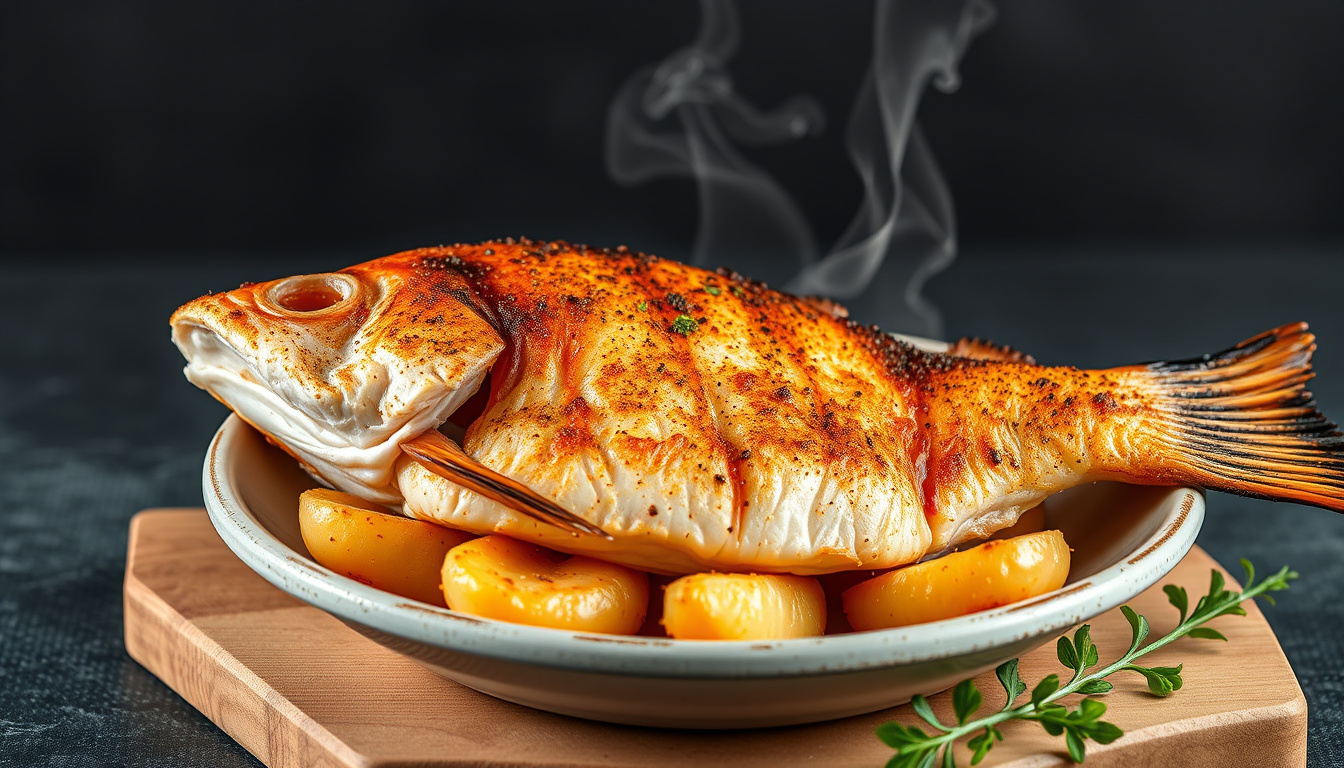
When the fillets sit in a single layer, the oil stays hot enough to set the batter into a crisp shell.
Visual Cues: Even Golden Brown
Done fish has an even, matte golden crust. Blotchy patches usually mean the fish shifted in the oil or the batter was uneven. Light tan and doughy areas are a sign that the coating has not finished setting. Dark brown edges mean the heat was too high or the fish stayed in too long.
Bubbling Behavior
The first minute of frying is loud and aggressive as surface moisture boils off. As the fish approaches doneness, the bubbling becomes slower and gentler. A constant hard sizzle often means moisture is still escaping from the center. Wait until the crackle relaxes, then check the internal temperature.
Internal Temperature: The Final Check
Insert an instant-read thermometer into the thickest part of the fillet. You are looking for 145°F. The USDA’s food safety guidance identifies this as the safe line for fish, and it is the only cue that removes all guesswork from timing.
Common Mistakes That Throw Off Your Frying Time
Most disappointing fried fish comes from a few fixable errors. Here is what usually goes wrong.
Overcrowding the Pan
Too many fillets in one batch drops the oil temperature and traps steam. The coating fails to crisp, and the fish cooks unevenly. Fry in small batches, roughly 2 to 3 fillets per gallon of oil, and let the oil recover before the next load.
Frying Before the Oil Returns to Temperature
Home cooks often add the second batch while the oil is still recovering. That batch spends more time in cooler oil, absorbs more grease, and still looks pale when the center is already dry. Wait until the thermometer reads 350°F again.
Starting With Wet Fish
A wet surface steams from below and weakens the batter, often causing it to slide off. The exposed fish then overcooks while the remaining coating stays soft. Dry the fillets thoroughly just before coating.
Trusting the Timer Instead of the Thermometer
Timers do not know how cold your fish was or how thick the coating is. Color alone can lie. If you are new to cooking proteins by temperature, easy steak cuts are a good place to build the same heat-management instincts before you master the fryer.
Frozen vs Fresh Fish: A Practical Timing Comparison
Frozen fish is convenient, but it behaves differently in hot oil. The biggest difference is not the total cook time — it is the oil temperature drop and the way surface moisture affects the batter.
| Fish state | Approx. time at 350°F (3/4-inch fillet) | What changes |
|---|---|---|
| Fresh | 4–6 minutes | Predictable crust, even browning, less temperature loss |
| Frozen | 6–8 minutes | More oil-temperature loss, longer center finish, more moisture |
When frying frozen fish, shake off any loose ice crystals and coat it quickly. Frying from frozen is possible, but you must be patient with oil recovery. If the oil stays below 325°F for too long, the fish will turn out heavy and greasy rather than crisp.
In many ways, this is the opposite of a slow-cooked pork timeline, where low heat is the goal. Deep frying needs fast, stable heat to keep the crust dry.
Which Fish and Batters Fry Fastest?
White fish with firm flakes are the standard choices for deep frying. Cod, haddock, tilapia, and catfish fry quickly and predictably. Oily fish like salmon can be fried, but they release fat into the oil and can brown faster, which shortens your visual warning time.
Batters also change the timing:
- Fine flour dredge — very fast, thin, and crispy.
- Tempura batter — fast, light, and delicate.
- Light beer batter — medium speed and classic pub texture.
- Thick beer batter — slowest; the coating needs more time to dry before the center catches up.

Draining fish on a rack instead of paper towels keeps the crust crisp by letting steam escape.
The fastest result comes from a thin coating on a moderately thick fillet. A heavy batter protects the fish from overcooking, but it also delays heat penetration, so the fry time stretches. For the most consistent batch, choose a lighter batter and keep the fillet thickness fairly uniform.
A Simple Frying Workflow You Can Reuse
Here is the whole process in one sequence:
- Dry the fillets and season them.
- Heat the oil to 350°F and hold it there for 2 minutes.
- Coat the fish in a light batter or dredge.
- Add only a few fillets at a time.
- Start timing after the initial bubbling settles.
- Watch for a matte golden crust and slowing bubbles.
- Check the thickest part reaches 145°F.
- Drain on a rack for 1–2 minutes before serving.
That last step matters more than most cooks realize. Resting on a rack lets excess oil drip away without steaming the crust. Paper towels work, but they trap heat and moisture, which softens the coating quickly.
Conclusion
Deep frying fish does not have a single perfect number, but it does have a reliable range: 3 to 8 minutes at 350°F, depending on thickness and coating. The proven way to get crispy results is to pair that time window with two checks — a golden, set crust and an internal temperature of 145°F.
Before your next batch, make sure you have a clip-on oil thermometer and an instant-read thermometer. Those two tools eliminate almost every timing problem in home frying. Use them on every batch, and you will get consistently crisp fish without the guesswork.
Frequently Asked Questions
What temperature should the oil be for deep frying fish?
Keep the oil between 350°F and 365°F for most fillets. At 350°F, the fish cooks gently enough to firm up before the batter burns, while 365°F creates a slightly faster crust. Below 325°F, the coating absorbs oil and turns greasy.
How long do you deep fry fish at 350°F?
At 350°F, a 1/2-inch fillet takes 3 to 4 minutes, a 3/4-inch fillet takes 4 to 6 minutes, and a 1-inch fillet takes 6 to 8 minutes. Start checking the crust around the lower end and confirm the center reaches 145°F before serving.
Can you deep fry frozen fish with batter?
Yes, but expect longer times and extra temperature loss. A frozen fillet can take 1 to 2 minutes longer than fresh, and the oil must return close to 350°F before the next batch. Never assume color means done—frozen fish can look brown while the center stays cold.
How do I know when deep-fried fish is done?
The crust should be evenly golden and matte, bubbling should slow from vigorous to gentle, and the thickest part should reach 145°F on an instant-read thermometer. If the fish flakes easily but the batter is pale, it needs slightly more time at stable heat.
Why is my deep-fried fish greasy instead of crispy?
Greasy fish usually means the oil was too cool, the basket was overcrowded, or the batter went on wet fish. Fry in small batches, hold the oil near 350°F, and dry the fillets thoroughly before coating. Letting the drained fish rest on a rack also keeps the crust crisp.
Is it better to rest deep-fried fish after cooking?
Rest the fish on a wire rack for 1 to 2 minutes, not on paper towels. Paper towels trap steam and soften the crust. A short rest lets excess oil drip off while the interior finishes gently, so the outside stays crunchy and the center does not overcook.