How Long Does it Take To BBQ a Pork loin: Timing Guide
How long does it take to bbq a pork loin? That’s the question that decides whether dinner feels effortless or turns into a “why is it still not done?” kind of night.
Pork loin is lean, so timing matters. Pull it too early and it’s undercooked; leave it too long and it dries out fast. Most cooks are really balancing two things: steady grill temperature and the roast’s thickness.
From a food-safety and barbecue standpoint, the most reliable approach is simple: cook to internal temperature, not the clock. Pros and test kitchens lean on a thermometer because it removes the guesswork and keeps results consistent, even when weather or grill hotspots fight back.
Look, a practical example helps: if they’re grilling a 3–4 lb pork loin over indirect heat at about 350°F, they’ll often plan on roughly 60–90 minutes, then rest it 10 minutes before slicing. The exact finish time shifts based on:
- Grill setup (direct vs. indirect heat)
- Thickness and weight of the loin
- Target doneness (145°F plus a rest)
Next, they’ll see the key timing ranges, what changes them, and a quick way to estimate cook time so the pork lands hot, juicy, and right on schedule.
What affects how long it takes to BBQ a pork loin
Now that the basics are clear, the real answer depends on a few variables that change cook speed more than most beginners expect. Pork loin is lean, so small shifts in heat and thickness show up quickly in the final time and juiciness.
The biggest driver is thickness, not just weight. A 3-inch-thick center-cut loin takes longer than a flatter piece of the same pounds because heat must travel farther to reach the center.
Time also changes with these factors:
- Grill temperature stability: lid closed, steady vents, and minimal peeking keep timing predictable.
- Bone-in vs boneless: bone can slow cooking near it but helps retain moisture.
- Starting temperature: fridge-cold meat cooks slower than a loin rested 20–30 minutes.
- Two-zone setup: sear over direct heat, then finish indirect to avoid a dry exterior.
- Target doneness: pull at 145°F and rest 10 minutes; carryover heat finishes the job.
Practical example: if they grill a 4 lb boneless loin at a “supposed” 350°F but the lid thermometer is off and the grate is actually 300°F, the cook can run 15–25 minutes longer. A probe thermometer at grate level keeps timing honest.
BBQ pork loin time chart by weight and grill temperature
Look, charts only work when they’re used as planning tools, not promises. These estimates assume a boneless pork loin cooked indirect with the lid closed, then rested 10 minutes after reaching 145°F in the center.
Use this as a starting point, then confirm with a thermometer. Wind, cold weather, and frequent lid opening can stretch times fast.
|
Weight (boneless loin) |
300°F grill (indirect) |
350°F grill (indirect) |
400°F grill (indirect) |
|---|---|---|---|
|
2 lb |
55–75 min |
40–55 min |
30–45 min |
|
3 lb |
75–95 min |
55–75 min |
45–60 min |
|
4 lb  |
95–120 min |
70–95 min |
55–80 min |
|
5 lb |
120–150 min |
90–120 min |
70–100 min |
Practical example: for a 3 lb loin at 350°F, they can plan on about 60–70 minutes, start checking at 50 minutes, and pull at 145°F. If it’s tied into a uniform cylinder, timing tightens because thickness is consistent end to end.
Direct vs indirect heat: choosing the right setup for pork loin
Now the timing variables are mapped out, the next decision is the heat setup. Pork loin is lean, so it rewards control more than brute force. The right zone setup keeps the outside from racing ahead of the center.
Indirect heat is the default for most pork loins because it cooks evenly like an oven while still picking up smoke and grill flavor. On a gas grill, they’ll light one side and place the pork on the unlit side; on charcoal, they’ll bank coals to one side and cook on the cooler half with the lid closed.
Direct heat has a role, just not for the whole cook. A quick sear builds color and a better crust, then indirect finishes the interior gently. Look for steady lid temps and avoid constant flipping, which dumps heat and stretches cook time.
Most cooks do best with this simple flow:
- Sear 1–2 minutes per side over direct heat for browning.
- Move to indirect heat, lid closed, until near target temperature.
- Rest off-heat so juices redistribute and carryover finishes the job.
Practical example: On a two-burner gas grill, they’ll preheat both burners, sear the loin over high heat, then turn one burner off and park the pork on that side at a steady medium grill temp to finish without drying.
Target internal temperature and carryover cooking for safe doneness
After the setup is right, doneness comes down to temperature, not minutes. Pork loin is safest and juiciest when it’s cooked to the correct internal temperature and allowed to rest. Guessing here is how dry pork happens.
The widely accepted target is 145°F (63°C) in the thickest part, followed by a rest. During that rest, carryover cooking typically raises the center another 3–8°F, depending on loin size and how hot the grill ran. That’s why many cooks pull it at 140–143°F and let the rest finish the climb.
Accuracy depends on how they measure. A probe thermometer placed in the center (not touching the grate or a fat seam) gives the clearest read.
- Pull temp: 140–143°F for a 5–10 minute rest.
- Finish temp: 145°F minimum for safe, juicy slices.
- Check points: thickest end, then a second spot for confirmation.
Practical example: If the loin hits 142°F and they tent it loosely with foil, it often settles at 146–148°F after resting. Slicing immediately can spill juices and make it seem “overcooked” even when the thermometer was right.
Step-by-step timing: from preheat to resting and slicing
Now the variables are set, the fastest way to nail timing is to treat the cook like a checklist. Most pork loin “mystery minutes” come from skipped preheat, lid peeking, or resting too short.
A reliable flow looks like this, assuming a two-zone grill and a 2–4 lb loin. Total time often lands around 60–120 minutes, depending on thickness and grill temperature.
-
Preheat (10–15 min): Heat the grill with the lid closed until the grates are fully hot and the indirect zone is stable.
-
Season + optional brine/dry brine (0–24 hr): This isn’t grill time, but it affects how aggressively they can cook without drying out.
-
Sear (6–10 min): 2–3 minutes per side over direct heat to build color, then move to indirect.
-
Roast over indirect (30–75 min): Lid closed, aiming for the target internal temperature, checking near the end.
-
Rest (10–15 min): Tent loosely; carryover finishes the center and keeps juices in place.

-
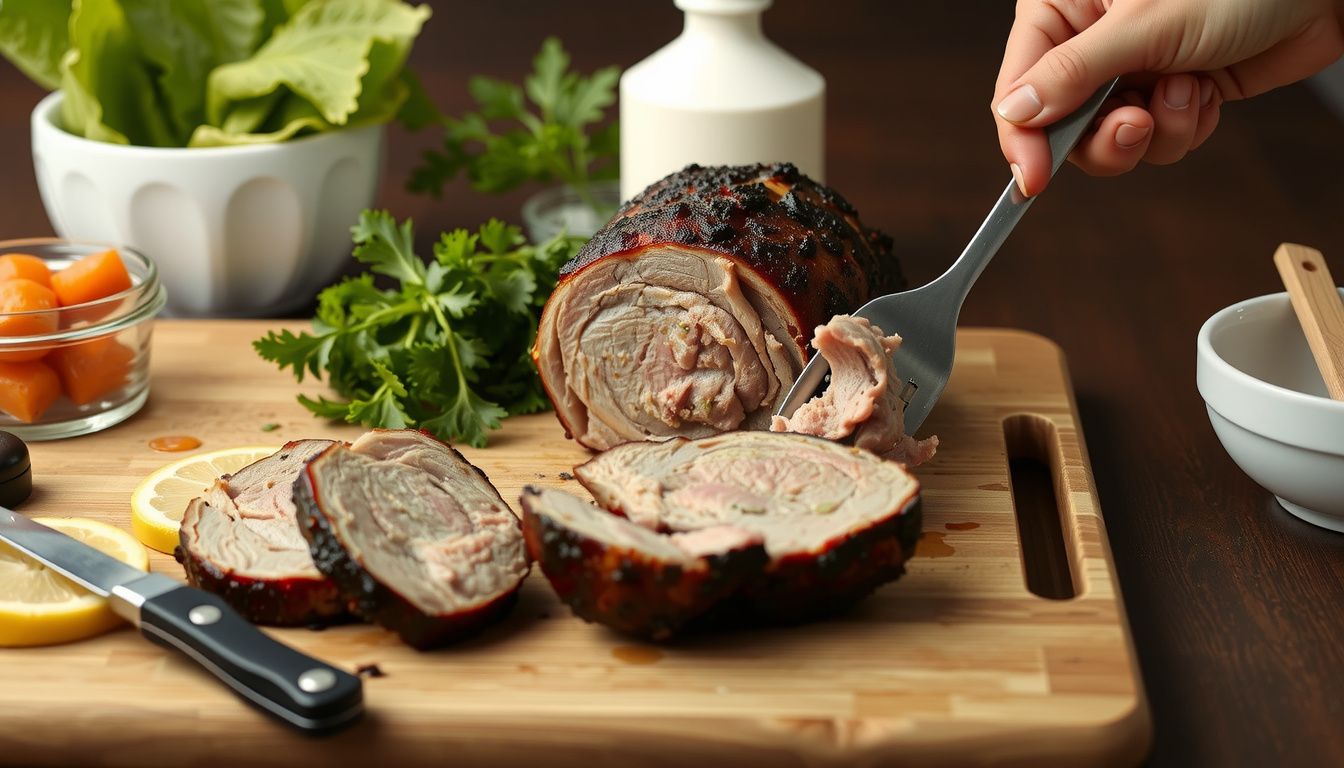
Slice (2–5 min): Cut across the grain; thicker slices stay juicier on a buffet line.
Practical example: They preheat 12 minutes, sear a 3 lb loin for 8 minutes total, then roast 45 minutes at 350°F indirect, rest 12 minutes, and slice—about 1 hour 17 minutes start-to-serve.
Boneless vs bone-in pork loin: time differences and adjustments
Boneless and bone-in loins don’t cook the same, even at identical weights. Bone changes heat flow: it can slow cooking near the bone, yet the outer meat may finish sooner if the cut is thinner overall.
As a rule, a bone-in loin takes about 10–20% longer than a boneless loin of similar thickness. The best adjustment is not “extra minutes,” but a smarter probe plan and slightly lower, steadier indirect heat.
-
Boneless loin: More uniform thickness, so it cooks predictably. They can start checking earlier and expect a tighter finish window.
-
Bone-in loin: Expect a wider doneness gradient. They should probe in two spots: near the bone and in the thickest center.
-
Placement: Bone-in benefits from bone-side facing the hotter side of the indirect zone to balance the lagging area.
Practical example: At 350°F indirect, a 3.5 lb boneless loin may finish in roughly 55–70 minutes after searing, while a similar bone-in loin may run 65–85 minutes. They pull each when the thickest center hits the target temperature, not when the clock says so.
Marinades, brines, and rubs: how prep changes cook time
Now that the grill setup and target doneness are set, prep choices can quietly change timing. Marinades, brines, and rubs don’t rewrite the clock, but they can shift how fast the center heats and how forgiving the meat feels at serving.
Brining adds water and salt into the muscle. That extra moisture can slightly slow heat penetration, so the cook may run a few minutes longer, especially on thicker loins. The payoff is a wider “juicy window” if the internal temperature creeps up.
Marinades are usually surface-level. They rarely change cook time unless they’re sugary or oily. High sugar browns fast and can force a lower grill temperature, which extends the overall cook.
Dry rubs don’t meaningfully affect internal timing, but they affect crust development. Heavy paprika, brown sugar, or thick spice layers can darken early, prompting indirect heat and a longer finish.
- Wet brine: slightly longer cook, better moisture retention
- Sugary marinade: slower cook if heat must be reduced to prevent burning
- Salt-forward rub: better browning and seasoning, minimal timing change
Practical example: if they brine a 3–4 lb pork loin overnight, they should expect a small timing cushion but plan a few extra minutes on the grill, then trust the thermometer over the clock.
Common timing mistakes that dry out pork loin (and how to avoid them)
Look, most “dry pork loin” stories aren’t about bad meat—they’re about timing errors. Pork loin is lean, so small mistakes compound fast once it crosses the ideal finish temperature.
The biggest issue is using time alone. Wind, lid openings, and grill hot spots can turn a “60-minute plan” into an overcooked roast. They should treat time as a guide and let internal temperature call the finish.
- Starting too cold: a fridge-cold loin cooks unevenly, tempting longer cook times
- Too many lid checks: each peek dumps heat and stretches the cook
- Chasing color with high heat: the exterior looks done while the center lags
- Skipping rest: juices run, slices look dry even when cooked correctly
Practical example: if they keep opening the lid every 5 minutes “to see progress,” the cook can drag on and the outer layers overcook. A probe thermometer left in place lets them monitor without heat loss.
They’ll avoid dryness by stabilizing grill temperature, minimizing lid time, and pulling the loin at the planned finish point rather than waiting for “one more minute.”
FAQ: exact cook times, flipping frequency, and thermometer tips
Now that the timing variables are clear, people usually want the exact numbers. For how long does it take to bbq a pork loin, plan 45–75 minutes total for a typical 2–4 lb loin on a closed-lid grill. Thicker loins trend longer; wind and cold grates add minutes.
How often should it be flipped? Flip every 12–15 minutes for even browning and steadier internal rise. If flare-ups start, move it away from the flame and flip sooner to prevent surface scorching.
Where should the thermometer go? Insert a probe into the thickest center, avoiding fat seams and any bone. A leave-in probe is easiest; if using an instant-read, check from the side so the tip lands in the center, then re-check in 3–5 minutes near the end.
- When to start checking: at the 35–40 minute mark for a 3 lb loin
- What “done” looks like: steady climb, then a slower rise near target
- Thermometer sanity check: ice-water test (32°F/0°C) if readings seem off
Example: A 3 lb boneless loin at ~350°F often hits temp in about 55 minutes with flips at 15, 30, and 45 minutes, then a final check every 3 minutes until it’s ready to pull.
Final Summary
Now it’s just execution. When people ask how long does it take to bbq a pork loin, the reliable answer comes from staying consistent: steady grill heat, a clear doneness target, and a quick check before it’s too late to correct course. Nail those, and the cook feels predictable instead of stressful.
The best results come from treating the process like a simple checklist, not a guess. Keep the focus on:
- Consistency: maintain stable heat and avoid constant lid-lifting
- Verification: trust internal temperature over the clock
- Finish quality: protect juiciness with a calm rest before slicing
Real-world example: if they’re grilling a 3–4 lb pork loin for a weekend dinner, they can plan the cook, then use the final temperature check to decide whether to serve on time or hold it resting while sides finish.
Next step: they should pick their pork loin cut, set a serving time, and run one test cook with notes—then repeat it for consistently great results.