How Long Does It Take To Acclimate Fish: Best Proven Timing For Freshwater And Saltwater
Unpacking a new fish is a moment of both excitement and risk. Between the pet store and your tank, the fish has been sealed in a bag, cut off from filtration, building up CO₂ and ammonia, and sitting in water that may be several degrees colder and a full pH point different from your aquarium. Acclimation is the buffer that makes that journey survivable.
So how long does it take to acclimate fish? The practical answer is 60–90 minutes for most freshwater fish and 2–3 hours for most saltwater fish when using a controlled drip. But the clock is only a planning tool. What actually protects the fish is a gradual match of temperature, pH, salinity, and dissolved gases.
If you are the kind of angler who checks your fishing setup the night before a trip, you already understand the principle at work here: careful preparation beats frantic rescue.
What Acclimation Actually Means (And Why It Is Often Rushed)
Acclimation is the gradual process of moving a fish from its transport water into your aquarium water without crossing a dangerous chemical or temperature gradient. The goal isn't to keep the fish comfortable in the bag water. It is to give the fish's body time to adjust to the new water before its gills, kidneys, and stress hormones are flooded with sudden change.
A common mistake is treating acclimation like a countdown timer. The timer is a guide; the water tests and the fish's behavior are the truth. A fish that is breathing hard 20 minutes into a well-timed drip is telling you something important, and ignoring that signal is how otherwise careful keepers lose fish.
Acclimation fails in two ways: too fast, which causes osmotic and temperature shock, and too contaminated, which happens when you pour the store's bag water into your display tank. Both are preventable with the right timing and the right steps.
How Long Does It Take To Acclimate Fish? Quick-Answer Timing
Here is the short version before we dig into the details:
| Fish type | Recommended method | Typical time | Main variable to watch |
|---|---|---|---|
| Freshwater community fish (tetras, guppies, corydoras, danios) | Drip acclimation | 60–90 minutes | pH and temperature |
| Sensitive freshwater fish (discus, rams, scaleless species) | Slow drip | 90–120 minutes | pH, hardness, stress signs |
| Marine fish (clownfish, gobies, blennies) | Slow drip | 2–3 hours | Salinity (specific gravity) |
| Fish from the same water system, short trip | Floating only | 15–35 minutes | Temperature |
| Cold-water fish (goldfish) | Drip or float | 45–60 minutes | Temperature and dissolved oxygen |
A few rules of thumb make these ranges easier to apply:
- Add 30–60 minutes when the pH gap between bag water and tank water is 0.5 or larger.
- Extend the timeline when the fish was in transit for more than 8 hours or when the store's system tests very differently from yours.
- Shorten the process only when temperature, pH, and — for marine fish — salinity are already nearly identical.
These ranges come from how fish actually respond to water-chemistry gradients: the wider the gap, the slower the drip. A fish moved between two aquariums that share the same tap water may settle in 30 minutes. The same species flown overnight across the country can easily need two full hours.
The 5 Water Parameters That Control Acclimation Speed
Acclimation time is not a fixed number because it depends on the size of the change the fish has to absorb. Five variables matter most, and each one moves at a different speed.
Temperature: Fastest To Fix, Easiest To Rush
Fish are ectotherms — their body temperature and metabolic rate track the surrounding water. As a rule of thumb from biology, metabolic rate roughly doubles for every 10°C rise, a relationship biologists call Q10. That means even a 2–3°C shift changes how fast a fish burns oxygen, produces waste, and pumps stress hormones. A 6°C swing without a gradual step can cause enough gill and heart strain to kill a small fish quickly.
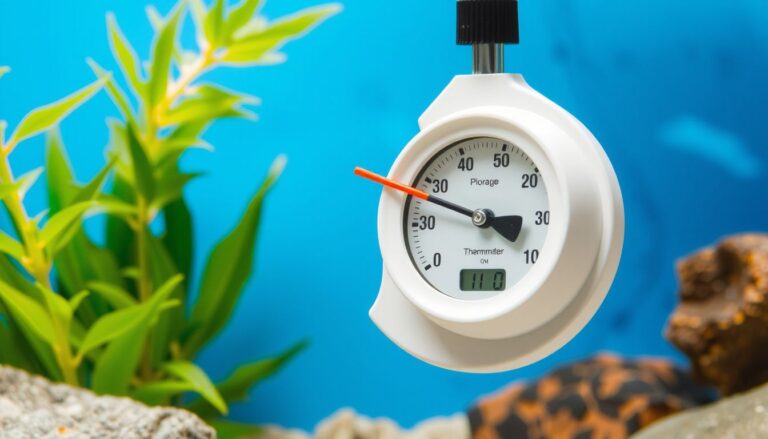
Temperature is the easiest parameter to fix — float the sealed bag for 10–15 minutes — yet it is the one most often skipped by tired hobbyists at midnight. Never skip it, and verify the result with a thermometer, not a hand test. The same temperature discipline applies in the kitchen: smoking fish is just as sensitive to a few degrees, which is why timing a fresh catch is its own skill.
pH: The Slow, Sneaky Variable
pH measures how acidic or basic the water is, and it matters because it changes how a fish's blood buffers carbon dioxide and ammonia. A sealed transport bag is a chemistry time bomb. During the trip, the fish breathes out CO₂, which acidifies the water. The moment you open the bag, that CO₂ escapes and the pH climbs — sometimes by a full point within minutes. That swing, not the temperature, is often what kills fish that looked perfectly fine in the bag.
If the tank and bag water differ by more than about 0.5 pH, lengthen the drip. Test both samples with a liquid kit instead of trusting a visual guess.
Salinity: Non-Negotiable For Saltwater Fish
For marine fish, salinity — measured as specific gravity (SG) — is the single most important parameter to match slowly. Saltwater fish constantly work to keep their internal salt balance stable against the surrounding water. When salinity moves too fast, the gills and kidneys cannot keep up, which leads to fluid shifts, disorientation, bloating, and sometimes death.
Aim to move SG slowly — roughly 0.001 to 0.002 per hour for delicate species — by dripping tank water into the bag until a refractometer reads the same in both. The osmoregulatory physiology behind this is well documented by institutions like NOAA, and every saltwater keeper should understand it before moving fish between systems.

The sealed bag keeps the fish calm while temperature equalizes — chemistry matching comes next.
Ammonia And CO₂: What Is Hiding In The Bag Water
Fish produce ammonia continuously. In transit, that ammonia builds up in the bag while pH drops from CO₂. Under acidic conditions, most ammonia exists as the less-toxic ammonium ion (NH₄⁺). When the bag opens and pH climbs, the balance shifts toward free ammonia (NH₃), which burns gills and causes visible respiratory distress.
This is the strongest argument against pouring store water into your tank. That bag water is not simply "old water" — it is a low-oxygen, high-ammonia soup that may also carry pathogens from the store's system. Agencies like the U.S. Fish and Wildlife Service emphasize that fish are most vulnerable to disease when they are crowded, stressed, and moving between water systems — exactly the situation your new fish is in.
Dissolved Oxygen: The Limiting Factor Nobody Tests
Dissolved oxygen is the parameter nobody tests, yet it determines how well a fish survives the acclimation process itself. Long trips, warm weather, and overstocked bags can leave the water nearly depleted. A fish arriving in low-oxygen water is already struggling before you add the stress of a transfer.
Drip acclimation helps here because inflowing tank water carries fresh oxygen, and light surface agitation in the acclimation bucket speeds gas exchange. If the fish starts gasping at the surface mid-drip, pause, add an air stone to the bucket, and slow the drip rate.
Step-By-Step: How To Acclimate Fish Safely
There are two safe ways to acclimate: the float method for temperature-only transfers and drip acclimation for everything else. For any fish coming from a different water system — which is almost every fish — drip acclimation is the safer default.
Gather Your Tools First
Before the fish arrives, assemble everything you need:
- A clean, aquarium-only bucket with no soap residue
- Airline tubing and an adjustable clamp or drip valve
- A thermometer for verifying both water temperatures
- Liquid test kits for pH and ammonia, plus a refractometer for saltwater SG
- A fine-mesh net, a lid or cover, and towels for spills
Step 1: Float The Sealed Bag (10–15 Minutes)
Turn off the tank lights. Float the sealed bag in the tank for 10–15 minutes so the temperature equalizes, keeping the bag upright and secured to the rim so it does not drift. Do not open it yet — reducing light and movement is part of the acclimation.
After 15 minutes, confirm with a thermometer that the bag water is within about 1°C of the tank. If not, float a few minutes longer.
Step 2: Drip Acclimate (45–120 Minutes)
Pour the bag and its water into a clean bucket placed below tank level. Start a siphon with airline tubing from the tank, and clamp it to a steady drip — roughly 2–5 drops per second for a small bag. Let the water volume increase until it roughly doubles over 60–90 minutes. For saltwater fish, plan for 2–3 hours and keep going until the SG in the bucket matches the tank.
If the bag water is visibly cloudy or smells strongly, shorten the drip and test ammonia. A fish sitting in deteriorating water is better off moving out sooner, once temperature, pH, and salinity are acceptable.

An airline clamp and valve turn any clean bucket into a reliable drip acclimation rig.
Step 3: Net, Don't Pour
When the drip is done, the work is still not finished. Do not pour the bucket water into your display tank. Use a clean net to move the fish gently, then discard the acclimation water. Every drop of that water carries the waste, CO₂, and potential pathogens you just spent an hour matching.
Step 4: Observe, Keep Lights Low, Don't Feed Yet
Keep the lights low for at least the first hour. Do not feed yet — a stressed fish needs its energy for osmoregulation, not digestion. Watch for steady gill movement, upright posture, and calm swimming. Some bottom-dwellers resting quietly is normal; frantic darting, gasping, or leaning is not.
Drip Acclimation vs Floating: Which Method Should You Use?
| Drip Acclimation | Floating | |
|---|---|---|
| Best for | Saltwater fish, large pH gaps, sensitive species, long shipments | Temperature-only transfers from the same system |
| Typical time | 45–120 minutes (freshwater), 2–3 hours (saltwater) | 15–35 minutes |
| Water matching | Temperature, pH, salinity, and gas exchange | Mostly temperature only |
| Risk if done wrong | Low when the drip is steady | Moderate when chemistry differs |
| Equipment needed | Bucket, airline tubing, clamp, thermometer | Nothing extra |
Float only when the store system and your tank share the same water source, the trip was short, and the fish is hardy. In that narrow situation, a 15–35 minute float works because temperature is the only real difference.
Drip when pH, salinity, hardness, or temperature differs — which is any time the water does not come from the same source. Marine fish should almost always be drip-acclimated because even a small SG shift matters. Move at a pace that feels more like handling a pontoon at idle speed — steady, predictable, and easy to stop — rather than a fast approach that ends in a bump.
Freshwater And Saltwater Timelines: What To Expect Per Fish Type
The broad ranges above tighten up when you look at specific fish types. Use these as your starting point.
Freshwater Community Fish: 60–90 Minutes
Most tropical community fish — neon tetras, rasboras, guppies, platies, swordtails, corydoras, danios, and barbs — handle a 60–90 minute drip easily. Their comfort zone is wide, and the main risks are temperature and pH. If the store's water tests nearly identical to yours, 45 minutes is usually fine.
Sensitive Freshwater Fish: 90–120 Minutes
Discus, angelfish, German blue rams, Apistogramma cichlids, and scaleless fish such as loaches and many catfish are far more sensitive to pH and hardness swings. Give them a full 90–120 minutes, keep the lights off, and watch closely. A slow drip into dim light is the best first impression you can give a delicate fish.
Marine Fish: 2–3 Hours Or More
Clownfish, gobies, blennies, and damsels should be drip-acclimated for 2–3 hours when moving between systems. The limiting factor is salinity: keep SG changes under roughly 0.002 per hour. If the gap between store water and tank water is larger than 0.004 SG, plan toward the full 3 hours or continue until the values match exactly.
Hardy Fish: 30–45 Minutes (But Slower Is Still Better)
Livebearers like mollies and guppies have a deserved reputation for toughness — they tolerate brackish swings, hurried transfers, and less-than-ideal chemistry. But tolerance is not preference. Even a hardy fish will be healthier and less stressed with a full 60-minute drip instead of a 20-minute splash-and-release.
7 Acclimation Mistakes That Stress Or Kill Fish
Most acclimation losses share the same few causes. Avoid these mistakes and you will eliminate the vast majority of failures.
- Skipping temperature matching. The most common cause of "died the next day" syndrome. Always float the bag first.
- Dumping bag water into the tank. It imports ammonia, CO₂, and pathogens. Net the fish and throw the water away.
- Acclimating into an uncycled tank. A tank that smells clean is not the same as a cycled tank. Test for ammonia and nitrite before the fish arrives.
- Keeping bright lights on. Bright light raises stress hormone levels and pushes new fish to hide or panic. Keep the tank dim for the first 24 hours.
- Feeding within the first hour. Food is a stressor, not comfort. Wait 12–24 hours.
- Ignoring store water differences. Water can look identical and still test drastically different in hardness or pH. Measure, don't guess.
- Watching the clock instead of the fish. Time is the framework, not the finish line. Breathing rate and water tests decide when the process is done.
How To Confirm Acclimation Worked: The Post-Transfer Checklist
Confirming success means watching behavior and testing water after release, not just timing the drip.
Watch Behavior In The First 30 Minutes
Look for steady gill movement without gasping, upright posture, and calm, controlled swimming. A little hiding is normal for shy species, but rapid darting, leaning to one side, or flashing against the substrate means something is wrong.
Check The Water At 2–4 Hours And Again At 24 Hours
Test ammonia 2–4 hours after release and again the next day. Temperature should hold within about 1°C of the acclimation point. If ammonia reads above zero, do a partial water change and test again in 12 hours. Keep the lights low during recovery, and keep your transfer gear clean — nets and buckets are the aquarium equivalent of routine boat upkeep: boring until the day it saves the trip.
When To Intervene
If the fish gasps at the surface, lists to one side, or shows clamped fins with rapid breathing, act immediately: test ammonia and pH, perform a 30–50% water change, and dim the lights. Early problems respond to clean water and darkness far faster than to any medication.
Conclusion
The real answer to "how long does it take to acclimate fish" is: as long as the water chemistry gap requires. For most freshwater fish, that means 60–90 minutes; for most saltwater fish, 2–3 hours. The number matters less than the method. Match temperature first, drip the rest, never pour bag water into the tank, and confirm success with behavior and water tests before the first day ends.
Your next step is simple: before the next fish arrives, assemble your acclimation kit — bucket, airline tubing, clamp, thermometer, and test kits — and commit to a 10-minute observation window after release. Make that routine permanent, and your losses will drop almost immediately. Once your new fish is thriving, you can channel the same patience into the rest of the hobby, whether that means crispy fried fillets from the day's catch or simply enjoying a calm, healthy tank.
Frequently Asked Questions
How long should I drip acclimate freshwater fish?
Plan on 45–90 minutes for most tropical community fish. Set the drip to about 2–5 drops per second and let the bag volume roughly double before you transfer. If the store water differs a lot in pH or temperature, stay closer to 90 minutes and test both water samples before release.
How long should I acclimate saltwater fish?
Saltwater fish usually need 2–3 hours of drip acclimation so temperature, pH, and salinity can align gradually. Move specific gravity slowly — roughly 0.001 to 0.002 per hour for delicate species — and keep the container shaded. Do not rely on floating alone when store and tank water differ in salinity.
Can I acclimate a fish in 15 minutes?
Only if the fish comes from the same water system as your tank, the trip is short, and the temperature is within about 1°C. Even then, a 15-minute float only handles temperature. Any fish from a different store or tank deserves at least 30–60 minutes of drip acclimation to cope with unseen chemistry differences.
Why did my fish die after acclimation?
Most losses trace back to water-quality shock or contamination, not bad luck. The usual culprits: an uncycled tank with ammonia, dumping bag water that carries CO₂ and pathogens, a large pH gap, or a temperature swing during transfer. Test ammonia and pH right after release and keep new fish in cycled, planted quarantine water.
Should I dump the store water into my aquarium?
No. Bag water contains ammonia, CO₂, and whatever pathogens live in the store's system. Net the fish out and discard the water. If you drip-acclimate in a bucket, that mixture of bag water and tank water should stay out of your display tank as well — your biological filter will thank you.
How long should I wait before feeding a new fish?
Wait at least 12–24 hours after transfer. A stressed fish needs time to stabilize its metabolism and osmoregulation before digesting food, and uneaten food degrades water quality exactly when your biofilter is coping with new waste. Start with a tiny amount and watch how quickly it is eaten.