How Long To Bake BBQ Chicken Thighs: Time, Temperature, And Doneness Tips
Baking barbecue chicken thighs should be simple, but the line between sticky, tender, juicy meat and dry, burnt, or undercooked chicken is a lot thinner than most recipes admit. The single most important shift is to stop treating the timer as the final answer. Chicken thighs vary by thickness, bone structure, starting temperature, and oven behavior, so a fixed minute count will eventually fail you.
This guide gives you the exact bake windows for bone-in, boneless, and frozen thighs, the best oven temperatures, how to glaze without scorching, and how to confirm doneness with confidence. Follow these methods and you will get consistent results whether you are cooking for a weeknight dinner or a backyard crowd. You can also read our guide on best bbq for chicken.
Why Bake Time Is a Range, Not a Rule
How long to bake BBQ chicken thighs is best defined as the time needed to reach a safe internal temperature of 165°F in the thickest part of the meat — not the number on a kitchen timer. Dark meat chicken thighs are more forgiving than breasts, but they still respond to thickness, bone, and starting temperature.
A common mistake is chasing a fixed clock. A cook baking bone-in thighs at 400°F in 35 minutes may find the center at only 150–155°F if the pieces are unusually thick, even when the skin looks browned and set. Conversely, thin boneless thighs can reach 165°F in the center while the surface still looks pale if the pan is overcrowded. In practice, bake time is a heat-transfer problem. Your job is to manage the variables that speed up or slow down heat penetration. For more on this, see our guide on how long to grill chicken legs and thighs.
Oven temperature control matters more than most people realize. Household ovens commonly swing 25°F or more above and below their set point, a challenge documented in food-safety guidance on reliable at-home roasting. That drift changes the bake window enough to leave you short of done or long into dry territory. A separate oven thermometer — placed on the center rack — is one of the cheapest upgrades you can make for consistent BBQ chicken thighs.
Best Oven Temperature for BBQ Chicken Thighs
For BBQ chicken thighs, a 400°F oven hits the sweet spot for most situations. It is hot enough to render fat, crisp the skin or surface, and caramelize sauce without charring it too quickly. A range in of 375°F to 425°F works well, but 400°F is the reliable default.
At lower temperatures, the outside stays soft longer and the sauce stays runny. At higher temperatures, the exterior browns fast while the center lags, which tempts you to extend the bake and dry out the meat. High heat also makes sugar-heavy BBQ sauce more likely to burn before the center finishes.
If your oven runs hot or has uneven airflow, place the rack in the middle position and rotate the pan once during baking. Overcrowding is another silent problem — stacked thighs trap steam, slow browning, and make the bake time harder to predict. Leave space between pieces so hot air can circulate.
For frozen thighs, the oven becomes less forgiving because the cold center mass absorbs heat slowly. A 400°F oven still works, but you will need noticeably more time and should consider covering the pan for part of the bake. No matter the temperature setting, the finish line is always 165°F in the thickest part.
Real-World Bake Times for Bone-In, Boneless, and Frozen Thighs
Exact times of depend entirely on thickness, weight, starting temperature, and whether you are cooking bone-in or boneless cut. The table below gives reliable starting windows. Treat them as a plan, not a guarantee.
| Type of thigh | Oven temp | Estimated bake time | Final internal temp |
|---|---|---|---|
| Fresh bone-in | 400°F | 35–45 minutes | 165°F |
| Fresh boneless | 400°F | 25–35 minutes | 165°F |
| Frozen bone-in | 375–400°F | 50–60 minutes | 165°F |
| Frozen boneless | 375–400°F | 40–50 minutes | 165°F |
Bone-In Chicken Thighs
Bone-in pieces retain more moisture and flavor, but the bone slows heat penetration. At 400°F, plan for 35 in 45 minutes for 6–8 oz thighs. If you are working with larger cuts, lean toward the upper end and verify with a thermometer.
A practical cue: when the skin looks crisp and the juices near the bone start to run clear, you are close. But "close" is not done.. Insert a probe into the thickest part of the thigh without touching bone. If it reads 165°F, pull the tray.
Boneless Chicken Thighs
Boneless thighs cook faster because heat reaches the center more directly. At 400°F, most 5–7 oz pieces finish in 25 to 32 minutes. The risk with boneless thighs is drying, not undercooking, because the thinner mass loses moisture quickly once it passes 165°F.
Watch for surface tightening and edges browning around the 25-minute mark. If you pull the thickest piece at or just before 165°F and let carryover heat finish the rest, the texture will stay tender and juicy.
Frozen Chicken Thighs
Frozen thighs require extra time and close attention because the exterior thaws and browns long before the center is safe. For frozen bone-in thighs at 375°F to 400°F, 50 to 60 minutes is typical. Frozen boneless pieces usually land in the 40 to 50-minutes range.
The trick is that frozen pieces can look done early. The glaze browns, the edges set, and you pull the tray — only to find a cold center or pink center. For frozen starts, cover the pan loosely with foil for the first half of the bake, then uncover to brown and glaze in the final third. Always verify 165°F in the thickest area before serving.
How to Bake BBQ Chicken Thighs Without Burning the Sauce
Burnt BBQ sauce is the most common failure in oven-baked chicken thighs. The culprit is usually sugar. Most barbecue sauces contain a significant amount of sugar or honey, and sugar begins to caramelize and then burn quickly under sustained high heat. If you coat the chicken at the start of a 45-minute bake, the sauce spends too long near scorching territory.
The fix is the staged coating: bake first, glaze late, and finish hot.
Step 1: Dry Bake for Doneness
Start by seasoning the thighs and baking them without sauce. At 400°F, bone-in thighs can go for about 30 minutes — or until the thickest part reads roughly 155–160°F — before the first coat of sauce. This gets the meat most of their way to safe while the surface sets and renders fat.
Step 2: Late Glaze for Color
Brush the thighs with BBQ sauce in the final 10 to 15 minutes of the bake. If you want a deeper flavor, apply a thin first coat at the mid-bake mark, just enough to adhere. Reserve the main glaze for the end so the sugars caramelize into a sticky sheen without turning bitter.
###3: Optional Brief Broil
For a glossy, tacky finish, switch on the broiler for 60 to 90 seconds after the last glaze. Stay close and watch for bubbling at the edges. This final blast sets the sauce quickly, and it prevents the slow scorch that happens when sugary glaze bakes for too long.
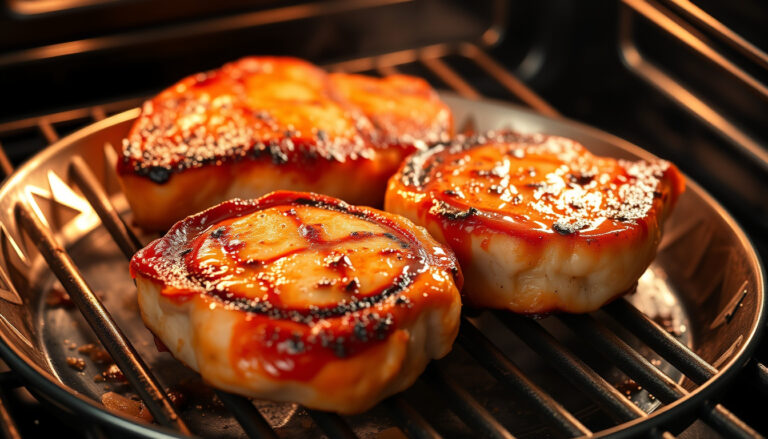
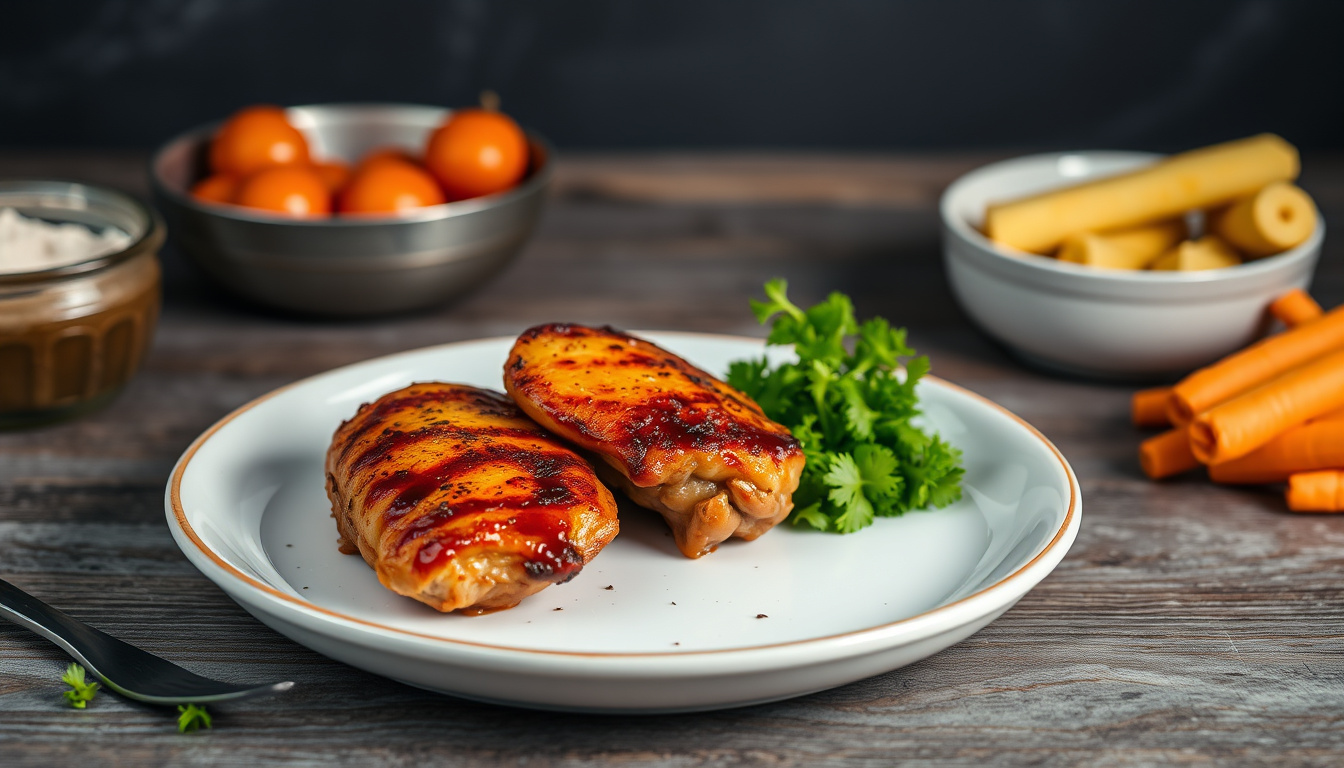
 Late-glazed BBQ sauce sets into a shiny, sticky coating without burning when you keep the final bake short.
The bottom line: how long to bake BBQ chicken thighs should be driven by the center temperature, not sauce color. A dark glaze can still hide an undercooked center.. A thermometer reading of 165°F is your true stop signal.
The 4-Step Method for Reliable BBQ Chicken Thighs
This process turns the bake time question into a repeatable system. It works across ovens, pan sizes, and whether you are using bone-in or boneless thighs.
1: Preheat and Prepare the Pan
Preheat the oven fully to 400°F and let it stabilize for at least 10 minutes after the preheat beep. Load the thighs onto a sheet pan with space between each piece — a rimmed baking sheet with a wire rack is ideal for airflow, but the lined sheet pan works too.
Season all thighs evenly on both sides. If you want crispier edges, pat the skin surface dry first. A dry surface browns better than a wet one, and better browning means less need to overbake for color.
Step 2: Bake to Near-Doneness
Place the pan on the center rack and bake until the thickest thigh reads about 155 to 160°F. For bone-in thighs at 400°F, this first phase usually takes about 25–30 minutes. For boneless thighs, check earlier — often around 20. For frozen thighs, plan a longer first phase and keep the pan covered for part of it.
Minimize door openings during this phase. Every time you open the door, you lose heat and add several minutes to your total bake time.
Team 3: Glaze and Finish to 165°F
Brush the BBQ sauce on, then return the pan the for 5 to 12 more, or until the thickest point hits 165°F. If you are broiling in the end, do it now for a minute then less, watching closely.
###4: Rest for Juicy Texture
Resting is not optional if you want juicy thighs. Let the chicken on the tray for 5 to 10 minutes after pulling it from the oven. During this window, juices redistribute through the meat instead of pooling on the cutting board. Skip rest and you will lose more moisture with every slice.
This same staged approach helps with other grilled proteins too. If you are dialing in your technique, the timing principles for a simple hamburger rune on similar logic — manage heat, check temperature, and rest before serving. The right heat control also matters for grilled beef, and the beginner's guide to grilling steak can help you understand carryover cooking on any protein.
Common Mistakes That Ruin BBQ Chicken Thighs
Most dry or undercook thighs come from a handful of avoidable errors. Here are the ones that most often throw off time, texture, and flavor.
Overcrowding the pan. When thighs are packed together, they steam instead of roast. The surface stays pale, the bake stretches longer, and the texture turns uneven. In practice, an overcrowded sheet can add 10 minutes or more to the total cook, even at 425°F.
Glazing too early. Putting sauce on at the start means the sugars sit in high heat for the whole bake. That is why so many baked BBQ thighs came out with a bitter, blackened crust and a center that is still climbing.
Skipping the thermometer. Visual cues lie, especially with dark meat and glossy sauce. The only reliable end point is 165°F in the thickest part, away from bone.
Not accounting for oven drift. If your dial says 400°F but the actual cavity runs 375°F, the same recipe will take longer and brown less. A standalone oven is the remove the guesswork.
Using cold or frozen thighs without adjusting. Straight from the fridge thighs take longer than room-temperature pieces. Frozen thighs need a noticeably longer first phase plus some early foil coverage to prevent over-browning while the interior catches up.
Serving immediately after the oven Skipping the rest is causing more juice loss when you cut or plate. Even five minutes makes a measurable difference in tenderness.
How to Check Doneness the Right Way
The timer is the planning tool, not a proof of doneness. When the timer goes off, your job is to check the meat, not automatically pull the tray.
Use a Thermometer in the Thickest Part
Insert the instant-read thermometer into the largest mass of meat, avoiding contact with bone. Bone conducts heat and can give false high reading. If the probe reads below 165°F, the chicken is not done — even if the timer says otherwise and the sauce looks perfect.
Read the Juices as Support, Not Proof
Clear juices and a firm surface are useful supporting cues, but they are not reliable on their own. Dark meat can still release slightly pink juices near the bone even when fully cooked. The thermometer is the authority.
For safe doneness, the USDA's guidance on poultry recommends 165°F for all poultry, including thighs. That standard is why every method in this guide points toward that same internal mark.
Rest Before You Serve
After the thickest thigh reads 165°F, rest the tray for 5 to 10 minutes. This lets carryover heat equalize and keeps the juices inside the meat. If you are mixing bone-in and boneless thighs in the same sheet, pull boneless pieces earlier or accept that they will cook a little past ideal while the bone-in finish.
For a slower-cook approach that produces a different texture, the crockpot method for pork chops uses a similar logic — low heat, patient timing, and a final tenderness check. On oven-based proteins, the method for boneless pork chops with oven also leans on same internal-temperature discipline to avoid dry, tough meat.
FAQ: Baked BBQ Chicken Thighs
In FAQ, we compress the same essential Q&A into tight answers for quick scanning.
How long do you bake BBQ chicken thighs at 400°F?
At 400°F, bake fresh bone-in thighs for 35 to 45 minutes and fresh boneless thighs for 25 to 35. The timer is a starting point, and the safest finish is 165°F in the thickest part. Check with an instant-read thermometer before serving.
What temperature should baked BBQ chicken thighs reach?
Baked chicken thighs should reach an internal temperature of 165°F in the thickest part of the meat, away from bone. This is the food-safety standard for poultry set by the USDA and the most reliable way to confirm doneness without overcooking.
problem How do you keep BBQ sauce from burning in the oven?
Apply the sauce late in the bake rather than at the start. A thin first coat at the midpoint helps adhesion, and the main glaze goes on in the final 10 to 15 minutes. The even better, finish with a brief broil of 60 to 90 seconds for a sticky, non-bitter coating.
Can you bake frozen BBQ chicken thighs?
Yes. Frozen thighs need 40 to 60 minutes depending on whether they are bone-in. Cover the pan loosely with foil for the first half, then uncover to brown and glaze. Always verify 165°F in the center before serving because frozen exteriors brown before the inside is safe.
Should you cover baked BBQ chicken thighs?
Covering helps in the early stage when you want to trap moisture, especially for frozen or very thick pieces. Remove the cover in the final third so the surface can brown and the sauce can set. For most fresh thighs, baking uncovered produces better browning and a stickier finish.
How long should BBQ chicken thighs rest after baking?
Rest the thighs for 5 to 10 minutes. This helps juices redistribute and keeps the meat tender. For bone-in thighs, a short rest also makes the meat easier to pull from the bone.
Conclusion
The fastest way to better BBQ chicken thighs is to stop trusting the clock and start trusting the temperature. Bone-in, boneless, and frozen thighs each need different bake windows, but they all finish at the same place: 165°F in the thickest part, checked with a thermometer and followed by the short rest.
If you want more control over your next cook, put the four-stage method here — preheat, bake to near-doneness, glaze late, and rest — into practice this week. Measure the thickest thigh, keep the sauce for the final stretch, and you will get juicy, sticky, reliably cooked results every time.
For more outdoor cooking fundamentals, explore timing burgers properly on the grill before your next cookout, or start with [beginner-friendly steak cuts]https://gearventra.com/best-steak-to-grill-for-beginners/that build confidence fast. If you are ready to turn your BBQ into more than a chicken-and-burgers machine, a [dedicated pizza setup for your grill]https//gearventra.com/best-bbq-for-pizza/opens up a different style of charred, sticky crust.