How Long To Bake BBQ Chicken Breast: The Complete 2026 Timing Guide
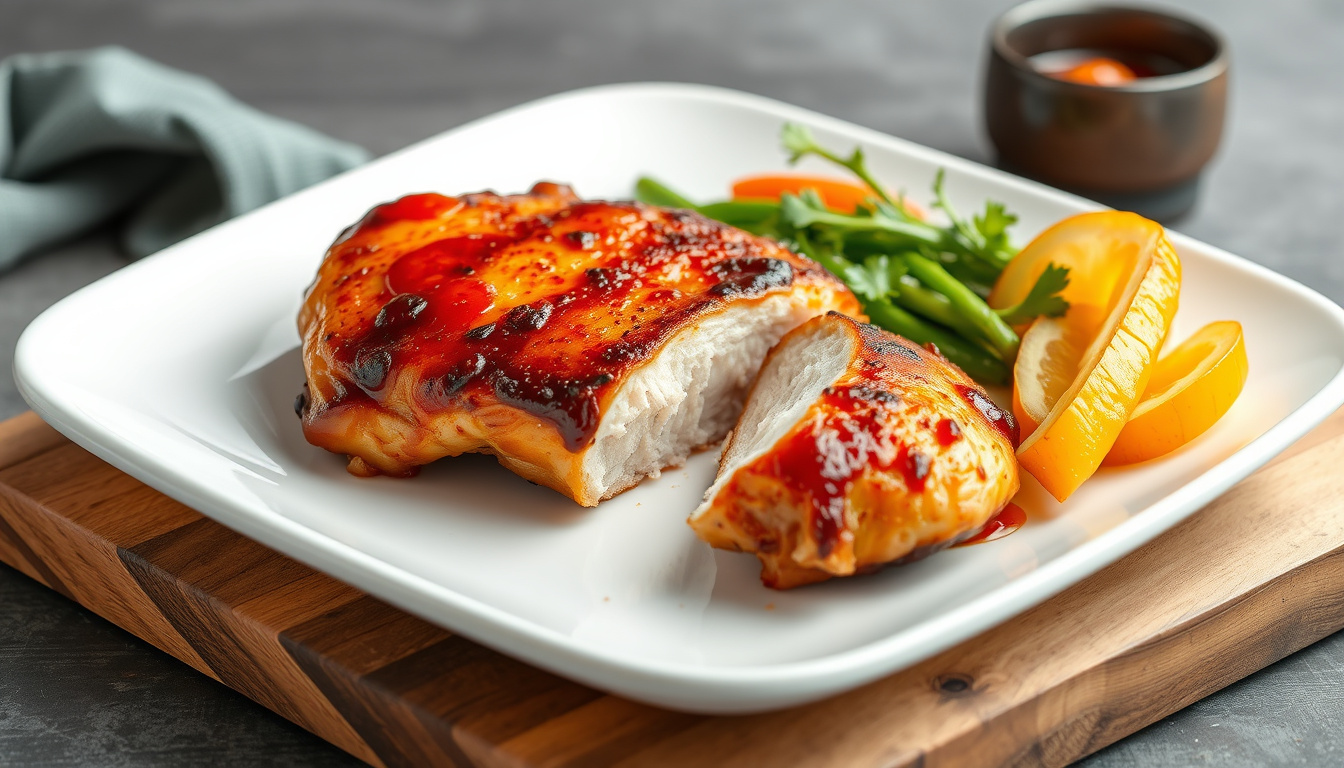
There are few disappointments more deflating than slicing into a beautifully sauced chicken breast and finding it dry, stringy, or still pink in the center. Baked BBQ chicken breast should be juicy, tender, and finished with a sticky, caramelized glaze. The difference between success and failure almost always comes down to two things: accurate timing and precise temperature. This guide gives you the exact times, the reasoning behind them, and the professional technique that guarantees moist, flavorful results every single time. No guesswork. Just a reliable method, backed by food-safety science.
The Quick Answer: BBQ Chicken Breast Baking Times at a Glance
For most home ovens, boneless, skinless chicken breasts bake at 425°F (218°C) for 18–22 minutes. That window assumes breasts are about 1 inch thick at their thickest point. But the timer is only a starting point — the true test is internal temperature. Chicken is safe and at its juiciest when the thickest part reaches 165°F (74°C). You can also read our guide on best bbq for chicken.
Here’s a fast reference for the most common scenarios:
| Chicken Type | Oven Temp | Approx. Time | Target Internal Temp |
|---|---|---|---|
| Boneless, skinless (1 inch) | 425°F | 18–22 min | 165°F |
| Boneless, skinless (1.5 inches) | 425°F | 25–30 min | 165°F |
| Bone-in breast | 400°F | 30–40 min | 165°F |
| Frozen (1 inch, thawed first) | 425°F | 26–32 min | 165°F |
Important: Never bake chicken straight from frozen without thawing it first in the refrigerator. Doing so leaves the exterior overcooked and dry before the center is safe. Always thaw overnight in the fridge, then proceed as normal.
In practice, the most reliable piece of equipment in your kitchen for this dish is not the oven — it’s an instant-read digital thermometer. Time gets you close. Temperature gets you perfect. You can also read our guide on how long to bake bbq chicken thighs.
Why Oven Temperature Changes Everything
Temperature choice affects not just how long the chicken takes, but also its texture, moisture, and how the BBQ sauce behaves. Understanding the trade-offs lets you choose the right setting for your priorities.
Baking at 375°F (190°C) – Gentle and Forgiving
At this moderate heat, 1-inch boneless breasts take 22–28 minutes. The slower cooking reduces moisture loss and gives you a wider margin of error. The downside? Less browning and a softer exterior. This is a good option if you’re cooking thick pieces, baking a large tray, or using a sugary sauce that tends to burn at higher temperatures. Expect a more “steamed” texture with less caramelization. You can also read our guide on how long to grill thick chicken breast.
Baking at 400°F (204°C) – The Middle Ground
Many recipes call for 400°F because it balances browning with control. Standard breasts typically finish in 16–22 minutes. The higher heat helps the sauce set into a tacky, sticky glaze without the aggressive risk of 425°F. Start checking the internal temperature at 16 minutes to avoid overshooting 165°F.
Baking at 425°F (218°C) – Our Recommendation for Boneless Breasts
This is the sweet spot for juicy interior plus caramelized exterior. At 425°F, 1-inch breasts cook in 18–22 minutes. The high heat rapidly browns the surface and drives off moisture, which is exactly what you want before adding sugary BBQ sauce. The critical technique is to add the sauce late — about 5–8 minutes before the chicken is done — so the sugars glaze rather than burn. We’ll cover this in detail shortly. You can also read our guide on how long does it take to bbq a whole chicken.
Baking at 450°F (232°C) or Higher – Risky for Sauced Chicken
Above 425°F, the window between “beautifully caramelized” and “bitterly burnt” narrows to a minute or two. BBQ sauce is high in sugar, and sugar burns fast. For bone-in pieces or unsauced chicken, 450°F can create excellent browning, but for sauced chicken breasts, stick to 425°F maximum. A common mistake is cranking the oven to 450°F to speed things up — that almost always ends with blackened sauce and dry meat.
The One Rule That Never Changes: Internal Temperature
Relying on baking time alone is the most common error home cooks make. Oven thermostats can be off by 25°F or more, chicken breasts vary in thickness and starting temperature, and different pans conduct heat differently. The only reliable way to know if chicken is done is to measure its internal temperature. You can also read our guide on how long does it take to bbq chicken legs.
Food-Safety Baseline: 165°F
According to FoodSafety.gov, all poultry must reach a minimum internal temperature of 165°F (74°C) to be safe. At this temperature, harmful bacteria like Salmonella and Campylobacter are killed instantly. The U.S. Department of Agriculture (USDA) reinforces this as a non-negotiable safety standard. Always verify the temperature in the thickest part of the breast, avoiding bone, fat pockets, or heavy sauce.
Carryover Cooking: Pull It Early, Rest It Well
Here is a professional trick that transforms baked chicken: remove the chicken from the oven when it reads 160–163°F, not 165°F. During the rest period, residual heat continues to cook the meat, raising the internal temperature the final few degrees to 165°F. This “carryover” effect prevents overcooking. If you wait until the thermometer reads 165°F inside the oven, the final temperature after resting will often hit 170°F or higher — and that means dry, sad chicken.
Let the chicken rest for 5–10 minutes loosely tented with foil. This allows muscle fibers to relax and reabsorb juices, so every bite stays moist.
Step-by-Step: How to Bake Juicy BBQ Chicken Breast
This method works every time, and it takes about 35 minutes from start to finish.
Step 1: Prep and Preheat for Success
- Preheat your oven to 425°F (218°C). Give it at least 15 minutes to come fully to temperature. A cold oven ruins browning and extends cooking time unpredictably.
- Pat the chicken breasts completely dry with paper towels. Surface moisture is the enemy of browning — it steams the meat instead of searing it.
- Season generously on both sides with salt, black pepper, garlic powder, and smoked paprika. Even with BBQ sauce, a flavorful base layer matters.
- Check thickness. If any breast is thicker than 1 inch, pound it gently between two pieces of plastic wrap until even. Uniform thickness means uniform doneness. This one step eliminates the most common cause of dry, overcooked edges and raw centers.
Step 2: First Bake – Cook “Naked” Before Saucing
- Arrange the seasoned breasts on a lightly oiled rimmed baking sheet or, better yet, a wire rack set inside a sheet pan. The rack allows hot air to circulate underneath, promoting even cooking and a crispier bottom.
- Bake for 18 minutes at 425°F. Do not open the oven during this time.
- After 18 minutes, insert an instant-read thermometer into the thickest part of the largest breast. If it hasn’t reached 155°F, continue baking and check every 2 minutes.
- Why sauce late? BBQ sauce is loaded with sugar. If you brush it on from the start, the sugars will burn and turn bitter long before the center is cooked. Baking the chicken “naked” for the first stage gives you a browned exterior and nearly cooked interior, ready for glazing.
Step 3: Sauce, Finish, and Rest
- Once the chicken reaches about 155°F, pull the tray from the oven.
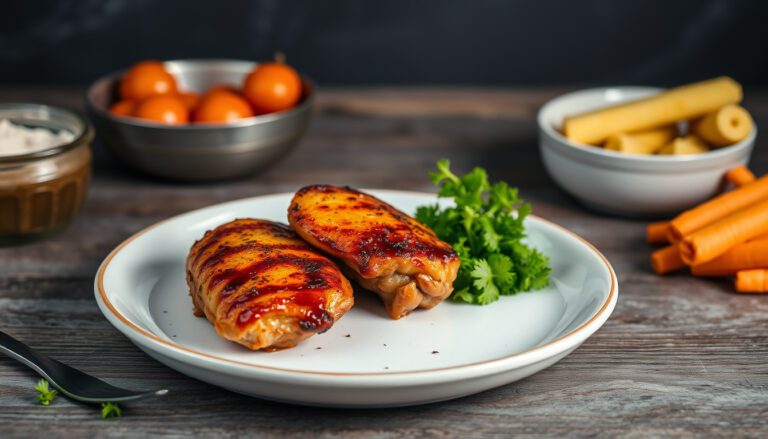
- Brush a generous layer of your favorite BBQ sauce over the top and sides of each breast. For extra stickiness, apply two thin coats rather than one thick blob.
- Return the tray to the oven for 5–8 minutes. The sauce will bubble, thicken, and turn glossy. Watch closely near the end — sugar can go from perfect to burnt in under a minute.
- Remove the chicken when its internal temperature reads 160–163°F. Rest on the tray, loosely tented with foil, for 5–10 minutes. Resting is non-negotiable; it redistributes the juices and lets the sauce set into that irresistible lacquered finish.
Chicken Thickness: The Real Timing Variable
The single biggest factor that changes how long chicken takes to bake is its thickness. Heat must travel from the outside to the center, and a thicker piece simply requires more time.
- 1-inch thick breast — the benchmark. 18–22 minutes at 425°F.
- 1.5-inch thick breast — these large cuts need 25–30 minutes at the same temperature. In practice, it’s often faster and more even to butterfly or pound them to a uniform 1-inch thickness before baking.
- Mixed thicknesses on one tray — a recipe for disaster. The thin ends will dry out while the thick centers remain undercooked. The fix is simple: either pound all pieces to the same thickness, or start checking the thinner ones a few minutes early and remove them as they finish.
If you enjoy this method, you can apply the same sauce-late technique when baking boneless pork chops in the oven — the internal temperature target is the same 145°F for pork, but the approach and timing adjustments are nearly identical.
Convection Ovens: Adjustments and Benefits
If you have a convection oven, your bake time will change — usually for the better. Convection ovens use a fan to circulate hot air, which cooks food faster and more evenly, and dries the surface more effectively for better browning.
How to adjust:
- Reduce the oven temperature by 25°F (e.g., set 400°F instead of 425°F), OR
- Keep the same temperature but reduce the baking time by about 25%.
At 400°F convection, 1-inch boneless breasts may finish in as little as 14–16 minutes. The forced air creates an even better crust for the BBQ sauce to cling to. Because the surface dries faster, start checking the internal temperature a few minutes earlier than you would in a conventional oven.
The Sauce Timing Trade-Off: When to Brush It On
The eternal battle in BBQ chicken is moisture versus caramelization. Sauce handling is the key to winning both.
Sauce from the Start – The Steaming Problem
Brushing sauce on raw chicken and baking the whole time creates a “steamed” effect. The high moisture content keeps the surface wet, preventing browning and extending cook time. Worse, the sugars in the sauce have 20+ minutes to burn, often turning bitter before the chicken is done. In practice, this method almost always produces rubbery meat with a charred, unpleasant sauce.
Sauce at the End – The Professional Standard
This is the approach used in restaurant kitchens and by experienced home cooks:
- Bake the chicken unsauced until it hits about 155°F internal.
- Brush sauce on generously.
- Return to high heat for 5–8 minutes to set the glaze.
- Rest and serve.
The chicken gets a proper sear and develops deep flavor, while the sauce gets a quick, intense burst of heat that makes it sticky, glossy, and delicious — never burnt. If you love dark meat, this same technique works beautifully for cooking BBQ chicken thighs, just with a slightly longer time and a target of 175°F for tender, fall-apart texture.
Common Mistakes That Ruin BBQ Chicken Breast (and How to Fix Them)
Avoid these pitfalls and you’ll nail the dish every time:
- Skipping the thermometer — Color is meaningless. Pink chicken can be safe if it hits 165°F, and brown chicken can be raw. Use an instant-read thermometer. The same tool helps you hit safe burger temperatures on the grill, so it’s a kitchen essential, not a luxury.
- Not preheating the oven — Placing chicken in a cold or half-heated oven leads to uneven cooking and a rubbery texture. Let the oven fully preheat, which takes 15–20 minutes in most home ovens.
- Overcrowding the pan — If breasts touch, hot air can’t circulate. They steam instead of roast. Leave at least 1 inch of space between pieces.
- Opening the oven door repeatedly — Every peek drops the temperature by 25–50°F and adds minutes to your cook. Trust the process and check temperature only once near the end.
- Not resting the meat — Slicing immediately causes all the juices to spill onto the cutting board. A 5–10 minute rest is essential for moist chicken.
- Burning the sauce — High sugar content plus early application equals bitter black char. Always sauce late and watch the final minutes closely.
- Using a thin, warped baking sheet — Thin pans create hot spots. Use a heavy, rimmed aluminum sheet or a wire rack set inside it for even heat circulation.
Adjusting for Frozen, Bone-In, and Meal Prep
Frozen Chicken Breasts
Baking from frozen is never recommended for sauced BBQ chicken. The exterior will dry out and potentially burn before the center reaches safe temperature. Always thaw frozen breasts in the refrigerator overnight first. If you’re in a pinch, you can submerge sealed chicken in cold water for 30–60 minutes, but never at room temperature. Once thawed, follow the standard times above. For a completely hands-off dinner, a slow-cooker alternative works well for cuts like pork chops, but chicken breasts tend to dry out in a slow cooker unless heavily sauced.
Bone-In Chicken Breasts
Bone-in breasts are more forgiving and often more flavorful because the bone insulates the meat and adds richness. They take longer: 30–40 minutes at 400°F. Since the bone affects heat transfer, insert the thermometer into the thickest part of the meat without touching the bone. The sauce-late technique still applies — brush sauce on for the final 10 minutes or so.
Reheating Baked BBQ Chicken
To reheat without turning it into shoe leather, use low, gentle heat. Place the chicken in a 300°F oven for 10–15 minutes, adding a splash of chicken broth or water to the pan and covering with foil to create steam. A microwave at 50% power in short bursts works in a hurry, but the texture will never match fresh. Reheated BBQ chicken is best used chopped in sandwiches or salads rather than served whole.
Meal Prep and Storage
Baked BBQ chicken breasts keep well in the refrigerator for 3–4 days when stored in an airtight container. Freeze cooked portions for up to 3 months. Thaw in the fridge and reheat gently. For meal prep, slightly under-sauce before storing, then add a fresh glaze during reheating to revive the flavor.
What to Serve with BBQ Chicken Breast
BBQ chicken breast is a versatile main that pairs well with almost any side. Classic options include coleslaw, cornbread, roasted vegetables, mac and cheese, or a simple green salad. If you’re cooking for a crowd and want to keep the oven free, consider firing up an outdoor pizza setup while the chicken rests — grilled flatbreads or pizzas make a fun, interactive side dish that uses the same smoky-sweet flavor profile.
Frequently Asked Questions
Do I need to flip the chicken while baking?
No. If you use a wire rack, hot air circulates underneath, so flipping is unnecessary. Baking directly on a sheet pan without a rack will give a slightly softer bottom, but the top still browns properly. Flipping mid-cook only disrupts the sauce and adds time.
Can I use bone-in chicken breast instead of boneless?
Yes. Bone-in breasts take longer (30–40 minutes at 400°F) and are more forgiving. The internal temperature target remains 165°F, but check the thickest part away from the bone.
What if I don’t have a thermometer?
You are flying blind. A decent instant-read digital thermometer costs between $10 and $20 and is the single most important tool for cooking meat safely and well. Without one, you risk undercooked chicken or dry, overcooked disappointment. It’s an investment that pays for itself the first time you nail a perfect breast.
Can I use a marinade instead of dry seasoning before baking?
Absolutely. A quick marinade — even 30 minutes in a mix of oil, vinegar, garlic, and spices — adds flavor and can help tenderize. Just pat the chicken dry before baking so it browns instead of steaming. Avoid sugary marinades for the initial bake; they’ll burn just like sauce.
Is it safe to eat chicken that’s still slightly pink inside?
Yes, as long as the internal temperature reached 165°F. Pinkness can come from myoglobin, not undercooking. The only safety indicator is temperature, not color. Conversely, brown chicken can still be undercooked if it never hit 165°F.
Conclusion
Knowing how long to bake BBQ chicken breast is less about memorizing a clock and more about understanding how heat, thickness, and sauce interact. The 18–22 minute window at 425°F will get you close, but the thermometer will get you perfect. Pull the chicken at 160–163°F, let carryover cooking finish the job, and you’ll never serve dry, stringy BBQ chicken again.
Now it’s time to put this into practice. Grab your instant-read thermometer, preheat that oven, and give the sauce-late technique a try. Your juiciest, most flavorful batch of BBQ chicken breast is less than 30 minutes away — and once you taste the difference, you’ll never go back to guessing. For another oven-baked protein with the same foolproof method, check out our guide to boneless pork chops in the oven for a quick weeknight alternative.