How To Winterize A Boat Motor: Step-By-Step Checklist For Safe Off-Season Storage
A boat motor left unprotected through winter is not simply resting — it is slowly degrading. Water trapped in cooling passages freezes and expands, untreated fuel turns to varnish, and moisture creeps into cylinders, electrical connections, and gearcases. What feels like a routine storage decision often determines whether your first spring launch is a quick turn of the key or an expensive trip to the shop.
The good news is that winterizing a boat motor is a repeatable, manageable process. With basic tools, the right fluids, and a systematic checklist, most owners can complete the job in an afternoon. This guide walks through fuel protection, freeze prevention, lower unit service, battery care, and final verification — with specific differences for outboards, sterndrives, and inboards. If you are working with a four-stroke powerhead, the core process is the same, but pay attention to the four-stroke-specific oil and fogging notes throughout.
Why Winterizing A Boat Motor Is Non-Negotiable
Cold weather does not just make a boat uncomfortable. It actively attacks unprotected engines through three main failure paths.
Freeze damage is the most catastrophic. Water expands by roughly 9% when it freezes. A few ounces of trapped water inside a cast block, manifold, or lower unit can crack metal, split hoses, and destroy a water pump housing. By the time you notice the damage, the repair often rivals the value of an older motor.
Fuel degradation is slower but equally reliable. Modern ethanol-blended gasoline is hygroscopic — it pulls moisture from the air. When enough water enters the fuel, phase separation occurs, leaving corrosive water and ethanol at the tank bottom. The resulting varnish and gum clog carburetor jets, injectors, and feed lines. The EPA’s guidance on ethanol fuel stability explains why this happens so aggressively during storage.
Corrosion flourishes in standing engines. Humid air inside cylinders, wiring connectors, and gearcases oxidizes metal slowly over months. By spring, you may find pitted cylinder walls, seized rings, corroded battery terminals, or a lower unit filled with milky, water-contaminated gear oil. A few hours of prevention eliminates all of these risks and costs far less than a typical winterization service call.
Before You Start: Tools, Inspection, And Storage Planning
A disciplined setup prevents missed tasks and reduces rework after the boat is covered. Spend 20 minutes gathering supplies and looking over the engine before you touch a drain plug or fuel line.
Gather The Right Supplies
Stage everything you need before starting. Walking away mid-job because you lack a gasket or the correct antifreeze is how steps get skipped.
- Marine-grade fuel stabilizer rated for ethanol blends
- Fogging oil — aerosol or pump style
- Marine propylene glycol antifreeze — never automotive ethylene glycol
- Fresh engine oil and filter for four-stroke engines
- New lower unit gear oil and drain/fill gaskets
- Replacement fuel filter
- Basic hand tools: wrenches, screwdrivers, pliers, socket set
- Absorbent pads, shop rags, flashlight, inspection mirror
- Battery terminal cleaner and a smart battery maintainer
- Marine grease and corrosion inhibitor spray
- Earmuffs or flush muffs and a garden hose
- Owner’s manual or access to the manufacturer’s service guidance
Inspect The Engine While It Is Still Accessible
Before you move the boat into storage, inspect everything while the motor is easy to reach. In practice, this first pass catches problems that later hide under a cover for six months.
- Check hoses for cracks, soft spots, bulges, and loose clamps
- Examine wiring for chafing, cracked insulation, or green corrosion at connectors
- Look for fuel leaks around lines, primer bulbs, fittings, and the fuel pump
- Check the water pump impeller condition if it was not replaced recently; many manufacturers recommend replacement every two to three seasons or on the interval in your manual
- Inspect the propeller for dings and remove fishing line wrapped tightly behind the prop — line can cut the prop shaft seal and let water into the gearcase
- On sterndrives, inspect bellows for cracks and check the transom seal area for leaks
One of the most common discoveries at this stage is a loose battery cable or a chafed wire that would have caused a weak-crank or intermittent ignition problem months later. Finding it now costs minutes.
Choose The Right Storage Spot And Position
Where and how you store the boat changes how well your winterization holds up.
Indoor storage — a garage, barn, or climate-controlled facility — provides the best protection against temperature swings. Outdoor storage is workable, but use a breathable, fitted cover. Tight plastic tarps trap humidity against the engine and interior, creating condensation that accelerates corrosion and mildew. If you store outdoors, inspect the cover seams and vents before covering, and take steps to deter birds and rodents from nesting under the cover.
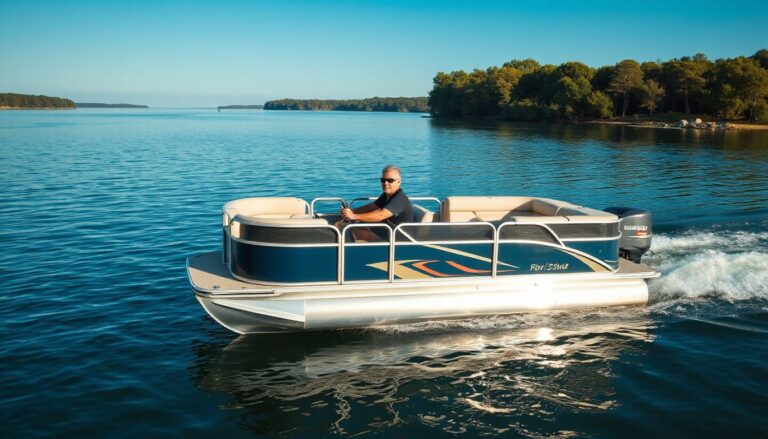
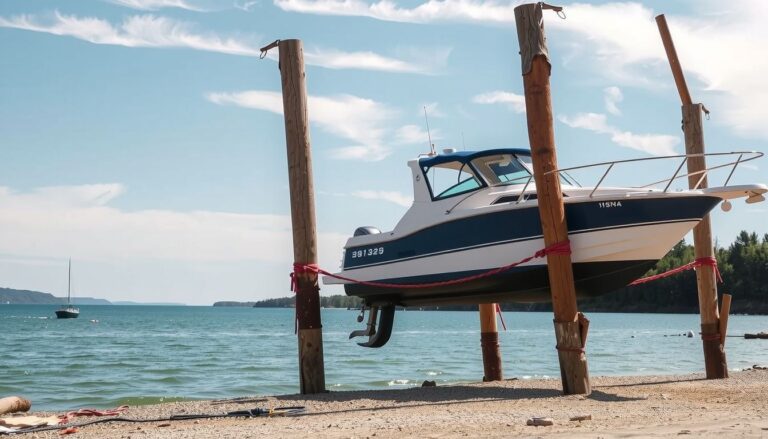
Position the trailer so the stern sits slightly elevated and water drains away from the engine, bilge, and lower unit. For outboards, the correct storage orientation is usually vertical or tilted down to allow complete cooling system drainage. Check your owner’s manual — leaving some engines fully tilted up can trap water in the midsection or propeller hub. For pontoons, make sure the motor and logs are properly supported on the trailer so the pontoon’s layout does not create uneven pressure points over the winter.
Fuel System Winterization: Stabilize, Fog, And Filter
Fuel problems cause more spring starting failures than any other single issue. The fix is a three-part routine: stabilize or drain the fuel, fog the cylinders, and replace the filter.
Stabilize Or Drain: Match The Storage Duration
The first decision is whether to keep fuel in the tank. Use storage length as the guide.
| Storage Duration | Recommended Fuel Approach |
|---|---|
| Under 60 days | Add stabilizer and run the engine to circulate treated fuel |
| 3–6 months | Stabilize thoroughly; draining is optional if the tank stays full |
| Over 6 months | Drain the fuel system completely when the engine design allows it |
If you keep fuel in the tank:
- Fill the tank nearly full. A full tank leaves less air space where condensation can form. Leave a small amount of room for expansion.
- Measure the stabilizer precisely. Most marine stabilizers specify a ratio such as 1 ounce per 10 gallons. Do not guess. A weak dose is a common reason treated fuel still turns sour.
- Run the engine for 10–15 minutes after adding stabilizer. This circulates treated fuel through the tank, lines, filters, injectors, or carburetor — not just the fuel in the tank.
Untreated fuel can begin breaking down within 30 days. By spring, the result is clogged jets, sticky float valves, and an engine that cranks endlessly without firing.
Fogging Oil: Protect Cylinder Walls And Valves
Fogging oil is a light corrosion inhibitor sprayed into the engine while it runs or directly through the spark plug holes. It leaves a protective film on cylinder walls, piston rings, and valve seats.
The procedure depends on the fuel system:
Carbureted engines: Start the engine and warm it to normal operating temperature. Remove the air filter assembly to expose the carburetor intake. With the engine idling, spray fogging oil into the carburetor throat in short bursts while opening the throttle enough to keep it running. The engine will smoke heavily — that is normal. On the final pass, give a heavy spray so the engine stalls on the fogging oil itself. That stall is your confirmation the cylinders received enough oil.
Fuel-injected engines: Some models have a designated fogging procedure through the throttle body. On many others, the most reliable method is to remove the spark plugs, spray fogging oil directly into each cylinder, and rotate the flywheel by hand to distribute the oil before reinstalling the plugs. Always follow the engine manufacturer’s service procedure for your exact model — a factory manual is more reliable than generic forum advice.
A common mistake is one quick spray into the intake and assuming coverage is complete. In practice, dry cylinders still draw humid air all winter. Aim for clear smoke or a stall, not just a token squirt.
Replace The Fuel Filter And Check Lines
Replace the fuel filter before storage, not in spring. A contaminated filter left in place traps moisture and debris, creating a damp, corrosive pocket for months.
- Remove the old filter and look at what it caught — debris can reveal a deteriorating tank or poor-quality fuel
- Install the new filter according to the manufacturer’s specification
- Check all fuel line connections for tightness and signs of cracking
- Squeeze the primer bulb until firm to confirm the fuel system holds pressure
- Confirm the tank vent is clear; a blocked vent can create pressure changes that force stale fuel into sensitive passages
Cooling System And Freeze Protection
Freeze damage is the most catastrophic winterization failure. A cracked block, manifold, or gearcase usually means replacement. Cooling system protection is non-negotiable.
Flush With Fresh Water First
Flushing removes salt, sand, and debris before antifreeze goes in. For saltwater engines this step is not optional — salt residue absorbs moisture and accelerates corrosion inside cooling passages all winter.
- Attach flush muffs or earmuffs over the water intake openings
- Connect a garden hose and turn the water on before starting the engine
- Start the engine and idle for 5–10 minutes until it reaches operating temperature
- Warm-up opens the thermostat, allowing freshwater to flush the entire system
- Shut down and remove the flush muffs
Never run the engine without cooling water flowing, even for a few seconds.
Drain Or Circulate Marine Antifreeze
After flushing, you must deal with water left in the engine. Two methods work depending on design:
Drain-and-dry: Some engines have drain plugs or petcocks that allow complete water removal. If you use this method, be absolutely certain no water remains in low spots, thermostat housings, or internal galleries. Many blocks look drained but still hold a small pocket of water that freezes and cracks metal.
Antifreeze circulation: This is the more reliable approach for most engines. Disconnect the flush muffs and place the water intake into a clean bucket of marine propylene glycol antifreeze. Start the engine and run it until the telltale discharge stream shows consistent antifreeze color. Do not stop when you first see a faint tint — wait for full, consistent color at the telltale or exhaust outlet, then shut down immediately.
Use only marine-grade propylene glycol antifreeze. Automotive ethylene glycol antifreeze is toxic to aquatic life and can damage marine cooling components. The marine product is formulated for engine cooling passages and is biodegradable.
Lower Unit And Gearcase Service
The lower unit contains precision gears operating under high load. Gear oil lubricates them, but water intrusion destroys that protection. If the drained gear oil looks milky, creamy, or chocolate-colored, water has entered and the seals need attention before storage.
- Remove the fill plug first to relieve pressure
- Remove the drain plug at the bottom and drain the old gear oil completely
- Inspect the color and consistency — clean gear oil is typically viscous and clear or lightly amber
- Check the drain plug magnet for metal shavings; a fine gray film is normal, but chunks signal bearing or gear wear
- Refill from the bottom drain hole using a gear lube pump until oil flows cleanly from the top fill hole
- Install both plugs with new gaskets and tighten to the specified torque
Water inside a gearcase does two things: it freezes and expands, cracking the housing, and it corrodes bearings. Both failures are far more expensive than the cost of two new gaskets and a quart of gear lube.
Change Four-Stroke Engine Oil Before Storage
For four-stroke outboards, inboards, and sterndrives, change the engine oil and filter as part of winterization. Dirty oil contains combustion acids and moisture that sit against bearings and cylinder walls for months. Warm the engine first, drain the old oil completely, replace the filter, and refill with the viscosity specified in your manual. Avoid overfilling — excess oil can aerate and overpressure seals. Two-stroke outboards do not have engine oil to change in the crankcase, but check the oil injection reservoir and top it off if equipped.
Electrical, Battery, And Ignition Care
The electrical system fails quietly over winter. Corrosion, condensation, and slow discharge create spring problems that are easy to prevent.
Battery Storage That Prevents Sulfation
Most spring cranking failures trace back to an undercharged battery, not a skipped spark plug. A lead-acid battery left at partial charge sulfates its plates and loses capacity permanently.
- Disconnect the battery — remove the negative terminal first, then the positive
- Clean the terminals and cable ends with a wire brush or terminal cleaner
- Apply a light coating of dielectric grease to the terminals to resist corrosion
- Fully charge the battery with a smart charger matched to the battery chemistry
- Keep it on a maintainer through the winter; a maintainer holds voltage without overcharging
- Store the battery in a cool, dry location rather than directly on cold concrete, which accelerates discharge in some cases
In practice, a battery that sits at 12.0 volts for months is often damaged by spring. A maintained battery at a healthy state of charge will typically fire the engine on the first or second start attempt.
Ignition, Wiring, And Corrosion Protection
Moisture at ignition connections causes intermittent spark under load — a problem that appears on the water, not in the driveway.
- Inspect coils, plug wires, and connections for cracks or corrosion
- Dry any visible moisture with a clean rag
- Spray electrical connectors with a dielectric protectant
- Check spark plug boots for splits that admit moisture
- Remove and inspect spark plugs; replace if worn, fouled, or out of specification
- Walk the engine bay and look for chafed wires, brittle insulation, and loose ground straps
Outboard Vs. Sterndrive Vs. Inboard: Key Differences
The core winterization principles are the same, but each engine type has specific failure points.
Outboard: The engine is self-draining when stored vertically or tilted down. Pay closest attention to the lower unit gear oil, water pump impeller, powerhead fogging, and fuel system. Outboards also benefit from a light spray of corrosion inhibitor on external metal and the steering ram.
Sterndrive / I-O: The engine sits inside the boat with a drive unit outside. In addition to engine oil and fogging, you must drain the raw-water side of the engine and manifolds, service the drive unit gear lube, and inspect bellows and transom seals. A cracked bellows lets water into the bilge and the gimbal bearing area.
Inboard / V-drive: Raw-water-cooled inboards need block, manifold, and heat exchanger drains opened before freeze protection. Freshwater-cooled inboards use a heat exchanger and require the raw-water side drained while the closed cooling side often already has antifreeze. Check the raw-water strainer, seacock, and shaft packing area for leaks.
The Step-By-Step Winterization Checklist
Use this master list as you work. Check each item before covering the boat.
| Step | Task | Why It Matters |
|---|---|---|
| 1 | Inspect hoses, clamps, wiring, propeller, and lower unit | Finds damage before it sits for months |
| 2 | Fill fuel tank and add measured marine stabilizer | Prevents condensation and fuel degradation |
| 3 | Run engine to circulate treated fuel | Moves stabilizer through injectors or carburetor |
| 4 | Fog cylinders or intake until stall or direct cylinder coating | Protects rings, valves, and cylinder walls from rust |
| 5 | Replace fuel filter and check primer bulb and vent | Reduces spring clogging and pressure issues |
| 6 | Flush cooling system with fresh water | Removes salt, sand, and corrosion-causing debris |
| 7 | Circulate marine antifreeze or confirm complete drainage | Protects block, manifolds, and pumps from freeze damage |
| 8 | Drain and refill lower unit gear oil; replace gaskets | Prevents water intrusion, corrosion, and gearcase cracks |
| 9 | Change four-stroke engine oil and filter | Removes acids and moisture from the crankcase |
| 10 | Disconnect, clean, charge, and maintain battery | Preserves cranking capacity through winter |
| 11 | Protect ignition and electrical connectors | Prevents corrosion and intermittent spark |
| 12 | Spray exposed metal with corrosion inhibitor | Reduces external rust on powerhead and drive |
| 13 | Position motor correctly and cover with breathable material | Promotes drainage and limits condensation |
| 14 | Document all fluids, filters, and findings | Makes spring startup and future service easier |
Common Winterization Mistakes That Cause Spring Failure
Even experienced boat owners make costly errors. These are the ones that consistently lead to a rough spring launch.
- Underdosing or forgetting fuel stabilizer. A splash of stabilizer in a full tank does nothing. Measure it, then run the engine.
- Draining the cooling system but not verifying. Many engines retain water in low spots even after drain plugs are removed. Circulate antifreeze or inspect every drain point carefully.
- Using automotive antifreeze. Ethylene glycol is toxic and can damage marine components. Marine propylene glycol only.
- Ignoring milky lower unit oil. Milky oil means a leaking seal. Refilling without replacing the seal simply stores the same contaminated condition.
- Leaving the battery partially charged. Even a few months at low voltage can permanently reduce capacity.
- Storing under a non-breathable tarp. Trapped humidity causes more corrosion and mildew than open air.
- Skipping the impeller until spring. A brittle impeller that fails on first start can overheat the engine before you leave the dock.
- Forgetting to document what you did. Without records, spring troubleshooting means starting from zero and repeating inspections you already completed.
If you find enough damage that the motor is not worth saving, the conversation changes from winterization to removing and disposing of the old boat and motor.
How To Confirm Winterization Is Complete
Before you walk away, run a final verification pass. Winterization can look finished while one missed step leaves freeze risk undetected until spring.
Final Verification Walkthrough
- Confirm the telltale or exhaust showed consistent antifreeze color during circulation
- Verify the lower unit fill and drain plugs are tight and dry
- Check that no coolant or water is seeping from block drains or manifolds
- Confirm the fuel system holds treated fuel at the documented level
- Make sure the battery is disconnected or connected to a maintainer
- Inspect the cover for tears and confirm vents are open
Document What You Did
Take ten minutes to record everything: the date, engine model, products used, measured quantities, filter replacement status, and any observations such as water in the gear oil or a damaged hose. A simple notebook page or digital note works. These records make spring troubleshooting a matter of checking what was done — not guessing.
Plan Your Spring Start-Up Sequence
Before you launch in spring, stage the restart instead of cranking blindly:
- Inspect or replace the fuel filter if it was deferred
- Confirm cooling water flows from the telltale within a few seconds of starting
- Listen for unusual noise from the lower unit or engine
- Watch the battery voltage and charging circuit during warm-up
- Run the engine at idle until it reaches temperature before applying full load
Also give the boat itself a quick pre-launch once-over. A full exterior wash and attention to carpet and interior moisture prevent stains and mildew from becoming permanent while the boat sits.
Winterizing A Boat Motor: FAQ
What is the most important step when winterizing a boat motor?
Freeze protection and fuel stabilization are equally critical. Skimping on either creates a major spring failure. Trapped water can crack the block or gearcase, while untreated fuel clogs the fuel system. Both must be addressed before storage.
Should I use fuel stabilizer or drain the fuel completely?
It depends on storage length. Under 60 days, stabilized fuel works well. For 3–6 months, stabilize thoroughly and keep the tank nearly full. Beyond six months, draining the system is safer when your engine design allows complete drainage. Always follow your manufacturer’s recommendation.
How long should I run the engine to circulate antifreeze?
Run until the telltale discharge shows consistent antifreeze color — not by a fixed time. The exact duration depends on your cooling system and the antifreeze product. Shut down as soon as the color is steady; running longer wastes product and adds wear.
Can I use automotive antifreeze for my boat motor?
No. Use only marine-grade propylene glycol antifreeze. Automotive antifreeze contains ethylene glycol, which is toxic to aquatic life and can damage marine cooling system components. Marine antifreeze is formulated specifically for engine cooling systems and is biodegradable.
Do I need to winterize a boat motor that stays in a heated garage?
Yes. Even heated storage experiences humidity and temperature swings. Fuel still degrades, batteries still discharge, and corrosion still occurs. The only difference is lower freeze risk — every other winterization step remains necessary.
What happens if I skip winterization?
The range is frustrating to catastrophic. At minimum, expect hard starting, rough idle, clogged fuel system parts, and a weak battery. At worst, a cracked block or gearcase from trapped frozen water requires replacement at a cost that can exceed the boat’s value.
Conclusion
Winterizing a boat motor is a few hours of methodical work that protects a significant investment and eliminates the most common spring failures. Fuel stabilization, cooling system freeze protection, lower unit gear lube service, engine oil changes on four-strokes, and battery maintenance are not optional extras — they are the difference between a reliable launch and a repair bill.
Work through the checklist in order, verify each step, and write down what you did. Your documentation becomes the starting point for next spring’s startup sequence and future seasonal service.
Your next step is simple: set aside time this weekend, gather the supplies, park the boat where you can reach the motor, and start at the top of the checklist. Finish before the first hard freeze, and you will spend winter knowing the engine is protected — not wondering whether it will start.